Preventative roof maintenance gives Texas property owners a simple way to spot small changes before they become harder to manage. Heat, heavy rain, wind, hail, tree debris, and seasonal storms can all put stress on a roof, but a consistent routine helps you notice what has changed and decide when to bring in a professional. The steps below work for homes and commercial buildings in Houston, Austin, and nearby communities.
Contact Elevation Roofing & Restoration to plan a roof inspection.
What Does Preventative Roof Maintenance Include?
Preventative maintenance is a repeatable process of observing, recording, and addressing roof conditions. It is not the same as climbing onto a roof without training or trying to repair it yourself. From the ground, an owner can look for visible changes and keep roof-related records. A qualified roofing professional can assess areas that are not safely accessible and explain whether a repair, maintenance visit, or further evaluation makes sense.
A practical routine has four parts:
- Observe: Check the roof and drainage areas from a safe location after seasonal weather or when a new issue appears.
- Record: Note the date, weather event, location, and visible concern. Take photos from the ground when possible.
- Maintain: Keep nearby trees and drainage paths from creating avoidable debris or water-flow problems, without stepping onto the roof.
- Follow up: Ask a roofing professional to assess changes that may affect the roof covering, flashing, drainage, or interior.
For commercial properties, written records make it easier to compare conditions over time and share observations with a facilities or property-management team. A maintenance plan can help an organization protect a roof, as described by the Texas Association of School Boards Risk Management Fund. The same basic idea applies to a home: keep a record, follow up on changes, and do not wait for a visible leak to start paying attention.
When Should Texas Owners Check Their Roof?
There is no single calendar that fits every roof. Roof age, material, nearby trees, drainage conditions, recent weather, and the building’s use all affect how often a closer look may be useful. Instead of relying on a fixed promise about roof life or inspection frequency, build checks around relevant events and your property’s history.
| Timing or trigger | Owner action | Why it helps |
|---|---|---|
| Seasonal change | Look from the ground for visible damage, debris, and drainage concerns. | Creates a consistent record and may reveal changes after different weather conditions. |
| After hail or strong wind | Check for displaced materials, fallen branches, and new interior water marks; photograph visible concerns. | Documents what you can see and helps determine whether a professional assessment is needed. |
| After heavy rain | Look for standing water where visible, overflowing gutters, or water entering the building. | Connects drainage or interior symptoms with the timing of rainfall. |
| When a leak or stain appears | Protect belongings, note the location and date, and arrange a professional evaluation. | Prompt assessment can help identify the source before the affected area changes further. |
| During planned property upkeep | Review past notes and discuss roof condition with a roofing professional. | Supports informed decisions about maintenance, repair, or additional inspection. |
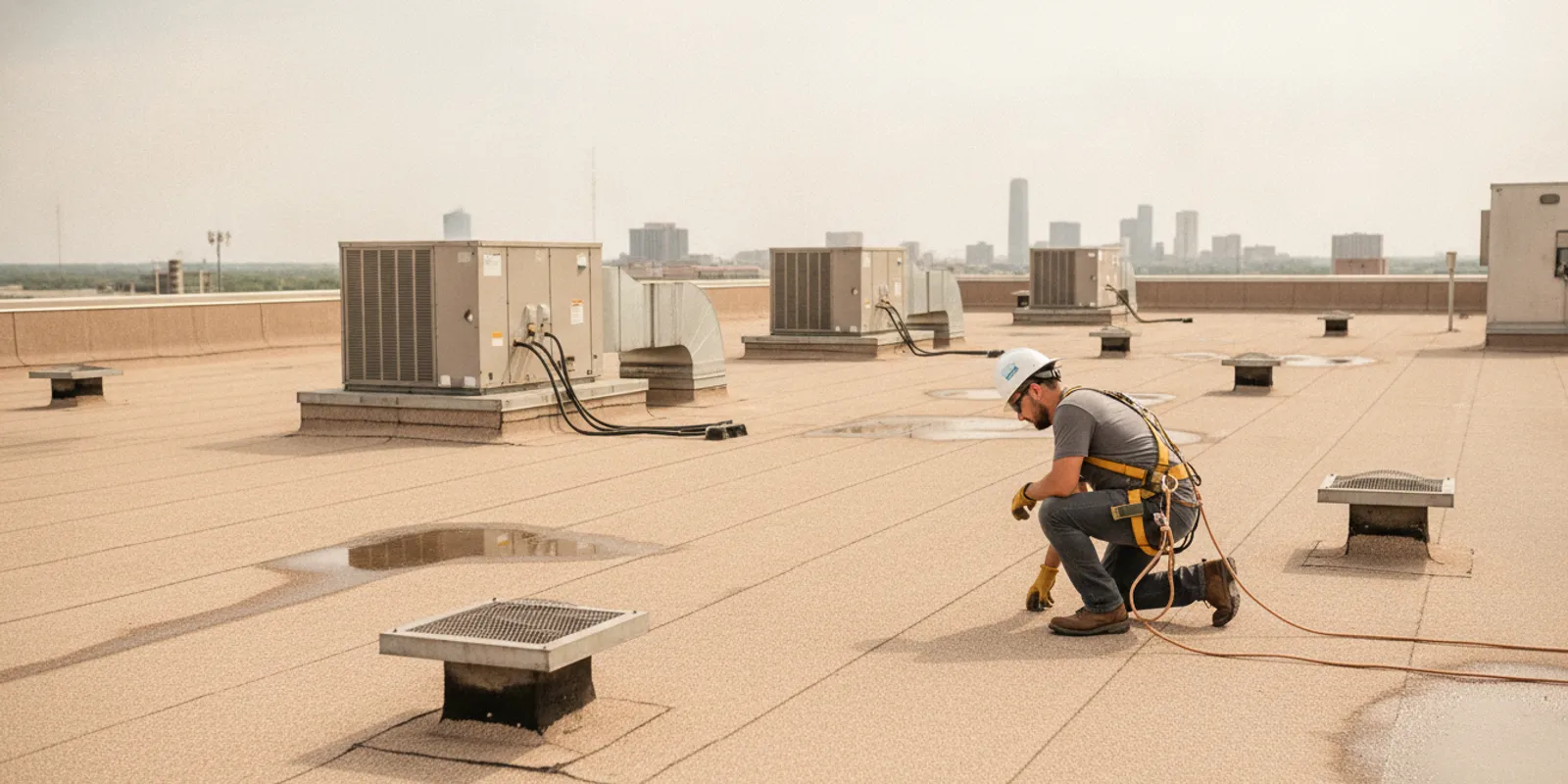
In Houston and other parts of Southeast Texas, wind-driven rain, storms, humidity, and nearby vegetation can make drainage and visible changes worth watching. In Austin and Central Texas, local weather and the building’s surroundings still matter, so use your own observations rather than assuming the same schedule fits every property. If your building has a flat or low-slope roof, drainage details deserve particular attention because water movement may not be obvious from the ground.
How Can You Make Preventative Roof Maintenance Safer?
Many useful observations do not require walking on the roof. A ground-level check is safer and can still help you spot changes in roof lines, shingles, metal panels, gutters, downspouts, or nearby tree limbs. Use binoculars only from a stable place, and do not lean out of windows or climb onto ladders to get a better view.
- Walk around the building and look for missing, lifted, cracked, or visibly displaced roof materials.
- Look at gutters and downspouts for sagging, separation, overflow marks, or debris that is plainly visible from a safe position.
- Check ceilings and upper walls indoors for new stains, bubbling paint, or damp areas, and record where they appear.
- After a storm, look for fallen branches or debris near the building, but do not approach downed power lines or unstable structures.
- Keep notes and photos together with receipts, inspection documents, and any correspondence about roof work.
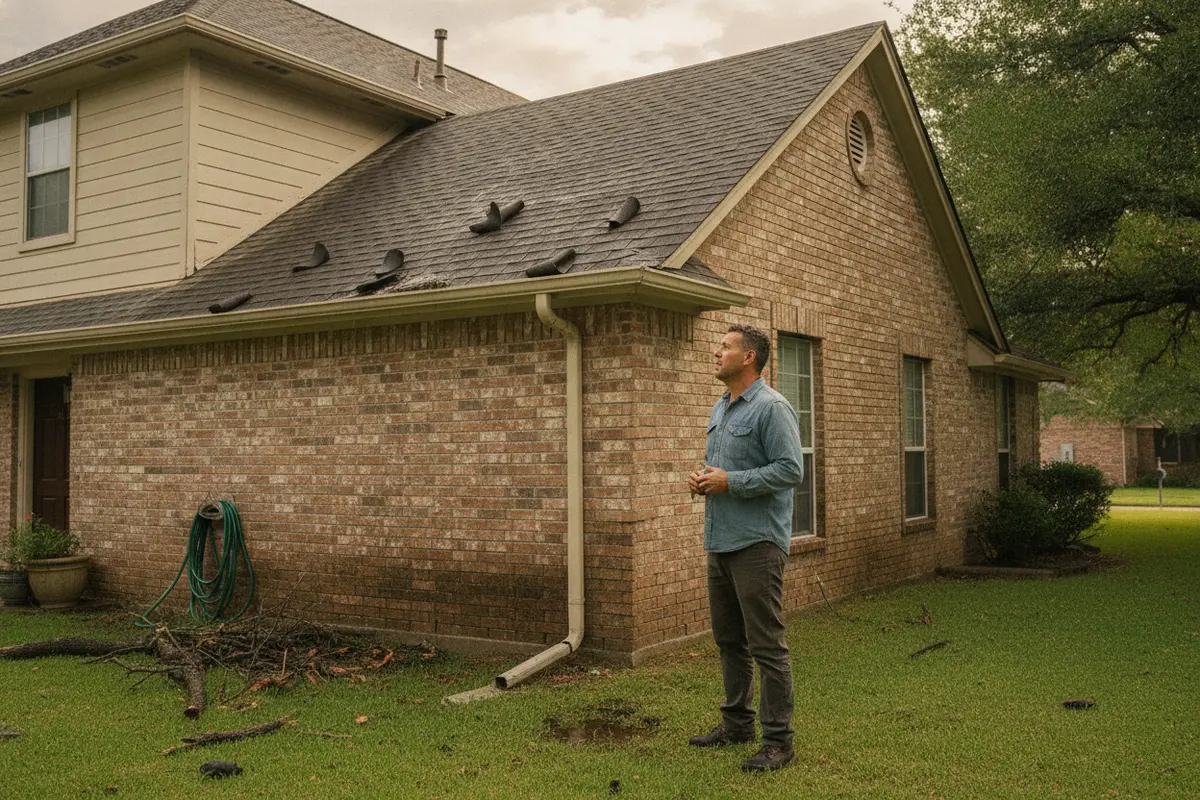
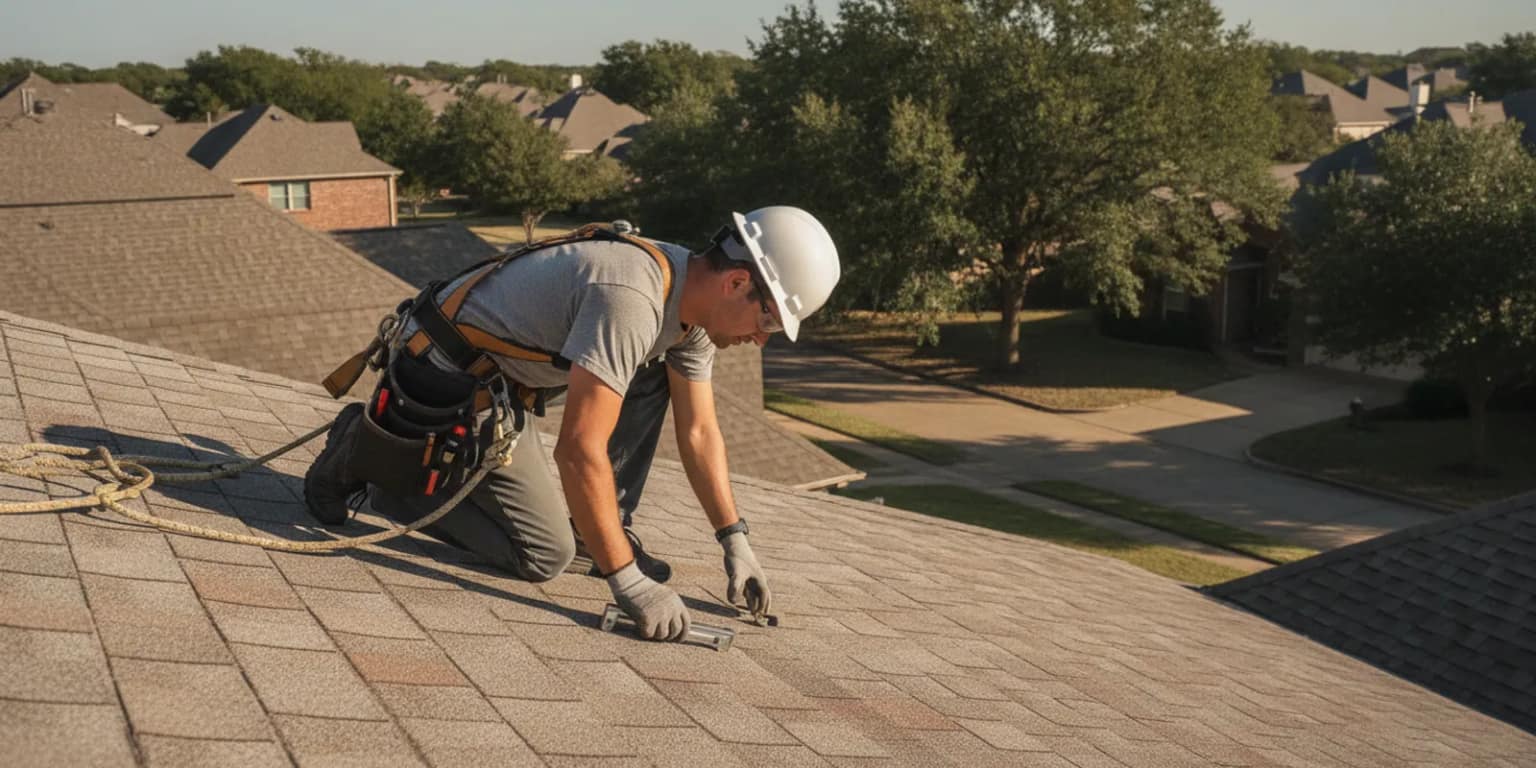
Do not climb onto a wet, steep, damaged, or unfamiliar roof. Avoid moving roofing material, opening roof penetrations, or attempting a temporary repair unless a qualified professional has advised you on a safe approach. If water is entering the building, protect people and belongings first, then contact a roofing professional to assess the roof. For a closer look, review professional roof inspection options rather than treating a visual check as a diagnosis.
What Should You Look for Around the Roof?
A useful check connects outside observations with what is happening inside. One mark or piece of debris may not tell you the cause, but a pattern, a new change, or a recurring symptom is worth documenting.
Roof covering and edges
From the ground, note areas that look uneven or visibly different from nearby sections. On shingle roofs, look for missing or displaced shingles. On metal roofs, note panels or trim that appear out of place. Do not assume that a roof is sound because it looks intact from the street; some conditions require close inspection to identify.
Gutters, downspouts, and drainage
Observe whether gutters appear attached and whether downspouts direct water away from the building. Look for overflow marks, persistent debris, or water collecting near the foundation after rain. Keep gutters clear only when you can do so safely from the ground or through an appropriate maintenance provider. Learn more about gutter installation and repair services if you see a concern that needs attention.
Interior signs
Look at ceilings, upper walls, and attic areas that you can access safely. A new stain, musty odor, damp insulation, or peeling finish may have several possible causes, so do not assume the roof is the source without an assessment. Record the room, approximate location, date, and whether the area changes after rain.
Nearby trees and objects
Branches that touch the roof or hang over it can drop leaves and limbs. Note trees or equipment near the roof and ask an appropriate professional about safe trimming or clearance. Do not cut limbs near power lines or climb onto the roof to remove debris.
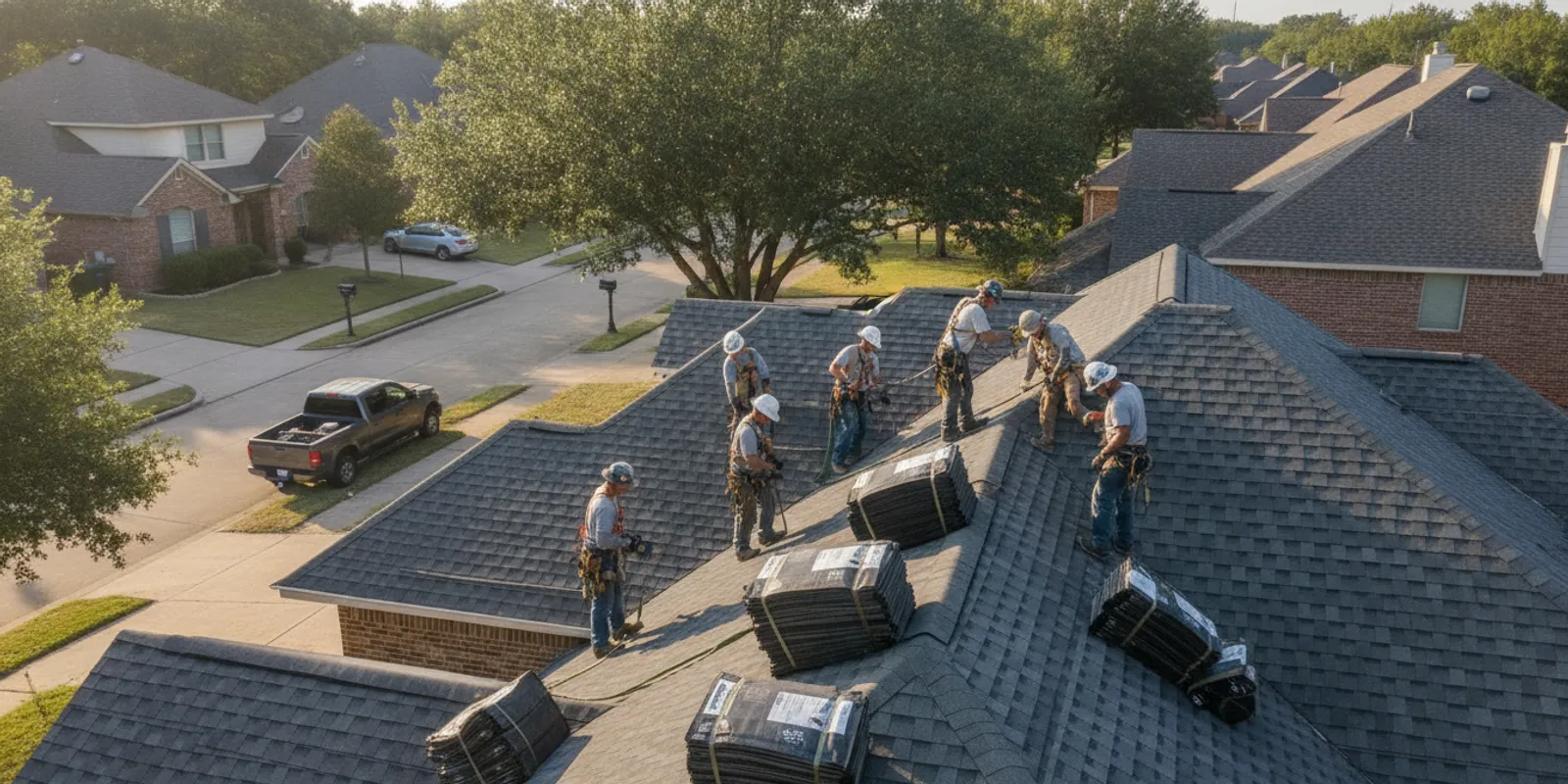
Homes with different roof systems may need different expertise. Elevation Roofing & Restoration works with residential and commercial roofing, including shingle, tile, metal, and flat-roof systems. Owners can use the company’s overview of roof types to identify which material is on their building before asking questions about care.
Which Signs Mean You Should Call a Roofing Professional?
Arrange a professional assessment when you see a new leak, a ceiling stain that grows, visibly displaced roof material, damage after a storm, or a drainage problem that keeps returning. A professional can inspect areas that are not visible from the ground and explain what the observations may mean. If a storm may have caused damage, take photos from a safe location and keep the date and any related records. Do not promise yourself that a small-looking concern can wait, since its significance depends on the roof and conditions.
Elevation Roofing & Restoration provides roof repair, inspection, maintenance, replacement, and restoration services. Its team can also help property owners navigate storm-related insurance questions, but the owner should review policy terms and communicate with the insurer directly about coverage decisions. For storm concerns, see the company’s storm repair information. A service description is not a substitute for an assessment of your particular roof.

Request a free roof inspection to discuss visible concerns.
How Does Preventative Roof Maintenance Become a Useful Plan?
A roof log does not need specialized software. A spreadsheet, property file, or notebook is enough if it captures the same basic details each time. For a commercial building, assign one person to keep the record and share updates with the people responsible for repairs. For a home, save photos and inspection notes with other property documents.
- Start with the building: Record the address, roof type if known, approximate installation or replacement date if documented, and any past repair history.
- Make dated entries: Note the weather event or reason for checking, what you observed, and exactly where you observed it.
- Attach evidence: Keep ground-level photos and copies of inspection findings, estimates, invoices, or insurer communications together.
- Track follow-up: Record who assessed the concern, what action was recommended, and whether that action was completed.
- Review the record: Look for repeat concerns, such as recurring water marks or drainage problems, and raise the pattern with a roofing professional.
When a professional evaluates the roof, ask what was inspected, which areas were inaccessible, what needs attention now, and what should be monitored. Request clear photos or written notes when available. If a proposal includes repair work, compare its scope with the observed issue and ask how the work addresses it. The goal is a clear next step, not a checklist that treats every roof as identical.
Property owners in Houston, Austin, and nearby service communities can review Elevation Roofing & Restoration’s service areas and explore the company’s roof maintenance services. To understand the range of work available, see roofing services or the company’s company information. You can also read customer reviews when comparing providers, and use the contact page to ask about your property.
Frequently Asked Questions
Can I do preventative roof maintenance myself?
You can make ground-level observations, check for interior signs, and keep records. Do not walk on a roof or attempt repairs without appropriate training and safety measures. Have a qualified professional assess areas you cannot safely inspect.
Does preventative maintenance mean a roof will not leak?
No. Maintenance cannot guarantee that a roof will not leak or prevent all damage. It can help you document conditions and identify visible changes that deserve follow-up, but hidden problems and severe weather can still affect a roof.
What should I do after hail or strong wind?
From a safe location, look for visible changes, fallen branches, or signs of water entering the building. Take photos if it is safe, write down the date, and arrange a professional evaluation if you see damage or are concerned. Avoid climbing onto the roof.
Should a flat roof be checked differently?
Flat and low-slope roofs have their own materials and drainage details. Do not walk on the roof to check for ponding or debris. Record any drainage or interior concerns you can safely observe and ask a roofing professional to assess the system.
Contact Elevation Roofing & Restoration to discuss a roof check for your Texas property.
A steady record of observations, safe checks, and timely professional assessments gives you a practical way to care for your roof and respond when conditions change.