A skylight is one of the best features a home can have. It pulls natural daylight into kitchens, stairwells, and bathrooms, cuts your reliance on artificial light, and makes a room feel twice its size. But a skylight is also a deliberate hole cut into your roof, and in the Austin climate that hole takes a beating. Between relentless summer UV, sudden hailstorms rolling in off the Hill Country, and the heavy downpours that follow a long dry spell, the weakest part of any roof is usually the part where something penetrates it. This guide walks Austin homeowners through how to recognize a failing skylight, what actually causes the problem, and how to decide between a targeted repair and a full replacement.
The Warning Signs Austin Homeowners Should Never Ignore
Skylight problems almost always announce themselves before they become expensive. The trick is knowing which symptoms point to the glass itself and which point to the roof around it. Watch for these:
- Water dripping during or after rain. The most obvious sign, and the most urgent. A skylight that leaks in a heavy Texas downpour has either a failed seal, cracked flashing, or a worn gasket.
- Brown stains on the ceiling or walls around the skylight. Staining means water has been getting in for a while, often long before you ever saw a drip. By the time drywall discolors, the deck above may already be wet.
- Condensation or fog trapped between the glass panes. A foggy, hazy look inside a double-pane skylight means the sealed unit has lost its seal and moisture is now trapped inside. That glass unit is failing.
- Drafts or temperature swings near the opening. If the area under the skylight feels noticeably hotter in July or colder during a hard freeze, the seal or insulation around the frame has gaps.
- Cracked, chipped, or discolored panes. Hail is the usual culprit in Central Texas. Even a hairline crack lets water in and grows fast under thermal stress.
- Visible gaps or peeling sealant. Old caulk and dried-out flashing tape pull away from the frame as the materials bake in the sun, opening a direct path for water.
Why Skylights Fail in the Texas Climate
Understanding the cause helps you fix the right thing instead of throwing sealant at a symptom. In our part of Texas, skylight failures usually trace back to one of these:
UV and Thermal Cycling
Austin roofs swing from triple-digit surface temperatures on a summer afternoon to a cool night, then repeat it for months. That constant expansion and contraction is brutal on sealants, gaskets, and the flashing kit that ties the skylight into the roof. Materials that were watertight five years ago dry out, shrink, and crack. This is the single most common reason an older skylight starts to leak even though nothing dramatic happened to it.
Flashing Failure, Not the Glass
Here is what surprises most homeowners: the majority of skylight leaks are not the skylight at all. They come from the flashing, the metal that channels water around and away from the unit. If that flashing was installed poorly, has corroded, or has lifted after a windstorm, water sneaks underneath and runs down the roof deck before dripping into your home, sometimes feet away from the skylight itself. A new pane of glass will not fix a flashing problem.
Hail and Wind Damage
Central Texas sits in a corridor that sees regular hail. A storm can crack a skylight dome, dent the flashing, or loosen fasteners without leaving an obvious mark you would notice from the ground. High winds can lift the edge of the flashing or the surrounding shingles. After any significant storm, a skylight deserves a close look, which is exactly the kind of damage our storm repair team checks for.
Age and the End of the Service Life
Most residential skylights are built to last roughly 10 to 20 years. The glass may outlast that, but the seals and flashing generally do not. If your skylight is original to a home built before 2010 and you are seeing fog or drips, age alone may be the answer.
Why Skylight Repair Is Not a DIY Job
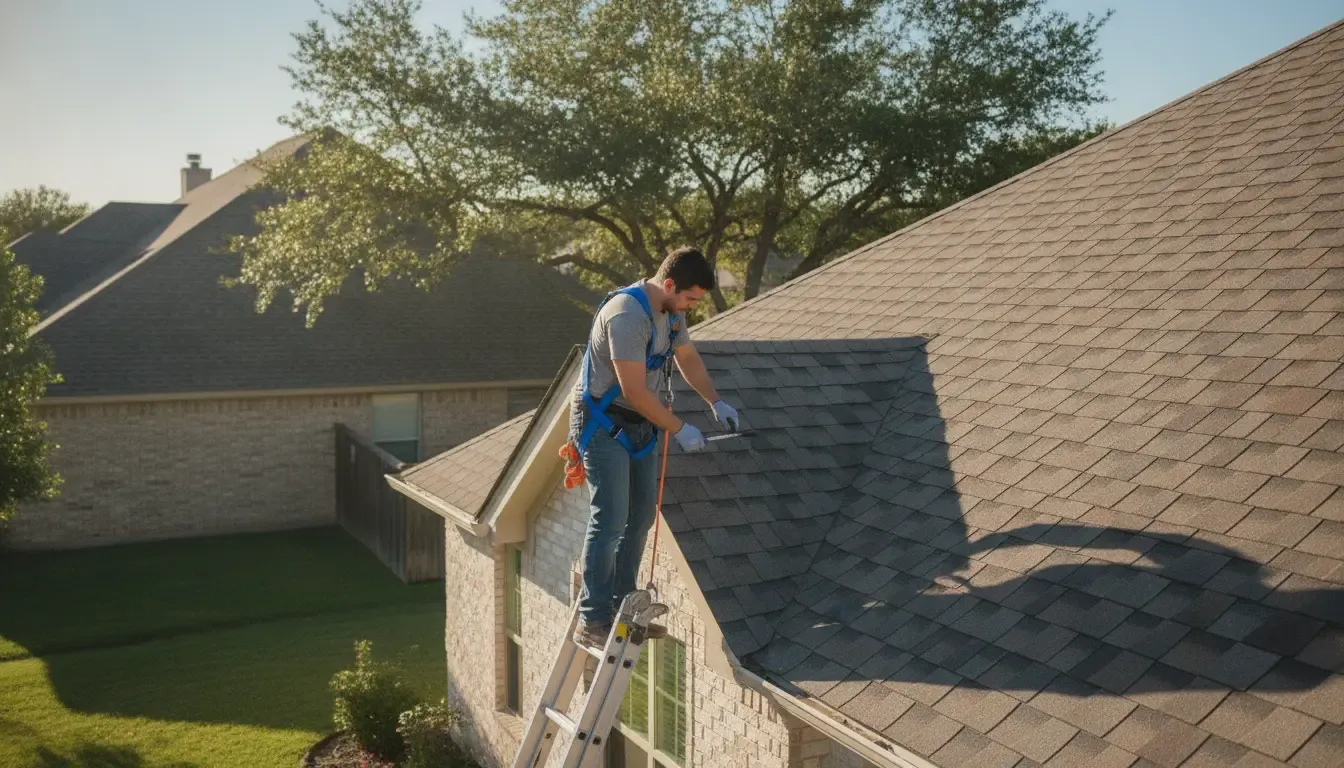
It is tempting to climb up with a tube of caulk, especially when the leak looks small. We strongly advise against it, for two reasons. First, safety: an Austin roof can be slick, steep, and dangerously hot, and most homeowner injuries from roof work are falls that were entirely avoidable. Second, effectiveness: smearing sealant over a visible drip almost never works, because the real entry point is usually somewhere else under the flashing. A surface patch traps moisture, hides the spreading damage, and often makes the eventual professional repair more expensive.
A proper repair means lifting the surrounding shingles, inspecting the flashing and underlayment, finding where water actually enters, and re-integrating the skylight into the roof system the way it was meant to be installed. That is a roofing job, not a handyman job. Our roof repair crews diagnose the true source first, then fix it once.
Repair or Replace? How to Decide
Not every skylight problem calls for a full replacement, and a good roofer will tell you honestly which path makes sense. As a general rule:
- A repair usually makes sense when the glass is intact, the unit is relatively young, and the issue is flashing, sealant, or a single damaged gasket. Re-flashing and resealing can add many more good years.
- A replacement usually makes sense when the panes are fogged or cracked, the unit is near the end of its service life, or the same skylight has leaked repeatedly. Newer skylights are far more energy-efficient, which matters a great deal during an Austin summer.
- Look at the roof around it. If your shingle roof is also aging, it is often smarter and cheaper to address the skylight during a planned roof replacement than to disturb old shingles twice.
This is where a professional inspection pays for itself. A roofer can tell you whether you are looking at a quick reseal or a symptom of a larger roof issue that the skylight just happened to reveal first.
Preventing the Next Leak
Skylights reward a little routine attention. Twice-a-year roof maintenance, ideally before storm season in spring and again before winter, catches dried sealant and lifted flashing while the fix is still small. Keep the surrounding area clear of leaves and debris so water drains the way it should, and have a roofer take a look after any major hail or wind event. Catching a failing seal early is the difference between a modest reseal and a ceiling repair with mold remediation.
Get a Straight Answer on Your Skylight
If you have noticed any of these signs around a skylight in your Austin home, do not wait for the next storm to make it worse. Elevation Roofing & Restoration is a GAF Preferred Contractor with 9-plus years serving more than 100 Texas communities, a 5-star Google rating, and a 100% satisfaction guarantee. We will assess the skylight and the roof around it, tell you plainly whether you need a repair or a replacement, and back the work either way. Schedule your free roof inspection, a $399 value, or contact our Houston and Austin team today to stop a small skylight problem before it becomes a big one.