A metal roof is one of the best long-term investments a Texas homeowner can make. Done right, a quality metal roofing system shrugs off Houston's brutal UV, Gulf Coast hurricane winds, and Hill Country hail for 40 to 70 years. But here's the part that gets glossed over in the brochures: metal is one of the least forgiving materials to install. The same roof that lasts six decades when handled correctly can start leaking at the seams within a year or two when it isn't.
The difference is almost never the metal itself. It's the installation. Across Greater Houston and the Austin metro, the metal roof failures we get called out to repair trace back to the same handful of avoidable errors. Below are the seven we see most often — so you know exactly what separates a roof that earns its price tag from one that becomes a recurring headache.
1. Skipping Proper Deck and Surface Prep
Metal panels are only as sound as what sits beneath them. A common shortcut is laying panels over a deck that wasn't inspected, dried out, or repaired first. In Texas humidity, decking with hidden rot or trapped moisture keeps degrading under the new roof, and the fasteners holding everything down lose their grip.
Proper prep means evaluating the decking, replacing any soft or water-damaged sheathing, and installing a quality underlayment rated for high heat — a non-negotiable under metal, which gets blistering hot in a Texas summer. A good crew documents the deck condition during the inspection before a single panel goes up.
2. Mixing Incompatible Metals (Galvanic Corrosion)
This is the quiet killer. When two dissimilar metals touch in the presence of moisture — say, steel panels with the wrong fasteners, or copper flashing against aluminum — an electrochemical reaction called galvanic corrosion eats away at the weaker metal. On the humid Gulf Coast, that reaction runs fast.
The fix is simple but requires discipline: panels, fasteners, flashing, clips, and trim all need to be metallurgically compatible. Reputable manufacturers spec exactly which components belong together, and a careful installer follows that spec instead of grabbing whatever's on the truck. Corrosion that starts at a single mismatched screw can streak rust across an entire panel within a couple of seasons.
3. Ignoring Thermal Expansion and Contraction
Metal moves. A panel that's installed on a cool Austin morning will expand measurably by a 100-degree July afternoon, then contract again at night. Over thousands of cycles, a roof installed without room to breathe will buckle, oil-can (visible waviness), tear at fastener holes, or pop its seams.
This is one of the biggest reasons metal demands an experienced crew. The system has to be engineered for movement — through floating clip systems on standing-seam roofs, correctly sized fastener holes, and proper panel-length planning. Texas's extreme temperature swings make this far more critical here than in milder climates.
4. Over-Driving or Under-Driving Fasteners
On exposed-fastener metal roofs, every screw passes through a rubber or neoprene washer that seals out water. Get the torque wrong and that seal fails:
- Over-driven screws crush the washer and dimple the panel, creating a low spot where water pools and works its way in.
- Under-driven screws leave the washer loose, so wind-driven rain — exactly what a Texas thunderstorm delivers — sneaks underneath.
- Angled screws never seat the washer evenly, leaking from day one.
A single roof can have thousands of fasteners. It only takes a handful of bad ones to start a leak, and finding them after the fact is tedious and expensive. This is precision work, and it's a major reason we steer homeowners away from low-bid crews.
5. Botched Flashing at Penetrations and Valleys
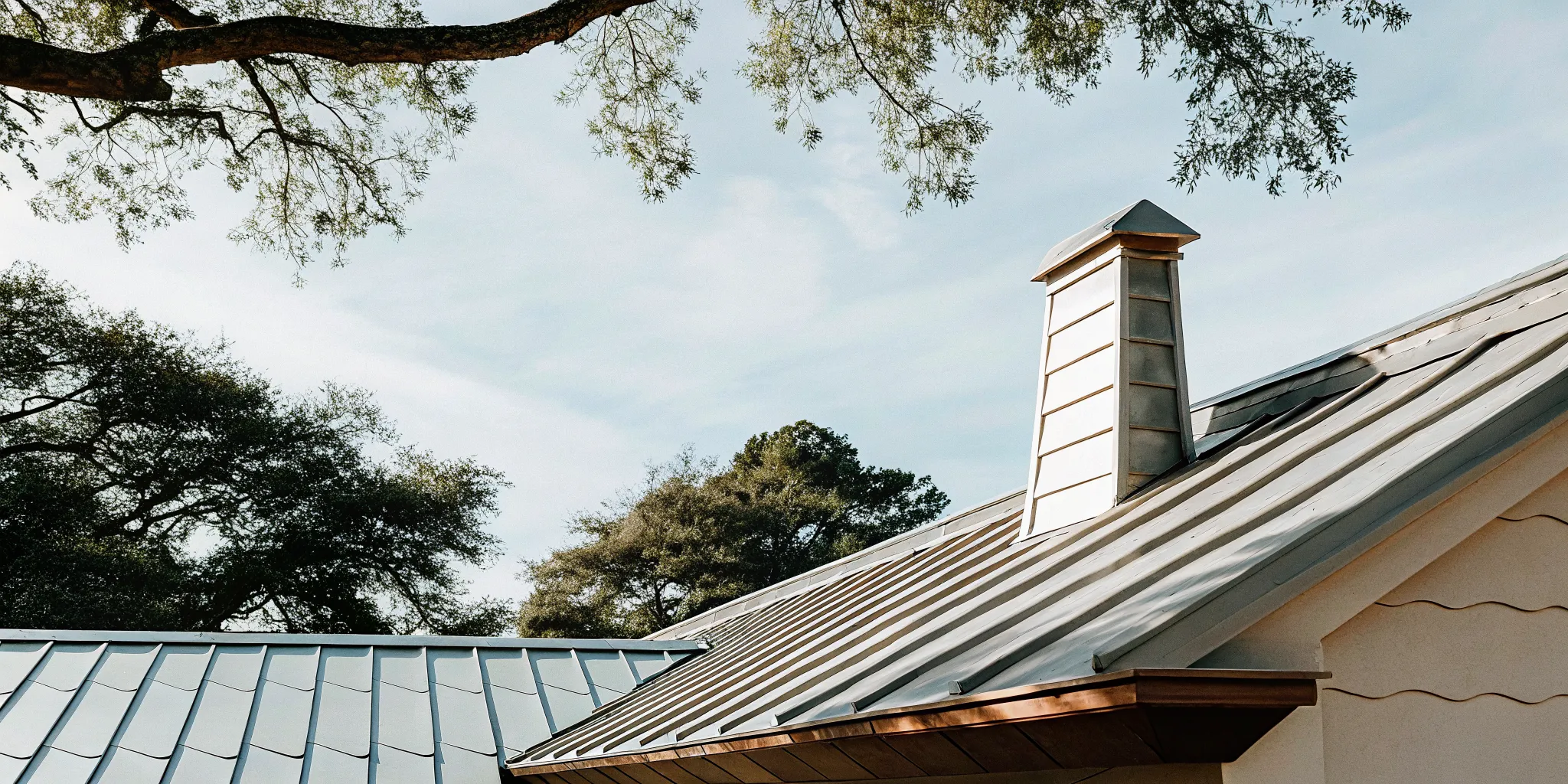
Most metal roof leaks don't happen in the open field of panels — they happen at the transitions. Valleys, ridges, chimneys, vents, skylights, and the points where the roof meets a wall are where water concentrates and where sloppy installation shows up fast. Reused old flashing, sealant slathered on as a substitute for proper metalwork, or poorly fabricated valley pans will all eventually let water in.
Quality flashing is custom-fitted, layered to shed water in the right direction, and built to last as long as the panels. When we handle a metal roof installation, the flashing details get the same attention as the panels — because that's where the roof actually earns its waterproofing.
6. Inadequate Attic Ventilation
A sealed metal roof over a poorly ventilated attic is a recipe for trapped heat and condensation. In a Texas summer, an under-ventilated attic can hit punishing temperatures that cook your insulation, spike your cooling bills, and shorten the life of everything up there. In the rare hard freeze, warm interior air meeting a cold metal underside creates condensation that drips like a leak and breeds mold.
Balanced intake and exhaust ventilation — soffit vents paired with ridge or other exhaust vents — keeps air moving and moisture out. Ventilation isn't an afterthought to bolt on later; it's part of designing the roof system correctly the first time. It's also a frequent finding in our maintenance visits.
7. Treating Metal as "Install It and Forget It"
Metal roofs are genuinely low-maintenance, which leads some owners to ignore them entirely. But low-maintenance isn't no-maintenance. Fastener washers age, sealant at penetrations breaks down under UV, debris collects in valleys, and storm damage can loosen panels or trim. Caught early, these are minor fixes. Ignored, they become the leaks and corrosion we get called to repair.
A quick annual roof inspection — especially after hail or a tropical system rolls through the Houston area — catches small issues while they're still small. After a major storm, our storm repair team works directly with homeowners' insurance on hail and wind claims.
The Common Thread: Installation Quality Beats Material Every Time
Notice what every item on this list has in common. None of them are about the metal being a bad choice — metal is an excellent choice for Texas. They're all about execution. A premium standing-seam system installed by a rushed, inexperienced crew will lose to a mid-grade panel installed correctly, every single time.
That's why the contractor matters more than the brand on the panel. As a GAF Preferred Contractor with 9+ years installing metal and every other major roof type across more than 100 Texas communities, we install complete systems — deck, underlayment, flashing, ventilation, and fasteners — and back them with a 100% satisfaction guarantee. If you want to compare your options first, our roof types guide walks through how metal stacks up against shingle, tile, and flat systems.
Thinking About a Metal Roof? Start With a Free Inspection
Whether you're planning a new metal roof, worried about one that was installed poorly, or just want an honest opinion on your current roof, the smartest first step is having someone walk it. Schedule a free roof inspection (a $399 value) with Elevation Roofing & Restoration. We'll tell you exactly what your roof needs — no pressure, no upsell — and make sure the next metal roof you pay for is the last one you'll ever need.