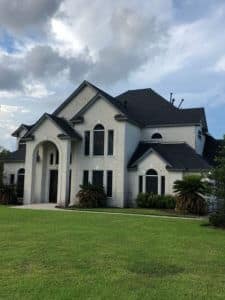
Most Houston and Austin homeowners blame a high summer power bill on the air conditioner, the windows, or the price of electricity. The quieter culprit is often the skin of the house itself. Old siding that has cracked, warped, or pulled away from the wall lets conditioned air bleed out and lets the brutal Texas heat soak in, and it does it slowly enough that you rarely connect it to the number at the bottom of your bill. Your siding, insulation, and roof work together as one building envelope, and when one layer fails, the whole system pays for it.
This article breaks down exactly how aging siding erodes your home's energy efficiency, how to tell whether yours is the problem, and the smartest order to fix it in a climate that swings from triple-digit heat to the occasional hard freeze.
How Siding Actually Affects Your Energy Bill
Siding is not just a decorative shell. It is the outermost barrier in a layered system designed to keep weather out and conditioned air in. When that barrier ages, several things go wrong at once, and each one makes your HVAC work harder.
- Air infiltration. Gaps, cracks, and warped panels create dozens of small openings. Cool air you paid to produce escapes, and hot, humid Gulf Coast air pushes in. Your AC never gets to rest.
- Lost insulation value. Many older homes rely on the siding assembly and the cavity behind it to slow heat transfer. As panels loosen and gaps open, that thermal resistance drops.
- Trapped moisture. Failed siding lets rain and humidity reach the sheathing and wall cavity. Wet insulation loses most of its R-value, and damp walls breed mold that further degrades both insulation and indoor air quality.
- Heat absorption. Faded, sun-baked siding, especially in dark colors, absorbs and re-radiates heat into the wall instead of reflecting it away. In a Texas July, that radiant load is significant.
The result is an HVAC system that runs longer cycles, struggles to hold a set temperature, and wears out years early, all while your bill climbs every summer.
Warning Signs Your Siding Is Costing You Money
You do not need a contractor to spot the early symptoms. Walk the perimeter of your home, ideally on a sunny afternoon, and look for these:
- Cracked, split, or visibly warped panels, especially on the south- and west-facing walls that take the most sun
- Boards or panels pulling away from the wall, leaving visible gaps at seams and corners
- Faded, chalky, or bubbling surfaces where the protective finish has broken down
- Peeling interior paint or soft drywall near exterior walls, a sign moisture is getting through
- Rooms on the sunny side of the house that stay noticeably hotter than the rest
- A summer energy bill that keeps rising even though your usage habits have not changed
Any one of these on its own is worth watching. Two or three together usually mean your envelope is leaking energy, and the fix will pay you back month after month.
Why the Texas Climate Makes Old Siding Worse
Siding ages everywhere, but the Texas climate accelerates it. Intense UV radiation breaks down finishes and makes vinyl brittle. Daily heat expansion and overnight cooling work panels loose at the fasteners. Gulf Coast humidity and heavy rain drive moisture into any opening, while hail and high winds from spring and summer storms crack and dislodge panels outright. Even the rare hard freeze stresses already-weakened materials.
Because the same storms that batter siding also batter your roof, it is common for both to show wear at the same time. If a recent storm hit your area, our storm damage repair team can assess the whole exterior at once, and if there is insurable damage we work directly with your homeowner's insurance on the claim.
Repair, Add Insulation, or Replace: Choosing the Right Fix
The right move depends on how far the deterioration has gone. Here is how we think about it.
Targeted repair
If only a few panels are cracked or loose and the wall beneath is sound, sealing gaps, replacing damaged sections, and re-caulking around penetrations can restore most of the envelope's performance for a fraction of replacement cost. This is the right call when the damage is localized and recent.
Adding insulation
When siding is being repaired or replaced, it is the ideal moment to address what is behind it. Rigid foam insulation board installed under new siding adds a continuous thermal layer that dramatically slows heat transfer through the walls, which matters enormously during a Texas cooling season. Pairing better wall insulation with a properly ventilated attic gives you the biggest comfort gain for the money.
Full replacement
If panels are widespread failing, moisture has reached the sheathing, or the material is simply at the end of its life, replacement is the sound investment. Modern energy-efficient siding, paired with a quality moisture barrier and continuous insulation, can transform how your home holds temperature. Lighter, reflective colors are a smart choice in our climate because they bounce heat away instead of absorbing it.
Because we handle the full exterior, siding work often dovetails with broader residential remodeling, so you can improve efficiency and curb appeal in one coordinated project rather than a string of disconnected ones.
Don't Forget the Roof and Gutters Above It
Siding never works alone. Water that should run cleanly off your roof and through your gutters ends up sheeting down your walls when gutters clog or fail, soaking the very siding you just paid to fix. And the roof itself is the single largest surface absorbing Texas heat. Sealing your walls while a tired roof bakes the attic above leaves money on the table.
That is why a true efficiency upgrade looks at the whole envelope. A professional roof inspection checks not just the shingles but the ventilation, flashing, and gutter system that determine how heat and water behave around your entire home. If the roof is near the end of its service life, planning a coordinated roof replacement alongside siding work avoids paying twice for overlapping labor.
The Bottom Line for Texas Homeowners
Old siding rarely fails dramatically. It leaks energy quietly, summer after summer, until your AC is overworked, your bills are inflated, and your walls are hiding moisture you cannot see. The good news is that the fix is straightforward once you know the condition of your envelope, and the savings show up on every bill that follows.
If your home runs hot on one side, your energy bills keep creeping up, or your siding looks tired after years of Texas sun and storms, let us take a look. Elevation Roofing & Restoration serves more than 100 communities across Greater Houston and the Austin metro, and we offer a free roof inspection (a $399 value) that includes a look at how your roof, gutters, and exterior are affecting your comfort and your costs. As a GAF Preferred Contractor with a 5-star Google rating, 9-plus years in business, and a 100% satisfaction guarantee, we will give you an honest assessment and the most cost-effective path forward. Call (832) 271-1726 to schedule yours.