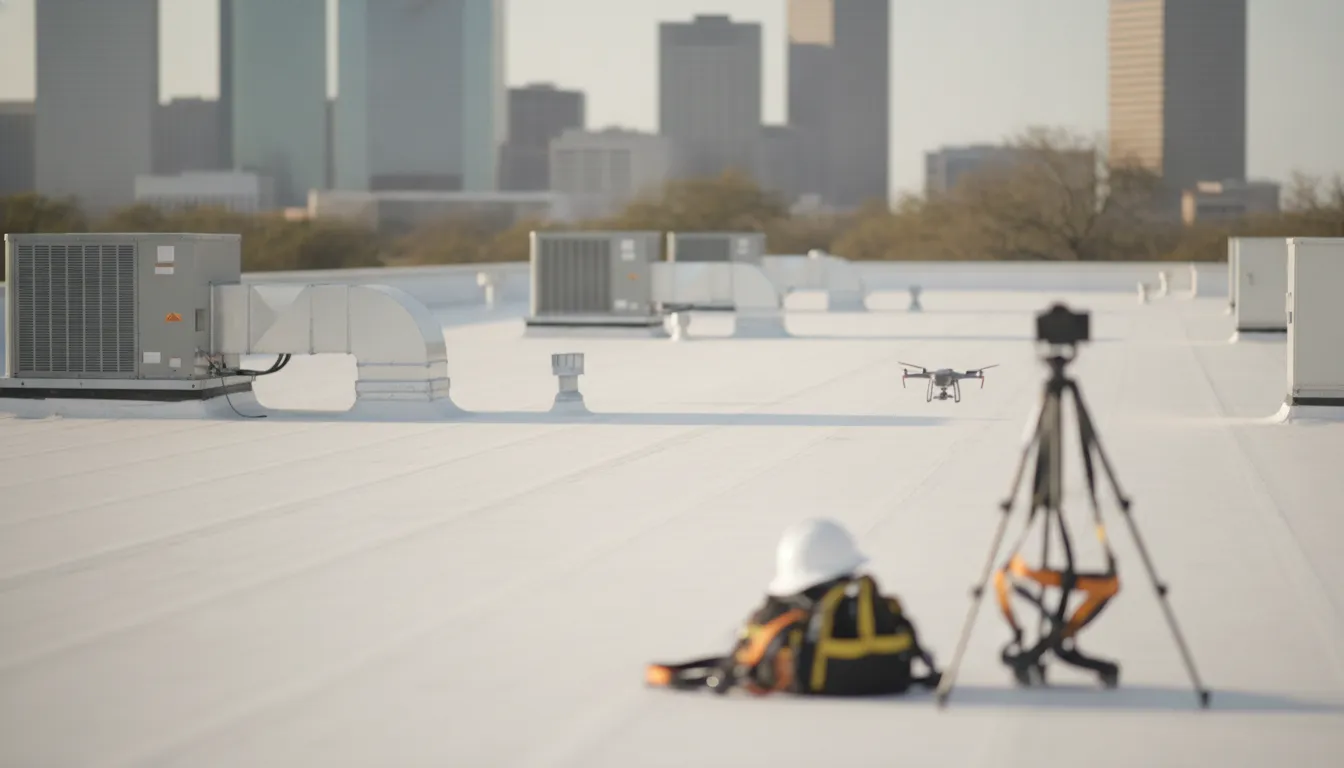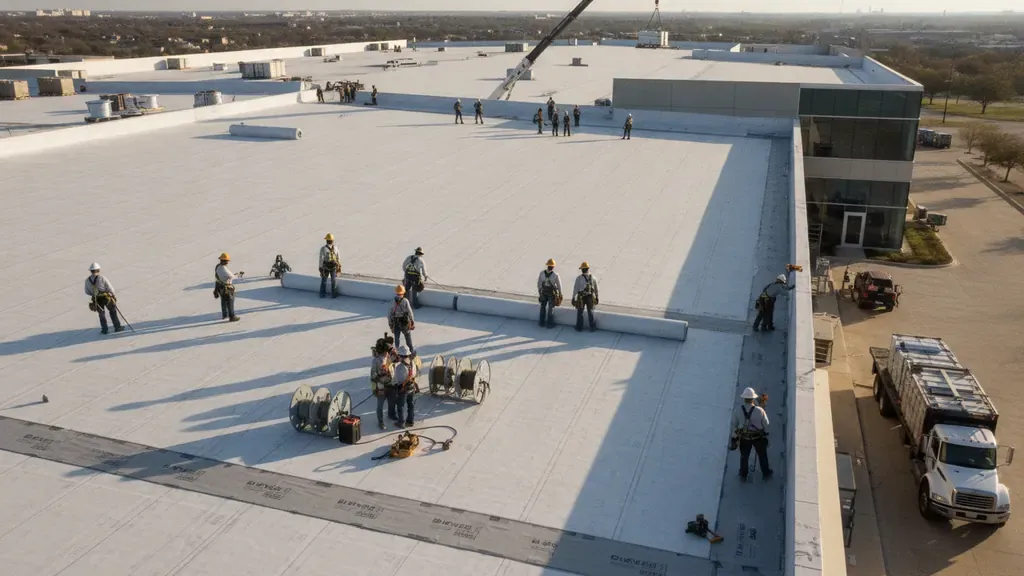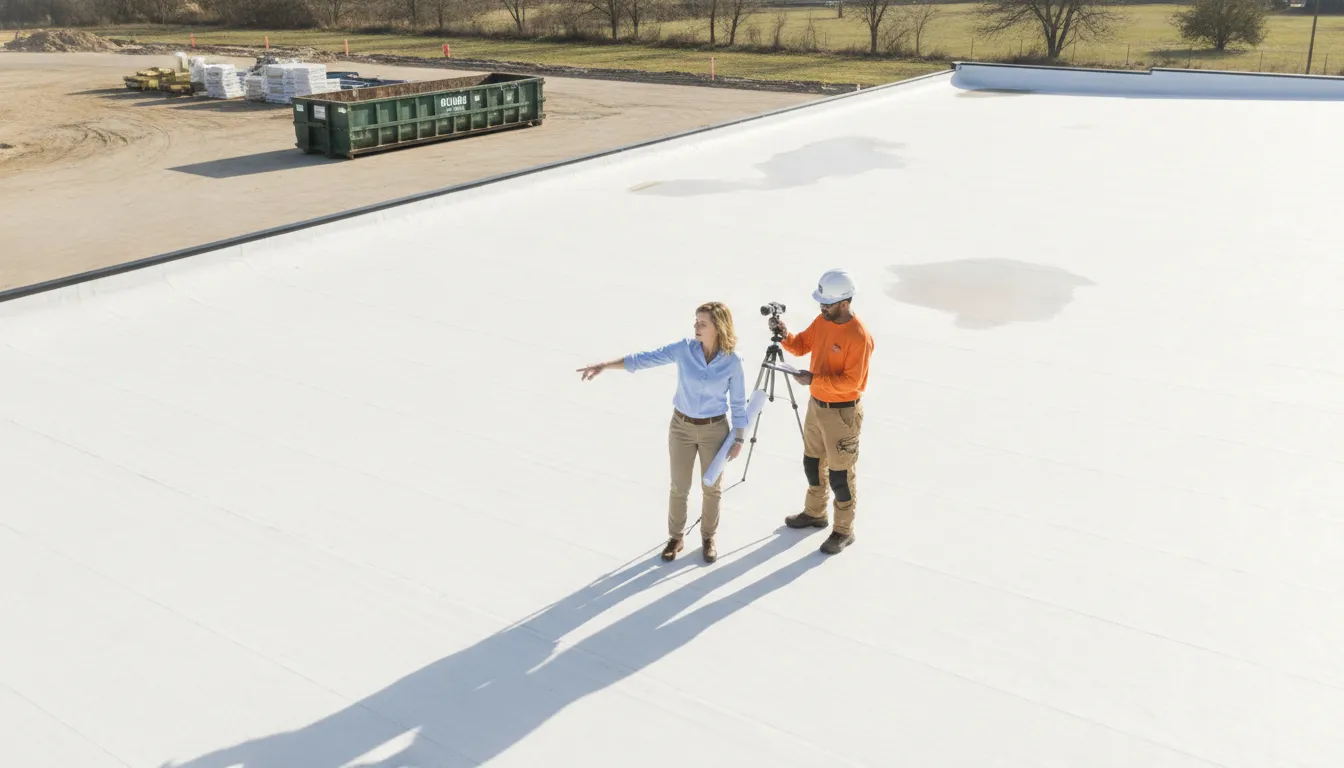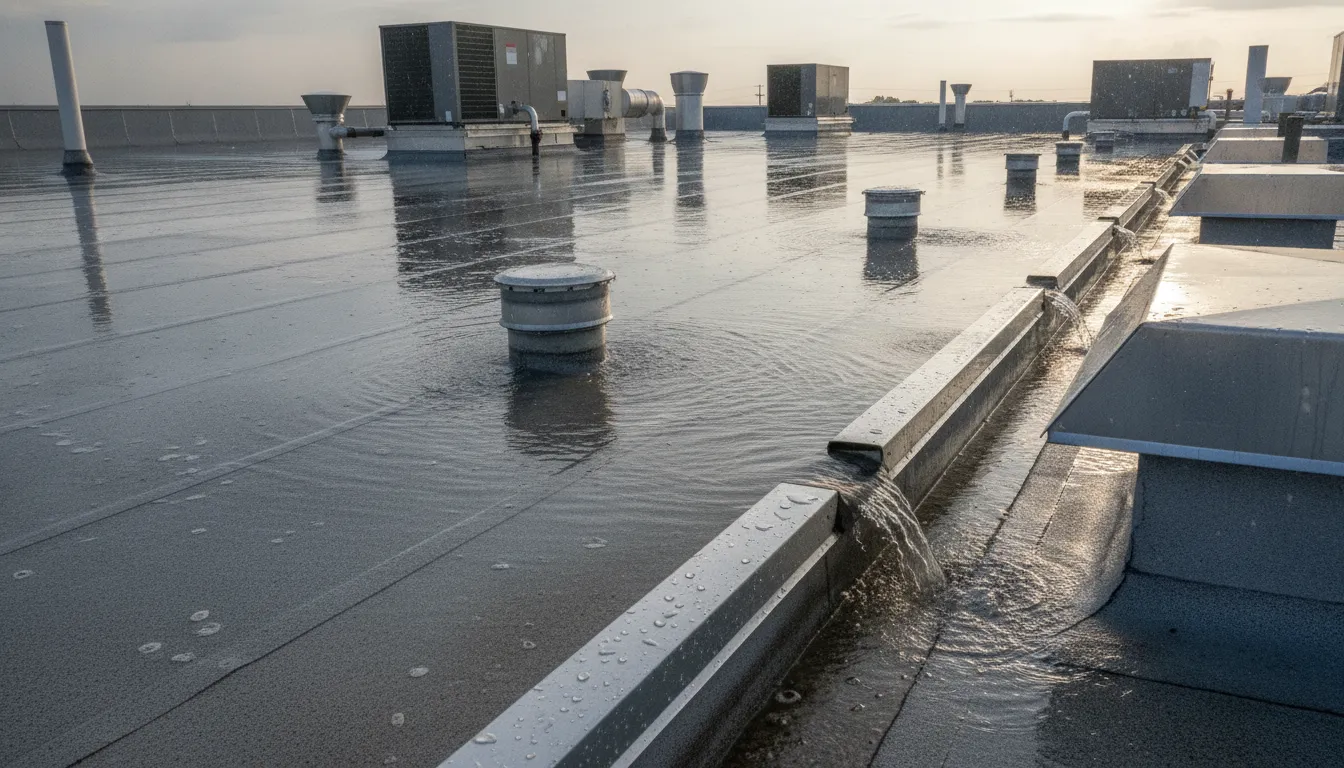
On a flat or low-slope roof, rainwater cannot simply run off in every direction. It needs a planned path to a drain, scupper, gutter, or another safe discharge point. In Houston, Austin, and surrounding Texas communities, keeping that path clear matters. A small drainage problem can turn routine weather into ponding, leaks, or damage to roofing materials.
Schedule a free roof inspection for flat roof drainage concerns.
Flat roof drainage collects rainwater and directs it away from the building through a system designed for that property. Regular inspections, debris removal, and drainage clearing can help identify blocked or slow-moving water before it contributes to membrane stress, leaks, or more extensive roof concerns.
The right approach depends on the building, roof system, and existing drainage components. First, it helps to understand how water moves across a low-slope roof and which parts guide it safely away from the structure.
What Is Flat Roof Drainage and How Does It Work?
A flat roof is not usually perfectly level. It is built with a low slope so rainwater can move toward planned collection points instead of remaining across the membrane. Flat roof drainage is the system that gathers that water and directs it away from the building through drains, scuppers, gutters, downspouts, or a combination of these components.
The basic path is straightforward. Rain lands on the roof surface, follows the available slope, and flows toward a drain or roof edge. A strainer or other protective fitting may help keep leaves and debris from entering the drainage line. From there, water moves through internal piping or over the edge through a scupper and into a downspout or other safe discharge area. Flashing and edge details help protect transitions where the roof membrane meets walls, parapets, or drainage openings.
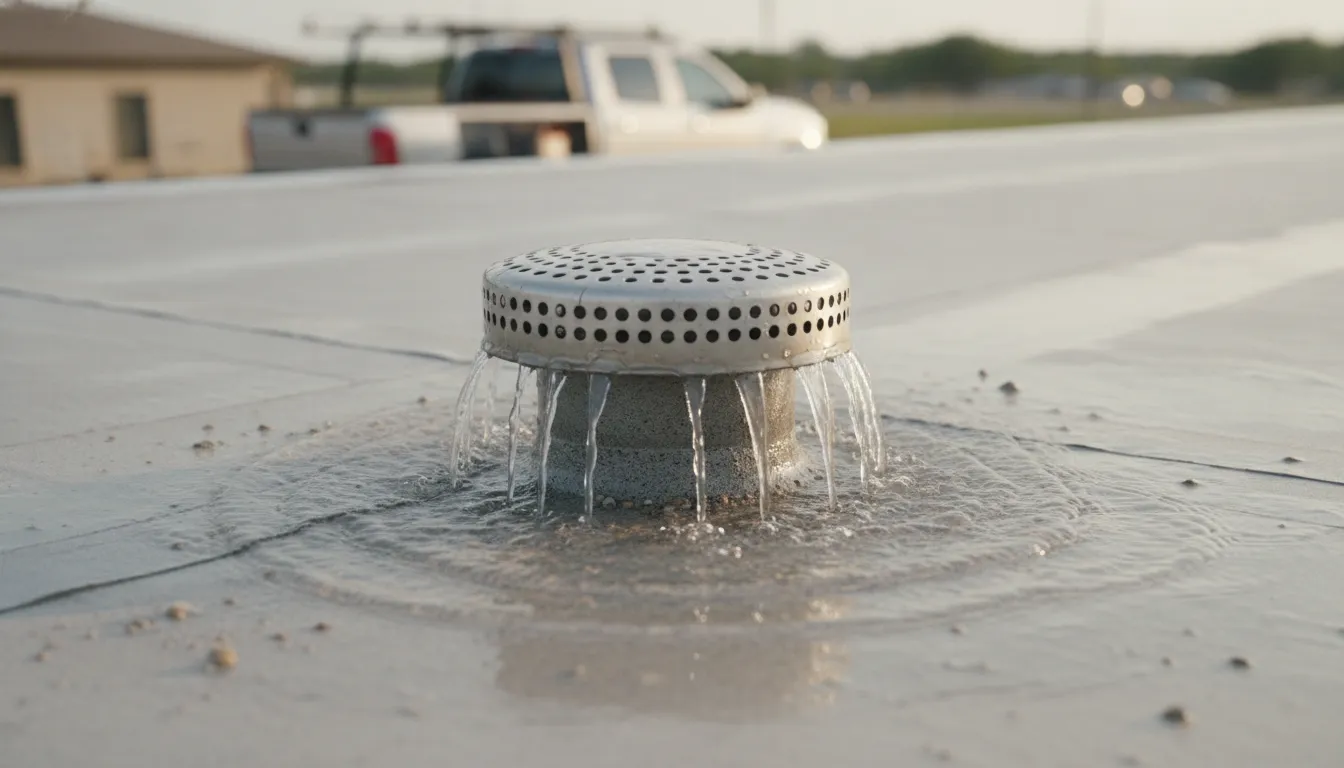
Key components depend on the building
There is no single drainage layout that fits every flat or low-slope roof. Internal drains are often placed within the roof area and connect to piping below the surface. Scuppers allow water to pass through a parapet or exterior wall. Gutters and downspouts may collect water at roof edges where the design allows. Overflow provisions can provide an additional path when the primary drainage route becomes obstructed. But the appropriate arrangement depends on the roof shape, surrounding walls, membrane system, and building design.
That is why drainage should be evaluated as part of the whole roof system. Elevation Roofing's inspections examine roof drains and gutters along with flashing, vents, fascia, soffits, and other roof details. Debris, damaged flashing, blocked strainers, or a slow discharge path can all change how water moves. A recurring wet area or leak deserves more than a surface-level patch because the visible damage may be downstream from the original drainage problem.
Residential and commercial considerations
On a home, drainage may involve a low-slope addition, porch, garage, or entire low-slope roof, with gutters and downspouts often playing an important role. Commercial properties may have larger roof areas, parapets, internal drains, and more complex maintenance needs. Property managers also need to consider access, tenant operations, and documented upkeep when drainage problems arise.
Whether the property is residential or commercial, a professional roof inspection can identify where water is collecting and whether the drainage path, membrane, or edge details need attention.
Which Flat Roof Drainage Options Fit Different Buildings?
There is no single drainage layout that works for every low-slope roof. Building size, roof shape, parapet walls, membrane details, discharge locations, and the surrounding site all affect how water should leave the roof. A residential addition may use edge drainage, while a commercial roof with parapets may depend on internal drains or scuppers. The best design is the one that creates a dependable path without introducing new leak risks.
| Option | How it works | Where it may fit | Planning considerations |
|---|---|---|---|
| Internal drains | Water flows toward roof drains and travels through pipes inside or below the building structure. | Commercial roofs and other buildings where perimeter discharge is limited or concealed drainage is preferred. | Drain locations, strainers, flashing, pipe routes, maintenance access, and overflow planning need to be coordinated with the roof design. |
| Scuppers | Openings through a parapet or wall allow water to discharge beyond the roof edge. | Low-slope buildings with parapet walls and a suitable exterior discharge area. | Wall and edge detailing must direct water away from the building and protect vulnerable surfaces below. |
| Gutters and downspouts | Gutters collect water at an edge and downspouts carry it toward a safe discharge point. | Roof edges where the slope, fascia, and site layout allow exterior collection. | Capacity, attachment points, debris, downspout outlets, and connections to existing drainage should be evaluated together. |
| Overflow provisions | A secondary path helps limit water buildup if a primary drain or outlet becomes obstructed. | Buildings where backup drainage is important because water could collect near walls, equipment, or roof penetrations. | Overflow placement and discharge direction should be planned as part of the complete system, not added as an afterthought. |
These options can also work together. For example, a roof may use internal drains as its primary system and separate overflow provisions for added protection. Existing roofs should be evaluated before changing the drainage layout because membrane condition, roof slope, flashing, and structural details all matter. Elevation Roofing can review drains and gutters as part of a professional roof inspection and recommend a practical next step for the building.
Why Does Flat Roof Drainage Matter in Texas Weather?
Texas weather can test every part of a low-slope roofing system. Heavy rain can send more water toward drains, scuppers, and roof edges than a restricted outlet can handle. Heat then accelerates drying and expansion, while wind can move leaves, branches, and other debris across the roof. Effective flat roof drainage gives that water a controlled path away from the membrane and the building.
Ponding Water Adds Ongoing Stress
A flat roof is not usually perfectly level. It is built with subtle slopes that guide water toward designated drainage points. As a general roofing example, some low-slope systems use approximately 1/4 to 1/2 inch of slope per foot. But that range is not a universal Texas code requirement or a design recommendation for every property. The correct approach depends on the roof assembly, layout, drainage design, and existing conditions.
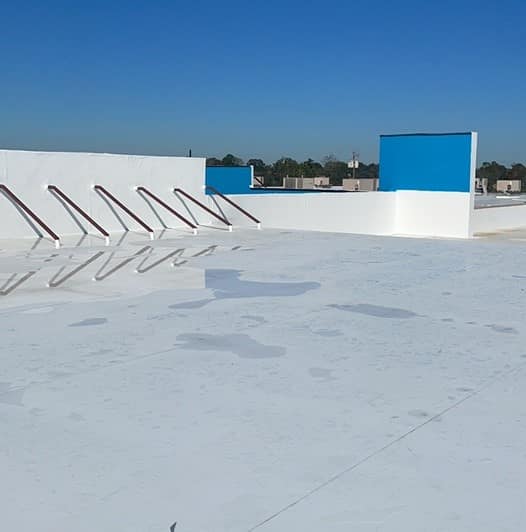
When water remains after a storm, the result is called ponding. A shallow puddle may seem harmless, but recurring ponding keeps the membrane wet and adds weight to the roof assembly. One gallon of water weighs about 8 pounds, so larger or repeated accumulations deserve attention. Ponding can also conceal damaged seams, deteriorated flashing, or blocked strainers until a leak appears.
Heat, Debris, and Storms Can Compound the Problem
Texas heat can make membrane movement and surface wear more noticeable over time. Water that lingers on the roof may contribute to stress at seams, penetrations, and flashing details as the roof expands and contracts. Storm debris creates another risk. Leaves and branches can cover drains, strainers, gutters, and scuppers, slowing discharge just when the system is handling the most water.
- Water stains or active leaks near ceilings, walls, or roof penetrations.
- Recurring puddles that remain after nearby roof areas have dried.
- Debris collecting around drains, scuppers, or parapet walls.
- Membrane blisters, open seams, cracked flashing, or soft roof areas.
These conditions can affect more than the roof surface. Moisture may damage insulation, interior finishes, stored materials, electrical components, or structural elements if it continues unchecked. Property owners in Houston, Austin, and surrounding communities can use a professional roof inspection. The inspection can evaluate drainage paths, membrane condition, gutters, flashing, and signs of water intrusion before a manageable issue becomes a broader repair problem.
What Are the Signs a Flat Roof Drainage System Needs Attention?
Drainage problems often become visible before they turn into a larger roof repair. A property owner or manager may notice water lingering after a storm, a new stain on an interior ceiling, or debris collecting around a drain. These observations do not identify the exact cause, but they are useful reasons to arrange a closer evaluation.

Look for recurring water and blocked drainage points
Occasional dampness after heavy rain can have several causes, while recurring ponding is a more important warning sign. Water that remains in the same area may point to a blocked outlet, a clogged strainer, debris, or a low area that is not draining as intended. Slow drainage around roof drains, scuppers, gutters, or downspouts also deserves attention. Never assume that a clear-looking opening means the full drainage path is clear.
- Water repeatedly collects in the same section of the roof.
- Drain strainers, scuppers, or gutters appear clogged with leaves or other debris.
- Water stains, damp insulation, or musty odors appear inside the building.
- Membrane surfaces show splits, punctures, bubbling, or other visible damage.
- Water reaches walls, parapets, flashing, or roof edges instead of moving toward its intended outlet.
Connect visible signs to the roof system
Staining and leaks can indicate that water has moved beneath the membrane or through a vulnerable detail, but the source may not be directly above the interior mark. Membrane damage near a drain or parapet can also make a drainage concern more urgent. Commercial property managers should document where water collects, when it appears, and whether the issue follows particular storms. Photos taken from a safe location can help a roofing professional compare conditions over time.
Owners should limit observations to areas that can be reached safely from the ground or an approved access route. Do not walk on a wet roof, climb onto a roof without suitable equipment, remove a drain cover, or probe the membrane. Elevation Roofing's inspection process examines roof drains and gutters along with flashing and other roof components. A professional roof inspection can help distinguish a maintenance issue from a leak or membrane repair need.
How Can Property Owners Maintain Flat Roof Drainage?
A consistent maintenance routine helps property owners spot drainage problems before they become active leaks. The safest approach is not to walk onto a flat roof without the right training and fall-protection procedures. Instead, use ground-level observations and qualified professionals for roof access, drain clearing, and any work near edges, penetrations, or fragile membrane areas.
- Review the roof from a safe location. After rain, look from the ground, a doorway, or another approved vantage point for standing water that remains well after surrounding areas have dried. Also note overflowing gutters, water marks on exterior walls, damaged downspouts, or debris collecting near visible drainage points. These observations can help a roofing professional understand where water may be slowing or backing up.
- Remove accessible debris only when it is safe. Leaves, branches, and windblown material can obstruct drainage, but owners should not climb onto an unsafe roof or reach across a parapet to clear it. Do not disturb membrane seams, flashing, drain covers, or other roof components. If debris cannot be reached safely from the ground, arrange professional service rather than turning a maintenance task into a fall or roof-damage risk.
- Keep drains and gutters on a documented schedule. Preventive maintenance can include annual inspections and cleaning, gutter cleaning, debris removal, and drainage clearing. Elevation Roofing's inspection process examines roof drains and gutters along with flashing and other roof components. A professional roof maintenance visit can address the drainage system while also checking for conditions that may not be visible from below.
- Record changes over time. Keep dated notes and photos of recurring ponding, staining, slow drainage, gutter overflow, or changes after maintenance. For commercial properties, share the record with the facility or property-management team. A simple history can show whether a problem is isolated, seasonal, or becoming more frequent, and it gives the roofer useful context before an inspection.
- Schedule an inspection after storms or recurring ponding. Heavy weather can move debris, damage drainage components, or expose existing weaknesses. Recurring standing water deserves attention even when no interior leak is visible. Schedule a professional assessment after a significant storm or when ponding continues, especially before making repairs based only on a visual assumption.
Maintenance should preserve safe water flow, not simply remove what is easiest to see. A qualified roofer can determine whether the issue involves debris, gutters, drains, membrane damage, or another condition requiring repair.
When Should You Schedule a Flat Roof Inspection or Repair?
Observation is useful, but it has limits. Once water is reaching the interior, collecting repeatedly on the roof, or failing to move through the intended drainage path, it is time to involve a roofing professional. A qualified inspection can distinguish a maintenance issue, such as debris in a drain or gutter, from damage that needs targeted repair.
Schedule a professional roof inspection when you notice recurring ponding, slow drainage, interior staining, active leaks, or visible damage around roof edges and drainage points. An inspection is also appropriate after a significant storm or when a property has an aging roof and its maintenance history is unclear. Elevation Roofing's inspection process examines roof drains and gutters along with other roof components, including flashing, vents, fascia, and soffits.
Move from observation to repair when water is causing damage
A clogged strainer or a small amount of debris may call for drainage clearing or routine maintenance. A leak, storm-related damage, damaged membrane, or recurring water intrusion requires a more specific evaluation. The goal is not to assume that every symptom has the same cause. Water may be entering through a roof surface, flashing, edge detail, gutter, or drainage component, so the repair should follow the inspection findings.
Elevation Roofing's documented repair and maintenance scope includes leak repairs, storm damage, gutter work, and drainage clearing. If the issue has progressed beyond basic upkeep, review the company's roof repair services before choosing a response.
Residential and commercial owners should watch different patterns
Homeowners may first notice a ceiling stain, a musty area, water near an exterior wall, or gutters that overflow during rain. Commercial owners and property managers should also track repeated drainage complaints, water near parapets or roof edges, disruption to occupied areas, and maintenance findings across multiple roof sections. Keeping a simple record of where and when symptoms appear can help the inspector connect the visible problem to the roof system.
- Schedule an inspection for recurring ponding, slow drainage, stains, leaks, or storm damage.
- Request maintenance when debris, clogged drains, or gutter buildup is the likely concern.
- Discuss repair when water intrusion or visible roof damage continues after basic clearing.
- For a multi-unit or commercial property, share prior maintenance records and the locations of repeated issues.
For properties in Houston, Austin, and surrounding Texas communities, a professional evaluation provides a clearer next step. It is better than waiting for the next rainfall to reveal whether the drainage problem has worsened.
Frequently Asked Questions
What are the best drainage options for a flat roof?
The right option depends on the roof layout, slope, surrounding walls, and where water can safely discharge. Common approaches include internal drains, scuppers, gutters, and downspouts. A professional assessment can determine whether the existing system needs cleaning, repair, replacement, or a different drainage approach.
How do you drain a flat roof?
Water is directed across the low-slope surface toward a drain, scupper, gutter, or downspout, then carried away from the building. Keeping strainers, outlets, gutters, and discharge paths clear helps the system work as intended. Do not walk on an unsafe or wet roof to investigate a drainage problem.
What are three methods of draining flat roofs?
Three common methods are internal drains, scuppers through parapet walls, and gutters connected to downspouts. Some roofs use more than one method, and the best combination varies by building design. Drainage components should also be checked for debris, damaged flashing, and signs of slow flow.
How often should flat roof drainage be inspected?
Annual inspections and cleaning are part of a practical maintenance plan, with additional attention after severe weather or when water begins ponding. Owners should also watch for clogged outlets, staining, leaks, membrane damage, or water collecting near walls. Recurring signs justify a professional roof inspection.
Ready to Schedule a Flat Roof Inspection?
A professional review can help identify drainage concerns before they become more disruptive repair issues. Elevation Roofing & Restoration can assess your flat roof and help clarify a practical next step for your property.
Schedule a free roof inspection for your flat roof drainage concerns.