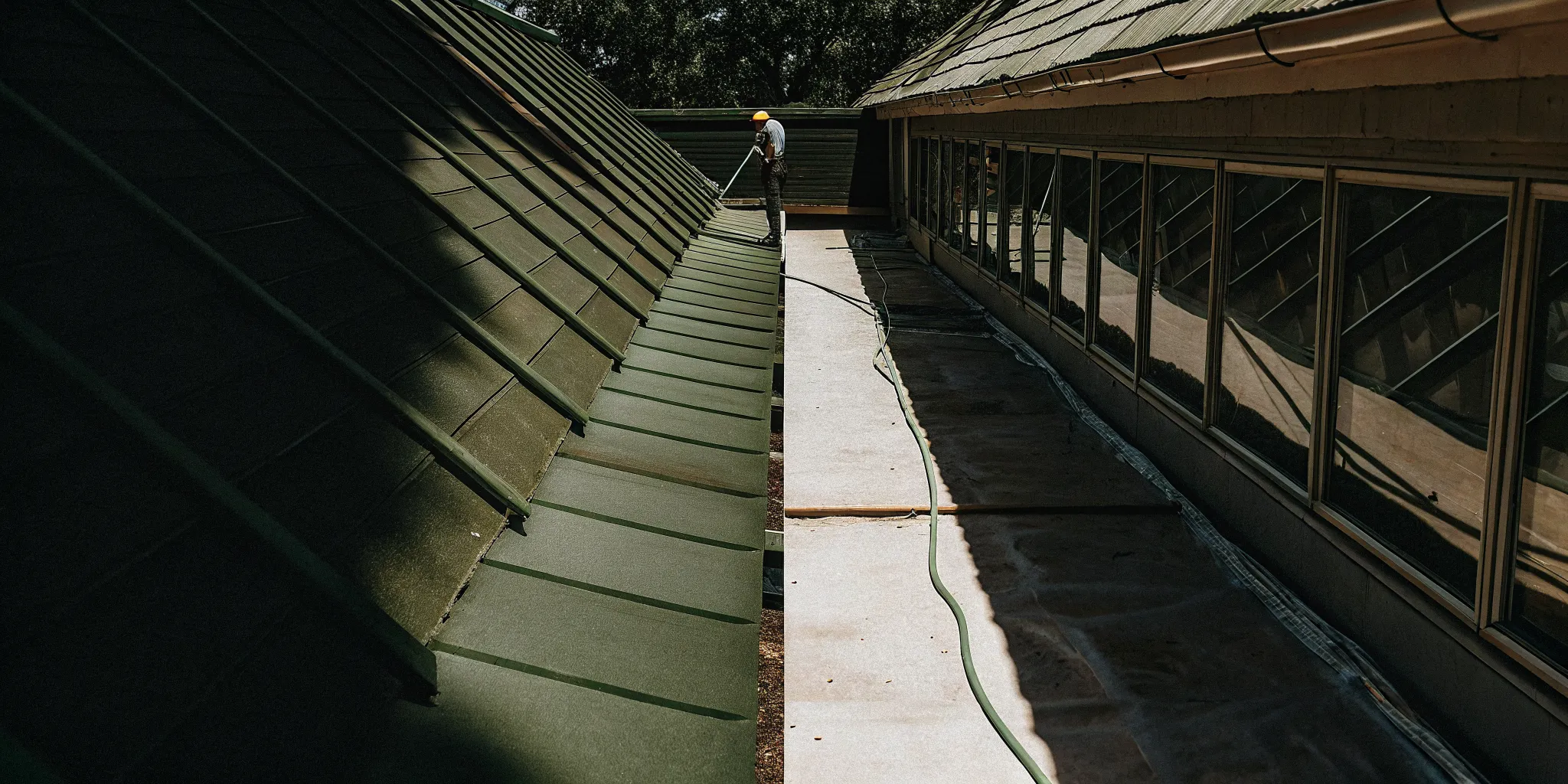
Commercial property owners in Texas face high costs when a large roof starts to fail in the heat. You can often restore a roof for four dollars per square foot instead of twenty. Choosing the right fix depends on your building.
Schedule Your Free Commercial Roof Inspection Today , (832) 753-5775
Deciding on commercial roof coating vs replacement depends on the age and health of your current roof. A roof coating is a liquid layer spread over a sound roof to stop leaks and reflect heat for about $2 to $4 per square foot. In contrast, a full replacement involves tearing off old layers and putting in a new system for $10 to $20 or more per square foot. While replacement is needed for roofs with wet insulation, coatings extend the life of a roof that is still solid. According to the Berkeley Lab Heat Island Group, these coatings also lower energy bills by reducing AC needs. This makes fixing the roof a smart choice for Texas owners who want to avoid the high price of a new roof.
What Is Commercial Roof Coating?
A commercial roof coating is a liquid-applied system that dries to form a seamless, rubber-like membrane. Think of it as a thick paint layer that shields your roof from the elements. Unlike traditional roof layers, this membrane has no seams, which helps block water and leaks. Building owners often use these systems to fix an old roof without the high cost of a full teardown.
Common Types of Roof Coatings
Most commercial coatings fall into three main groups, each with distinct advantages:
- Acrylic coatings are water-based and work well in dry areas because they reflect UV rays. They are cost-effective and easy to apply.
- Silicone coatings excel on roofs that hold water, as they resist ponding and do not break down under standing moisture. They offer excellent long-term durability.
- Polyurethane coatings are extremely tough and resist foot traffic, impact, and chemical exposure, making them ideal for high-traffic roof areas.
You can learn more about these commercial roof restoration methods to see which fits your building best.
Each type serves a specific goal for your roof. Silicone is often chosen for its long life, while acrylic is popular for its low cost and ease of use. If your roof has many units or pipes, these liquid systems are ideal because they seal around every edge. They create a tight bond that protects the structure for many years.
How Coatings Protect Your Building
The main job of a coating is to shield the roof surface from sun damage and water. Solar-reflective surfaces, often called cool roof coatings, maintain lower roof temperatures by bouncing heat away. This layer blocks UV rays that can cause old roof materials to crack or peel over time. It also adds a layer of water protection to stop leaks before they start.
Beyond weather proofing, these systems help extend the life of your roof by 10 to 20 years. By keeping the roof surface cool, the system reduces the stress of heat and cold on the building. This can lower the roof temperature and make the whole roof system last much longer. For many owners, this is the best way to get more value out of an existing roof.
Key Benefits of Roof Restoration
Cost is a huge factor when choosing between a coating and a new roof. Most roof coatings cost between $2 to $4 per square foot. This is much cheaper than a full replacement, which can cost five times as much. You also save on labor and waste fees since you do not have to tear off the old roof.
Energy savings are another major perk for commercial properties. These coatings reflect sun rays, which keeps the inside of the building cooler during the Texas heat. This reduces the load on your HVAC system and can lower your monthly energy bills. It is a smart way to protect your building while also saving money on upkeep.
When Should You Choose Commercial Roof Replacement?
A roof coating can help your building, but it is not a fix for every problem. You must choose commercial roof replacement services when your current system has deep issues. A new roof is the best choice if your structure is weak or if the system has reached the end of its useful life.
Signs you need a full replacement
You should look for these signs of severe damage that indicate replacement may be necessary:
- Widespread damage exceeding 25 percent of your roof surface. When more than a quarter of the roof needs repair, a full replacement is more cost-effective than patching.
- Recurring leaks that return after temporary fixes, usually meaning the roof deck or insulation is wet and compromised.
- Wet insulation trapped under the surface. If a coating is applied over wet insulation, the trapped moisture will rot the deck and cause more harm over time.
- Structural deck damage such as soft spots, rot, or sagging areas that indicate the roof structure is no longer sound.
- Advanced age. Most commercial roofing systems have a 15-to-25-year lifespan. Beyond that, replacement is typically the only reliable option.
Structural health is the most important factor to check. Standard federal energy guides note that replacement involves removing the old system entirely before a new one goes on. This process allows pros to find and fix soft spots in the deck. Regular roof inspections help you catch these issues early. While coatings work best on sound roofs, a weak deck needs a fresh start to stay safe.
Costs and the installation process
A new roof costs more than a coating, but it gives you a clean slate. Complete replacement costs typically range from $10 to $20 per square foot. This price covers the full tear-off, deck repairs, and the new material. While a coating is a less disruptive choice, it cannot fix a roof that has failed. Spending more now can save you from high repair costs later.
Long term benefits of a new roof
A fresh roof comes with a new warranty and a long life. Most new commercial systems last for 20 years or more with basic care. You also get the chance to use new, energy-efficient materials that were not available when your old roof was built. This switch can help lower your monthly bills and keep your building at a steady temperature all year.
Commercial Roof Coating vs Replacement: Cost Comparison
Choosing the right fix for a business roof is a big step. Most owners look at two main paths: a new roof or a liquid coating. Price is often the main factor in this choice. A new roof costs a lot because it takes more time and labor. On the other hand, a coating is a fast and cheap way to fix leaks. Many owners find that they can save 50 to 70 percent by using commercial roof restoration methods instead of a full tear-off. This choice helps you keep your cash while getting the shield you need.
| Feature | Roof Coating | Full Replacement |
|---|---|---|
| Cost per Square Foot | $2 to $4 | $10 to $20+ |
| Added Life | 10 to 20 years | 15 to 30 years |
| Stress Level | Low | High |
| Power Savings | High | Varies |
| Tax Setup | Upkeep Cost | Capital Cost |
Low start costs and labor
The first cost you see is the most important for your budget. A new roof needs a full crew to tear off old parts. You also have to pay to move all that old waste to a dump. A commercial roof coating costs about $2 to $4 per square foot. A full new roof costs between $10 and $20 per square foot. This price can go even higher for complex jobs. Because a coating goes on top of the old roof, it stays out of your way. Your staff can work as usual while our team finishes the task. You do not have to close your doors or lose a day of work.
Small stress and fast results
The stuff used for a coating is easy to handle. Since we do not rip up the old roof, the job is much cleaner. There is no loud noise from tearing off big sheets of metal or wood. This means your guests and workers will not feel stressed by the project. Most coating jobs take much less time than a full swap. This speed saves you money on both labor and the cost of having people on site. It is a great path for a business that needs to stay open every day.
Long term energy and tax wins
A coating does more than just shield the building. It also acts as a cool roof. These shiny surfaces bounce sun rays back into the sky. This keeps the roof and the rooms below it much cooler. As seen in a report from the Department of Energy, these roofs can lower bills by cutting the need for cooling. In the heat of Houston and Austin, these savings add up fast. You will see lower power bills as soon as the job is done.
There are also tax wins to keep in mind. A new roof is a big cost that you must spread out over many years. A coating is often seen as upkeep. This means you might be able to count the full cost in the same year you pay for it. This can lead to a lower tax bill right away. A good fix can add 10 to 20 years to the life of your roof. This helps you avoid the high cost of a new roof for a long time. It is a smart move for any owner who wants to get the most for their money.
What Factors Determine Whether to Coat or Replace Your Roof?
Deciding between a new roof and a protective layer depends on the state of your building. A full tear-off is a big project that costs more and takes longer. In contrast, commercial roof restoration methods can save time and money if the timing is right. You must look at the age of the deck and how much water it holds before you choose.
Check for structural strength
The most important factor is the strength of the roof deck. Roof coatings work best when the deck is strong and has no large areas of rot. If the base of the roof has failed, a coating will not fix the issue. You should only use a coating when the system is not yet at the end of its useful life as noted by the U.S. Department of Energy. A weak deck needs a full replacement to keep the building safe.
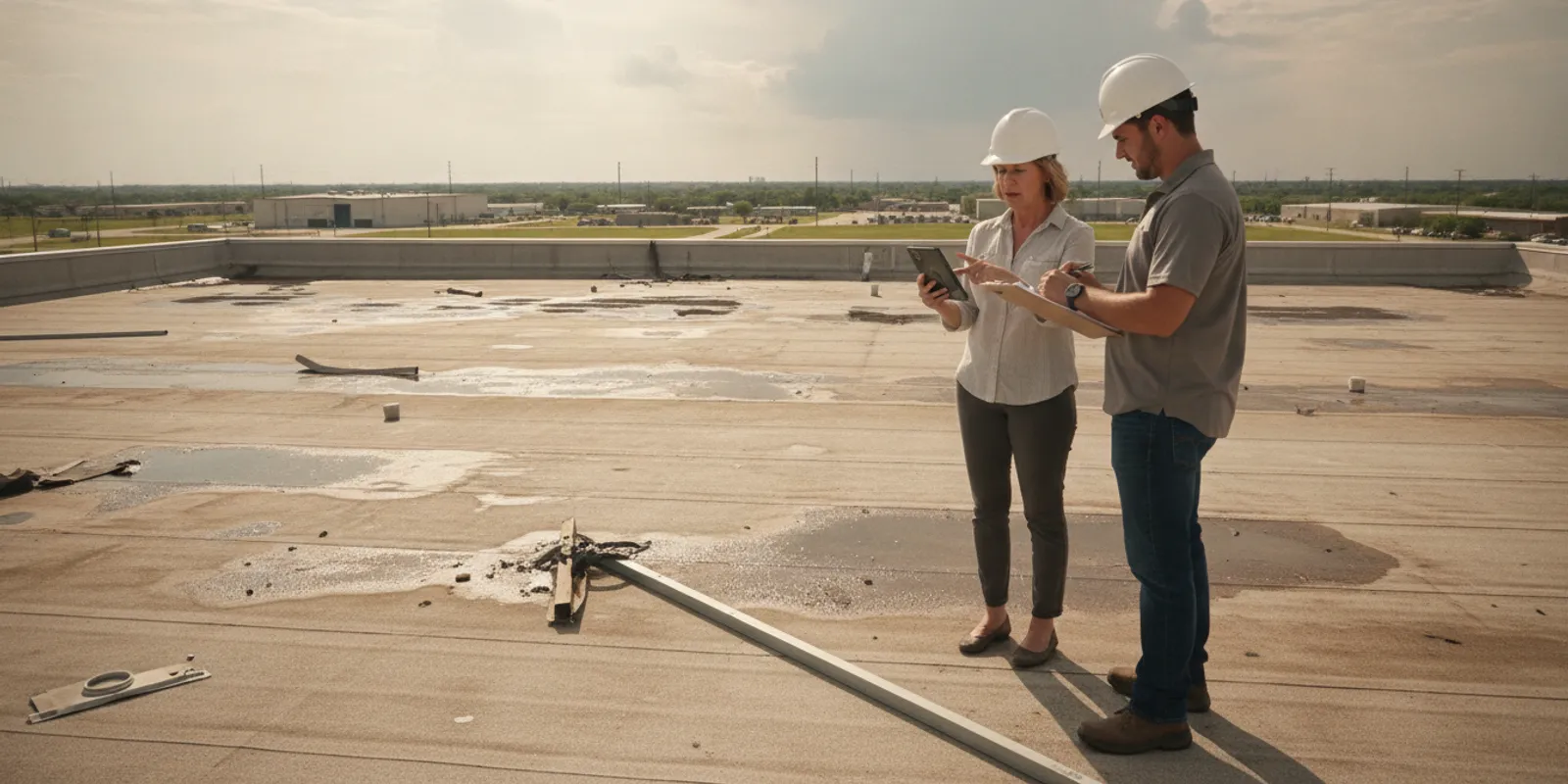
You must also check for wet insulation under the surface. Trapped water will cause a coating to fail soon after it is put down. Most pros use heat scans to find these wet spots. If more than 25 percent of the roof is wet, a total replacement is usually the better path. This step prevents small leaks from turning into big structural losses later on.
Look at drainage and leak history
Good drainage is vital for a successful roof coating. If your roof has water that stays for more than 48 hours, it can damage the new layer. Poor work on a roof that does not drain well leads to blistering and peeling. You should fix any slope issues before you decide to coat. A roof that drains well is a prime choice for restoration.
Review your leak logs from the last few years. One or two small leaks are easy to patch before the coating goes on. But many leaks across the whole surface often point to a deep problem. If the seams are split or the joints are loose, a coating might only be a short fix. A full replacement gives you a fresh start with new materials that stop all leaks.
Think about your budget and goals
Your plans for the building should guide your choice. If you want to keep the property for many years, a replacement offers the longest life. But if you want to cut costs now, a coating is a smart move. Restoring a roof can also lower the heat of the roof surface to help it last longer as noted by Lawrence Berkeley National Laboratory. This choice helps your air system run less and saves on bills.
Energy goals are also key for many Texas owners. Cool roof coatings reflect the sun to keep the building at a lower temperature. This can help you meet green building rules without the cost of a new roof. Also, consider the noise and mess of a project. A coating is much quieter and less messy than tearing off an old roof. This keeps your business running smoothly while the work is done.
How Is a Commercial Roof Coating Applied?
Applying a commercial roof coating is a precise task. It turns an old, sound roof into a protected surface that blocks UV light and water. Unlike a full commercial roof replacement services project, this method adds a thick layer over your existing system. This liquid-applied membrane acts like a thick paint to seal the roof from the elements.
Initial inspection and surface prep
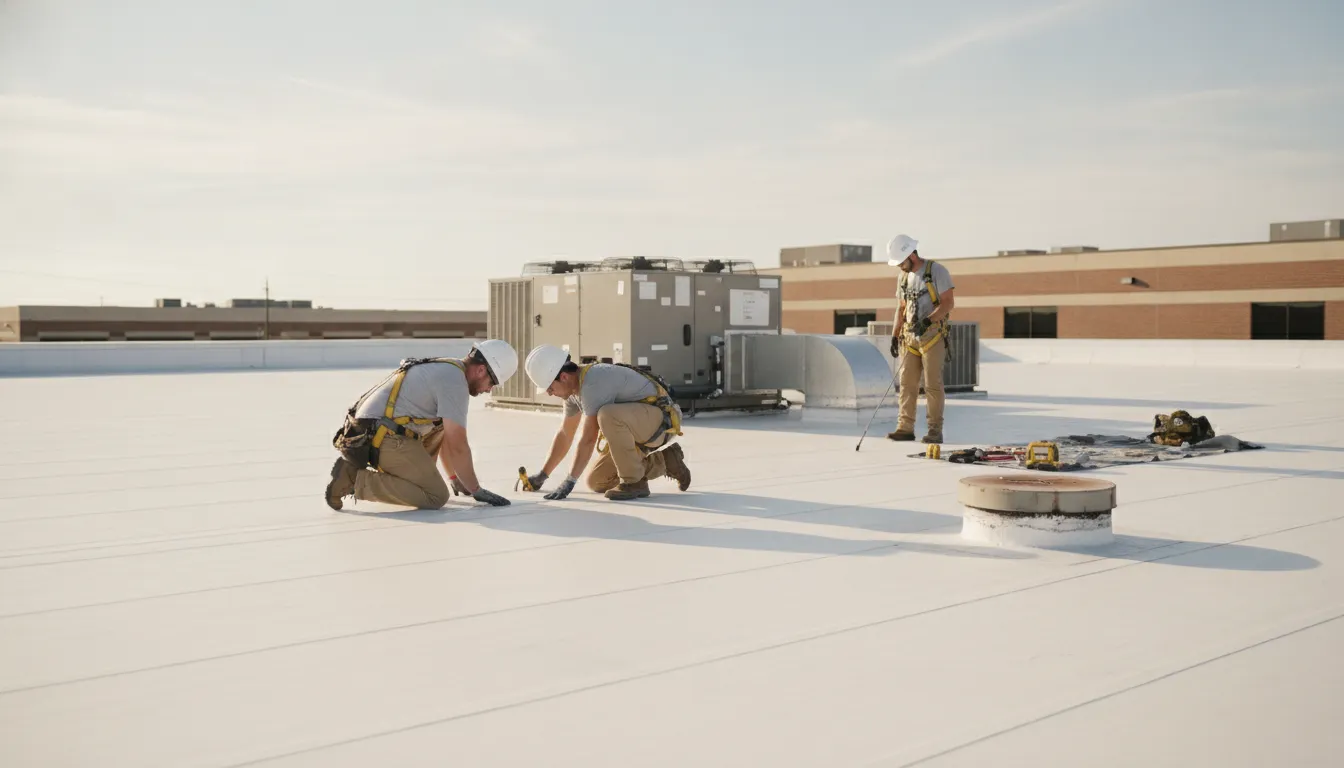
The first step is a professional inspection. A team checks for soft spots, leaks, and structural health. A roof must be sound before any work starts. Once the roof passes, workers clean the surface. They use power washers to remove dirt, grease, and loose debris. This step is vital because a clean surface helps the coating stick well.
Proper prep prevents many common problems later on. If the roof is not clean, the coating might peel or fail. Specialists also look for ponding water areas during this phase. Handling these issues early ensures the new membrane performs its best for years to come.
Repairs and primer
After cleaning, the team fixes any damage. They patch small holes and seal open seams. They also check flashings around vents and curbs. Sealing these spots is a key part of commercial roof restoration methods. It builds a solid base for the next layers.
Next, workers apply a primer if the roof type needs it. The primer creates a strong bond between the old roof and the new coating. It acts as a bridge to hold the materials together. Skipping this step can lead to air bubbles or poor stick, so pros never rush it.
Coating application and final check
Pros apply the coating using sprayers or rollers. They ensure the layer is thick enough to meet the rules of the brand. Proper application is critical to avoid issues like blistering or peeling. They often apply two layers to get the right thickness for long-term protection.
- Detailed check: A team inspects the roof for any soft areas or wet insulation.
- Deep cleaning: Workers use high-pressure water to remove all dirt and loose bits.
- Seam sealing: The crew patches holes and seals every seam and joint by hand.
- Primer coat: A base layer goes down to help the main coating bond to the surface.
- Main coating: Workers spray or roll the thick liquid membrane across the whole roof.
- Curing: The product dries to form a seamless, waterproof barrier over the building.
- Final pass: A manager checks the entire job to ensure the thickness is correct.
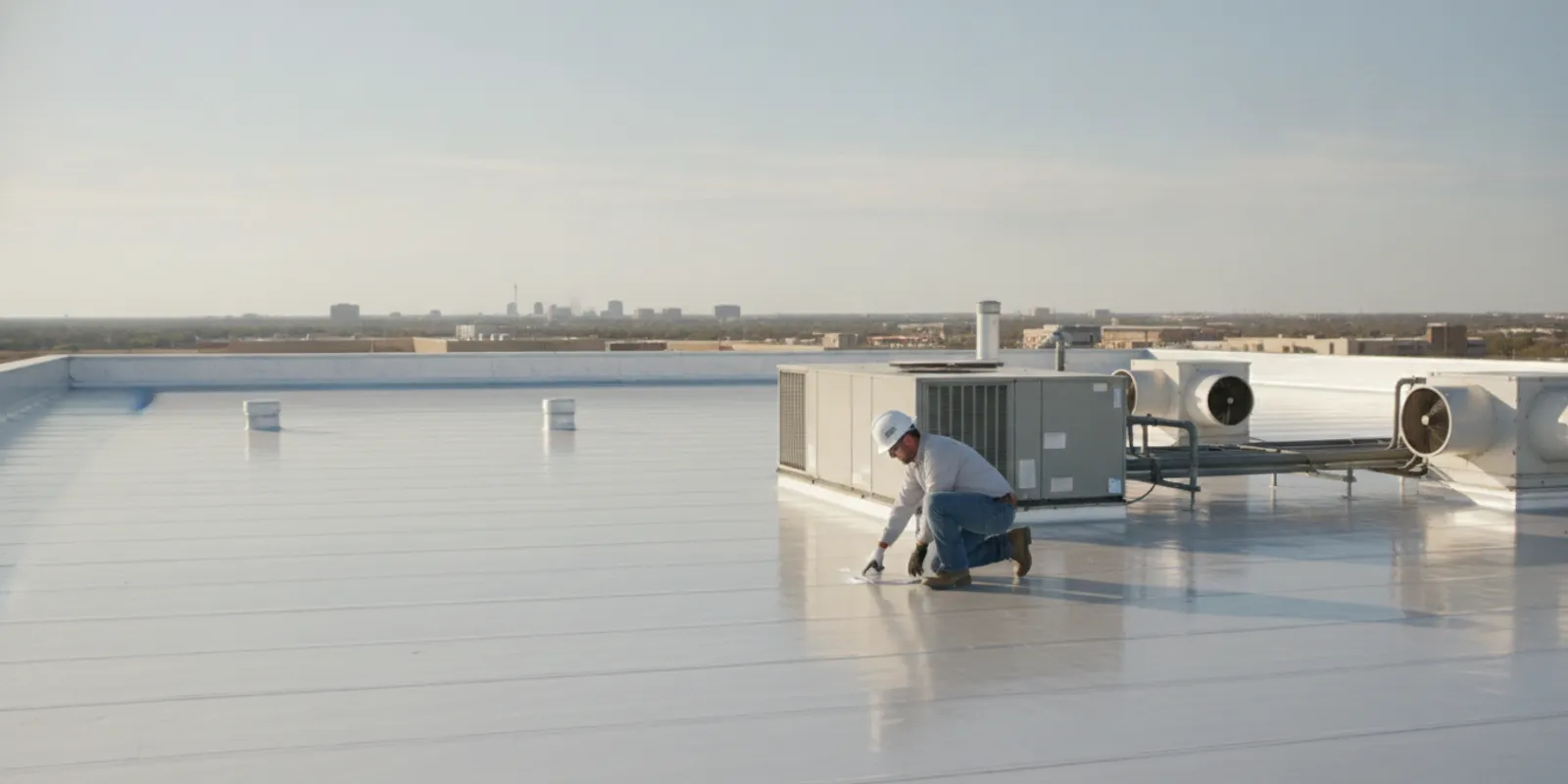
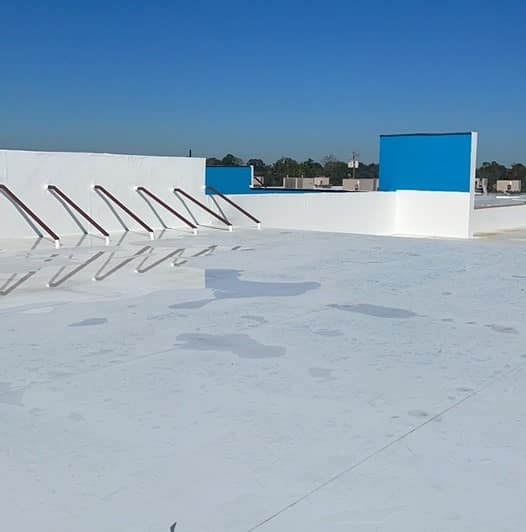
Once the coating dries, it forms a seamless skin. This layer reflects sun rays and sheds water easily. A final quality check confirms there are no gaps or thin spots. This careful process gives your building a fresh start without the mess of a full tear-off.
Energy Efficiency and Long-Term Value of Roof Coatings
Cool roof coatings offer a smart way for Texas building owners to cut costs. These coatings use solar-reflective surfaces to keep roof levels cooler than dark materials. By bouncing sunlight away, they lower the heat that enters your building. This change helps your cooling system work less during hot summer months in Houston or Austin.
Lower cooling costs
One of the biggest wins for a property owner is lower energy bills. Adding a cool roof coating can help save money by cutting the need for air conditioning. Some buildings see cooling cost drops of 20% to 35% after a professional application. This high level of solar reflectivity makes a big impact on your monthly overhead.
Regular commercial roofing maintenance often includes checking these coatings. A well-kept roof keeps its reflective power for years. This steady cooling effect helps offset the initial cost of the coating quickly. Most owners see a return on their spend through these energy savings alone.
Extended roof life
Heat does more than raise your bills; it also wears down your roof membrane. High heat causes materials to expand and contract. This stress leads to cracks and leaks over time. Roof coatings help by lowering the operating temperature of the surface. This change can help extend the service life of your existing commercial roof.
By adding 10 to 15 years to your roof's life, you push back the need for a full reroof. This long-term value makes coatings a top choice for aging but sound roofs. It is a cost-effective path to protect your asset without the high price of a total tear-off.
Environmental impact
Choosing a coating over a replacement also helps the planet. A full roof tear-off sends tons of waste to local landfills. Coatings go right over your old roof, so there is no waste to haul away. This makes the project much cleaner and faster for your business.
Cool roofs also fight the urban heat island effect. When many buildings in a city use reflective roofs, the local air temperature stays lower. This benefit helps the whole community stay cooler and reduces total energy use across the city. It is a win for both your budget and your neighbors.
Choosing the Right Path for Your Texas Commercial Property
The weather in Texas puts a lot of stress on commercial buildings. In Houston, the high humidity and heavy storms can cause water damage quickly. In Austin, the intense summer heat makes roof surfaces expand and contract. This can lead to cracks and leaks over time. To handle these issues, local pros often suggest using cool roof coatings that have solar-reflective surfaces. These surfaces help keep the roof much cooler on sunny days.
Houston Humidity and Austin Heat
Local experts know how to read these Texas weather patterns. They look for signs of wear that a typical owner might miss. For example, they check how well your roof sheds water after a Gulf storm. They also check how it handles the direct sun of Central Texas. This local knowledge helps them decide if a coating will work or if you need to start fresh. Roofing pros who understand these patterns give the best advice for your property.
Comparing Your Options
When you think about a commercial roof replacement, cost is a big factor. Replacing a full roof often costs between $10 and $20 or more per square foot. This is a large expense for any business. It also takes a lot of time and can get in the way of your daily work. Choosing the right path means weighing your budget with the long-term health of your building.
On the other hand, a roof coating is a much cheaper choice for many owners. These coatings usually cost between $2 and $4 per square foot. Because you do not have to tear off the old roof, it is a less disruptive way to fix your building. You can keep your business open while the work is being done. This saves you both time and money in the long run.
Start with an Expert Review
To pick the right path, you must look at the age and state of your roof. If the roof structure is strong, a coating may add many years of life. But if there is deep damage or many leaks, a full replacement is safer. You should also think about your energy goals. A reflective coating can help lower your cooling bills by keeping heat out of the building. This is helpful during the long Texas summer.
Before you make a final plan, you should get a professional roof inspection. An expert can tell you if your roof is a good fit for a coating. They will check for trapped moisture and hidden damage. This step ensures that you spend your budget on the fix that makes the most sense. Making the right choice now will help protect your Texas property for years to come. Local expertise matters when choosing between coating and replacement.
Frequently Asked Questions
What is the cost difference between commercial roof coating and replacement?
According to Elevation Roofing, coatings usually cost between $2 and $4 per square foot. In contrast, a full roof replacement often costs from $10 to $20 per square foot. Choosing a coating can save a building owner a large amount of money. This option also avoids high labor costs and dump fees from a full tear-off. It is a smart way to manage your budget while keeping your building safe from the Texas heat.
What are the disadvantages of using roof coatings?
While roof coatings offer many benefits, they do have some risks if not applied correctly. Potential issues include blistering, peeling, or premature wear. According to Elevation Roofing, improper installation can also lead to ponding water, which damages the coating over time. Coatings cannot fix major structural damage. If your roof has large leaks or weak spots, a coating might only hide the problem instead of fixing it for good.
What is the 25% rule for commercial roofing?
The 25% rule is a common building code standard that helps owners decide when to replace a roof. If more than 25% of the total roof area is damaged or needs repair, local laws often require a full replacement. This rule ensures that the entire system remains safe and meets modern codes. It prevents owners from making too many small repairs on a failing roof. Checking your roof for this limit is a key part of any professional inspection.
How often should a commercial building roof be replaced?
Most commercial roofs last about 20 to 30 years depending on the material and maintenance. However, Texas storms and high heat can shorten this life. You should consider a full replacement if the roof is near the end of its useful life or has major leaks. According to the Department of Energy, using a cool roof coating can extend the service life of an existing roof. Regular checks help you find the best time to act.
When is a roof coating a better choice than a full replacement?
A roof coating is a great choice when your roof is still in good shape. It works best if the structure is sound and there are no large leaks. According to the U.S. Department of Energy, coatings act like a shield against sun and rain. This option is less disruptive to your business because it does not require a full tear-off. It is an ideal way to renew a roof that is not yet ready for replacement.
Ready to choose between a roof coating or a full replacement?
If you wait to fix your roof, leaks can cause water damage that ruins your building and forces you to stop your daily business work. Taking action now keeps your building safe through the next big storm and helps you avoid the high price of a full new roof today. Our team of experts will look at every part of your roof to make sure you get the right fix that saves you money.
Frequently Asked Questions About Commercial Roof Coating vs Replacement
How long does a commercial roof coating last?
A properly applied commercial roof coating typically lasts 10 to 20 years, depending on the coating material, climate conditions, and maintenance. Silicone coatings generally offer the longest lifespan, while acrylic systems may need recoating sooner in areas with heavy rainfall or standing water. Regular inspections help maximize the coating's service life.
Can you apply a roof coating over an existing commercial roof?
Yes, roof coatings are designed to be applied directly over most existing commercial roofing membranes. Including metal, built-up roofing (BUR), modified bitumen, and single-ply systems like TPO and EPDM. The existing roof must be clean, dry, structurally sound, and free of standing water. A professional inspection determines whether your roof is a good candidate for coating.
Is roof coating cheaper than roof replacement for commercial buildings?
Yes, roof coating is significantly cheaper than full replacement. Coatings typically cost $2 to $4 per square foot, while full replacement runs $10 to $20 or more per square foot. This makes coating 50 to 80 percent less expensive upfront. However, coating is only a viable option when the existing roof structure is sound with no trapped moisture.
Do roof coatings help with energy efficiency in Texas?
Yes, cool roof coatings with high solar reflectance can lower roof surface temperatures by up to 50 degrees Fahrenheit, reducing cooling costs by 20 to 35 percent. This is especially valuable in Texas markets like Houston and Austin, where air conditioning runs most of the year. Reflective coatings also reduce urban heat island effect and extend HVAC equipment life.
When is roof replacement the only option for a commercial building?
Full replacement is necessary when the roof deck is structurally damaged, more than 25 percent of the surface has wet insulation. The roofing membrane has reached the end of its service life (15 to 25 years depending on material), or there are multiple recurring leaks. A coating cannot fix underlying structural issues , it only extends the life of an already sound roof.
Ready to get the facts about your roof? Call (832) 753-5775 or schedule your free commercial roof inspection online. Our team serves Houston, Austin, and all of Central Texas with professional commercial roof coating and replacement services backed by a 100 percent satisfaction guarantee. Call toll-free at (888) 883-ROOF (7663).s Corning and GAF Certified expert today to save your building and your budget.