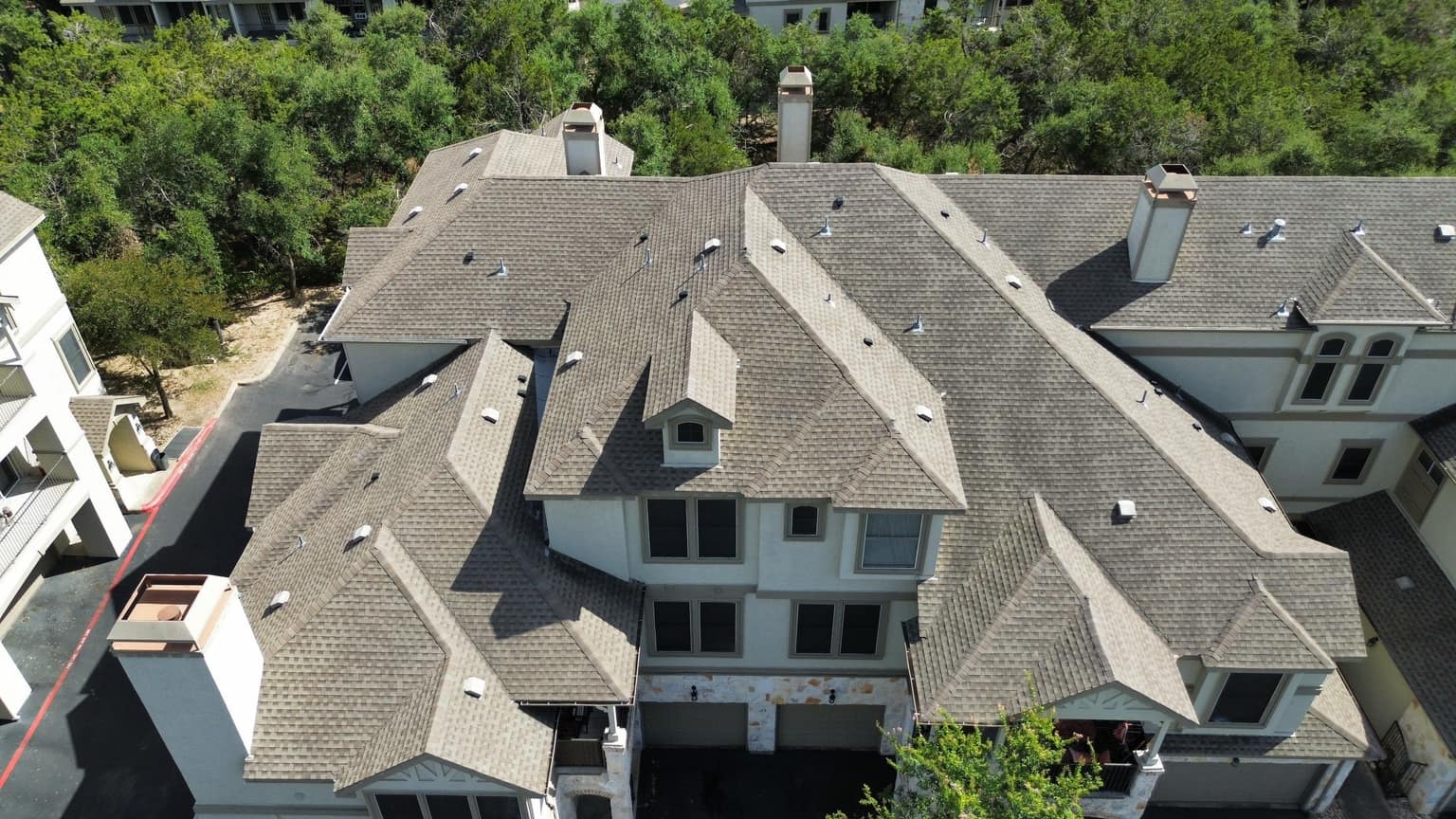
If you have lived in Central Texas for even a single year, you already know the running joke: don't like the weather, wait fifteen minutes. From the Austin metro down through the I-35 corridor and over to Greater Houston, the climate here cycles through extremes that most of the country never sees in one place. And every one of those swings lands first on your roof. Understanding how Central Texas weather affects your roof, season by season, is the single best way to avoid a surprise leak and a five-figure replacement bill.
Roofing systems are not damaged at random. The threats arrive on a fairly predictable calendar, which means your defense can follow the same calendar. Below is a month-by-month look at what each Texas season does to your roof, paired with exactly what a homeowner in Round Rock, Cedar Park, Katy, or anywhere across the 100-plus Texas communities we serve should do about it.
Spring (March to May): Hail and severe storm season
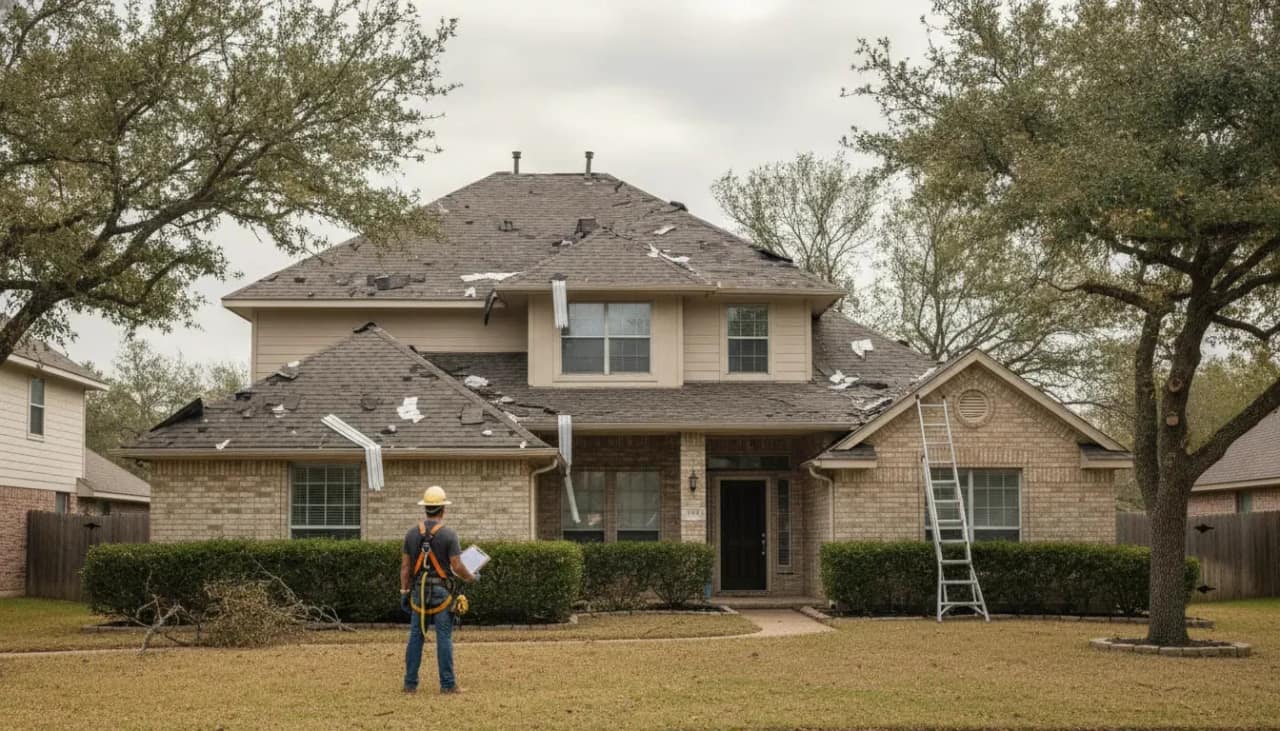
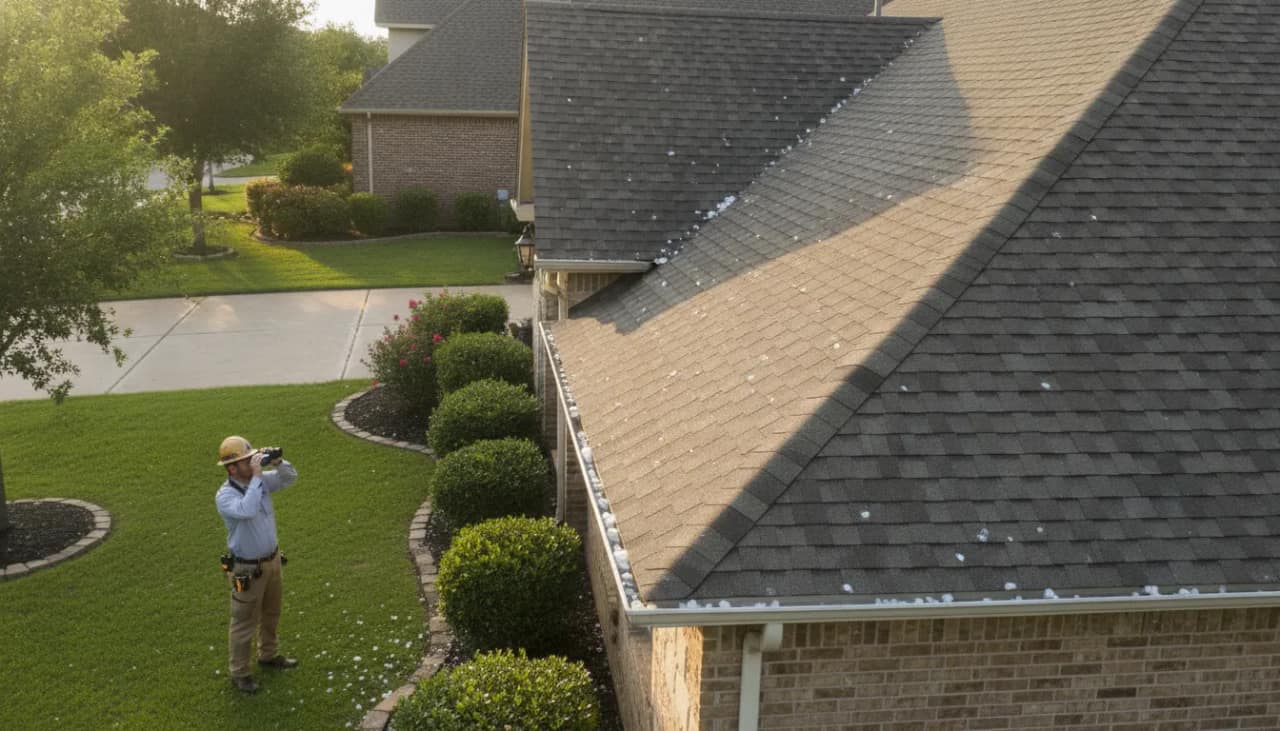
Spring is the most dangerous season of the year for a Central Texas roof, and it has nothing to do with how the weather feels. The I-35 corridor and the Austin metro sit inside one of the most active hail zones in North America, and the bulk of those storms fire up between March and May when warm Gulf moisture collides with cooler air sweeping down from the plains.
Here is what spring throws at your roof:
- Hail that bruises and fractures the shingle mat, often with zero visible damage from the ground
- Straight-line winds and gusts that break the adhesive seal between shingle courses
- Heavy, fast rainfall that exploits any weakness the hail and wind just created
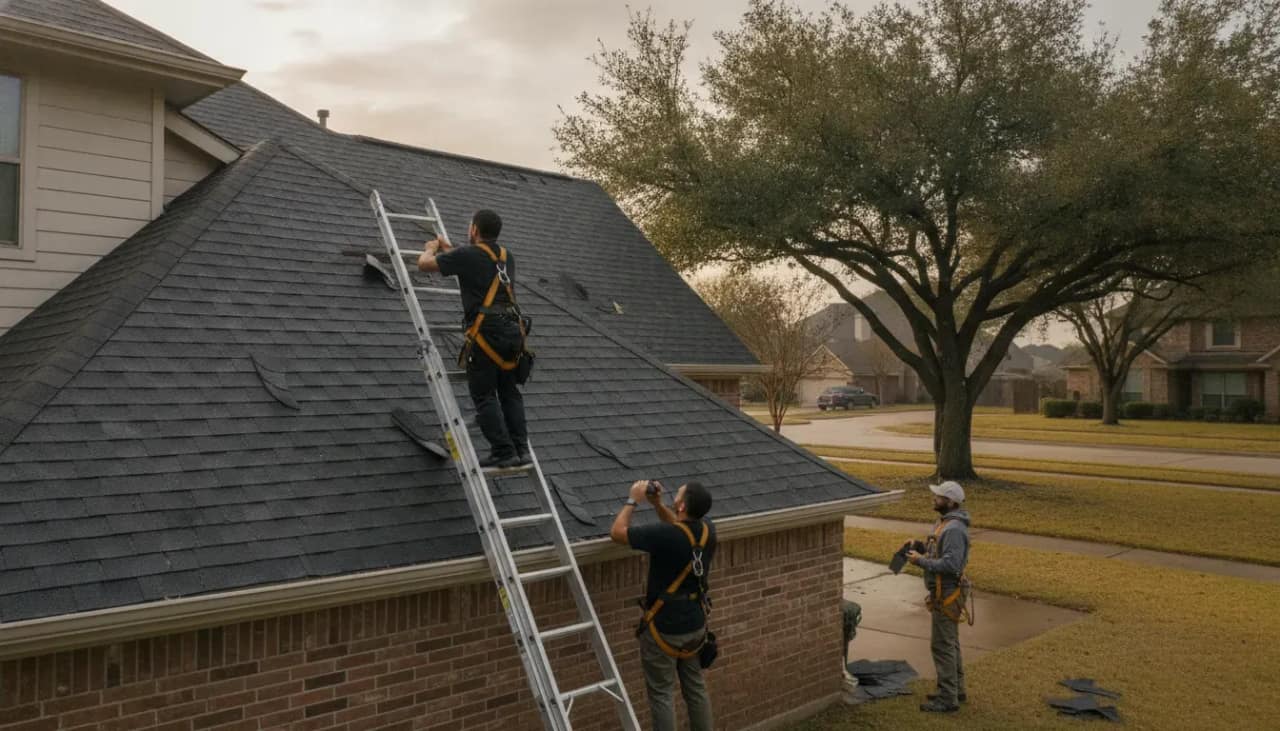
The cruel twist of spring hail is timing. A bruised shingle may not leak for months or even years, by which point the storm is forgotten and your insurance claim window has often closed. If a hailstorm passes over your neighborhood, the smartest move is a prompt storm damage assessment while the claim period is still open. As a GAF Preferred Contractor, we work directly with your homeowners insurance to document hail and storm damage so you are not navigating the claim alone.
Summer (June to September): Relentless UV and triple-digit heat
Once the storms quiet down, the sun takes over, and Texas summers are a slow, punishing assault on roofing materials. A dark asphalt shingle on a rooftop in Houston or Austin can reach 150 to 170 degrees on a July afternoon. Multiply that by months of daily expansion and nightly contraction, and the wear adds up fast.
Summer damages your roof in ways you rarely see from the driveway:
- UV breakdown of the asphalt binders that keep shingles flexible, leaving them brittle and dry
- Granule loss that strips away the shingle's built-in sunscreen and fills your gutters with coarse black grit
- Thermal cycling that loosens the adhesive strips holding each course down
- Superheated attics that cook the underside of the decking when ventilation is poor
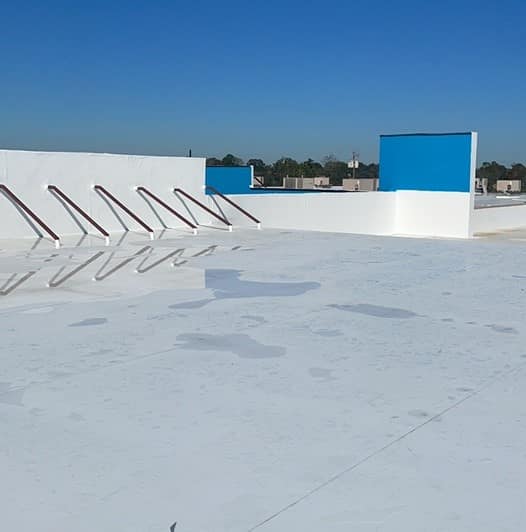
This is where attic ventilation and UV-rated materials earn their keep. A roof that loses its granules early can shave five to ten years off its lifespan. Mid-summer is the ideal time for a professional roof inspection to check granule coverage and confirm your attic is breathing the way it should. If your shingles are already curling or chalky, it may be worth exploring more heat-tolerant options like metal roofing or tile, both of which handle Texas UV far better than aging asphalt.
Late summer and fall (August to November): Hurricane and tropical season
For anyone in Greater Houston and along the Gulf Coast, the calendar carries a second wave of danger from roughly August through November. Tropical storms and hurricanes drive sustained winds and gusts that find any shingle whose seal has already been weakened by a summer of heat. Once one shingle lifts, it acts like a sail and peels its neighbors with it.
Even inland, the Austin metro often catches the rain bands and wind on the back end of these systems. The combination of high wind and wind-driven rain is what turns a small, sealed-over flaw into an active leak. Properly fastened, impact-resistant systems hold up dramatically better here, which is one reason we install GAF lifetime roofing systems and are RhinoRoof certified for premium synthetic underlayment that resists wind-driven moisture. If a named storm has passed over your area, do not wait for the ceiling stain. Our roof repair crews handle post-storm fixes quickly, and your gutters should be cleared before the heavy fall rains arrive so water actually drains away from your foundation.
Winter (December to February): Hard freezes and freeze-thaw stress
Texas winters are mild until they are not, and the occasional hard freeze is brutal on a roof already softened by a long, hot summer. When trapped moisture inside cracked shingles or worn flashing freezes, it expands and widens every small fissure. Repeat that freeze-thaw cycle a few times and minor cracks become genuine entry points for water.
Winter risks to watch for:
- Freeze-thaw cracking in shingles and sealant that the summer sun already made brittle
- Ice buildup at the roof edge when gutters are clogged with granule sediment and leaves
- Thermal shock from rapid temperature drops after a sudden cold front
- Hidden moisture that lingers in the attic during our damp, gray winter stretches
Clogged gutters make all of this worse by holding water where it can freeze against the roofline. A simple late-fall gutter cleaning and a quick roof maintenance visit go a long way toward getting your roof through winter intact.
Why the damage hides for so long
Here is the part that catches most Texas homeowners off guard: modern roofing systems are layered and redundant, which means they mask deterioration. Underlayment can hold back water even after shingles fail, and your attic quietly absorbs the first signs of moisture out of sight. By the time a stain appears on your ceiling, the damage has usually been developing for one to three years and several seasons of weather.
That hidden lag is exactly why "I'll deal with it when I see a leak" is such an expensive strategy in this climate. In Central Texas, by the time you see the leak, the weather has already won several rounds.
Your year-round roof game plan
The good news is that seasonal damage is also predictable, and predictable damage is preventable. Here is the rhythm we recommend for every Central Texas homeowner:
- Spring: Inspect after every hailstorm or severe weather event, and file insurance claims promptly while the window is open.
- Summer: Check granule loss and attic ventilation, and consider a heat-resistant upgrade if your roof is aging.
- Fall: Clear gutters, tighten flashing, and storm-proof ahead of tropical and winter weather.
- Winter: Watch for freeze-thaw cracking and keep drainage paths clear.
Two professional inspections a year, ideally spring and fall, plus a look after any major storm, will catch nearly every problem while it is still a cheap repair instead of a full roof replacement.
Built for every Texas season, backed by experience
For more than 9 years, Elevation Roofing & Restoration has helped homeowners across the Austin and Houston metros defend their roofs against everything the Texas sky delivers, from spring hail to summer UV to the rare winter freeze. We hold a 5-star Google rating and back every residential and commercial project with a 100% satisfaction guarantee.
Wherever you are in the season, it is never the wrong time to know exactly where your roof stands. Schedule your free roof inspection, a $399 value with no obligation, and let us tell you precisely how this year's weather has treated your roof. Call (832) 271-1726 to get started.