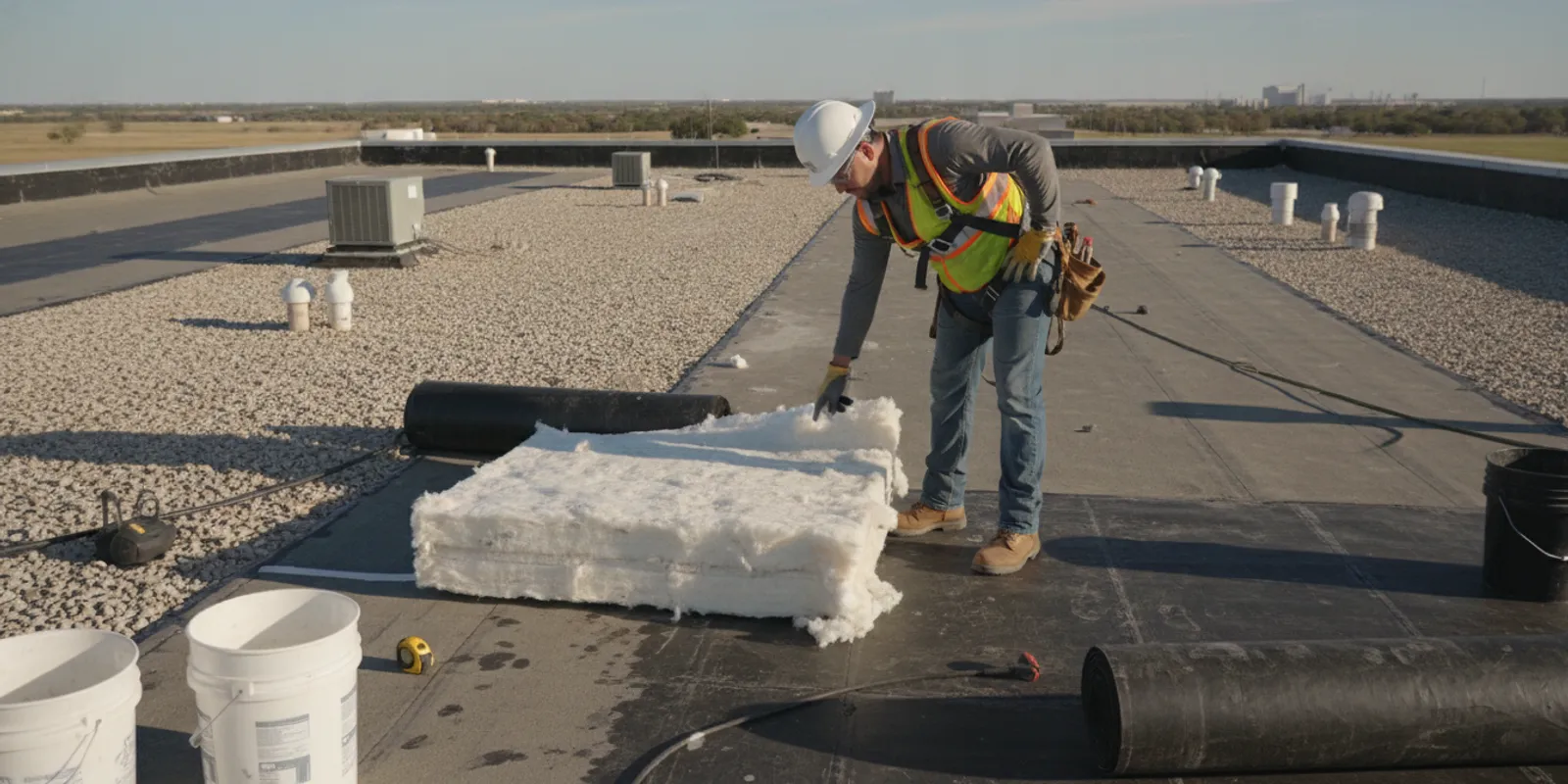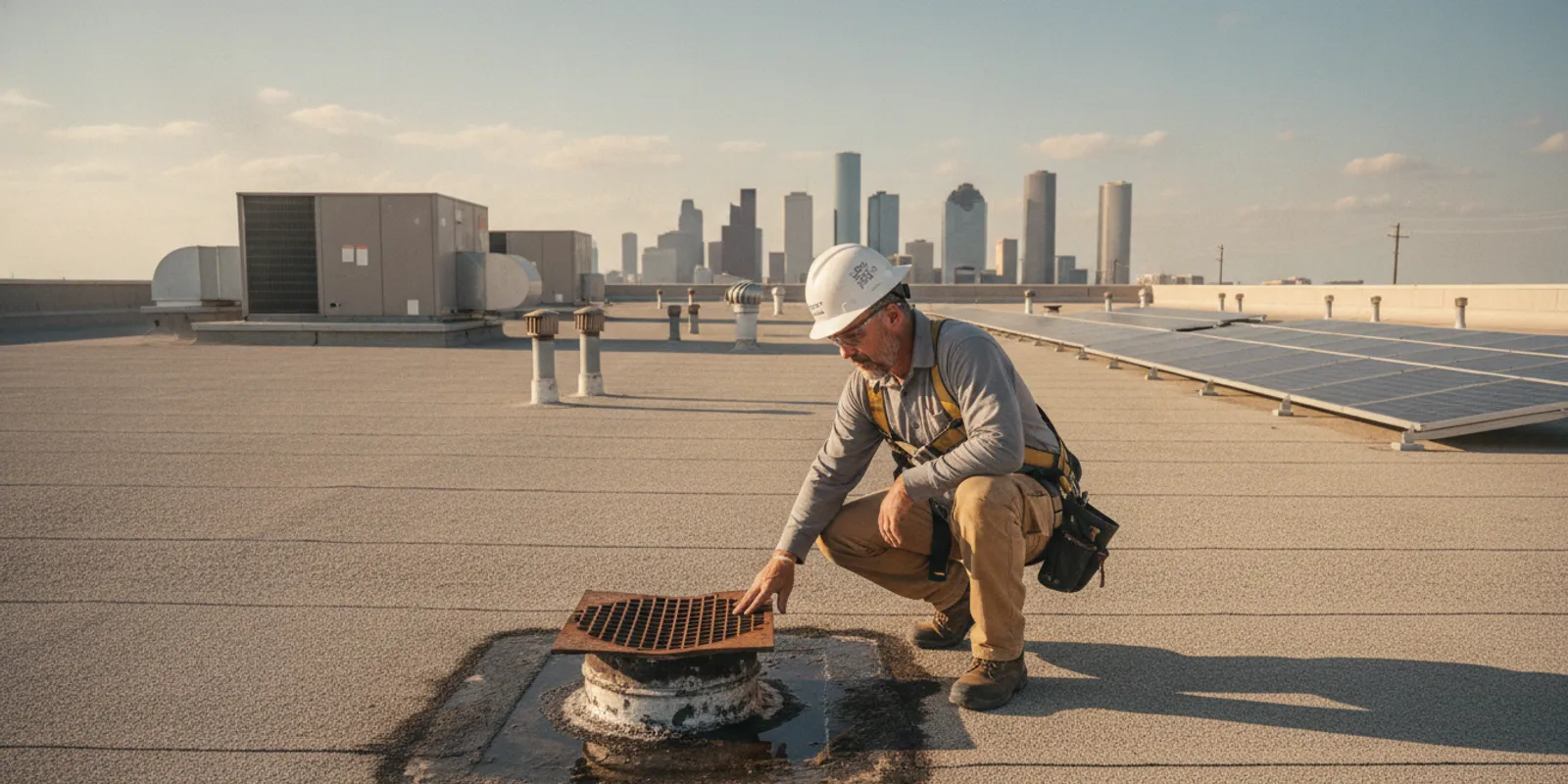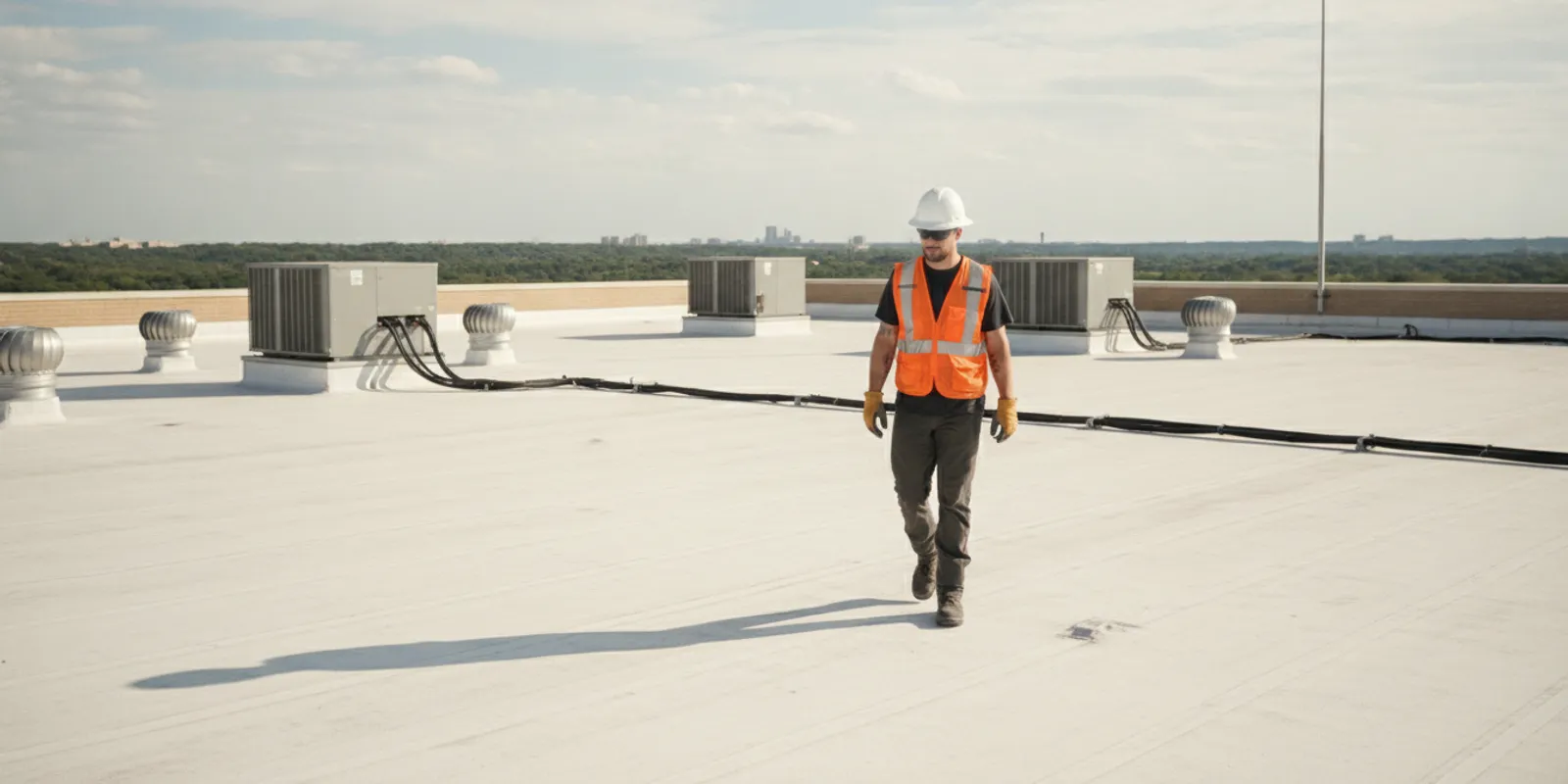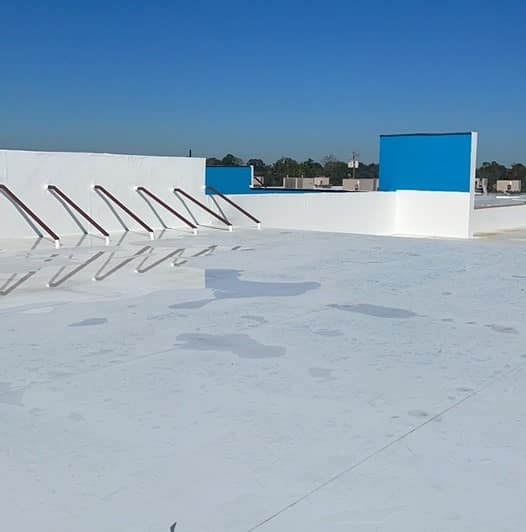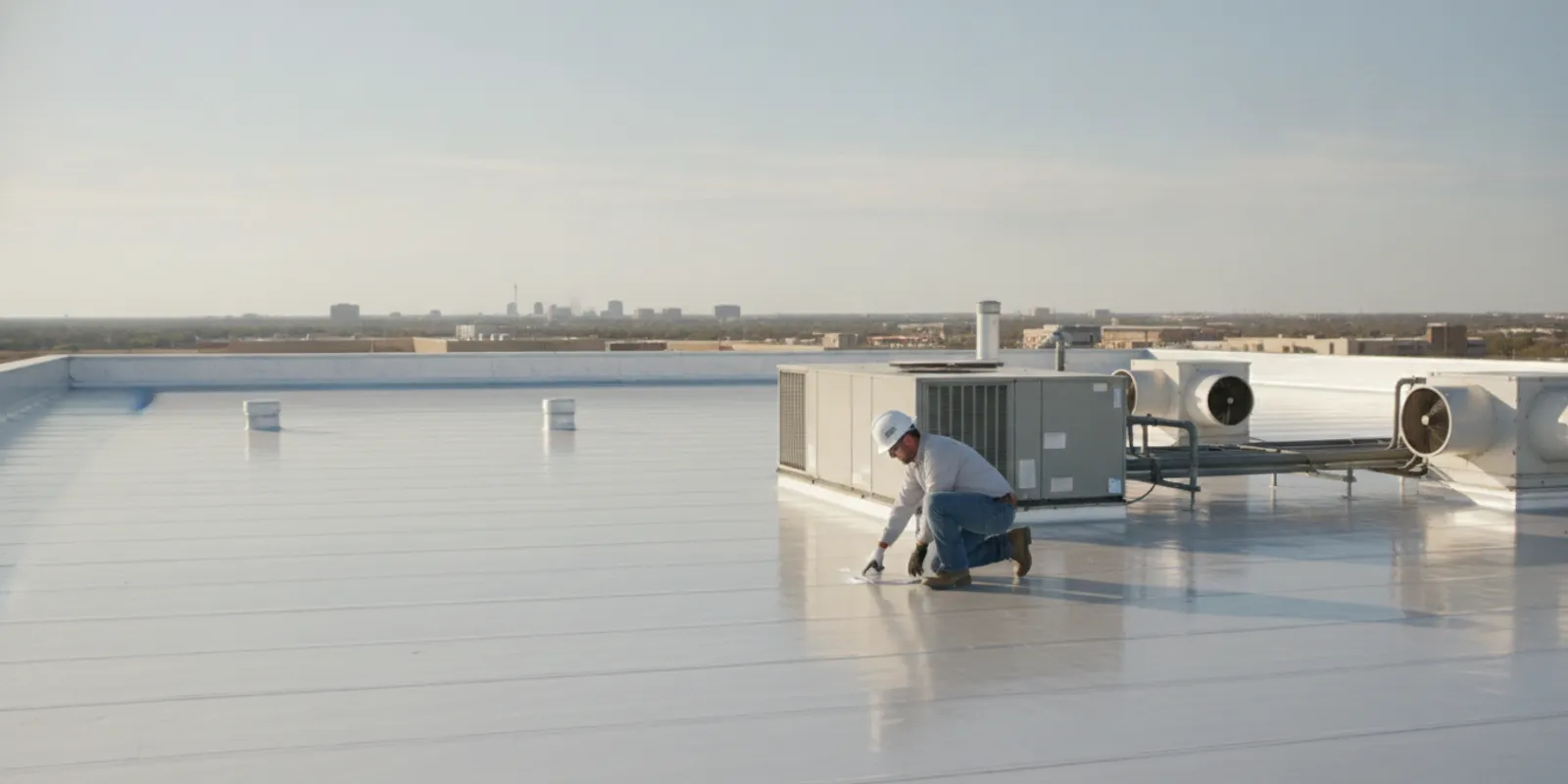
Commercial roof coatings can add a renewed protective surface to some existing low-slope roofs, but they are not a universal fix. The right choice depends on the roof’s material, condition, drainage, and the coating system’s compatibility. Understanding commercial roof coatings helps property owners ask better questions before approving work.
Schedule a free roof inspection
What Do Commercial Roof Coatings Do?
A roof coating is a liquid-applied layer installed over a prepared roof surface. Depending on the product and roof assembly, it may help protect the existing surface from weather exposure and may reflect more sunlight when a suitable reflective product is used. The coating itself does not correct every underlying problem. Wet insulation, failing seams, poor drainage, or structural concerns need to be assessed and addressed as part of the project plan.
Think of a coating as one part of a roof system, not a substitute for evaluation. An inspection should identify the existing membrane or surfacing, repairs needed before application, and whether the roof is a candidate for coating. For general context on reflective roof materials, the U.S. Environmental Protection Agency describes cool roofs and common material categories in its overview of cool roofs. ENERGY STAR also describes coatings among the materials used on low-slope cool roofs in its cool roofs overview.
Which Types of Commercial Roof Coatings Are Common?
Products vary in chemistry, performance characteristics, and intended substrates. Product labels and manufacturer specifications matter; terms such as “roof coating” are not interchangeable. A contractor should identify the specific product proposed and explain why it suits the roof under consideration.
| Coating type | General characteristics | Questions to ask |
|---|---|---|
| Elastomeric | Flexible coating that can form a continuous layer when correctly applied | Is the product compatible with this roof surface and expected movement? |
| Acrylic | Often selected as a reflective coating option; performance depends on product and conditions | What weather and surface conditions are required during application? |
| Silicone | Used on some roof systems where the specified product is suitable | How will the surface be prepared, and what maintenance is expected? |
| Polyurethane | Available in formulations intended for different coating-system roles | Which layer or use is proposed, and how does it fit the full system? |
These are broad categories, not a product recommendation. Confirm whether the proposal specifies a primer, reinforcement at seams or details, and one or more coating layers. The EPA identifies liquid-applied coatings among cool roof materials, but the roof and product still need to be matched carefully. The flat roof service information can help owners understand the range of systems considered for low-slope properties.
What Benefits Can a Coating Offer?
When the existing roof is suitable and preparation is done correctly, a coating may provide practical benefits such as:
- A renewed protective layer over an existing roof surface.
- Potentially greater solar reflectance when a reflective coating is selected.
- A project approach that may preserve a serviceable roof assembly rather than remove it, subject to condition and applicable requirements.
- A defined maintenance plan that makes future roof checks more organized.
Benefits depend on the existing assembly, workmanship, product, and ongoing care. A coating does not guarantee lower energy bills, stop active leaks without repairs, or resolve inadequate drainage. For commercial properties, minimizing disruption also requires clear scheduling and access planning, not just product selection. Review the company’s roofing services and roof maintenance information when considering the work that may surround a coating project.
A reflective surface changes the roof’s interaction with sunlight, but the building’s insulation, ventilation, occupancy, and equipment also shape indoor conditions. Ask the contractor to distinguish the coating’s stated properties from broader outcomes that depend on the whole building. Avoid relying on a projected utility reduction unless its assumptions are explained and relevant to the property.
Is Your Roof a Suitable Candidate?
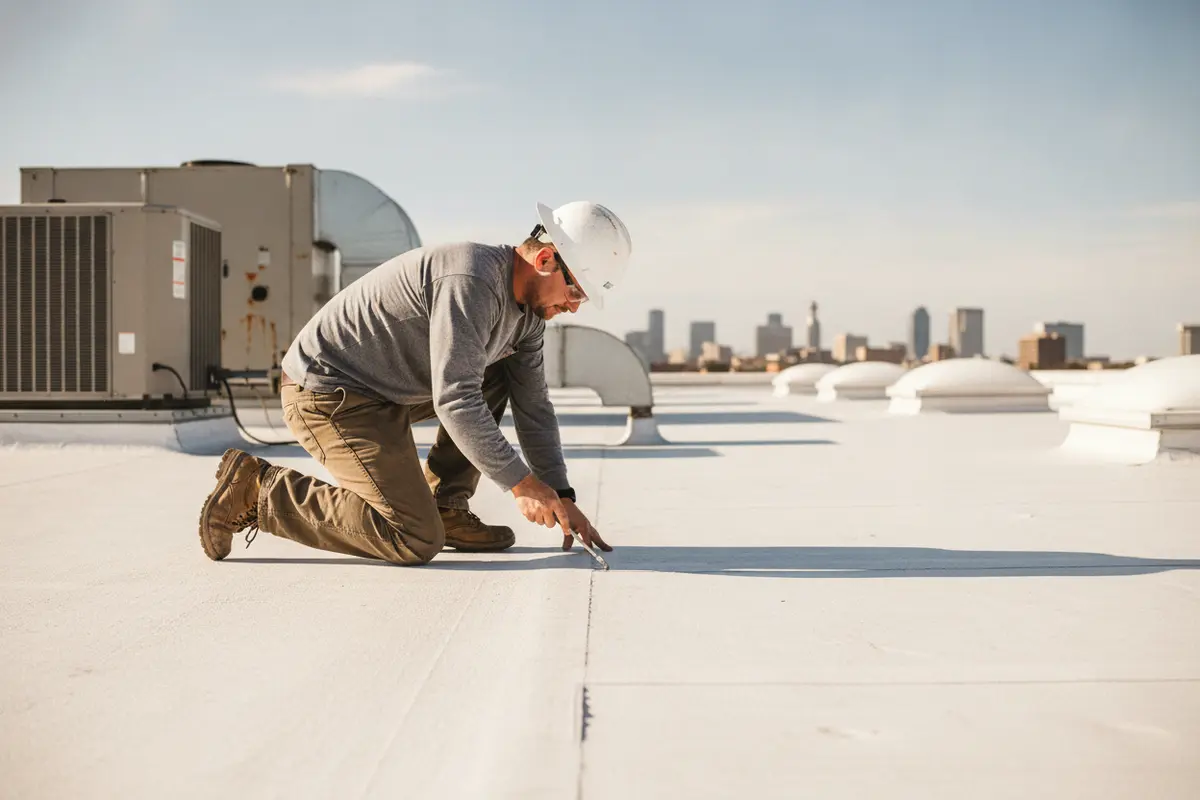
Suitability starts with a close review of the roof, including the field surface, seams, penetrations, edges, and drainage. A coating may be inappropriate if the roof has widespread deterioration, trapped moisture, persistent ponding, or unresolved leaks. The evaluation should explain what can be coated and what must be repaired or replaced first.
- Identify the roof system and its age or known repair history.
- Check seams, flashing, penetrations, and perimeter details for movement or failure.
- Look for ponding water, clogged drains, and areas where water cannot flow away.
- Assess whether insulation or roof components may be wet or damaged.
- Confirm that the specified coating is approved for the substrate and existing surface.
Do not treat a quick visual check from the ground as a diagnosis. A professional roof inspection can document visible conditions and help define next steps. Elevation Roofing serves commercial property owners in Houston and Austin; review the service locations for regional coverage information.
One area deserves special attention: drainage. A coating does not reshape a roof or automatically eliminate ponding. Check whether drains, scuppers, gutters, and discharge paths are clear, and ask how the work will address any standing-water conditions. Persistent ponding can affect the roof regardless of surface treatment. Photographing recurring problem areas after rain can also help communicate where water lingers, though a professional assessment is needed to determine the cause.
Request a commercial roof inspection
How Should You Compare Coating Proposals?
Two proposals may both say “coat the roof” while describing very different scopes. Compare the documented work and system details, not just the headline product or total. A useful proposal makes the roof conditions, preparation, repairs, application, and exclusions understandable.
| Proposal item | What to verify |
|---|---|
| Condition findings | Are defects, wet areas, drainage concerns, and repair needs listed? |
| Preparation | Does it specify cleaning, surface preparation, and handling of loose or failed material? |
| System components | Are product names, primer, reinforcement, and coating layers identified? |
| Application details | Does it explain coverage, application conditions, and treatment of seams and penetrations? |
| Closeout and care | Are inspection, documentation, maintenance expectations, and warranty terms stated? |
Ask the contractor to explain how the selected coating fits the existing roof and what conditions would change the scope. Clarify who handles access to rooftop equipment, how occupants or tenants will be notified, and how weather delays are managed. Houston-area owners can consult the Houston roofing information; Austin-area owners can see the Austin service page.
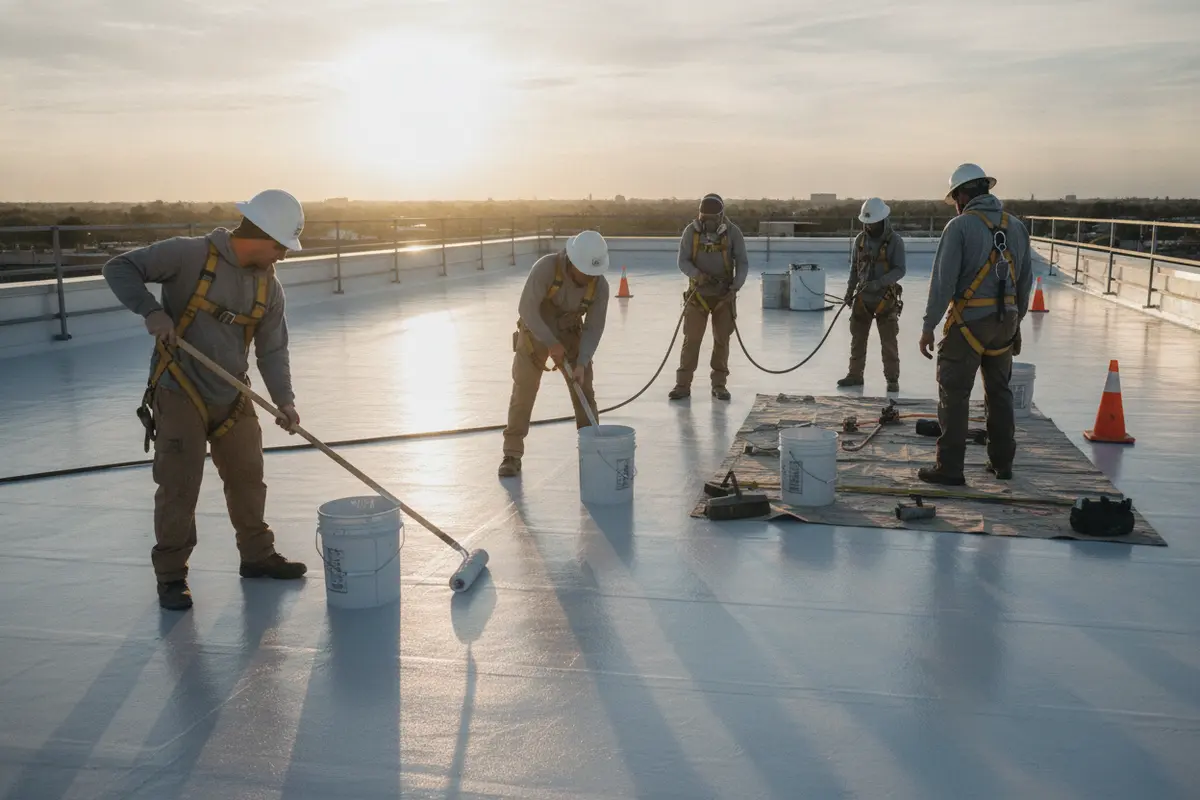
A thorough proposal should also describe how the contractor decides the substrate is dry and ready. Ask whether any adhesion checks or test patches are planned, what weather limits apply, and how the crew will protect rooftop units, drains, and nearby surfaces. Request clarity on the expected coating coverage and the method used to confirm that the specified system has been applied consistently. These are practical scope questions, not a guarantee of a particular outcome.
Get guidance on your commercial roof
What Should Property Owners Ask Before Work Begins?
Before signing, use the proposal review to close gaps in scope. Ask direct questions and request written answers where they affect materials, schedule, or responsibilities.
- What exact roof surface and coating product are included?
- Which repairs are included, and which would require approval as additional work?
- How will the contractor verify that the surface is ready for coating?
- What happens if inspection reveals moisture or concealed damage?
- What weather conditions are required for application and curing?
- What documentation and maintenance guidance will be provided after completion?
For a broader view of the company’s approach, owners can review customer reviews and the about page. Ask who will be the point of contact during work, how site access will be coordinated, and how any unexpected condition will be documented before work changes. A written scope and clear limitations are more useful than a broad promise that every roof can be coated.
How Can You Plan for Work on an Occupied Property?
Commercial roofing can affect tenants, employees, deliveries, and equipment even when the work remains on the roof. Agree on access routes and work hours before mobilization. Identify sensitive areas below the work zone, such as customer entrances, loading areas, or rooms with equipment that may need protection. Confirm how building contacts will receive schedule updates and how changes caused by weather will be communicated.
Ask whether rooftop equipment needs to be accessed or temporarily protected, and identify any areas the crew must keep clear. Building staff should know where materials will be staged and whom to contact if a concern arises. These coordination details do not determine coating compatibility, but they make the written project plan more useful for everyone using the property.
After completion, keep the proposal, product information, inspection notes, and any closeout photographs together. Record the date of the work and the maintenance instructions provided. A future reviewer can then compare observed changes with the original roof condition instead of relying on memory. If a leak or surface concern appears later, these records can help a qualified roofer understand what was installed and where follow-up may be needed.
Get your roof evaluated before choosing a coating
Frequently Asked Questions
Can a coating stop an existing roof leak?
A coating should not be treated as a guaranteed leak repair. The source of the leak and any damaged seams, flashing, or roof components need to be identified and addressed before a coating system is considered.
Can coatings be applied to any commercial roof?
No. Compatibility depends on the existing roof surface, its condition, and the coating manufacturer’s requirements. An inspection and product-specific review are necessary.
Will a reflective coating reduce cooling costs?
A reflective coating may reflect more sunlight than a darker surface, but actual energy effects depend on the building, roof assembly, climate, and operating conditions. Avoid assuming a specific savings amount without a building-specific assessment.
Does every coating project require roof repairs first?
Not every roof needs the same repairs, but defects and preparation needs should be documented before application. The proposal should identify repairs included and any conditions that could change the work.
Make the Next Step an Informed One
Commercial roof coatings can be a useful option when the roof, product, preparation, and project scope all fit together. Start with a documented assessment, compare proposals line by line, and ask for clear answers about limitations and ongoing care before deciding.