You walk into your building after a Texas downpour and there it is: a brown ring spreading across a ceiling tile, a steady drip into a trash can, or worse, water sheeting down an interior wall. A leaking commercial roof is not just an inconvenience, it threatens inventory, equipment, electrical systems, and the safety of everyone inside. The good news is that the first hour matters more than almost anything else. What you do in those early minutes can be the difference between a contained repair and a five-figure interior loss. This guide walks property owners and managers across Greater Houston and the Austin metro through exactly what to do when a commercial roof starts leaking, and what to leave to a professional.
First, Make the Area Safe
Before you worry about the roof, protect people and electricity. Water and power are a dangerous combination, and a commercial leak often finds its way into light fixtures, outlets, and electrical panels.
- Cut power to affected zones. If water is anywhere near electrical equipment, panels, or lighting, shut off the breaker for that area before touching anything.
- Cordon off the wet floor. Place warning signs or cones around slick surfaces. Wet polished concrete and tile cause far more injuries than people expect.
- Move people and valuables. Relocate staff, customers, electronics, documents, and inventory away from the active drip and the area directly around it.
- Watch the ceiling. A bulging or sagging ceiling tile or drywall is holding water and can collapse. Keep people clear and, if it is safe, puncture a small relief hole over a bucket to drain it in a controlled way.
Contain the Water and Limit Interior Damage
Once the area is safe, your goal is simple: catch the water and protect everything you can. You are buying time, not fixing the roof.
- Catch and channel. Use buckets, bins, and tarps to capture water. A tarp funneled into a large container handles a heavy drip better than a single bucket.
- Protect the floor and assets. Cover carpet, machinery, and stock with plastic sheeting. Move anything water-sensitive out of the room entirely.
- Start drying immediately. Standing water and saturated materials grow mold fast in Texas humidity, sometimes within 24 to 48 hours. Towels, a wet vacuum, and fans help, but do not run electrical equipment in a flooded area.
- Stay off the roof in the storm. A wet commercial roof, especially a low-slope membrane, is extremely slippery, and rooftop edges and skylights are real fall hazards. Do not climb up during or right after rain to chase the leak yourself.
Document Everything for Your Insurance Claim
This step is easy to skip in the chaos, and skipping it costs money. Thorough documentation protects your claim and gives your roofing contractor a head start.
- Photograph and film the damage. Capture the active leak, water stains, damaged inventory or equipment, and any ceiling or wall damage from multiple angles, with timestamps.
- Note the conditions. Record the date, the weather (hail, high wind, heavy rain), and roughly when you first noticed the leak.
- Keep receipts. Save costs for tarps, fans, water removal, and any emergency measures. These are often reimbursable.
- Call your carrier early. Report the loss and ask what your policy requires. If the leak followed a storm, this is likely a covered event. Elevation works directly with homeowners' and property insurance on storm and hail claims, so you do not have to navigate the adjuster process alone.
Why the Source Is Almost Never Where the Drip Is
Here is the part that frustrates building owners most: the spot where water hits your floor is rarely directly below the breach in the roof. On a commercial building, water that gets past the membrane travels. It runs along the underside of the roof deck, follows structural beams and conduit, pools on top of insulation, and finally drips down at the lowest point it can find, which may be twenty or thirty feet from the actual hole.
That is why a confident eye on the floor still cannot tell you where the roof failed. Chasing the visible drip with a tube of sealant usually fails, because the entry point is somewhere else entirely. Finding it reliably takes someone who understands how water moves through a layered flat or low-slope roof assembly, often with the help of moisture meters or infrared scanning to map where water is actually trapped.
The Usual Suspects on a Texas Commercial Roof
Most commercial leaks trace back to a handful of recurring weak points, many of them made worse by our climate of intense UV, hail, high wind, and Gulf Coast rain:
Flashing and Penetrations
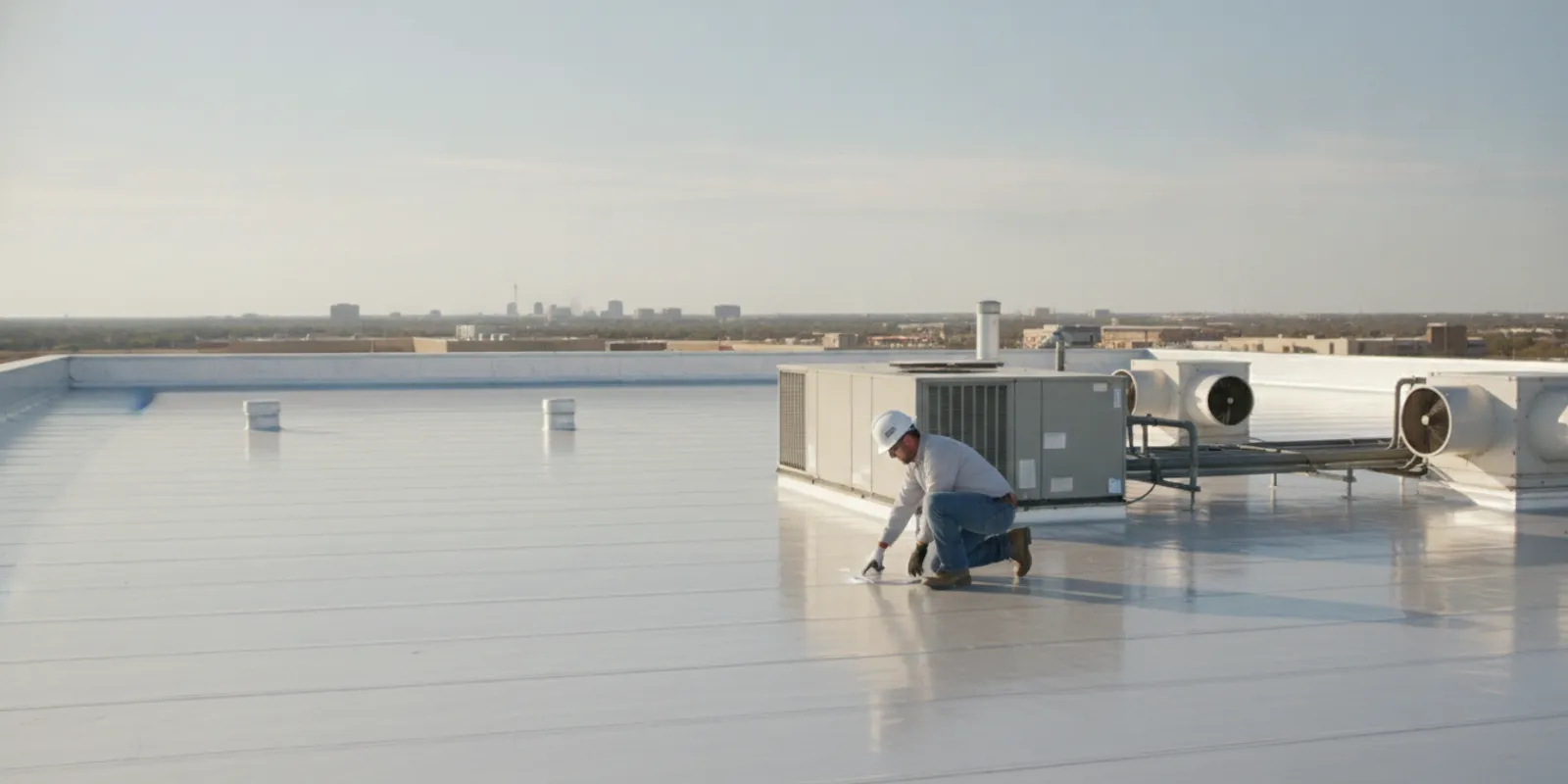
The flashing around HVAC curbs, vents, drains, skylights, and parapet walls is the number one source of commercial leaks. These details take constant thermal stress and are the first to separate or crack. Anywhere something pokes through the roof is a candidate.
Failed or Open Seams
On TPO and modified bitumen systems, the seams are the lifeline. A heat-weld or adhesive bond that has started to delaminate can stay watertight on a dry day and open under the pressure of a heavy downpour. Intermittent leaks that "come and go" are classic seam failures.
Ponding Water
Texas heat and a slightly deflected deck create low spots where water sits for days. That standing water concentrates UV damage and eventually finds the smallest flaw in the membrane.
Storm and Hail Damage
Hail can bruise a membrane and crush the insulation beneath without leaving an obvious hole, and high winds can lift edges and flashing. The damage may not leak for weeks, which is why a post-storm roof inspection matters even if nothing is dripping yet.
Clogged Drains and Scuppers
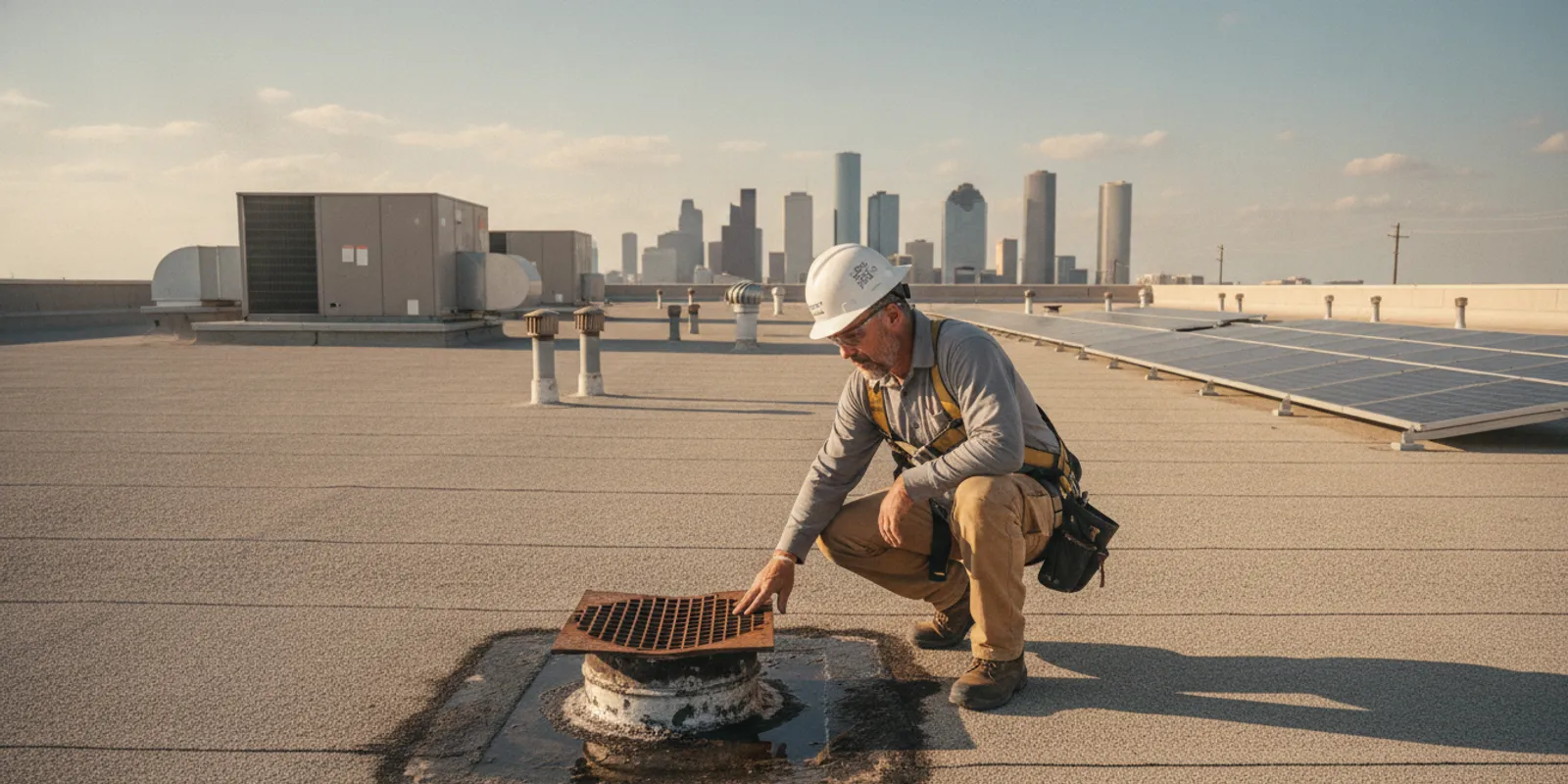
When drains back up, water rises above flashing heights and finds entry points that would otherwise stay dry. Simple, preventable, and a frequent cause of sudden interior flooding.
When to Call a Professional, and What We Do
A bucket and a tarp buy you a few hours. They do not stop a leak, and a DIY patch on a wet commercial roof rarely holds and often voids your warranty. As soon as the immediate danger is handled, the right move is to get a qualified commercial roofer on site. When you call Elevation, our process is straightforward:
- Emergency stabilization to stop active water intrusion safely, without making the eventual repair harder.
- Source diagnosis using our knowledge of layered roof systems plus moisture detection to find where water is truly entering, not just where it lands.
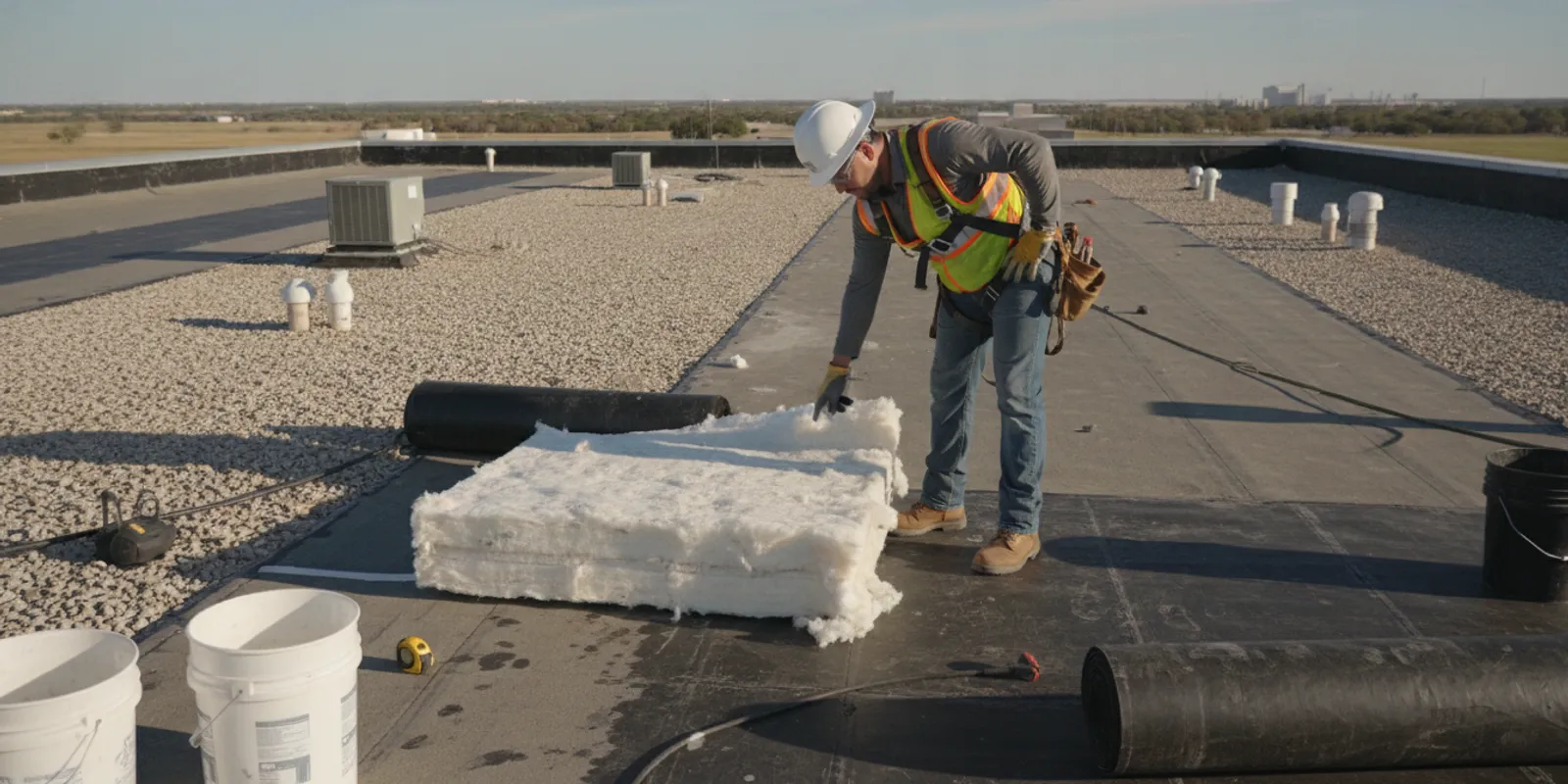
- A clear repair-or-replace recommendation. If the deck is sound and damage is isolated, a targeted roof repair stops the leak for good. If the membrane is failing across the field, a restoration or full replacement is the honest fix, and we will tell you which you actually need.
- Insurance support so your documentation and our condition report line up with what your carrier needs.
As a GAF Preferred Contractor installing GAF lifetime and RhinoRoof-certified systems, with 9-plus years serving more than 100 Texas communities, a 5-star Google rating, and a 100% satisfaction guarantee, we build and repair commercial roofs to stand up to Texas weather, not just survive the next rain.
Stop the Next Leak Before It Starts
The most expensive commercial leaks are the ones nobody saw coming. Routine roof maintenance and twice-a-year inspections catch flashing failures, seam separation, and storm bruising while they are still cheap to fix. If your roof is leaking right now, get the area safe, contain the water, document the damage, and then call us. If it is dry today, the smartest insurance is a professional set of eyes before the next storm tests it. Schedule your free roof inspection, a $399 value, or contact our Houston and Austin team for fast commercial leak response.