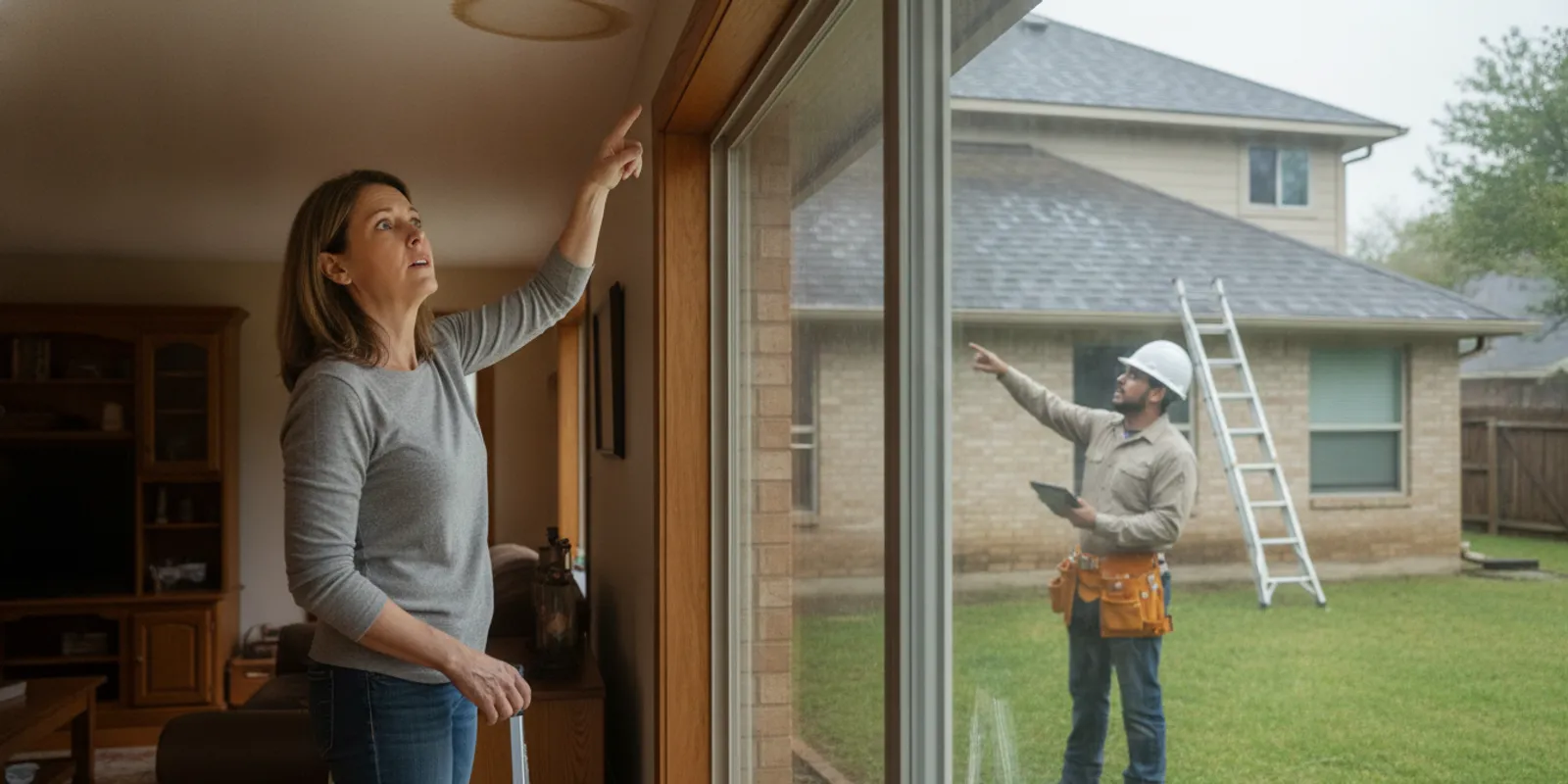
A roof overhang is the part of a roof that extends beyond the exterior wall. In Texas, it can help move the drip line away from siding and provide shade near windows, but it is not a substitute for sound roofing and drainage. Knowing what it can and cannot do helps you assess roof-edge conditions and decide when to ask for an inspection.
Schedule a free roof inspection
What Does a Roof Overhang Include?
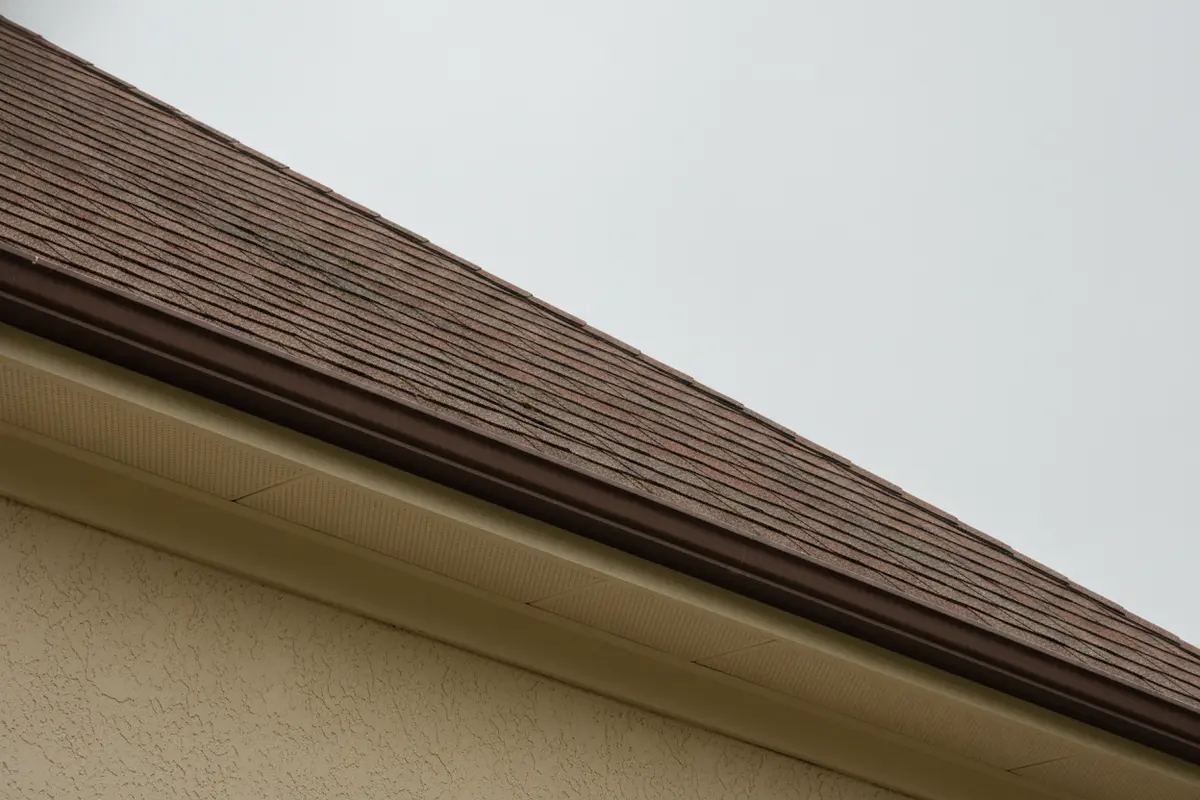
The overhang is the section of roof that projects past the wall beneath it. At the eave, the lower edge of a sloped roof may include exposed rafter tails or a finished soffit, a fascia board, and a gutter. These pieces are related, but each has a different role. The roof covering sheds water, the fascia finishes and protects the edge, and the soffit closes the underside while the design may also provide ventilation.
Some buildings have open eaves, where structural members remain visible. Others have enclosed eaves with soffit panels. A gable overhang is at the sloping end of a roof, while an eave overhang runs along the lower roof edge. The shape and depth vary with architecture and framing; there is no single projection that suits every home or commercial building.
The American Society of Heating, Refrigerating and Air-Conditioning Engineers notes that roof overhangs can serve functions such as roof ventilation and rainwater control in its roof overhang test case. That does not mean an overhang alone controls moisture. It is one part of an assembly that also depends on roofing, flashing, drainage, and upkeep.
How Can a Roof Overhang Affect Rain and Shade?
An overhang projects the roof edge outward, so water falling vertically may land farther from the wall than it would with a flush edge. That can reduce some direct wetting of siding, trim, doors, and windows. The real effect depends on the overhang depth, roof pitch, surrounding features, wind direction, and the intensity of rain.
Wind-driven rain can travel sideways and reach surfaces under the eave. Water can also run back along roof components if details are damaged or poorly maintained. Gutters may collect runoff, but only when they are attached, clear enough to drain, and directed to a suitable outlet. For this reason, an overhang should be understood as a helpful design feature, not a guarantee against leaks or wet walls.
- Rain exposure: A projection may reduce direct rainfall on some wall areas, but wind can carry rain beneath it.
- Shade: The roof edge may shade nearby windows or walls when the sun angle and building orientation align.
- Roof-edge protection: Fascia, soffit, gutters, and roof covering must work together to manage water and exposure.
Shade changes through the day and across seasons. A south- or west-facing opening may experience a different pattern from a north-facing one, and nearby trees or buildings also affect how much sun reaches the wall. A deeper projection may create more shade at some times, but it is not possible to judge its effect from depth alone.
What Should You Check Around a Roof Overhang?
Start with observations from the ground. Choose a dry, calm time, stand clear of the roof edge, and use binoculars or a phone camera zoom if needed. Check more than one side of the building, because an issue on one elevation may not appear elsewhere. After rain, note where water drains and whether any part of the edge appears to overflow.
- Look for a sagging, uneven, or visibly loose roof edge.
- Notice peeling paint, swelling, soft-looking wood, or stains on fascia and soffit.
- Check for a gutter that appears detached, bent, overflowing, or obstructed.
- Look for recurring marks on siding below the eaves, especially near corners and openings.
- From indoors, note ceiling or wall staining near the perimeter and when it appears.
These clues are not a diagnosis. A stain could have another source, while hidden damage may not be visible from outside. Write down the location, date, and weather conditions when you notice a change. Photos taken from a safe location can help you compare the area later and explain what you have observed to a roofing professional.
Do not climb onto a roof to examine the overhang. Avoid ladders during rain, wind, or storm conditions, and do not reach toward loose materials or hanging gutters. If anything looks unstable, keep people away from the area and arrange an assessment. For a broader look at possible warning signs, see Elevation Roofing's roof inspection information.
How Do Overhang Design Choices Compare?
Comparing design options is useful when planning construction or discussing a change to an existing roof, but a table cannot replace a site-specific review. Roof framing, water paths, ventilation, building appearance, and local project requirements all matter. Do not use a generic dimension as a structural specification.
| Design choice | Possible purpose | Questions to consider |
|---|---|---|
| Shallow projection | Creates a modest roof edge with limited extension beyond the wall | Where will runoff fall, and how will gutters or other drainage handle it? |
| Deeper projection | May move the drip line outward and provide more shade at some sun angles | Does the framing support the design, and how will wind exposure and appearance be addressed? |
| Finished soffit and fascia | Provides a more enclosed, finished edge | Are materials appropriate for exposure, and are ventilation and access needs considered? |
| Open eave | Keeps parts of the framing visible as an architectural detail | How will exposed components be protected and inspected over time? |
For an existing building, avoid extending, cutting back, or enclosing an overhang based only on appearance. Altering the edge may affect framing, roof drainage, ventilation, and the connection to exterior walls. If the goal is to address repeated water exposure or improve shade, first identify what is causing the problem and what the project is expected to change.
What Can a Roof Overhang Tell You After Heavy Rain?
Rain provides a chance to observe drainage, but it is not a reason to inspect from a ladder. From a safe place, note whether water leaves the roof edge evenly, flows through the gutters, or spills from a particular section. A concentrated stream, repeated overflow, or a wet patch below one corner may help identify where further investigation is useful. It does not establish the cause by itself.
Use a simple observation record: mark the side of the building, the approximate location, whether the gutter was involved, and whether the symptom appeared during or after rain. For example, if you see water staining below one eave but no visible overflow, report both details rather than assuming the gutter is the source. If the mark appears only during wind-driven rain, mention the wind-facing side and conditions. Those details can help an inspection focus on the relevant roof edge and nearby components.
At a commercial property, observations can include several roof edges, entrances, loading areas, and interior spaces below the perimeter. Keep staff and visitors away from any area with dripping water or loose overhead material. Record the location precisely so a facilities manager can compare the observation with roof plans or prior maintenance notes.
For further context, review Elevation Roofing's roof maintenance and gutter service information. These links describe related service paths; they do not imply that every drainage concern requires the same repair.
Request a free roof inspection
When Should You Ask a Roofer About a Roof Overhang?
Ask for a professional assessment when the edge looks loose or distorted, soffit or fascia is deteriorating, water is entering near the eaves, or the same moisture pattern returns after routine gutter care. An assessment can examine the roof edge and nearby details to help determine whether the concern is localized or connected to a larger roofing issue. The visible symptom alone should not dictate the repair.
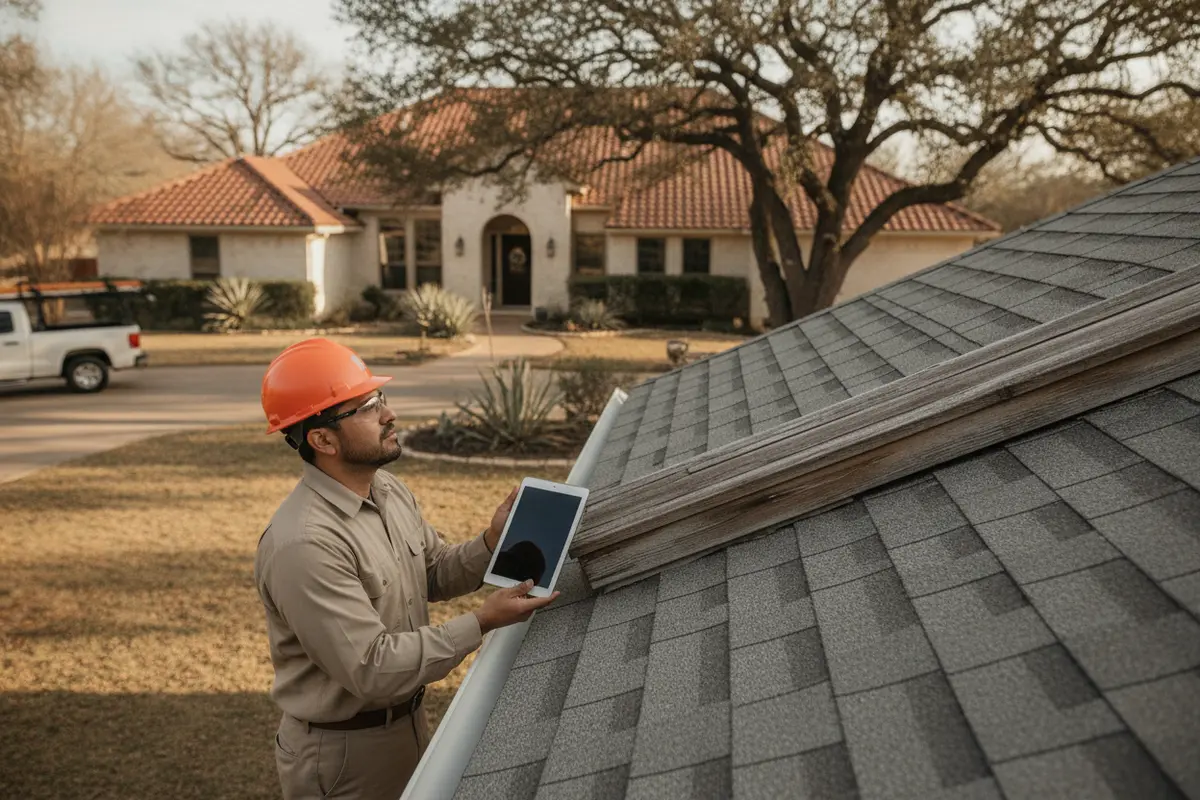
If you suspect storm damage, take photos from a safe location and make notes before arranging repairs. A roofing contractor can provide observations about roofing conditions, but an insurer determines coverage under the policy. Do not assume every leak or stain is storm-related, and avoid removing materials before the relevant parties have assessed the situation unless urgent safety or property protection requires action.
Elevation Roofing serves property owners in Houston, Austin, and surrounding Texas communities. You can review its service locations, learn about other exterior services, and read customer reviews. For a roof concern, start with the condition you can describe, such as a loose edge or repeated water mark, rather than presuming which component needs replacement.
Learn about the company's roof repair and roof replacement options if an inspection identifies a roofing issue. Property owners in Houston and Austin can also check the Houston and Austin service pages for local information.
Frequently Asked Questions
Does a roof overhang prevent leaks?
No. It may reduce some direct rain exposure, but leaks can involve roof covering, flashing, drainage, or other building components. An inspection helps investigate the likely source.
Can a roof overhang keep rain off every wall?
No. Wind can push rain beneath an overhang, and the amount of shelter depends on design and weather. Sound roofing, siding, flashing, and drainage still matter.
Should I climb a ladder to inspect the eaves?
No. Observe from the ground and avoid ladders or roofs in unsafe conditions. A professional can examine hard-to-reach components with appropriate access and safety measures.
Does a larger overhang always provide more shade?
Not necessarily. Shade depends on projection, window direction, sun angle, and nearby obstructions, so evaluate the design in context.
Make the Next Step an Informed One
A roof overhang is one part of a larger roof and exterior system. If you see recurring moisture or visible deterioration near the eaves, describe what you observe and arrange an assessment so the underlying cause can be considered before repair decisions are made.