A water stain indoors can point to a roof leak, but the mark on the ceiling is not always directly below the opening in the roof. If you are trying to learn how to find a roof leak, start with safe observations inside, compare them with recent weather, and avoid climbing onto a wet or damaged roof. A careful record of what you see can help a roofer narrow down the source.
Schedule a roof inspection with Elevation Roofing & Restoration
What Should You Check Inside First?
Begin indoors, where you can investigate without stepping onto the roof. If water is actively dripping, move furniture and belongings away from it. Place a container under drips if it is safe to do so, and keep people clear of sagging ceilings, wet light fixtures, and electrical equipment. Do not touch a wet electrical fitting or enter an area where the ceiling appears unstable. Contact an appropriate professional if there is an immediate safety concern.
Look for patterns rather than relying on one mark. Check the ceiling and upper walls in the room where you noticed water, then inspect nearby rooms, closets, and the attic access area if it is safe to enter. Useful clues include:
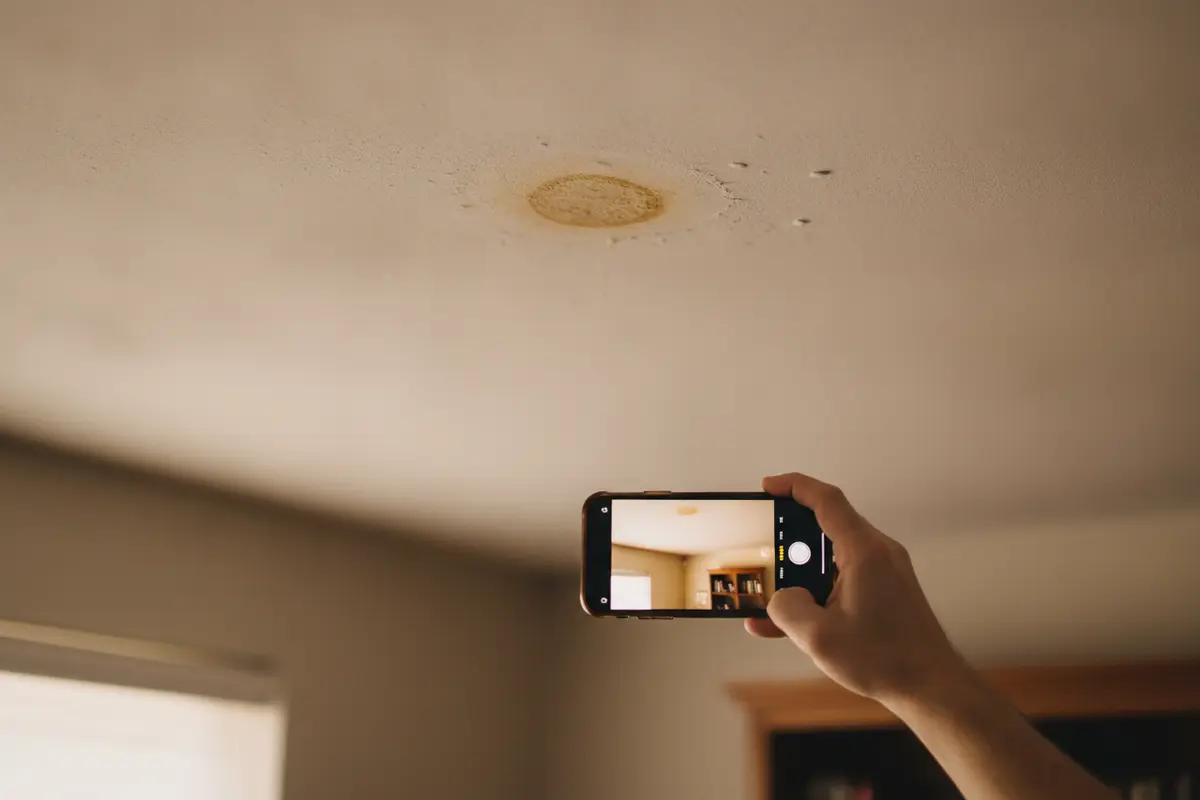
- Brown or yellow discoloration, bubbling paint, peeling finishes, or a soft-looking patch.
- Drips or dampness that appear during rain, shortly afterward, or only when wind drives rain from a particular direction.
- Musty odors or repeated damp spots that return after the visible area dries.
- Water marks around a chimney, skylight, vent, or exterior wall, if your building has those features.
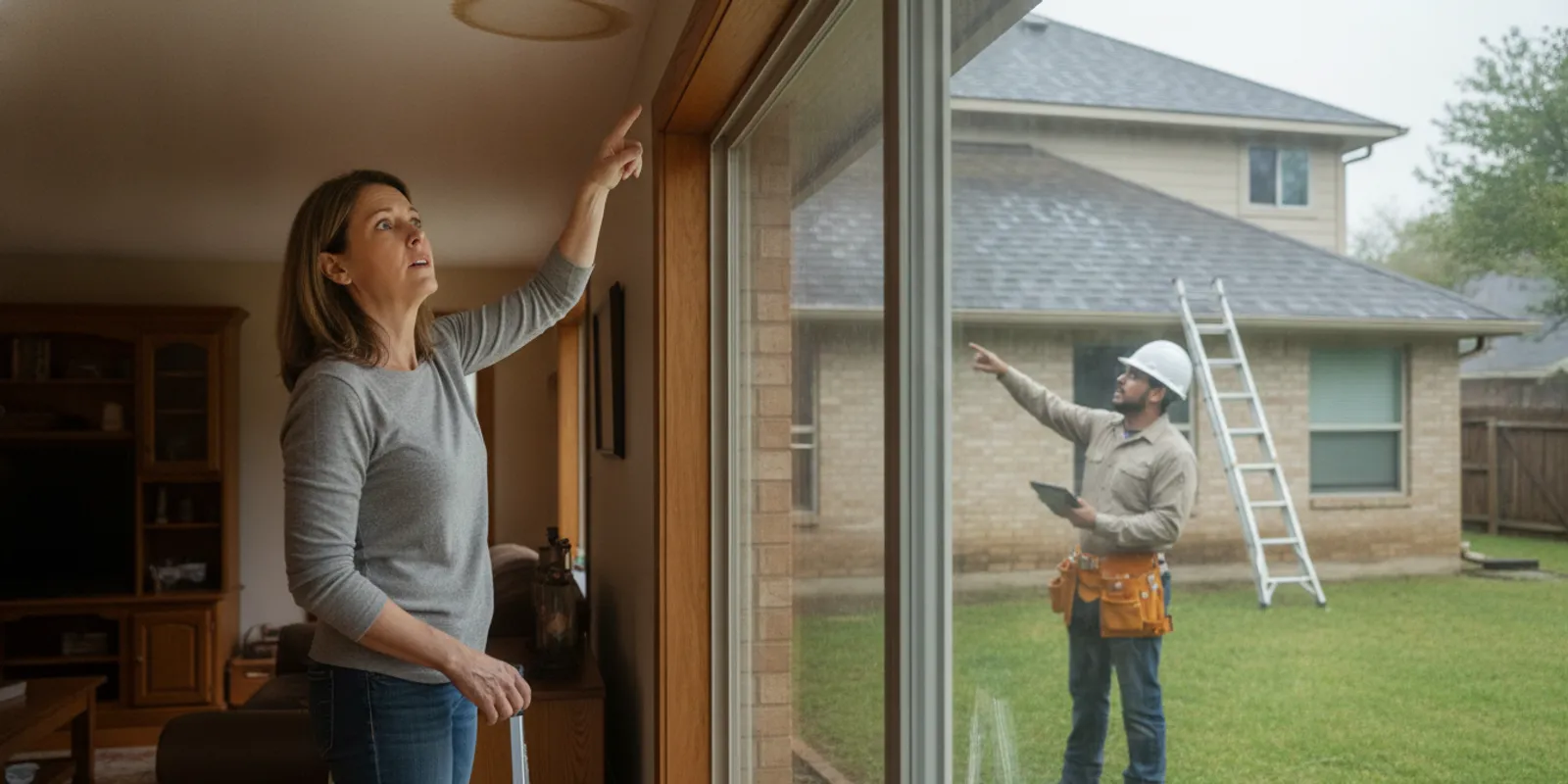
A stain can remain visible after the original leak has stopped, and water can travel along framing or other surfaces before it becomes visible. Do not assume the stain directly identifies the roof opening. Take clear photos, note the room and approximate size, and mark the edge of the visible stain with a small piece of removable tape if doing so will not damage the finish. Check later to see whether the mark grows. A photo with the room in view can help you compare the affected area over time. If you are unsure whether the ceiling is stable, do not touch it or stand beneath a sagging section.
How to Find a Roof Leak Without Climbing
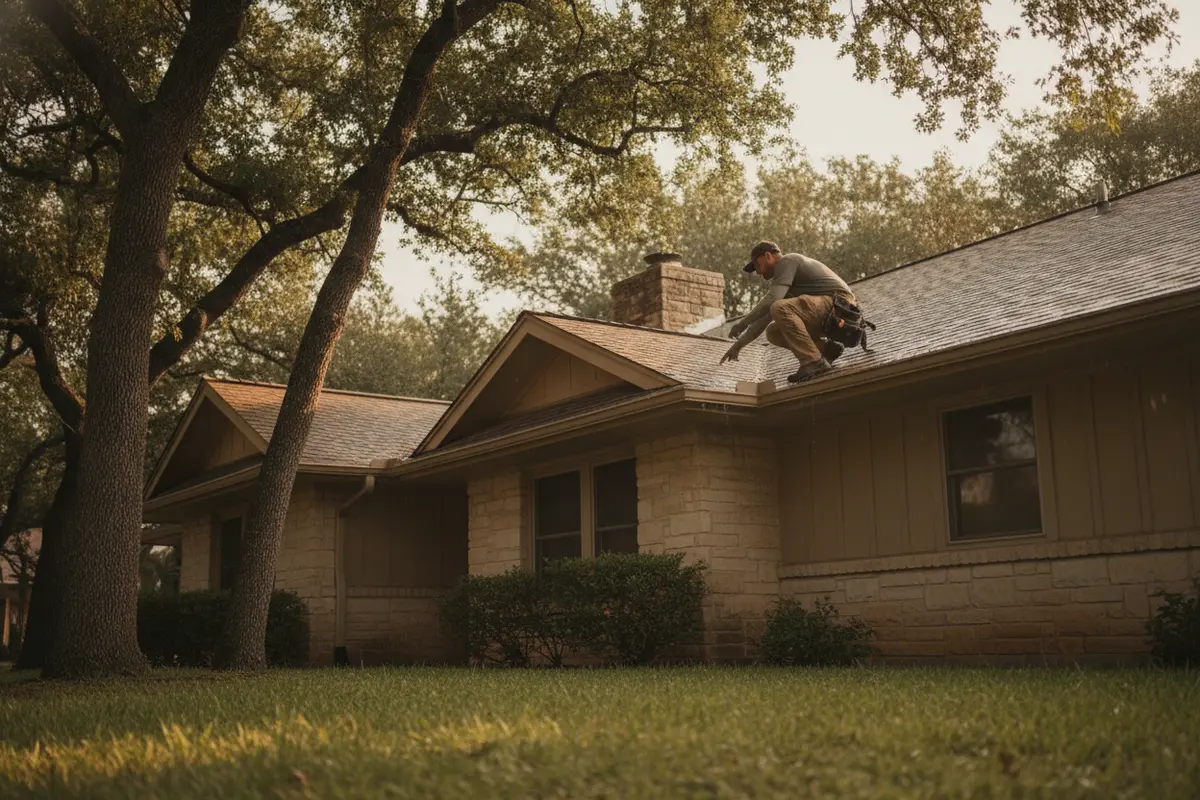
Once you have recorded the indoor clues, use a safe, ground-level view of the exterior. Do not climb onto the roof to confirm a suspicion. Roof surfaces can be slippery, steep, fragile, or difficult to assess, and a leak does not make a roof safe to walk on. From the ground, use binoculars only if you can do so safely, and look for changes rather than trying to diagnose every detail from a distance.
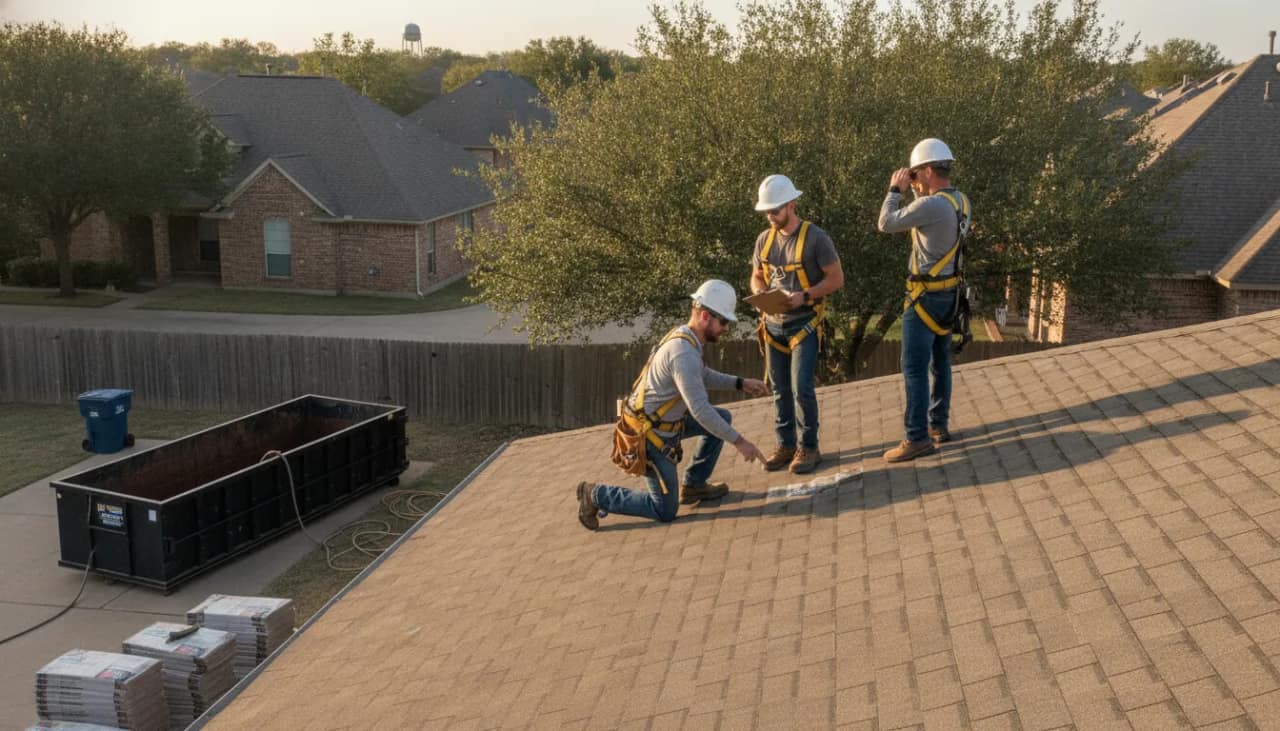
Check visible roof edges and slopes for shingles that appear missing, lifted, cracked, or out of line. Look for debris buildup or a branch resting on the roof, but do not climb up to move it. If you can see gutters from the ground, note any sections that appear clogged, pulled away, or overflowing. Water entering at a roof-to-wall joint or around roof penetrations can be hard to spot from below, so an exterior glance may reveal a concern without proving the cause. Avoid leaning out of a window or climbing a ladder for a better view. If the roof is obscured by trees or the building layout, record that you could not inspect it safely and leave the close check to a professional.
Pay special attention to visible flashing, the metal pieces that help direct water around roof joints and penetrations. Gaps, rust, or loose-looking sections may deserve professional attention. The National Roof Certification and Inspection Association’s roof leak cause determination guide also identifies flashing and exposed or rusted nail heads as inspection clues. Treat these as things to report, not as a reason to handle or repair a roof yourself. A surface detail that looks unusual from the ground may not be the entry point, and sealant or a temporary patch can hide what an inspector needs to evaluate.
Elevation Roofing & Restoration serves residential and commercial property owners in Houston and Austin and surrounding communities. If you need to identify the relevant service area, review the company’s Texas roofing locations. For a closer look by a professional, you can also learn about its roof inspection service.
How to Find a Roof Leak When the Source Is Not Obvious
Leaks can be intermittent. A roof may admit water only during heavy rain, wind-driven rain, or a particular direction of weather. Keep a simple log rather than guessing. Record when the leak starts, how long it lasts, whether rain was falling, and which rooms or ceiling areas are affected. Note any recent roof work, fallen branches, or visible exterior changes, without assuming that one event is the cause. If the leak appears during wind-driven rain, note which side of the building is exposed to the wind if you know it, but do not try to determine the source based on direction alone.
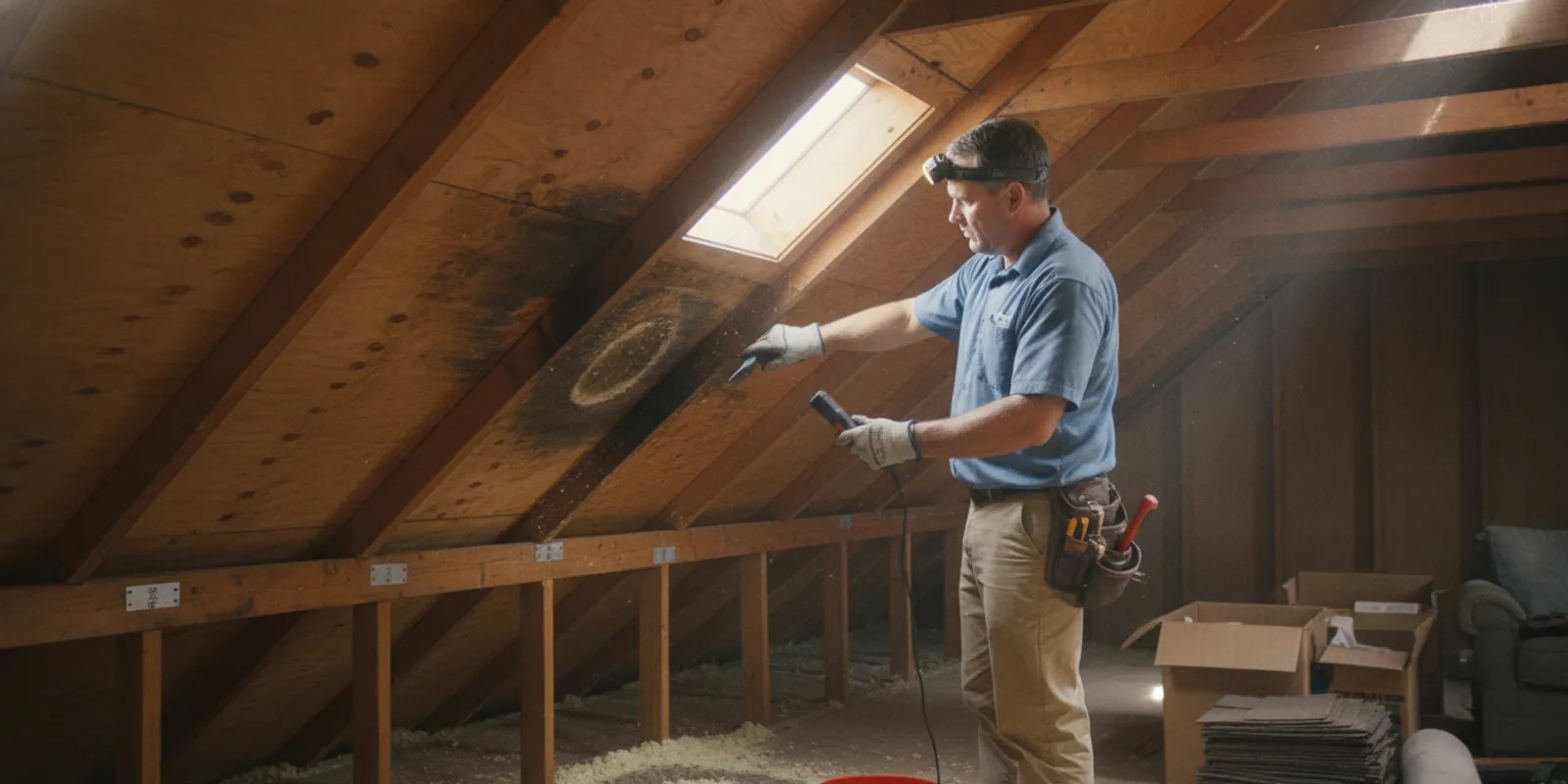
If it is safe to access the attic from a stable floor and without stepping on ceiling joists or insulation, use a flashlight to look for visible dampness or water trails on accessible framing and the underside of the roof. Do not enter a cramped, hot, wet, or poorly lit space, and do not touch wiring, wet insulation, or suspected mold. A roof leak may be concealed behind insulation or finishes, so seeing no water in the attic does not rule it out. Avoid moving insulation or stored items to search deeper. If access requires climbing, crawling, or stepping somewhere unstable, stop and describe the limitation to the roofing professional.
Use the room location and the roof layout as clues, not as a map. Water can move sideways before reaching a ceiling. A spot near an exterior wall may relate to an edge, a roof-wall transition, or another pathway; a mark near a vent or skylight may be worth mentioning, but is not proof that the feature is leaking. A professional can compare the indoor evidence with roof materials, flashing, and drainage details. If you have several affected rooms, sketch their locations and note whether they share a wall or sit below the same roof area. That information can help organize the inspection without making a diagnosis.
Ask Elevation Roofing & Restoration about a professional roof assessment
Could Something Other Than the Roof Cause the Moisture?
Not every damp spot proves that rain is entering through the roof. Plumbing lines, a bathroom or kitchen above the affected ceiling, or moisture around heating and cooling equipment may also deserve attention. In a commercial building, a stain near a mechanical room or equipment area should be noted along with any roof observations. This is not a reason to dismiss a possible roof leak. It is a reminder to report the full context so an inspector can consider more than one possible pathway.
Think about the timing. Does the mark appear only during rain, or does it show up after a shower, when a sink or appliance is used, or when cooling equipment is running? Is the area directly below a bathroom, plumbing fixture, or mechanical space? You do not need to test pipes, open equipment, or remove ceiling material. Simply record what was operating and when you noticed the moisture, and share that information with the appropriate building professional. If the timing does not clearly match rain, say so rather than trying to rule out the roof yourself.
For a business or multi-unit property, follow the building’s access and safety procedures before checking above a ceiling or entering a restricted area. Tell the property manager or maintenance contact about active drips, affected rooms, and any disruption to occupants. Avoid walking on a commercial roof or opening a roof hatch without authorization and suitable safety measures. A short, accurate account of the issue helps the inspection focus on the relevant area without treating an initial guess as a confirmed diagnosis.
What Do the Clues Suggest, and What Should You Do?
This comparison can help you organize observations and choose a safe next step. It cannot confirm a leak source or replace an on-site assessment.
| Observation | What it may indicate | Useful next step |
|---|---|---|
| Stain expands during or soon after rain | Moisture may be entering during a weather event, though the visible point may be away from the opening. | Photograph the stain, record timing and weather, and request an inspection. |
| Visible missing or displaced shingles from the ground | The roof covering may have damage or a gap that needs closer review. | Keep people away from the area below and arrange a professional assessment. |
| Water marks near a roof penetration or wall junction | A joint or flashing detail may merit attention; the location alone does not prove the source. | Share the location and photos with the roofer. |
| Overflowing or visibly separated gutter | Water may not be draining as intended, or the gutter may need attention. | Document it from the ground and ask whether roof-edge drainage should be checked. |
| Persistent dampness with no clear rain connection | There may be another moisture source, or the timing may be difficult to observe. | Record when it appears and ask a qualified professional to assess the area. |
What Should You Document Before Repairs Begin?
Good notes help keep the next conversation concrete, whether the issue is limited to one room or affects an occupied building. Save original photos where possible and take a second set later if the stain or damp area changes. Include a wider view that shows where the mark is in the room, plus a closer view of its edges. Record dates and times, rain or wind conditions you observed, and any areas where water appeared.
If storm damage may be involved, keep copies of your observations with any related communications and documents. Contact your insurer directly for questions about notice requirements, policy terms, or claim decisions. A roofing inspection can describe roof conditions, but it does not determine what a particular insurance policy covers. Avoid assuming that a visible defect will qualify for coverage, and do not rely on a contractor’s initial view as a policy decision.
Before repair work, ask the roofing professional to explain the observed condition, the recommended next step, and whether the proposed work addresses a confirmed source or is further investigation. For commercial properties, note whether water affects tenants, inventory, equipment, or normal operations, and tell the person responsible for the building. Do not delay addressing an active safety issue just to gather paperwork; keep people clear of hazards and seek appropriate help first.
Do not use a hose to flood-test the roof. Water can enter the building, spread into hidden areas, or create a misleading result. Do not apply sealant to a suspected opening as a quick test; an unsuitable patch can hide evidence or fail to address the underlying problem. Focus on keeping people and belongings safe and on gathering observations that will help an inspection.
If you see active water, worsening ceiling damage, or a suspected electrical hazard, prioritize safety and get appropriate help promptly. For non-urgent but recurring signs, the record of timing and location can help distinguish a repeatable pattern from a one-time stain. Elevation Roofing & Restoration offers roof repair services and storm repair services; an inspection helps determine what work, if any, is appropriate.
How Can You Prepare for a Roof Inspection?
A few details can make a professional visit more useful. Gather the photos you took indoors and from the ground, along with the dates and weather conditions when you noticed water. Point out the affected rooms and whether the stain changed. If you can safely identify a nearby roof feature, such as a vent or roof-to-wall junction, mention it as a clue rather than a diagnosis.
- Make a short timeline of when the leak appeared and whether rain or wind was present.
- Share photos that show both the full room and a closer view of the affected area.
- List any areas you could not safely inspect, such as a steep roof or inaccessible attic.
- Ask what the inspection found, what evidence supports the proposed source, and whether repair or further evaluation is recommended.
Owners in Houston, Austin, and nearby communities can confirm coverage through the service area directory. If the concern followed a storm, review the company’s storm-damage service information and keep your notes and photos with any claim-related records. For other roof concerns, the overview of roofing services explains the available service categories.
Request help assessing a possible roof leak
Frequently Asked Questions
Can I find a roof leak by looking at the ceiling stain?
A stain shows where moisture became visible, but it may not be directly below the roof opening. Track when it changes and have the roof and surrounding areas assessed if the problem recurs.
Should I climb onto the roof to look for a leak?
No. A roof can be slippery, steep, damaged, or otherwise unsafe. Observe from the ground and leave roof access and close inspection to a qualified professional.
What should I do if water is dripping now?
Move belongings away and place a container under a drip only if it is safe. Stay clear of sagging ceilings and wet electrical fixtures. Seek prompt help if there is a safety hazard or active damage.
Can a leak happen only during wind-driven rain?
Yes, a leak may appear only under certain weather conditions. Record the timing, wind and rain conditions, and affected locations so an inspector can consider the pattern.
Make the Next Step an Informed One
Finding a roof leak starts with safe, careful observation, not a risky climb or a quick patch. Document what you see, note when it happens, and arrange a professional inspection when signs persist or the source is unclear.