If you are weighing TPO roof repair vs replacement, the answer depends on more than the age of the membrane or the presence of one leak. The roof’s overall condition, the number and location of problems, the insulation below the membrane, and the history of prior work all matter. A careful inspection can help Texas property owners distinguish a local, repairable issue from widespread deterioration.
Request a roof assessment from Elevation Roofing & Restoration
What Should a TPO Roof Inspection Reveal?
TPO, or thermoplastic polyolefin, is a single-ply membrane commonly used on low-slope commercial roofs. A repair decision should begin with a roof-wide assessment, not just a patch over the spot where water appeared indoors. Water can travel below a membrane before it becomes visible inside, so the source of a ceiling stain may be some distance from the actual opening.
An inspection should consider the membrane, seams, penetrations, flashing, drainage, and underlying roof assembly. The inspector should record where defects occur and whether they are isolated or repeated across multiple areas. Ask for photographs and a written explanation of the findings, especially where a recommendation involves replacing more than the visibly damaged section.
- Membrane: Look for punctures, cuts, open laps, splits, or areas that appear brittle, loose, or badly worn.
- Seams and details: Check welds, edges, pipe penetrations, curbs, and transitions where the roof meets walls or equipment.
- Moisture below the surface: Ask whether wet or damaged insulation is suspected and how that was evaluated.
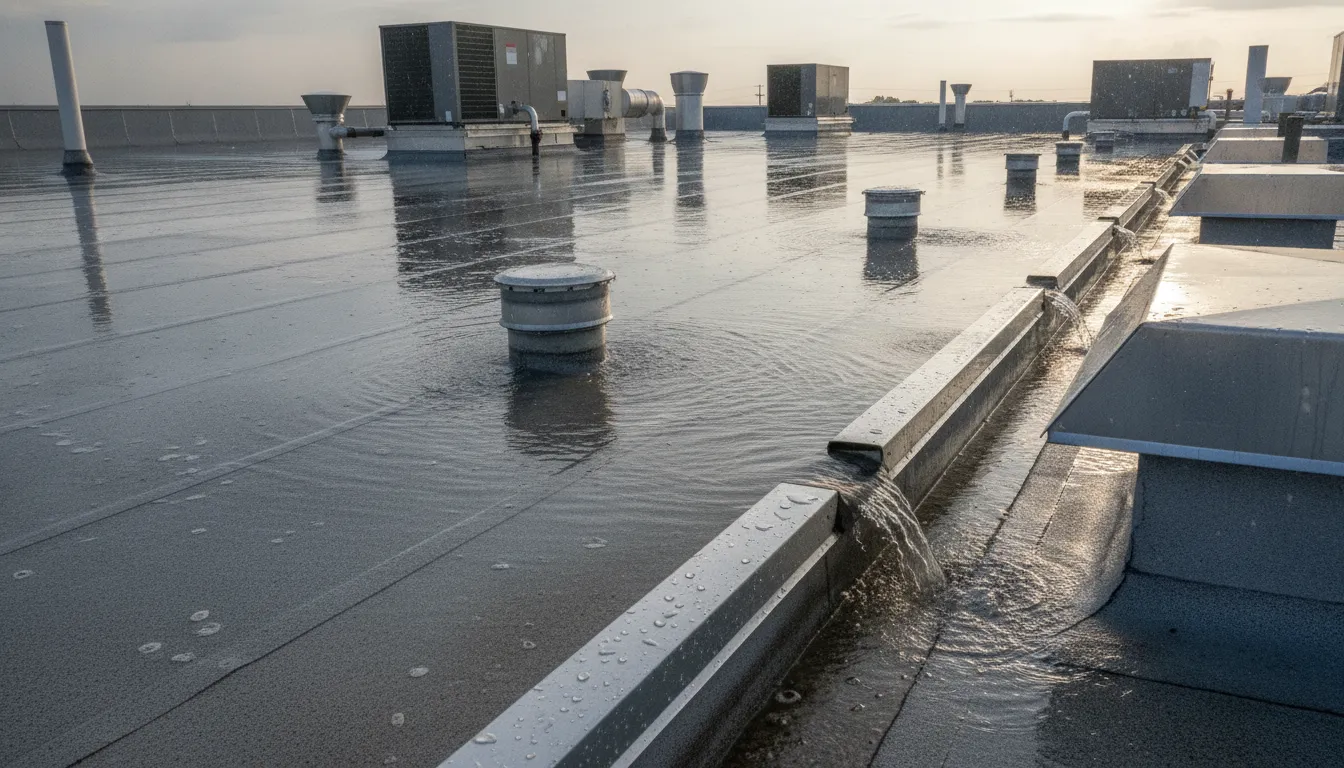
- Drainage: Note blocked drains, ponding areas, and slope issues that may repeatedly expose the same area to water.
- Repair history: Identify prior patches and whether leaks have returned at the same locations.

Elevation Roofing & Restoration provides roof inspections and works on commercial roofing systems. A useful inspection report should help you understand both what needs attention now and what conditions may lead to future work.
Ask how the inspector distinguished a surface defect from moisture or damage in the layers below. Visual checks can identify many concerns, but the inspector may recommend additional evaluation if the condition of the insulation or deck is uncertain. The report should say what was observed, what remains unknown, and whether a test opening or other follow-up is being proposed. This helps keep a recommendation tied to evidence rather than assumptions.
When Is a TPO Roof Repair a Reasonable Option?
Repair may be a sensible option when the problem is localized and the surrounding roof remains serviceable. Examples can include a small puncture, a limited seam issue, or a damaged flashing detail that has not led to extensive moisture intrusion. The specific repair method depends on the membrane condition, the location, and whether the affected surfaces can be prepared and joined reliably.
Repair is more persuasive when the inspection finds a defined source, the rest of the roof is in sound condition, and the proposed fix addresses the cause rather than only the visible symptom. Ask the roofer to explain the repair area, what preparation is required, how adjacent seams or flashing will be handled, and how the work will be checked when complete.
A repair plan should also address why the problem occurred. If water is entering at a penetration, for example, the scope may need to correct the flashing detail. If water collects because a drain is blocked or drainage is poor, simply sealing a nearby seam may not solve the recurring issue. Roof maintenance and timely repairs can help owners track developing problems, but they do not substitute for correcting a persistent underlying cause.
Before approving a repair, clarify its boundaries. Does the proposed work cover only the visible hole, or will it include nearby loose material, a seam, or a transition that appears related? Will the roofer inspect the area after the repair and provide photographs? If the membrane is old or has multiple patches, ask how the contractor will judge whether the repair can bond to the existing surface. These questions do not determine the answer by themselves, but they make the scope easier to compare and help prevent an incomplete patch from being mistaken for a roof-wide solution.
When Do Repeated Leaks or Broad Damage Point Toward Replacement?
Replacement deserves closer consideration when inspection finds deterioration across multiple roof areas, recurring leaks despite prior repairs, widespread seam problems, or moisture affecting substantial sections of the insulation or deck. A roof can also become difficult to keep watertight when repairs are accumulating in different locations and the membrane no longer provides a dependable surface for durable fixes.
Repeated leakage is a reason to investigate the roof assembly, not automatic proof that the entire roof must be replaced. A Portage County roof project description notes that repeated leaks in the same area can increase the potential that underlying insulation needs replacement. That is a project-specific observation, but it illustrates why a recurring leak should prompt an examination below the membrane, not just another surface patch. See the county roof project description.
Ask whether the proposed scope addresses the actual extent of damage. Depending on the findings and the roof design, options may range from replacing an isolated section to replacing a larger roof area. A contractor should explain the limits of any repair, including what cannot be confirmed without opening or testing parts of the assembly. For more on broader project planning, review Elevation’s information about roof replacement and flat roofing systems.
Think about the pattern, not simply the count of leaks. Several stains inside one room might trace back to one roof detail, while separate leaks across distant parts of the building may point to a wider condition. A recurring leak in the same place can also mean an earlier fix addressed the symptom but not the entry point. Give the inspector a timeline of when leaks appeared, what repairs were made, and whether the symptoms returned after rainfall. This history can help focus the inspection and make the recommended scope more specific.
| What the inspection finds | Repair may fit when… | Replacement may merit review when… |
|---|---|---|
| Membrane condition | Damage is confined to a small, accessible area and nearby material remains sound. | Deterioration, seam failures, or damage is widespread across the roof. |
| Leak pattern | There is a clear, isolated entry point and no sign of broad moisture intrusion. | Leaks recur in several locations or continue after appropriate repairs. |
| Insulation or deck | Inspection finds no broad wet or compromised areas. | Moisture or damage extends beneath the membrane across a substantial area. |
| Work history | A focused repair can address a new or one-time problem. | Repeated patches are no longer resolving the underlying issue. |
| Planning needs | A prompt, contained correction can restore the affected detail. | The owner needs to compare a larger project scope with continued repair planning. |
The table is a starting point, not a substitute for inspection. A roof’s age alone does not settle the decision; actual condition and the scope of damage matter. Owners can use a roofing estimate calculator as an early planning tool, then compare the result with an on-site assessment and a clearly documented scope.
Schedule a free roof inspection to discuss repair and replacement options
How Should Texas Owners Compare the Two Options?
Compare the full plan for each option, not only the first quoted price. A lower-cost repair can make sense if it resolves a localized problem and the rest of the roof is in good condition. It may be a poor long-term fit if leaks are recurring, the repair leaves known wet materials in place, or the roof has multiple weak areas. Conversely, a recommendation for full replacement should be supported by findings that explain why repairs would not adequately address the condition.
- Request a roof map or marked photographs. Look for the reported damage, leak history, and any areas needing further investigation.
- Ask what is included. Clarify the membrane or section being repaired or replaced, flashing and penetration details, drainage work, removal of damaged material, and cleanup.
- Understand exclusions and unknowns. Ask what conditions could change the scope once work begins and how those changes will be documented and approved.
- Compare expected disruption. For a business, ask how crews, access, equipment, noise, and weather contingencies could affect operations.
- Keep records. Save inspection photos, work descriptions, invoices, and notes about leaks so future maintenance starts with a useful history.
For a commercial property, coordinate the inspection and proposed work with the person responsible for building access and operations. For a home or a mixed-use property, track interior stains and note when they appear, but avoid climbing onto the roof yourself. A professional can assess elevated and potentially unsafe areas.
For a fair comparison, ask each proposal to describe the same area and assumptions. One quote may cover a small section while another addresses a larger area or includes removal of wet material. Those are not equivalent scopes, even if their totals appear side by side. Ask whether temporary protection is needed while the project is planned, how the crew will protect equipment or stored goods, and who will be the point of contact if the building is occupied during work. Elevation serves property owners in the Houston and Austin areas; its Texas service locations page can help you check regional coverage.
Discuss a documented repair or replacement plan with a roofing professional
What Steps Help Prevent Another TPO Roof Problem?
Once the immediate issue is handled, ask what routine checks are appropriate for the property. Keep drains and roof surfaces clear of debris when safe and appropriate, and have roof details checked after severe weather or building work that may affect penetrations. Record any new ceiling stains or dripping promptly, including the date and location. These simple records can help an inspector compare a new event with prior trouble spots.
Do not treat a surface coating, patch, or restoration as a universal alternative to replacement. Whether such an approach is suitable depends on the existing membrane, moisture below it, roof details, and the product and scope being proposed. Ask the contractor to explain whether the method is compatible with the roof and what conditions would rule it out. Elevation’s roof restoration service information can help you frame questions about restoration, while a site-specific inspection determines what fits your roof.
Set up a simple record that someone can maintain after the contractor leaves. Keep the inspection report, repair scope, photos, invoices, and a roof plan together. Note the date of each inspection, the weather or event associated with any leak, and whether a repair was completed. For a business, assign a facilities contact to check for new stains or drainage issues and to report them promptly. This does not prevent every roof problem, but it gives the next inspector useful context and can help avoid repeating diagnostics without the prior history.
Elevation Roofing & Restoration serves property owners in the Houston and Austin areas and offers roofing services for commercial properties. You can review its Texas service locations and customer reviews when deciding whom to contact. For a repair or replacement recommendation, ask for clear findings and a scope that matches the roof’s documented condition.
Contact Elevation Roofing & Restoration to plan your next step
Frequently Asked Questions
Can one leak mean a TPO roof needs replacement?
No. One leak can come from a localized membrane or flashing problem. Have the source and surrounding roof checked, including the insulation below, before deciding how extensive the work should be.
Does a recurring leak always mean the roof must be replaced?
No. A recurring leak signals that the cause may not have been resolved, or that moisture may extend beyond the visible entry point. Inspection findings determine whether a focused repair, a larger section repair, or replacement is appropriate.
What should a TPO repair estimate explain?
It should identify the location and nature of the problem, the repair method and included details, any known limitations, and how the completed work will be checked. Ask how the contractor will handle additional concealed damage if it is discovered.
Should I compare multiple options before replacing a commercial TPO roof?
It can be useful to compare a documented repair scope with a replacement proposal when both are technically reasonable. Make sure each estimate addresses the same roof areas and explains what conditions support its recommendation.
A documented inspection gives you a clearer basis for choosing a targeted TPO repair or planning a replacement that addresses the roof’s actual condition.