It’s hard to believe that the same basic material found in sandpaper is also responsible for the deep red of a ruby. The journey of aluminum oxide begins with bauxite, a reddish-brown rock that looks nothing like the final product. Through a complex refining method called the Bayer process, this raw ore is transformed into a pure white powder. This powder is the starting point for an incredible range of materials, from the metal in a soda can to the advanced ceramics in a medical implant. Understanding how this single compound can be so versatile is key to appreciating its role in our world.
Key Takeaways
- A unique combination of properties makes it a workhorse material: Aluminum oxide is exceptionally hard, resistant to extreme heat, and an excellent electrical insulator. This blend of traits makes it the perfect solution for tough jobs in industries from aerospace to electronics.
- It’s the starting point for countless applications: Nearly all aluminum metal begins as aluminum oxide, but its uses extend far beyond that. You can find it in abrasives like sandpaper, protective ceramics, medical implants, and even water purification systems.
- Proper selection and safe handling are essential: To use aluminum oxide effectively, match the grade and purity to your project’s specific demands. Always prioritize safety by using the right personal protective equipment, like a respirator, to avoid inhaling dust.
What Is Aluminum Oxide?
You’ve likely encountered aluminum oxide many times, even if you didn't know it. This unassuming material is one of the most important industrial compounds in the world, playing a role in everything from producing aluminum metal to creating brilliant gemstones. While it often starts as a simple white powder, its incredible strength and versatility make it a true workhorse material.
At its core, aluminum oxide is a simple combination of aluminum and oxygen, but this pairing creates a substance with remarkable properties. Its hardness is second only to diamond, making it an exceptional abrasive for grinding and polishing. It also stands up to extreme heat and resists corrosion, which is why you’ll find it in high-performance ceramics and industrial furnaces. Let’s look closer at its basic chemical and physical properties.
Chemical Makeup and Formula
Aluminum oxide is a chemical compound made of aluminum (Al) and oxygen (O). Its chemical formula is Al2O3, which tells you that each molecule contains two aluminum atoms bonded to three oxygen atoms. This strong atomic bond is the source of its impressive durability and stability.
You’ll often hear aluminum oxide referred to by its common name, alumina. While Al2O3 is the most prevalent form, the term "aluminum oxides" can also describe a group of related compounds with slightly different structures and properties. For most industrial and commercial purposes, however, alumina (Al2O3) is the star of the show. Its simple, stable makeup makes it a reliable and predictable material for countless applications.
Appearance and Common Forms
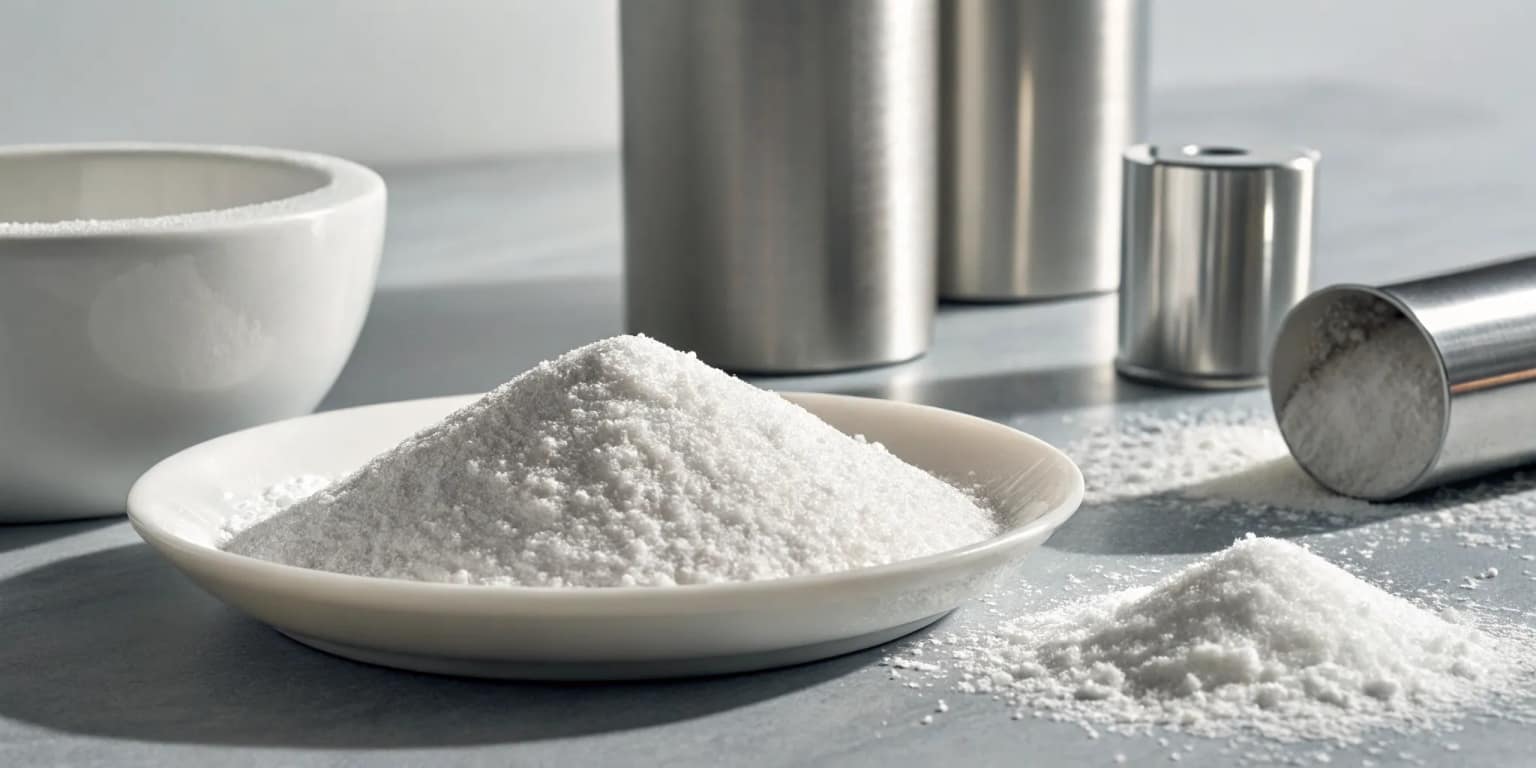
In its most processed form, aluminum oxide is a fine white powder with no smell. Because of its exceptional hardness, it’s widely used as an abrasive for sanding, grinding, and polishing. It scores a 9 on the Mohs hardness scale, putting it just one step below diamond, which is a perfect 10. This toughness makes it incredibly effective at shaping and finishing other, softer materials.
In nature, aluminum oxide appears as a crystalline mineral called corundum. While corundum itself is colorless, tiny amounts of other elements can transform it into precious gemstones. Traces of chromium create the deep red of a ruby, while iron and titanium produce the brilliant blue of a sapphire. So, the same basic material used in sandpaper is also responsible for some of the world's most stunning jewels.
What Makes Aluminum Oxide So Useful?
Aluminum oxide is a true multitasker in the world of materials. Its popularity isn't just a fluke; it comes from a powerful combination of traits that make it incredibly reliable for a wide range of jobs. From grinding tough metals to protecting sensitive electronics, its unique properties allow it to perform where other materials might fail. Let's look at the four key characteristics that make this compound so valuable.
Hardness and Durability
First and foremost, aluminum oxide is incredibly hard. On the Mohs scale, which measures mineral hardness, it scores a 9 out of 10, right behind diamond. This exceptional toughness is why it’s one of the most common abrasives used in sandpaper, grinding wheels, and sandblasting. It can easily cut, grind, and polish other tough materials without quickly breaking down itself. This durability means it provides consistent performance and has a long service life, whether it's being used to shape a metal part or smooth a wooden surface.
Heat Resistance and Stability
This material can really take the heat. With a melting point over 2,000°C (or 3,700°F), aluminum oxide remains stable at temperatures that would melt most metals. This makes it an essential component in refractory products, like the insulating bricks that line furnaces and kilns. Because it doesn't warp or degrade under extreme heat, it helps contain high-temperature processes safely and efficiently. This thermal stability is a key reason it’s trusted in demanding industrial environments, from metal smelting to glass manufacturing.
Electrical and Thermal Properties
Here’s where things get interesting. Aluminum oxide is an excellent electrical insulator, meaning it stops the flow of electricity in its tracks. At the same time, it’s a good thermal conductor, allowing heat to move through it effectively. This unusual combination is a huge advantage in electronics. For example, it's used as a substrate for circuit boards or as a filler in thermal pastes. It can isolate electrical components to prevent short circuits while also helping to draw heat away from sensitive parts, keeping them from overheating.
Chemical Resistance
Aluminum oxide is also highly resistant to chemical attacks. It doesn't corrode or react when exposed to strong acids or alkalis, which is a major benefit for applications in harsh environments. This chemical inertness makes it a reliable material for things like pump components, valves, and seals that handle corrosive fluids. It’s also biocompatible, meaning it doesn't cause a reaction in the human body. This allows it to be used safely in medical implants like dental crowns and hip replacements, where stability and safety are non-negotiable.
How Is Aluminum Oxide Made?
Aluminum oxide isn’t found in its pure form in nature. Instead, it’s refined from a reddish-brown, clay-like rock called bauxite ore, which is the world's primary source of aluminum. The journey from raw bauxite to the fine white powder of aluminum oxide is a fascinating and complex industrial process.
The most common method used to achieve this transformation is known as the Bayer process. Developed in the late 19th century, this chemical process has remained the go-to technique for producing alumina (another name for aluminum oxide) on a massive scale. It’s a multi-stage procedure designed to separate the valuable aluminum compounds from the other minerals mixed in the bauxite ore. Let's walk through how this works, step by step.
The Bayer Process: Turning Bauxite into Alumina
Think of the Bayer process as a large-scale purification recipe. The goal is to take raw, earthy bauxite and strip away everything that isn't aluminum. This highly effective method involves four key stages: digestion, clarification, precipitation, and calcination. Each step plays a critical role in isolating and refining the aluminum hydroxide from the ore before a final, high-heat transformation creates pure aluminum oxide. This process is the foundation of the entire aluminum industry, turning raw rock into a refined material ready for countless applications.
Digestion
The process begins by grinding the bauxite ore and mixing it into a hot, concentrated solution of sodium hydroxide, also known as caustic soda. This mixture is heated under pressure in large tanks. The strong alkaline solution acts as a chemical solvent, dissolving the aluminum-bearing compounds within the ore to form a sodium aluminate solution. Other elements in the ore, like iron and silicon, don't dissolve, which is key for the next step.
Clarification
Once the aluminum compounds are dissolved, the hot mixture is moved to settling tanks. Here, the undissolved impurities, which include iron oxides, silica, and other minerals, sink to the bottom. This reddish-brown waste material is known as "red mud." The remaining liquid, a much purer sodium aluminate solution, is filtered to remove any lingering solids. This step is all about cleaning up the solution before trying to get the aluminum back out.
Precipitation
With the impurities gone, the clear sodium aluminate solution is cooled. To encourage the aluminum hydroxide to come out of the solution, small crystals of previously made aluminum hydroxide are added. This technique, called seeding, prompts the dissolved aluminum hydroxide to precipitate, or form solid crystals. These crystals gradually grow and settle at the bottom of the tank, where they can be collected.
Calcination
The final step is to take the collected aluminum hydroxide crystals and heat them in massive rotating kilns to extremely high temperatures, often over 1,100°C (2,000°F). This intense heating process, known as calcination, burns off the water molecules bound within the hydroxide. What’s left behind is a fine, pure white powder: anhydrous aluminum oxide, or alumina.
Environmental Impact and Energy Use
While the Bayer process is incredibly effective, it comes with significant environmental considerations. The entire procedure is very energy-intensive, especially the calcination stage, which requires immense heat. Beyond its energy footprint, the process creates a major byproduct: red mud. Because this waste is highly alkaline from the caustic soda used in digestion, its disposal presents a challenge. The industry must carefully manage large volumes of red mud to prevent environmental contamination, making sustainability a key focus for producers. These environmental implications are a critical part of the conversation around aluminum oxide production.
Where Do You Find Aluminum Oxide?
Aluminum oxide is one of those amazing materials that you’ve probably used today without even realizing it. Because of its unique combination of hardness, heat resistance, and insulating properties, it shows up in an incredible range of products and industries. From the aluminum foil in your kitchen to the computer you're using right now, this versatile compound is working behind the scenes. Let's look at some of the most common places you'll find it.
Producing Aluminum Metal
The single biggest use for aluminum oxide, or alumina, is making aluminum metal. In fact, nearly all the aluminum in the world starts as aluminum oxide extracted from bauxite ore. The process involves dissolving the alumina in a molten salt bath and then using a powerful electric current to separate the pure aluminum from the oxygen. This electrolytic process is the foundation of the global aluminum industry. So, every time you grab a soda can, use aluminum foil, or see an airplane, you're looking at the end product of a journey that began with aluminum oxide.
Abrasives for Grinding and Polishing
If you’ve ever used sandpaper or a grinding wheel, you’ve experienced the power of aluminum oxide firsthand. It’s an incredibly hard material, ranking a 9 on the Mohs scale, just below diamond. This exceptional hardness makes it a perfect abrasive for shaping, cutting, and polishing other materials. You can find it in everything from industrial cutting tools to the polishing compounds used to remove scratches from car paint. It’s even gentle enough to be used in some toothpastes as a polishing agent and in microdermabrasion treatments for skincare, which just shows how adaptable it is.
High-Performance Ceramics
When you need a material that is incredibly strong, wear-resistant, and can handle high pressure, aluminum oxide is a top choice for creating high-performance ceramics. These aren't your typical pottery ceramics; they are advanced materials engineered for tough jobs. Because it doesn't wear down easily and maintains its strength under stress, aluminum oxide is used to make industrial components like seals, valves, and pump parts. It’s also used in ballistic armor and as a protective coating for tools, extending their lifespan in demanding environments. These technical ceramics are essential in many modern technologies.
Electronics and Insulation
Aluminum oxide is an excellent electrical insulator, meaning it doesn't conduct electricity. This property is absolutely critical in the world of electronics. It’s used as a thin-film insulator in microchips and capacitors, preventing short circuits and ensuring components function correctly. You can also find it in the ceramic body of spark plugs, where it insulates the center electrode and withstands the intense heat of an engine. Its ability to act as a barrier to both electricity and heat makes it a go-to material for protecting sensitive electronic components.
Medical and Biomedical Devices
Because aluminum oxide is strong, wear-resistant, and biocompatible (meaning it’s not harmful to living tissue), it has become a trusted material in the medical field. It’s frequently used to create artificial joints, especially hip and knee replacements, where its durability ensures a long lifespan inside the body. It's also a popular choice for dental implants and crowns because it mimics the strength and appearance of natural teeth. The non-reactive nature of these bioceramics makes them ideal for surgical tools and as coatings on medical devices to improve their performance and safety.
Speeding Up Chemical Reactions
In the chemical industry, efficiency is everything. Aluminum oxide plays a key role as both a catalyst and a catalyst support, helping to speed up chemical reactions without being consumed in the process. For example, it’s used in refineries to help convert harmful hydrogen sulfide gas into elemental sulfur, a much safer and more useful substance. It also serves as a stable, high-surface-area base for other precious metal catalysts, making them more effective and helping industrial processes run more smoothly and economically.
Purifying Water
Aluminum oxide’s porous structure makes it an excellent adsorbent, which means it can attract and hold molecules on its surface. This property is put to good use in purification processes. Known as activated alumina, it acts as a desiccant to remove water from gas streams in industrial settings, keeping them dry and preventing corrosion. It is also used in water filtration systems to remove contaminants like fluoride and arsenic from drinking water. Its ability to selectively adsorb certain substances makes it a simple yet powerful tool for ensuring purity in both air and water.
Key Industries Using Aluminum Oxide
Because of its unique combination of hardness, heat resistance, and chemical stability, aluminum oxide has become a cornerstone material in some of the world’s most demanding industries. It’s a versatile problem-solver, playing a critical behind-the-scenes role in everything from the car you drive to the device you’re reading this on. Its properties allow engineers and designers to push the boundaries of performance and reliability across a wide range of applications.
Aerospace and Automotive
Thanks to its incredible hardness and heat resistance, aluminum oxide is a key player in the aerospace and automotive industries. Because it’s both strong and relatively lightweight, it’s used to create wear-resistant components for engines and braking systems. Its excellent electrical insulation properties also make it the primary material in spark plug insulators, which have to withstand extreme temperatures. Beyond moving parts, its toughness is applied in more protective roles. For example, ceramic plates made from aluminum oxide are integrated into body armor. This material helps strengthen components without adding excessive weight, a critical factor in designing fuel-efficient aircraft and high-performance vehicles.
Electronics and Semiconductors
In the world of electronics, aluminum oxide is essential for its role as an electrical insulator. It prevents short circuits in tiny, complex components, ensuring devices work correctly. You’ll find it used as a thin-film layer in microchips and as a substrate for building integrated circuits. Its applications are also expanding into energy storage. Advanced coatings of aluminum oxide are used in lithium-ion batteries to improve their safety and lifespan by providing better thermal stability. This helps prevent overheating and extends the battery’s performance over time. The entire process of semiconductor fabrication relies on materials like this to create reliable, high-performance electronics.
Medical and Biomedical
Aluminum oxide is highly valued in the medical field because it is biocompatible, meaning it can exist inside the human body without causing an adverse reaction. Its exceptional strength and wear resistance make it an ideal material for long-lasting medical implants. You can find it in artificial hip and knee joints, bone screws, and dental implants, where durability is non-negotiable. Because it is chemically inert, it doesn't degrade over time when exposed to bodily fluids. These bioceramics are also used to create coatings for medical instruments, adding to their longevity and performance in sterile environments.
Petrochemicals
The petrochemical industry operates under some of the most extreme conditions, involving high temperatures, intense pressures, and corrosive chemicals. Aluminum oxide thrives in this environment. It is widely used as a refractory material, lining reactors, furnaces, and pipes to protect them from chemical attack and thermal stress. For example, it’s a key component in syngas reactors, which operate under very harsh conditions. Its chemical inertness and stability make it an excellent catalyst support, providing a durable base for the chemical reactions that produce fuels and other valuable substances. By withstanding these tough settings, aluminum oxide ensures industrial processes run safely and efficiently.
How to Choose the Right Aluminum Oxide
Picking the right aluminum oxide for your needs doesn't have to be complicated. While the options might seem endless, your choice really comes down to understanding a few key characteristics and matching them to the demands of your project. By getting clear on the grade, size, and purity you need, you can select a material that performs exactly as you expect it to, without overspending on features you don’t need.
Understand Grades, Sizes, and Purity
Aluminum oxide isn't a one-size-fits-all material. It comes in various grades, sizes, and purities that directly impact its performance. The grade often points to its intended use, such as abrasive grades for grinding and polishing or chemical grades for use in specific reactions. Purity levels can range from around 99% to an ultra-high 99.99%, a critical factor for sensitive jobs in electronics or pharmaceuticals where contamination is not an option. Understanding the different properties of alumina is the first step to making an informed choice for your application.
Match the Grade to Your Project
Once you know the basics, you can connect them to your project's specific needs. You don't always need the highest purity or the most expensive grade; it’s all about finding the right fit. For example, if you’re manufacturing cutting tools that require excellent wear resistance, a high-purity abrasive grade is a smart investment. On the other hand, if you need a filler for plastics or are working on a general-purpose ceramic, a standard, lower-purity grade will likely do the job perfectly and more cost-effectively. Matching the material to the application requirements ensures you get the performance you need without breaking your budget.
Aluminum Oxide vs. Other Abrasives
While aluminum oxide is a fantastic all-around abrasive, it’s not the only option on the shelf. Depending on your project, you might find that another material works better. The two other most common industrial abrasives are silicon carbide and zirconia. Each has its own set of strengths and weaknesses, and understanding the differences will help you choose the right tool for the job. Think of it like picking a knife in the kitchen; a chef’s knife is versatile, but sometimes you really need a paring knife or a cleaver. Let's break down how these materials stack up against each other.
Silicon Carbide
Silicon carbide is known for being extremely hard and sharp, even more so than aluminum oxide. This makes it perfect for grinding very hard materials like ceramics, stone, and glass. It’s also great for working on non-ferrous metals such as aluminum, brass, and titanium. Because its grains are so sharp, it can produce a very fine, smooth finish. The main trade-off is that silicon carbide is more brittle. While it cuts quickly, its sharp edges can fracture more easily, causing it to wear down faster than aluminum oxide in certain high-pressure applications. This makes it a specialist tool, ideal for tasks where a pristine finish on a hard surface is the top priority.
Zirconia
If you need toughness and durability, zirconia is an excellent choice. This abrasive is built to last, especially in heavy-duty applications like aggressive grinding and stock removal on metals. The magic of zirconia is in its unique self-sharpening ability. As the grains wear down, they fracture in a way that exposes new, sharp edges. This means the abrasive stays effective for longer, even under intense pressure. A comparative study of abrasive materials highlights that zirconia maintains its sharpness longer than aluminum oxide in high-impact situations. The downside? Zirconia is typically more expensive than both aluminum oxide and silicon carbide, so it’s best reserved for jobs where its longevity provides a real cost-per-use advantage.
Comparing Cost, Availability, and Performance
When it’s time to make a decision, you have to balance three key factors: performance, cost, and availability. Aluminum oxide is the popular workhorse for a reason. It’s widely available and generally the most cost-effective option, which can significantly impact the overall cost of a project.
In terms of performance, it’s a trade-off. Silicon carbide offers superior hardness for a finer finish but is more brittle. Zirconia provides exceptional durability for heavy-duty tasks but comes with a higher price tag. Your choice really depends on the specific demands of your application. For general-purpose sanding and grinding, aluminum oxide is often the perfect fit. For finishing hard ceramics, you might reach for silicon carbide. And for aggressively shaping steel, zirconia is likely your best bet.
How to Handle Aluminum Oxide Safely
Aluminum oxide is a versatile and powerful material, but like any industrial substance, handling it correctly is key to staying safe. The main concern is the fine dust created during processes like grinding or sandblasting. Taking a few straightforward precautions ensures you can work with it confidently without putting your health at risk. It’s all about understanding the potential issues and using the right gear and procedures to protect yourself and your team.
Understand the Health and Safety Risks
The primary health risk associated with aluminum oxide comes from inhaling its dust. When the fine particles become airborne, they can enter your respiratory system and cause irritation or inflammation in the lungs. Over time, significant and prolonged exposure can lead to more serious lung conditions. Some studies also point to potential long-term health effects of aluminum exposure, so minimizing your contact with the dust is always the best practice. Being aware of these risks is the first step toward creating a safe working environment. It’s not about being scared of the material, but about respecting it and handling it with care.
Essential Protective Gear (PPE)
Using the right personal protective equipment (PPE) is non-negotiable when working with aluminum oxide dust. Think of it as your first line of defense. Here’s what you’ll need:
- Respirators: A properly fitted respirator is your most important piece of gear. It prevents you from inhaling fine dust particles that can damage your lungs.
- Safety Goggles: Protect your eyes from dust and flying particles that can cause irritation or serious injury.
- Gloves: Chemical-resistant gloves are a good idea to prevent skin contact, which can sometimes lead to irritation for sensitive individuals.
Making sure your personal protective equipment is in good condition and worn correctly every time is a simple habit that makes a huge difference.
Following Regulatory Guidelines
To ensure workplace safety, regulatory bodies like the Occupational Safety and Health Administration (OSHA) have set clear rules for handling materials like aluminum oxide. These guidelines establish permissible exposure limits (PELs) for airborne dust. For aluminum oxide, the limit is 15 milligrams per cubic meter (mg/m³) for total dust and 5 mg/m³ for the finer, respirable dust over an 8-hour workday. Employers are responsible for monitoring air quality to stay within these limits and for providing employees with training on safe handling practices. Following these regulations isn't just about compliance; it's about actively protecting everyone's health on the job.
What's Next for Aluminum Oxide?
Aluminum oxide has a long history, but its story is far from over. This material is becoming even more critical as we look toward the future. Scientists and engineers are finding new and exciting ways to use its unique properties to solve modern challenges. From powering our devices more efficiently to creating next-generation materials and promoting a more sustainable world, aluminum oxide is at the center of some incredible innovations. It’s not just about what it has done; it’s about what it will do next. Let's look at a few key areas where aluminum oxide is set to make a big impact.
The Future in Electronics and Energy
As our world becomes more connected, the demand for better electronics and energy solutions is huge. Aluminum oxide is stepping up to the plate. It’s an excellent electrical insulator, which makes it perfect for protecting tiny, sensitive components inside our phones, computers, and other gadgets. Even more exciting is its role in energy storage. Researchers are using aluminum oxide as a special coating in lithium-ion batteries. This advanced coating helps extend the battery's life and improves its thermal stability, making our devices not only last longer but also safer. As we rely more on batteries for everything from electric vehicles to renewable energy grids, this is a game-changer.
Innovations in Nanotechnology
The field of nanotechnology, which involves working with materials at an atomic and molecular scale, sounds like science fiction, but it’s very real. And aluminum oxide is one of its rising stars. At this incredibly small scale, the properties of materials can change in amazing ways. Researchers are exploring how to use tiny particles of alumina to build advanced materials and devices from the ground up. Imagine creating stronger yet lighter composites for aerospace, more effective drug delivery systems in medicine, or ultra-efficient catalysts. By harnessing aluminum oxide's inherent strength and stability at the nano-level, we can create materials with capabilities we've only dreamed of.
A Focus on Sustainability and Recycling
In a world increasingly focused on sustainability, how we make and use materials matters more than ever. Aluminum oxide plays a surprisingly important role here. The vast majority of it is used to produce aluminum metal. The great news is that recycling aluminium is incredibly efficient, requiring just 5% of the energy it takes to create new aluminum from its raw ore, bauxite. This makes aluminum one of the most recyclable materials on the planet. By supporting a robust recycling loop, the aluminum oxide used in production contributes to a more circular economy, reducing energy consumption and preserving natural resources for future generations. It’s a powerful example of how industrial materials can be part of the solution.
Frequently Asked Questions
Is aluminum oxide the same as the aluminum in foil? Not quite, but they are closely related. Think of aluminum oxide as the raw ingredient and aluminum metal as the finished product. Aluminum oxide (also called alumina) is a ceramic compound that is refined from bauxite ore. To get the shiny, flexible metal used in foil or soda cans, this alumina must go through an energy-intensive process to separate the aluminum atoms from the oxygen atoms.
If it's used for grinding, why is it also in medical implants? This really shows how versatile the material is. For abrasives like sandpaper, we use aluminum oxide in its granular, sharp-edged form to take advantage of its extreme hardness. For medical applications like hip replacements, we use a highly purified, non-porous, and polished form of aluminum oxide. In this solid ceramic state, its key properties become biocompatibility and wear resistance, meaning it is safe for the body and will last for a very long time without breaking down.
What's the difference between a ruby and the aluminum oxide in sandpaper? The main difference is purity and crystal structure. At a chemical level, both are a form of aluminum oxide called corundum. The material in sandpaper is typically synthetic, manufactured for hardness and consistency. A ruby is a naturally occurring corundum crystal that gets its brilliant red color from trace amounts of chromium impurities. So, while they share the same base chemical, it's the tiny additions and natural formation that turn one into a precious gem.
Is aluminum oxide dust dangerous to work with? The solid material itself is very stable and safe. The primary health concern comes from inhaling the fine dust that can be created during grinding, cutting, or sandblasting. Prolonged exposure to this airborne dust can irritate the lungs. This is why using proper personal protective equipment, especially a well-fitted respirator and safety glasses, is so important when working with it in a way that generates dust.
Why is it called both alumina and aluminum oxide? They are simply two names for the same chemical compound, Al2O3. "Aluminum oxide" is the more formal, scientific name that describes its chemical makeup. "Alumina" is the common name that is widely used in industries like mining, ceramics, and materials science. You can use the names interchangeably, but you will often hear professionals in the field refer to it as alumina.