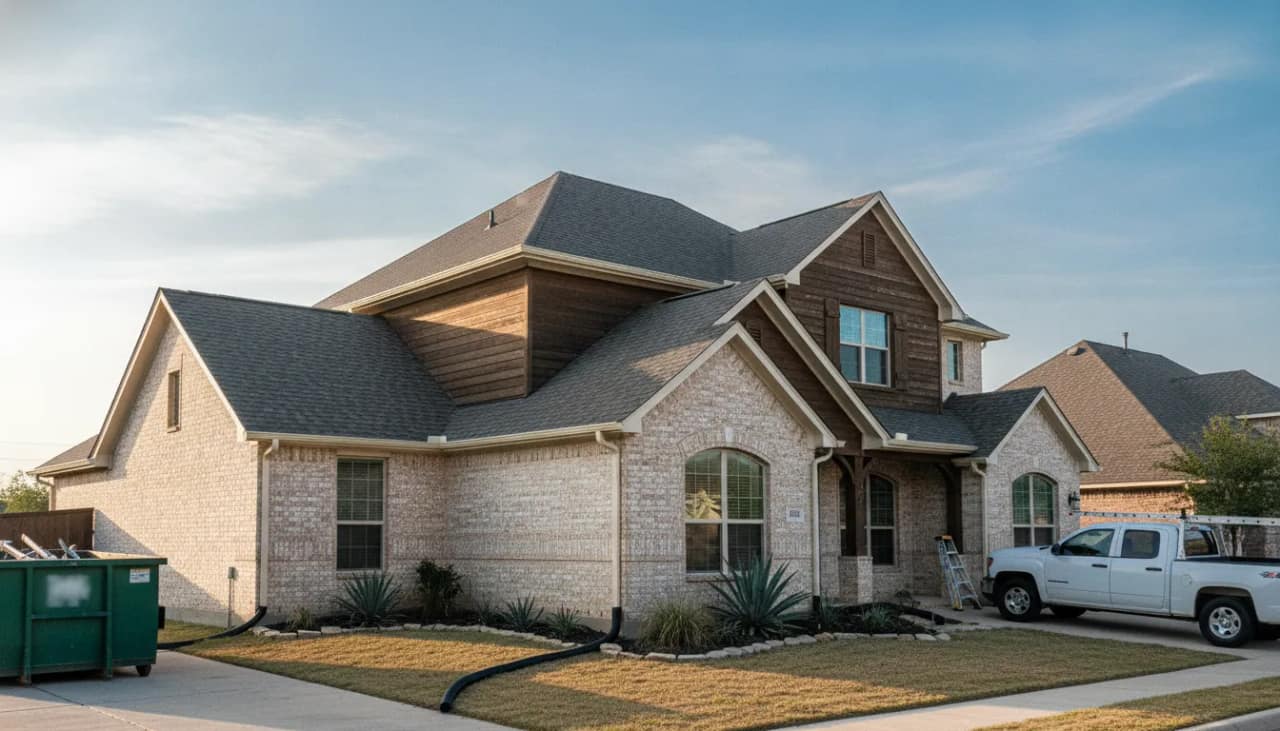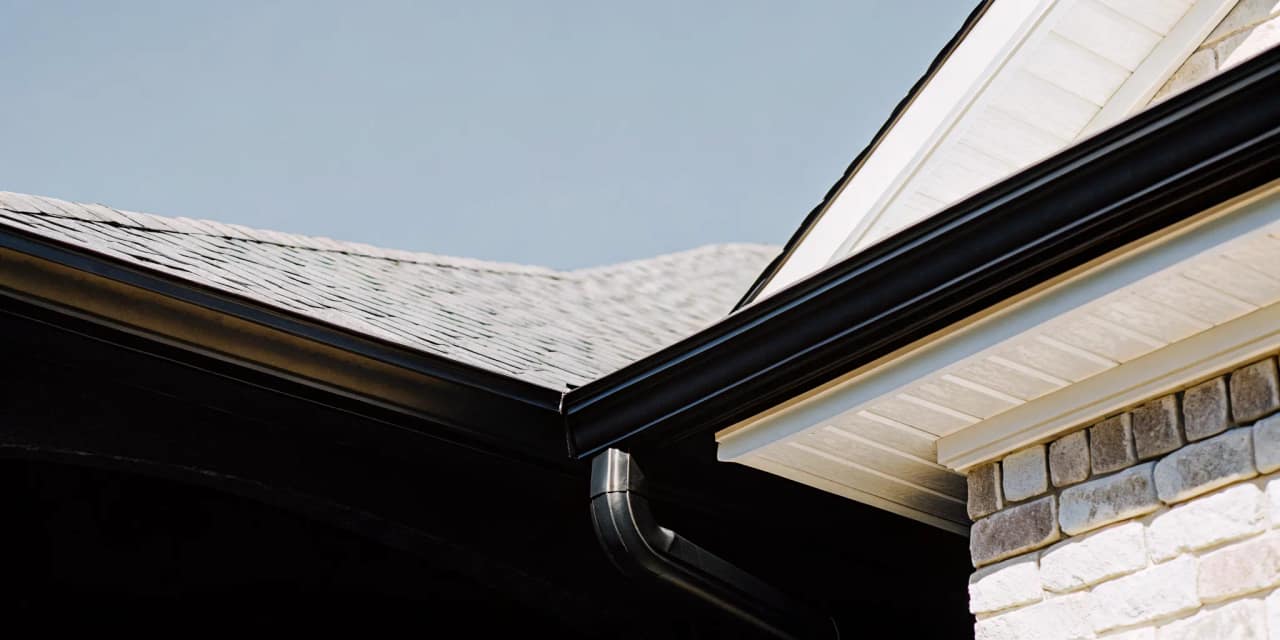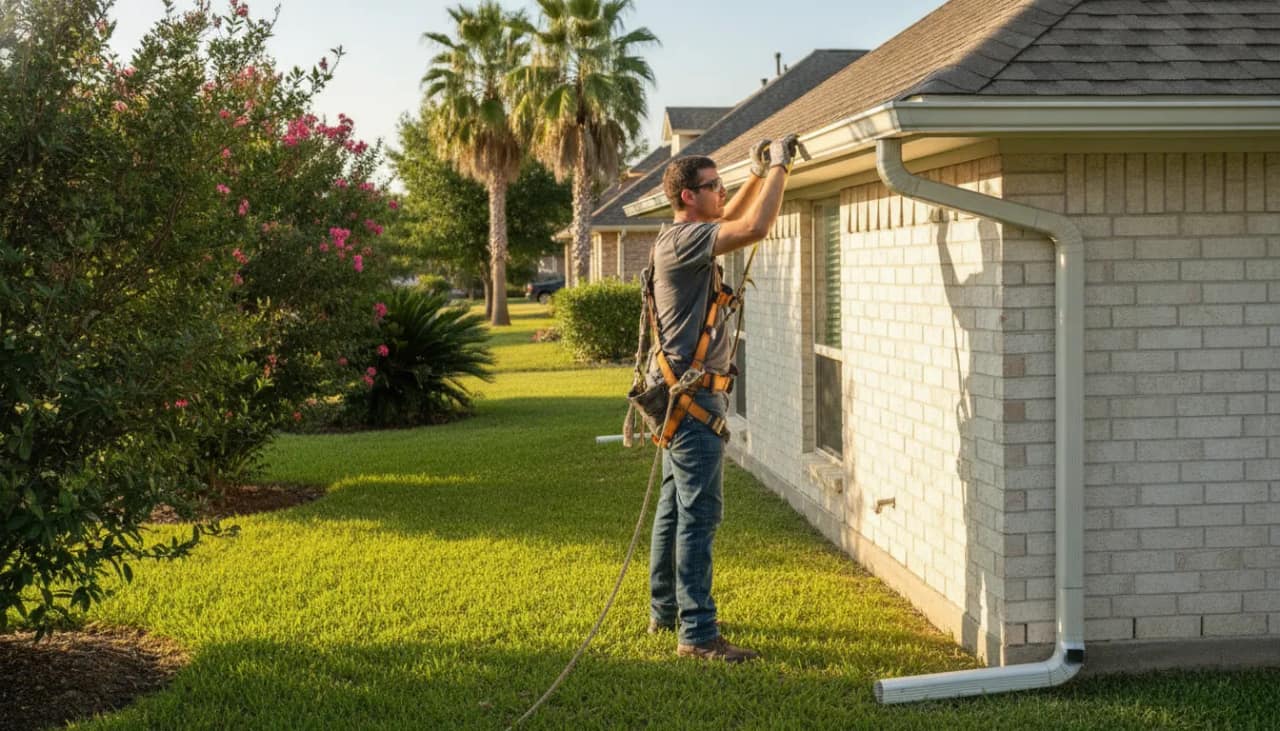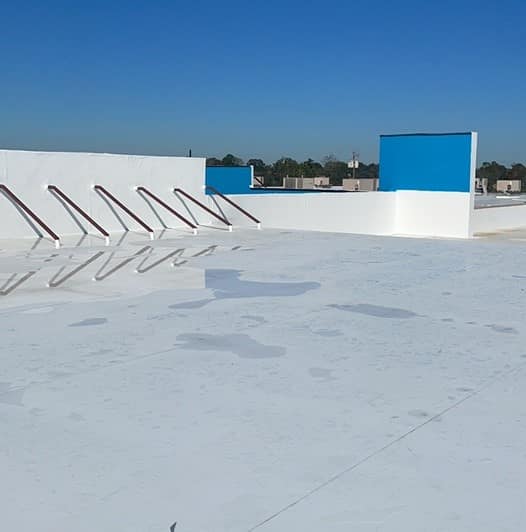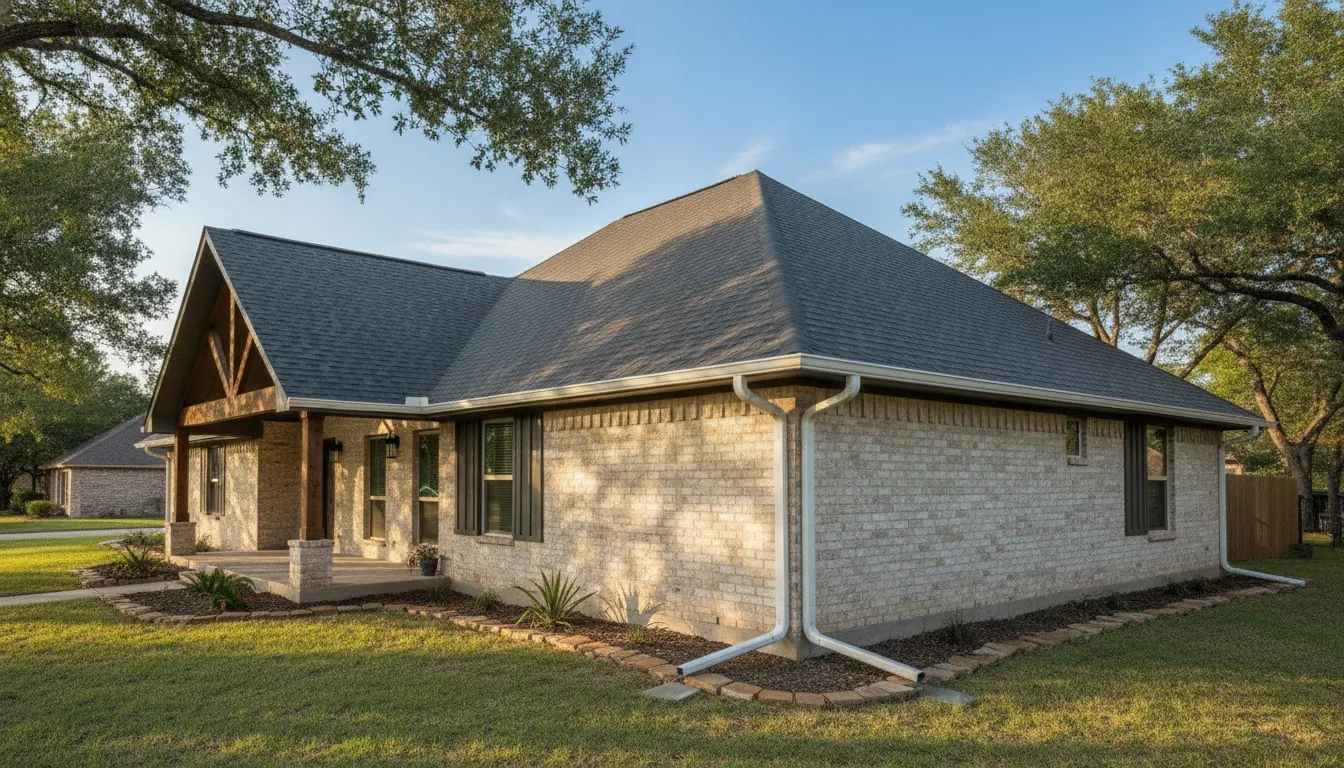
Gutters do more than finish the edge of a roof. In Texas, they help collect runoff and guide it away from walls, foundations, walkways, and landscaping. That makes installation a practical drainage decision, not just a weekend home-improvement project.
Call Elevation Roofing & Restoration at (832) 271-1726 for a free roof inspection.
DIY vs professional gutter installation depends on the property, the height and access involved, your comfort with accurate measuring and fastening, and how confidently you can direct water away from the building. A simple, low-access project may be manageable for an experienced homeowner, while complex rooflines, uncertain drainage, commercial buildings, or elevated work can justify professional help. OSHA identifies gutter installation as exterior-finishing work that can pose fall hazards: OSHA safety guidance provides useful context for evaluating the risk.
The right choice also depends on what happens after the gutters are attached. Understanding how runoff affects a Texas property helps you weigh safety, fit, drainage paths, and long-term maintenance before choosing an installation approach.
Why Does Gutter Installation Matter for Texas Properties?
Roofs collect and concentrate water that would otherwise spread across the ground. Because roof surfaces are impervious, they prevent rainwater from soaking into the soil and increase runoff, according to the University of Maryland Extension. Gutters and downspouts give that runoff a planned route instead of allowing it to fall directly beside the building.
That route matters for both homes and businesses. A properly directed downspout can move stormwater away from walls and the base of a structure. A poorly positioned or undersized system may release water where it can collect near the building. The goal is not simply to attach a channel to the roof edge. The complete system needs to collect water, maintain a practical flow path, and discharge it away from vulnerable areas.
For Texas property owners, the right decision depends on the building and the installation conditions. A simple, accessible roofline may be easier to evaluate than a commercial property with multiple roof sections, additions, or complicated drainage paths. Before choosing a DIY approach, consider whether you can safely reach every work area and verify that water will be directed where it belongs.
- Roof surfaces increase runoff because they prevent rainwater from being absorbed into the ground.
- Downspouts collect water from roofs and gutters and transport it away from buildings.
- Improperly maintained gutters, spouts, and drains can contribute to foundation damage and fascia rot.
The Texas gutter installation options guide covers materials and cost considerations. This article focuses instead on the decision between handling the work yourself and bringing in professional help. In either case, installation is only part of the responsibility. Gutters and downspouts need periodic attention so leaves, sediment, and other debris do not interrupt the drainage path.
Sources: University of Maryland Extension runoff guidance and Henrico County gutter maintenance guidance.
Is DIY Gutter Installation Right for Your Project?
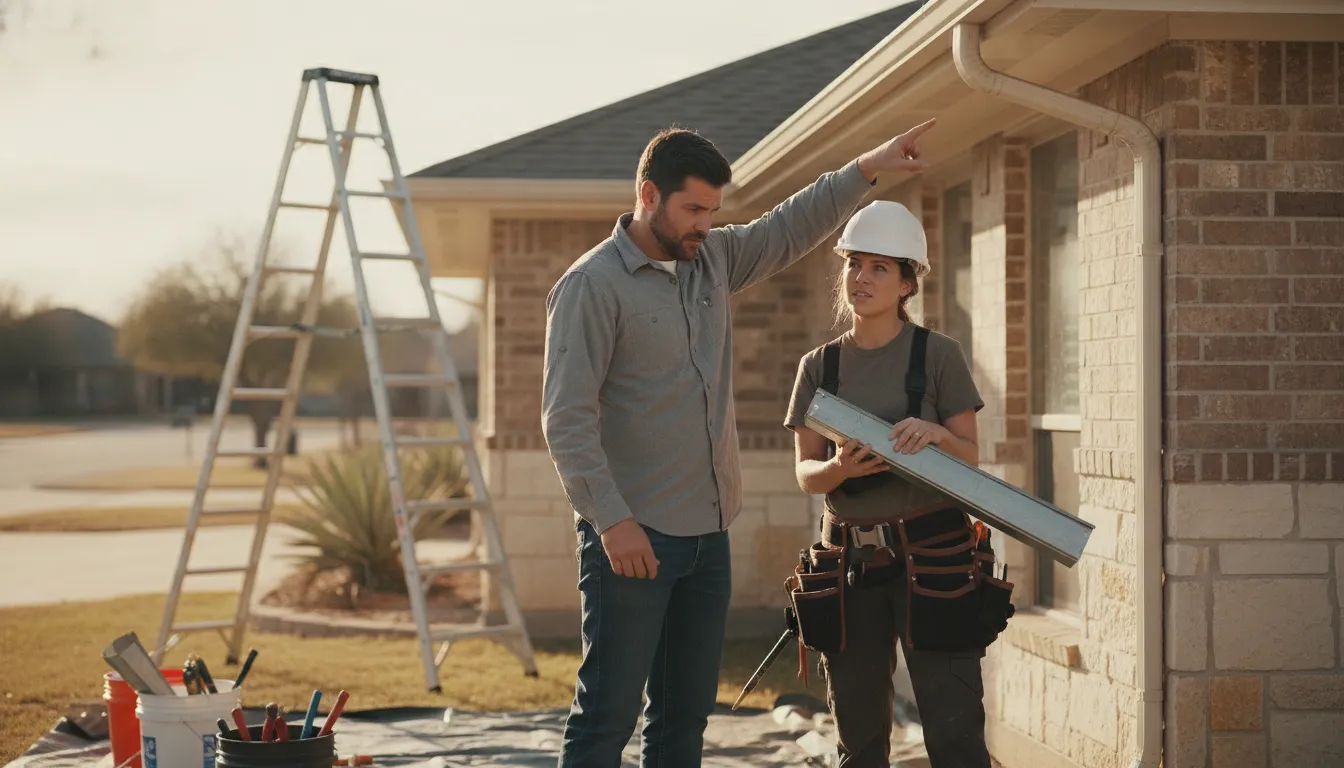
A straightforward gutter project may be manageable for a capable property owner when the work area is low, accessible, and easy to measure. The decision changes when installation requires extended ladder work, approaches a roof edge, or involves several roof planes and downspouts. A useful comparison is not simply DIY versus professional. It is whether the project can be completed safely and with enough attention to fit, drainage, and secure attachment.
| Consideration | DIY may fit | Professional help may fit better |
|---|---|---|
| Access | Low sections can be reached from stable ground or appropriate equipment. | Work requires repeated ladder repositioning, elevated platforms, or roof-edge access. |
| Property layout | A small, uncomplicated roofline has clear gutter and downspout paths. | Multiple roof levels, tight corners, valleys, or difficult discharge areas complicate the layout. |
| Skill and time | You can measure carefully, follow product instructions, and verify drainage. | The project must cover a large home, commercial property, or several connected elevations. |
| Safety judgment | You can keep the work within your equipment, experience, and comfort level. | You cannot establish a stable work position or identify a safe way to reach every section. |
OSHA identifies gutter installation as exterior-finishing work that can pose fall hazards and notes that ladders and step ladders are access or work platforms for some tasks. That guidance does not make every gutter project off-limits, but it does make access a first-order decision. If a section is high, awkward, or beyond your ability to work without stretching and overreaching, stopping is the practical choice. OSHA's residential fall-protection guidance also explains that its document is guidance, not a new regulation.
- Choose DIY only when the work area is accessible and the installation plan is clear.
- Plan for a second person to help handle long gutter sections and monitor the work area.
- Pause if you find damaged fascia, uncertain drainage, or a roofline you cannot safely reach.
The best choice is the one that leaves the property with secure gutters and a workable drainage path without creating a preventable fall or roof-edge problem.
How DIY vs Professional Gutter Installation Fits a Texas Property
The right choice depends on more than whether the gutter sections fit along the roof edge. A small, accessible home project may be manageable for someone with the tools and experience to measure carefully. Larger or more complicated work requires a closer look at how the entire drainage system works together.
Start with measurement. Gutter runs must be sized and positioned for the rooflines that feed them, while downspouts need a practical path to move water away from the building. A professional installer is also evaluating corners, valleys, fascia condition, and transitions between roof sections rather than treating each straight run as a separate task.
Need help weighing your options? Explore professional gutter installation in Texas.
Slope and fastener spacing affect drainage
Gutters need a consistent fall toward the downspouts. A Washington State University specification provides a useful technical reference by calling for a minimum slope of 1/16 inch per foot toward downspouts. It also limits fastener spacing to no more than 2 feet on center in that specification. These figures are not a universal instruction for every Texas property, but they show why an installation needs more than visual alignment. Small measurement errors can leave standing water in one area while sending too much flow toward another.
Fasteners, coatings, and sealants should follow the product manufacturer's recommendations for a watertight system. Seams need to be formed and sealed, and connections to downspouts and accessories need appropriate flashing and sealing. Those details are easy to overlook when a project is planned around hanging the visible gutter sections first.
Residential and commercial projects are not identical
A single-story home with simple rooflines may present fewer variables than a multi-level property with several valleys, additions, or limited access. Commercial buildings can add longer runs, multiple drainage paths, larger roof areas, and operational concerns around access and disruption. In either setting, the question is whether the installer can measure, secure, seal, and verify the system without creating a new roof-edge or drainage problem.
For a closer look at material and system considerations, review these Texas gutter installation options. Then compare the property's access, roofline, and drainage complexity before deciding whether DIY work is a sensible fit.
What Can Go Wrong When Gutter Installation Is Rushed?
Gutters can look finished while still directing water poorly. A rushed installation often misses the small details that control whether rainwater moves away from the roof edge or collects against the building. The problem may not appear until a heavy rainfall exposes the weak point.
One common failure is incorrect slope. Gutters need a consistent fall toward the downspouts, not a visibly level line or random high and low spots. A Washington State University gutter specification calls for a minimum slope of 1/16 inch per foot toward downspouts. If the slope is too shallow, water can sit in the channel, carry debris less effectively, and overflow at the fascia.
Fasteners create another weak point. Loose, widely spaced, or poorly selected fasteners can allow the gutter to pull away from the roof edge as it fills with water. The same specification calls for manufacturer-recommended fasteners, coatings, and sealants for a watertight system, with fastener spacing no greater than two feet on center. These are installation details, but they directly affect stability and leakage.
- Open seams: Unsealed joints can leak onto fascia, siding, or trim. Formed seams should be sealed watertight, and connections to downspouts and accessories should be flashed and sealed.
- Poor discharge: A downspout that ends too close to the building can return concentrated water to the foundation instead of carrying it away. Downspouts collect roof runoff and transport it away from buildings.
- Roof-edge damage: Incorrectly handled flashing or fasteners can bend, loosen, or damage materials around the roof edge, creating a repair issue beyond the gutter itself.
- Neglected maintenance: Even a sound installation can fail when gutters, spouts, and drains are ignored. Government guidance warns that improper maintenance can damage foundations and rot fascia boards.
These risks do not mean every DIY project will fail. They do show why measuring, fastening, sealing, discharge planning, and ongoing maintenance deserve as much attention as the visible gutter sections. For a practical upkeep checklist, review this Texas gutter maintenance guidance.
When Should Texas Property Owners Hire a Professional?
DIY may be reasonable for a small, accessible project when you understand the work and can keep both feet on a stable surface. Professional help becomes the better choice when the installation involves meaningful height, complicated roof geometry, uncertain drainage, or signs that the roof edge has already been damaged.
Height and access change the risk
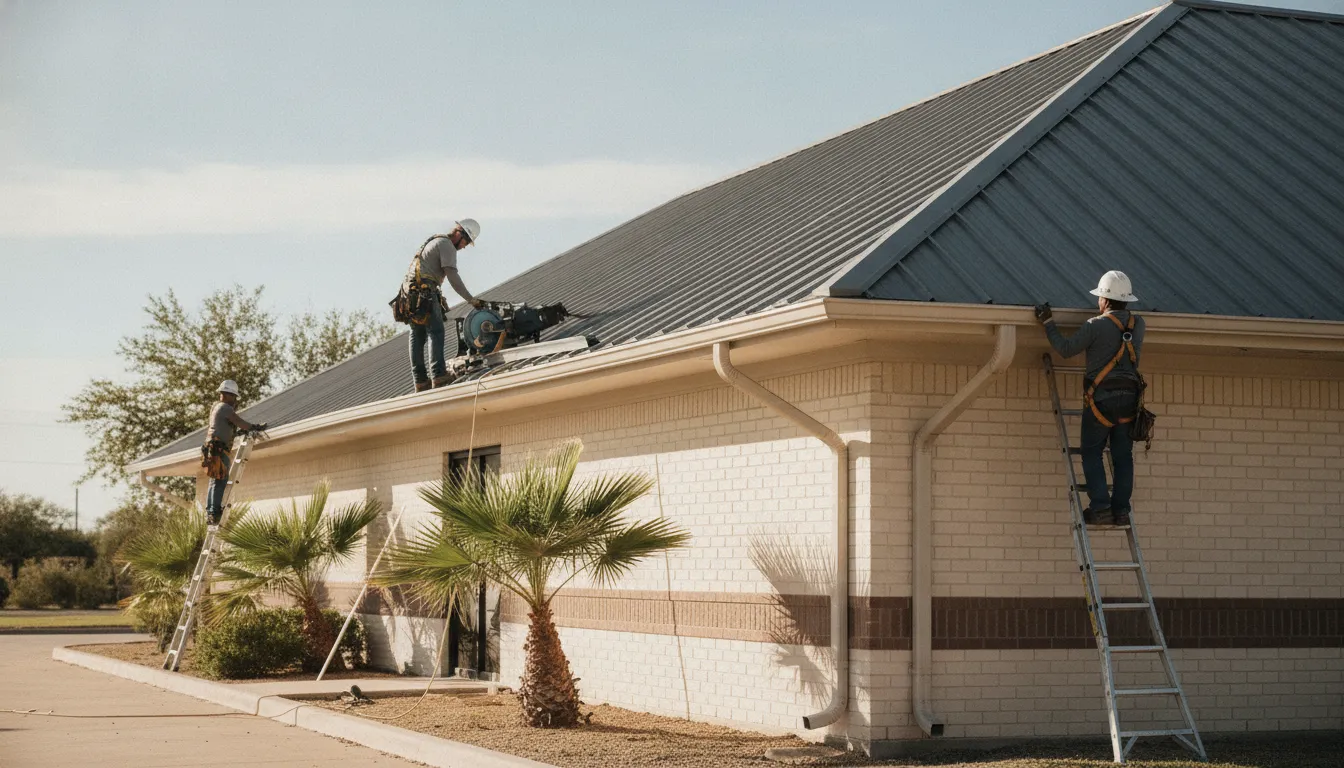
Gutter work often means reaching the roof edge repeatedly while handling long materials and tools. OSHA identifies gutter installation as an exterior-finishing task that can pose fall hazards. Its residential construction guidance addresses work six feet or more above a lower level as requiring conventional fall protection or another permitted measure. This is safety guidance, not a substitute for site-specific advice, but it is a useful point at which to stop treating the project as a simple weekend task. Read the OSHA fall-protection guidance before deciding.
Complex roofs need more than a straight run
Hire a professional when the roof has multiple elevations, inside or outside corners, valleys, dormers, several downspout paths, or difficult access. These conditions make it easier to overlook where water should go or how the gutter connects to fascia and other roof components. Drainage uncertainty is another strong signal. If you cannot confidently trace runoff from each roof section to a suitable discharge point, an experienced installer can assess the system instead of relying on guesswork.
Commercial scale and existing damage deserve a broader review
Long commercial buildings, multi-unit properties, and facilities with several roof sections usually require more coordination than a small residential run. Existing sagging, loose fascia, staining, leaks, or damaged soffits also warrant inspection before new gutters are attached. Elevation Roofing serves residential and commercial properties in Houston, Austin, and surrounding Texas communities, including professional gutter installation services.
A broader professional roof inspection examines gutters, fascia, soffits, drains, vents, and flashing. That can help identify related concerns rather than covering them with new materials. If you are unsure where to begin, learn about a free roof inspection or review Elevation's Texas service areas before choosing the next step.
What Should You Check Before Choosing DIY or Professional Installation?
A clear pre-installation check can make the decision more practical. If the project is easy to reach, the roofline is straightforward, and you understand how to create a reliable drainage path, DIY may be reasonable. If several factors are uncertain, professional help can reduce the chance of a safety or water-management problem.
- Access and height: Identify every work area, including corners, high roof edges, and locations above lower levels. OSHA identifies gutter installation as exterior-finishing work that can pose fall hazards. Its guidance discusses ladders and elevated platforms, but equipment must be appropriate for the work and used safely. If reaching the gutters requires unstable positioning or unfamiliar fall-protection equipment, do not treat the project as a simple DIY task. Review OSHA's fall-protection guidance before deciding.
- Roofline complexity: Look for multiple slopes, valleys, inside and outside corners, extensions, and transitions into existing roof or fascia components. More intersections mean more opportunities for measurement and sealing errors. A simple single-story run is different from a system that must coordinate with several roof sections.
- Drainage path: Trace where water will move from each gutter to each downspout and away from the building. Gutters need consistent slope toward the outlets. WSU's specification uses a minimum slope of 1/16 inch per foot toward downspouts, but the correct design still depends on the property and system. Confirm that discharge will not create a new problem at the foundation or walkways.
- Tools and experience: Be honest about your ability to measure, cut, join, fasten, and seal the system. WSU calls for manufacturer-recommended fasteners, coatings, and sealants for a watertight installation. If you cannot verify those details, compare the work with professional gutter installation services.
- Time and support: Plan for material handling, safe repositioning, cleanup, and a second person when the work requires it. A larger home, commercial property, or unfamiliar roof edge can make the time and coordination demands substantially different from a small, accessible repair.
- Post-install verification: Check slope, fasteners, seams, outlets, downspout connections, and discharge after installation. If you are unsure whether the system works with the roof and surrounding property, consult Elevation Roofing's Texas service areas for the appropriate next step.
Call Elevation Roofing & Restoration at (832) 271-1726 for a free roof inspection.
Frequently Asked Questions
Are DIY gutters worth it?
DIY gutters may be reasonable for a small, accessible project when you can measure accurately. Create a consistent slope, secure the system, and direct water away from the property. The tradeoff is your time, equipment, safety exposure, and responsibility for correcting drainage or installation problems.
Is it hard to install gutters by yourself?
It can be difficult because the work combines ladder safety, precise measuring, roof-edge access, slope, fastener placement, watertight seams, and downspout routing. A simple, low project may be manageable for an experienced homeowner. Steep roofs, multiple rooflines, or difficult access make the work more demanding.
Is it cheaper to DIY gutters?
DIY can reduce labor charges, but the total tradeoff depends on tools, materials, access equipment, mistakes, and the time required. Compare the complete project rather than material cost alone. If poor slope or discharge causes problems, rework can erase the initial savings.
Can I install gutters myself?
You can consider self-installation when the property is straightforward, the work area is safely accessible, and you understand how to create a reliable drainage path. Do not treat confidence as a substitute for fall planning. For elevated, complex, or commercial work, a professional assessment is the safer starting point.
Do I need gutters?
Many properties benefit from gutters because roof runoff needs a controlled path away from walls, foundations, landscaping, and walkways. The right solution depends on roof design, soil, grading, drainage outlets, and local weather exposure.
A property assessment can clarify whether gutters, downspout changes, or another drainage approach fits best.
Next steps should fit the property.
Schedule a Free Roof Inspection
A clear look at your roof edge, gutters, and drainage paths can help you choose the right installation approach for your Texas property. If you are weighing DIY work against professional help, schedule a free roof inspection to discuss your gutter installation questions with Elevation Roofing & Restoration. You can get practical next-step guidance based on the property, access conditions, and scope of work.