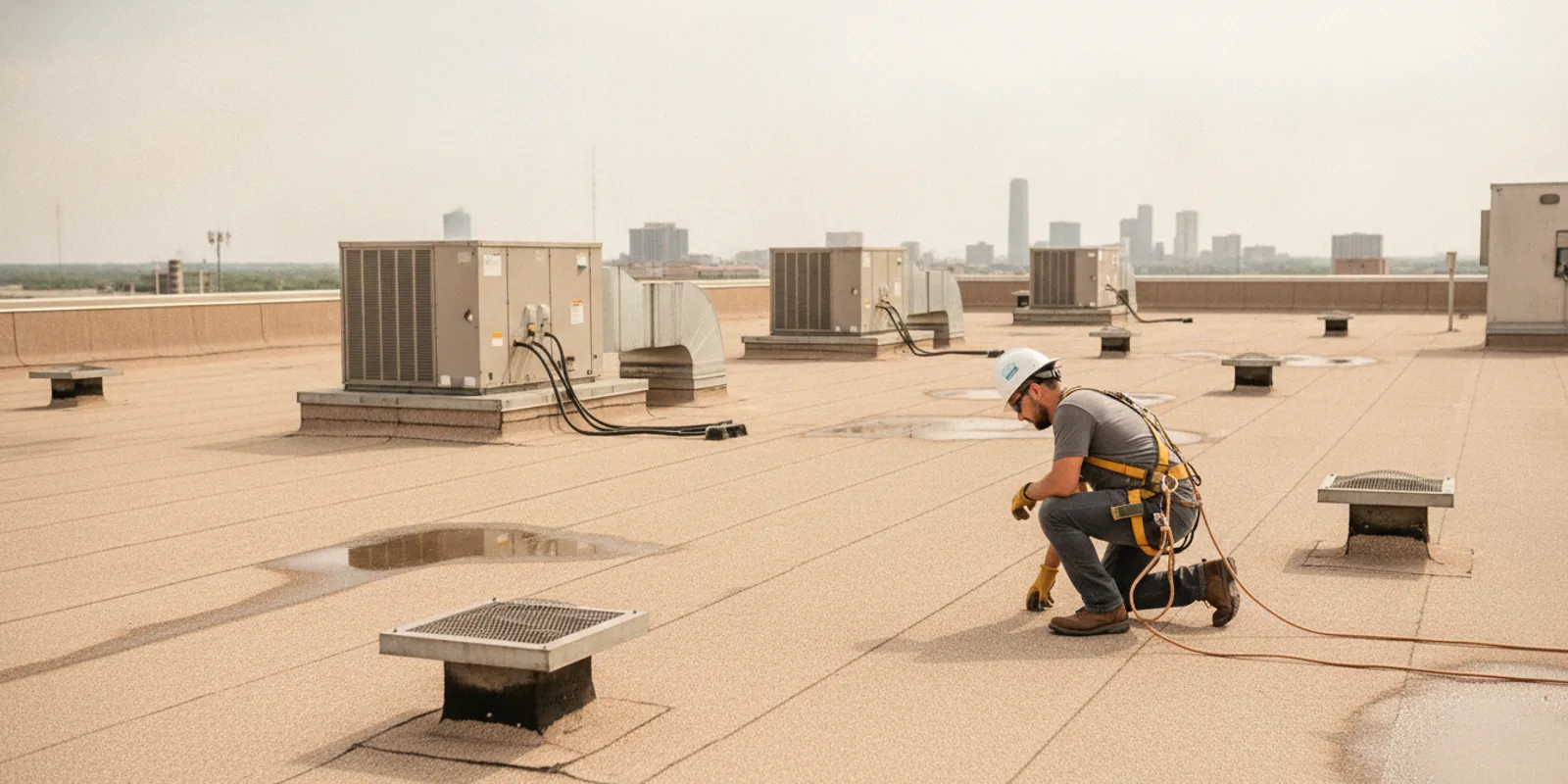
A free commercial roof inspection gives a property owner or manager a clearer view of roof condition before a small concern disrupts building operations. For Texas commercial properties, the visit should help you understand what was checked, what needs attention, and what to monitor next, not leave you with a vague verbal opinion.
Schedule a free commercial roof inspection
What Does a Free Commercial Roof Inspection Cover?
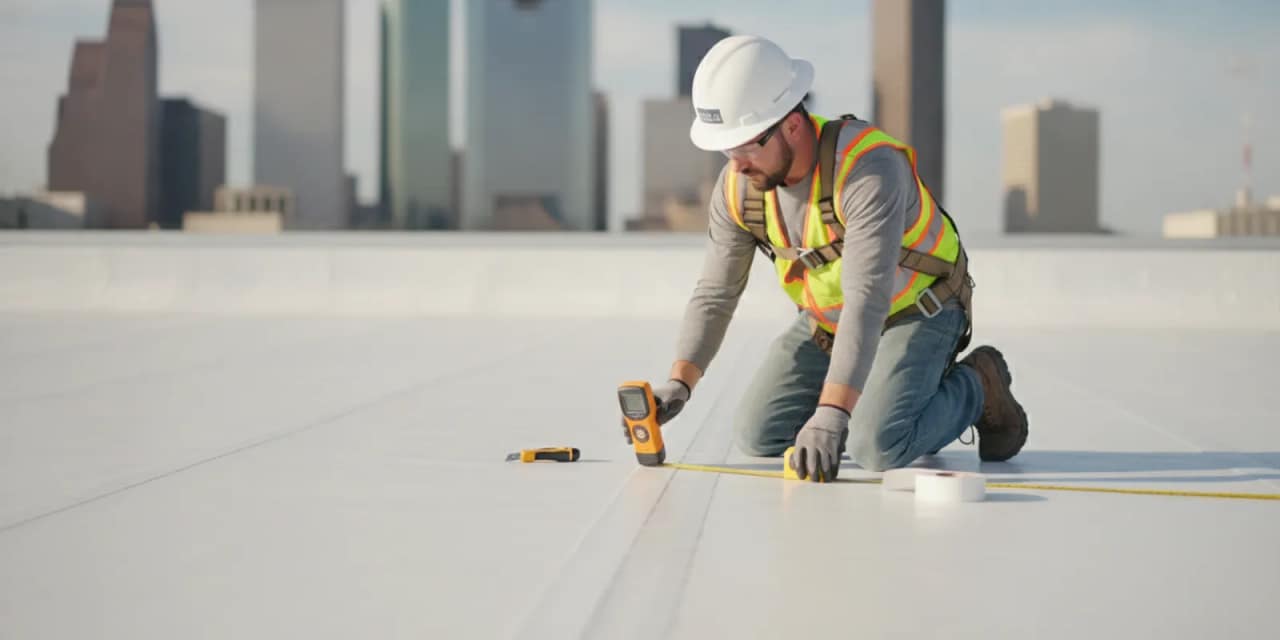
The precise scope depends on the roof system, building access, weather, and the visible conditions on the inspection day. A useful inspection typically considers the roofing surface, drainage, edges and transitions, penetrations, and signs of moisture or wear. On a commercial building, the inspector may also note equipment and access points that affect the roof’s condition or safe evaluation.
The inspection is a condition assessment, not automatically a repair, replacement, engineering evaluation, or guarantee that no hidden issue exists. Some parts of a roof may be concealed beneath membranes, insulation, rooftop equipment, or interior finishes. If a condition cannot be confirmed visually, ask what additional investigation would be needed before deciding what to do.
- Roof surface: Look for visible splits, punctures, open seams, displaced materials, loose or deteriorated flashing, and areas of unusual wear.
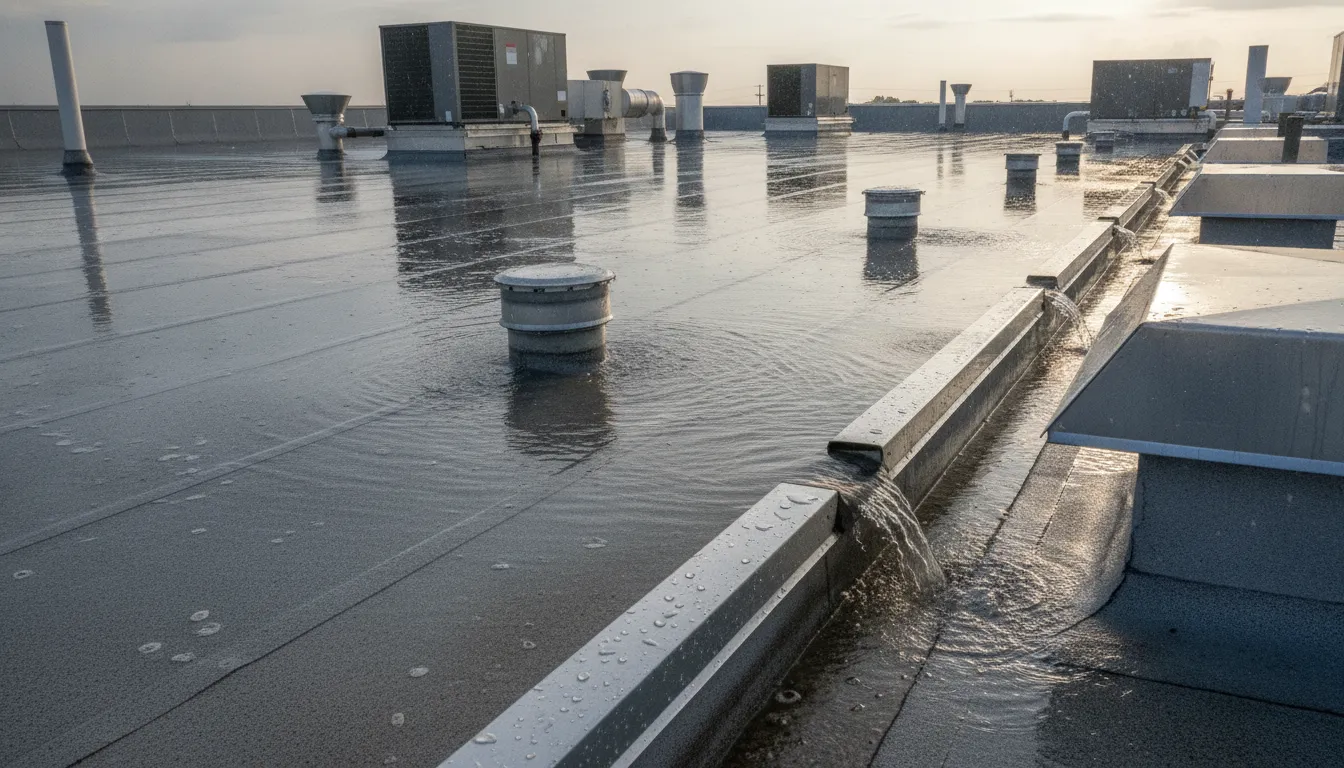
- Drainage: Check whether drains, scuppers, and gutters appear blocked or damaged, and look for signs that water has been standing.
- Transitions and penetrations: Review roof edges, curbs, vents, pipes, skylights, and other locations where the roof system changes or is interrupted.
- Interior clues: Where access is available, consider ceiling stains, damp areas, or other signs that may help trace a possible roof leak.
- Context: Note the roofing system, approximate age if known, previous repairs, reported leaks, and recent weather concerns.
Commercial properties use different systems, including TPO, modified bitumen, built-up roofing, EPDM, and PVC. Tell the inspector what system you believe is installed and share any past repair records. Elevation’s commercial flat roofing information can help you identify questions to ask about a flat roof system.
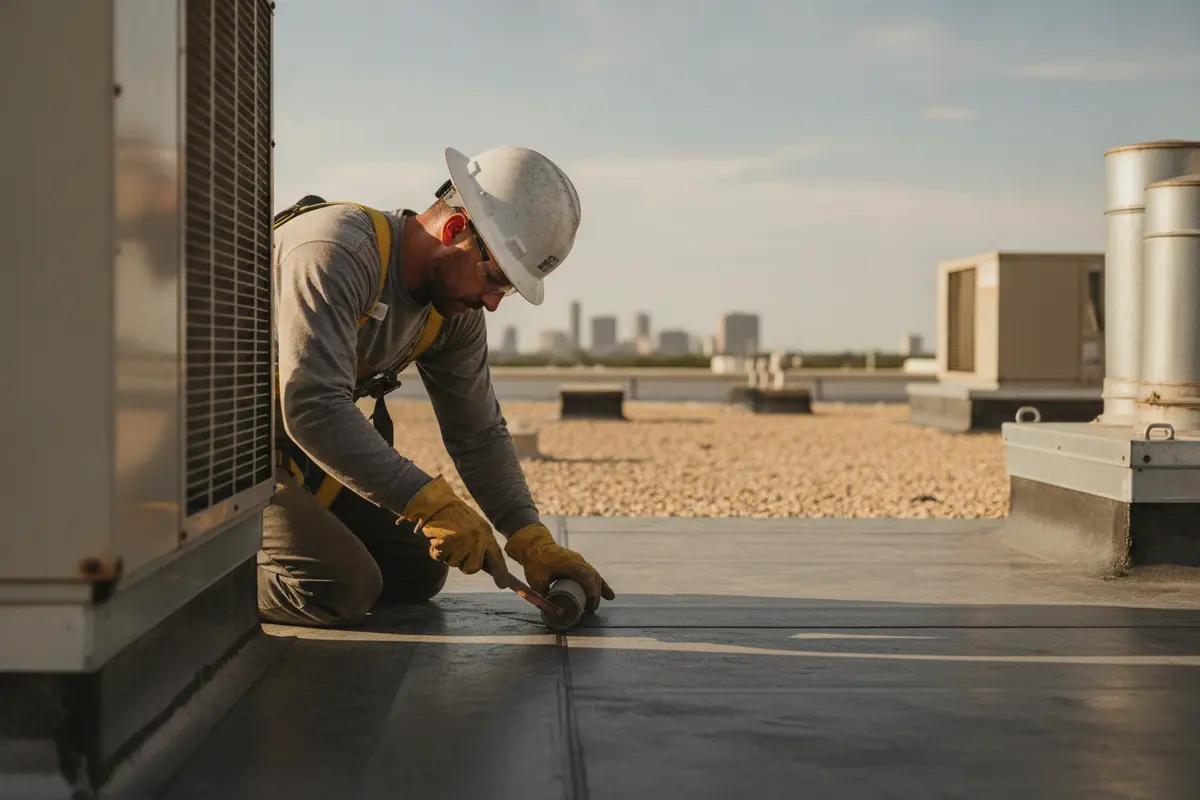
How Is a Commercial Roof Inspection Kept Safe?
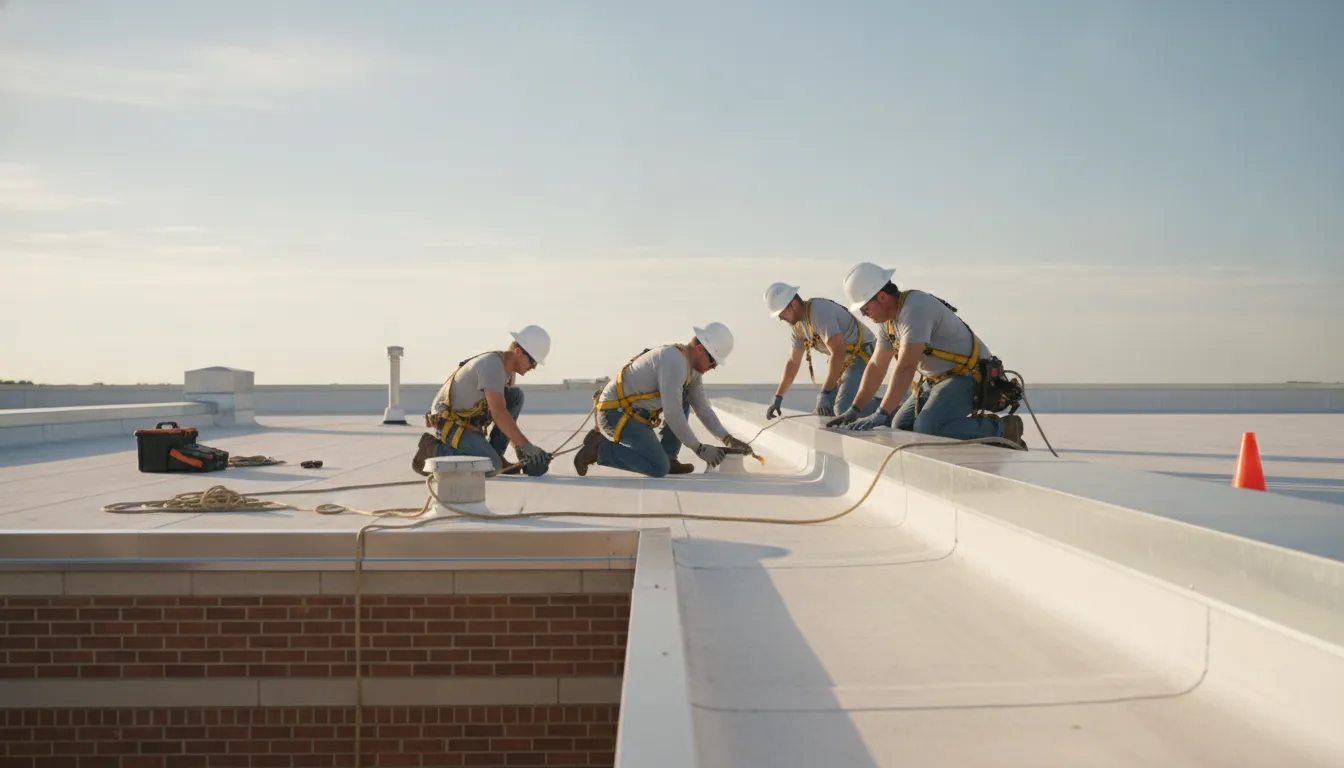
Commercial roofs can include slippery surfaces, fragile skylights, uneven transitions, electrical equipment, open edges, and limited access. Inspection plans should account for the specific building and conditions that day. Do not assume that an inspector will walk every roof area; some locations may need to be viewed from another safe position or left unaccessed.
Before the appointment, coordinate building access and identify any site-specific safety rules. Let the roofing professional know about locked roof doors, ladder or hatch access, tenant activity, restricted areas, and rooftop equipment that must remain undisturbed. If weather makes the surface unsafe, rescheduling or limiting the inspection may be the sensible choice.
- Confirm who will provide roof access and whether an escort is required.
- Point out known hazards, recent work, and areas where tenants or staff have reported leaks.
- Keep occupants clear of the work area and do not climb onto the roof to accompany the inspection unless the site’s safety procedures allow it.
- Ask the inspector to identify any areas that could not be safely reached and how those limitations affect the findings.
A responsible assessment distinguishes what was observed from what could not be checked. If the inspection is limited by weather, access, or a safety concern, ask whether a return visit or another evaluation is appropriate. For general workplace safety information, consult the Occupational Safety and Health Administration and follow applicable site procedures. For broader service information, see Elevation’s commercial and residential roofing services.
What Documentation Should You Expect?
Useful documentation turns an inspection into a practical record for the property file. Ask for a written summary that separates observations from recommendations. Photographs can be especially helpful when they show the location and context of a concern, rather than only a close-up that is difficult to identify later.
For each finding, look for the roof area or reference point, a short description, supporting images when available, and an explanation of why the condition matters. The report should identify urgent concerns separately from routine maintenance items. If it recommends repair or replacement, ask what evidence supports that recommendation and whether the proposed work addresses the observed issue.
| Report item | What to look for | How it helps your team |
|---|---|---|
| Inspection scope | Roof areas and components reviewed, plus access limits | Shows what the assessment does and does not cover |
| Condition notes | Specific locations, observed condition, and relevant context | Helps staff compare findings with leak reports or past work |
| Photographs | Images tied to a roof area or labeled location | Makes it easier to communicate with owners, tenants, and vendors |
| Priority and next step | Items to address promptly, maintain, or monitor | Supports a sensible work order and budget discussion |
| Proposal, if requested | Defined scope, materials or system details, and exclusions | Allows a fair comparison of repair or replacement options |
Keep the report with prior inspection records, invoices, warranties, and leak logs. If you manage multiple sites, use consistent building names and roof-area labels so maintenance teams can find the same location over time. You can also review customer feedback about Elevation Roofing & Restoration as part of your contractor research.

How Can Inspection Findings Become a Maintenance Plan?
An inspection is most useful when the findings connect to an actionable maintenance plan. Begin by sorting observations into three groups: conditions that may require prompt attention, routine work that can be scheduled, and items to monitor at a future check. The inspector should explain the reasoning, but the property team still needs to weigh building use, operational priorities, and available records.
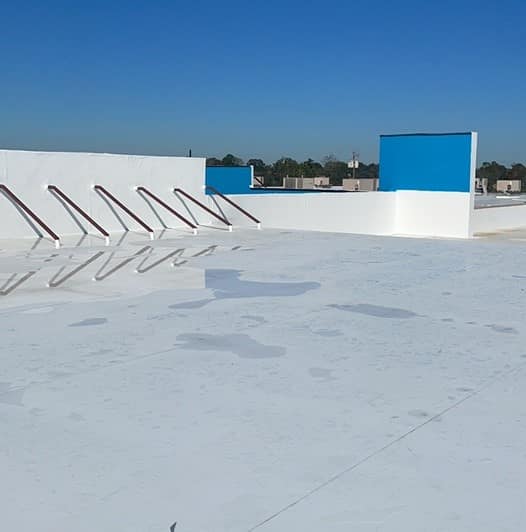
Drainage deserves regular attention on many commercial roofs. Debris at drains and scuppers can interfere with water flow, while ponding may warrant investigation to understand its cause and implications. Do not treat every mark or water stain as proof of a roof failure; document where and when it appears and ask for a clear diagnosis.
- Record the baseline. Save the inspection date, weather context if known, roof areas reviewed, photos, and report.
- Assign owners. Give each follow-up item to a staff member or vendor and set a realistic review date.
- Track changes. Compare new observations with prior photographs and note whether a leak, seam, drain, or other condition has changed.
- Plan access and operations. Coordinate tenant notifications, equipment restrictions, and work windows before maintenance begins.
- Revisit unresolved items. If the source of a leak or damage remains uncertain, request clarification or further assessment rather than letting the note disappear into the file.
Property managers in Houston, Austin, and nearby communities can use Elevation’s Texas service-area list to check relevant coverage. For buildings in Houston, the Houston roofing location page provides additional local context.
Talk with a roofing professional about your inspection findings
When Should You Consider Repair or Replacement?
An inspection can identify visible conditions, but the right next step depends on the roof system, the extent and location of the problem, the building’s history, and the scope of any proposed work. A localized issue may call for a defined repair. Widespread deterioration, repeated leaks, or concerns involving multiple roof areas may call for a broader evaluation of replacement options. These are not automatic rules; ask the contractor to explain the evidence and alternatives.
When comparing proposals, make sure each one addresses the same roof areas and defines the work clearly. Ask whether the price includes removal of existing materials, substrate repairs if discovered, protection of rooftop equipment, debris handling, and any required coordination with building operations. Clarify exclusions and how concealed conditions would be handled. A proposal should not be treated as interchangeable with an inspection report.
Elevation Roofing & Restoration provides roof inspection, repair, replacement, maintenance, and restoration services. Its roof repair information and roof replacement information can help you frame follow-up questions. If storm-related damage is a concern, review the storm repair service details and keep the inspection documentation with your property records.
What Questions Should You Ask After a Free Commercial Roof Inspection?
Use the follow-up conversation to make sure the findings are clear and that next steps match your needs. You do not need to approve work simply because an inspection has been completed. Ask for plain explanations, written scopes, and time to compare options where the issue is not urgent.
- Which areas were inspected, and which were inaccessible or not included?
- What findings are observations, and what is the evidence for each recommendation?
- Which items need prompt action, and which can be monitored or scheduled as maintenance?
- Can you show the location of each finding in a photograph or roof-area reference?
- Does the proposed scope address the cause of the problem, or only a visible symptom?
- What assumptions, exclusions, or concealed conditions could change the work?
- What should our team document or monitor after repairs are completed?
If your team needs a separate assessment or a written estimate for a defined scope, ask what information the contractor needs to provide it. The company’s roof inspection service page describes its inspection offering, and the contact page is available to arrange a conversation. Keep the property owner or authorized decision-maker involved before approving work.
Get help planning the next step for your commercial roof
Frequently Asked Questions
Is a free commercial roof inspection a repair estimate?
Not necessarily. An inspection assesses visible conditions and may identify recommended work. If you need pricing, request a written proposal that defines the work, materials, assumptions, and exclusions.
Can an inspector check every part of a commercial roof?
Not always. Access restrictions, roof conditions, weather, and safety concerns can limit where an inspector can go. Ask for any limitations to be documented and discuss whether another evaluation is needed.
What should I prepare before the appointment?
Arrange authorized roof access, share building safety requirements, gather prior reports or repair records, and list leak locations with dates if available. Let the inspector know about tenant schedules or equipment that needs special coordination.
Does an inspection guarantee that a roof will not leak?
No inspection can guarantee future performance or rule out every concealed condition. It provides information about what could be assessed at that time. Keep records and follow up on recommended maintenance or further investigation.
How should I choose between repair and replacement?
Ask for the findings, supporting evidence, and a clearly defined scope for each option. Compare the extent of the condition, roof history, practical disruption, and proposal assumptions with the property owner or qualified building advisers before deciding.
Make the Inspection Useful Beyond the Visit
A free commercial roof inspection is a starting point for informed property care. Request clear documentation, understand the limits of the assessment, and turn findings into assigned maintenance or a well-defined follow-up scope. That gives your team a record to use when planning repairs, considering replacement, and communicating with owners or tenants.