Have you ever wondered why aluminum is used for everything from airplanes to soda cans to the trim on skyscrapers? It’s not a random choice. Engineers and architects love it for one primary reason: its incredible strength-to-weight ratio. It delivers impressive durability without the bulk of other metals like steel. This unique characteristic is a direct result of the physical properties of the metal, specifically the low density of aluminum. In this article, we’ll break down this concept in simple terms and show you why the same quality that makes aluminum perfect for a jetliner also makes it an outstanding choice for your roof and gutters.
Key Takeaways
- Strength Without the Weight: Aluminum's greatest asset is its low density, offering the durability of metal at roughly one-third the weight of steel. This protects your home without placing unnecessary, long-term strain on its foundation and structure.
- Engineered for Performance: The aluminum on your home is an alloy, meaning it is mixed with other elements to enhance specific traits. This process creates a material perfectly suited for its job, whether that's providing corrosion resistance for gutters or extra strength for roofing panels.
- A Smarter Choice for Exteriors: Its lightweight nature makes aluminum ideal for roofing and gutters. Lighter panels can lead to a smoother installation, while lightweight gutters effectively manage water without pulling on your home's fascia boards over time.
What Is Aluminum's Density?
When we talk about materials for your home, especially for something as important as your roof, words like "strong" and "durable" come to mind. But another key factor is density, which is just a simple way of describing how heavy a material is for its size. Aluminum is famous for being lightweight, and its low density is the secret behind that quality. Understanding this property helps explain why it’s such a fantastic choice for modern roofing and gutters. Let's look at the numbers and what they really mean.
The Baseline: Pure Aluminum
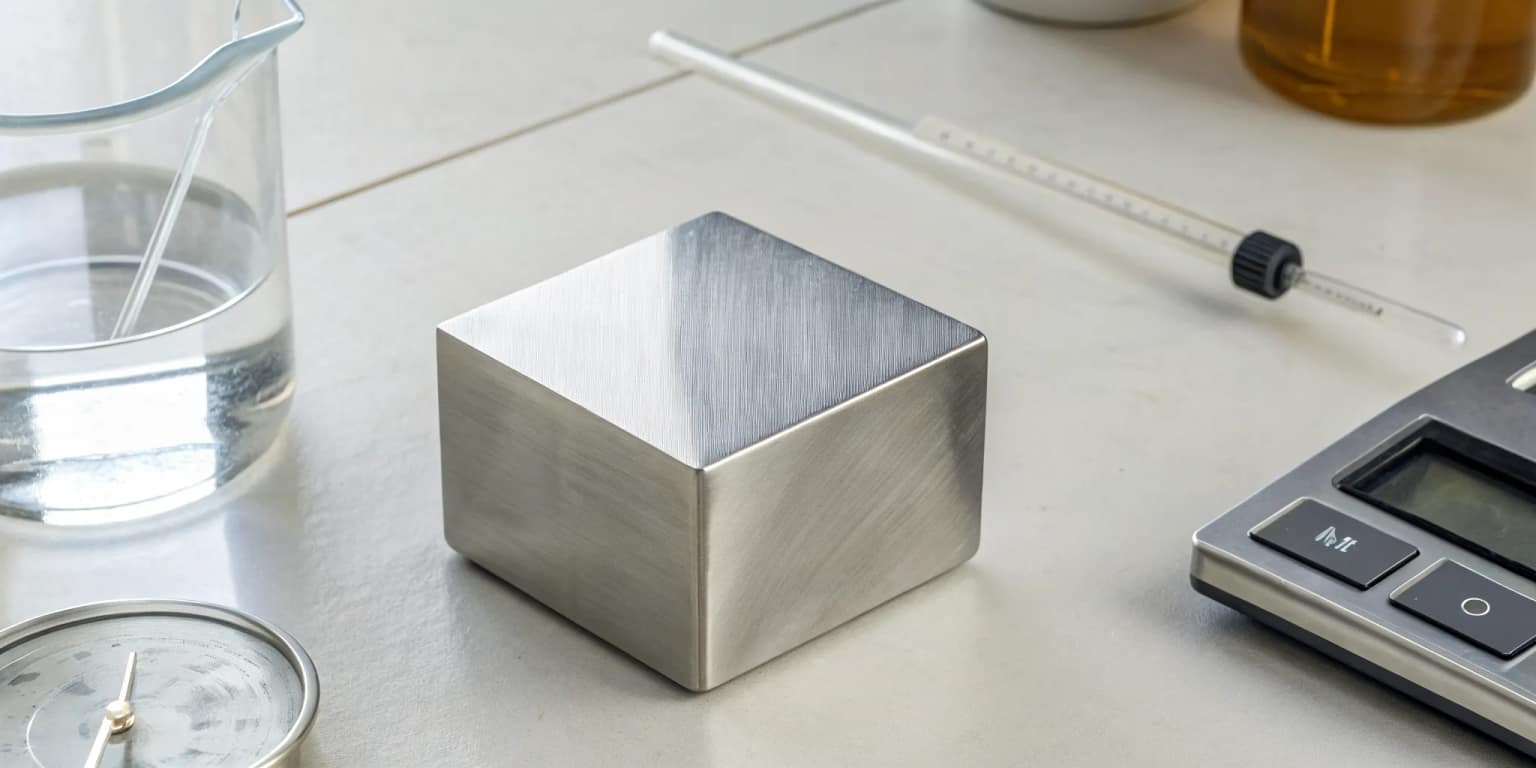
To get a clear picture, we need a starting point. Pure aluminum has a density of approximately 2.70 grams per cubic centimeter (g/cm³). Think of it this way: if you had a small cube of pure aluminum, about the size of a sugar cube, it would weigh 2.70 grams. This number is the benchmark we use when talking about aluminum's weight.
It’s important to remember this is for aluminum in its purest form. As we'll see later, adding other elements to create alloys can slightly change this value, tailoring the material for specific jobs. But for now, just know that this baseline density is what makes aluminum significantly lighter than many other common metals.
How Is Density Measured?
You'll usually see density measured in grams per cubic centimeter (g/cm³) or kilograms per cubic meter (kg/m³). While these units might sound a bit technical, the idea is straightforward. They measure how much mass (or "stuff") is packed into a set amount of space. Using a standard unit like grams per cubic centimeter allows us to make fair, apples-to-apples comparisons between different materials.
It’s how we know for sure that aluminum is about three times lighter than steel. This standardized measurement is essential for engineers and architects when they design everything from airplanes to the very roof over your head, ensuring the structure can safely support the material's weight.
Does Temperature Change Its Density?
Yes, it absolutely does. Like most materials, aluminum expands when it gets hot and contracts when it cools down. When you heat aluminum enough to turn it into a liquid, or its molten state, its atoms spread farther apart. This causes its density to drop to around 2.3 g/cm³.
While your roof won't be melting anytime soon, this property is crucial during the manufacturing process. It allows producers to cast aluminum into different shapes, like the panels and gutters we use in our roofing services. This change in density with temperature is a fundamental characteristic that makes aluminum such a versatile and workable material for countless applications.
How Does Aluminum Compare to Other Metals?
When you're choosing materials for your home, especially for something as important as your roofing services, it’s helpful to see how your options stack up. Aluminum's most notable feature is its low density, which makes it significantly lighter than many other common metals. This isn't just a fun fact; it has real-world implications for your property's structural load, installation ease, and overall performance. A lighter roof, for instance, puts far less strain on your home's foundation and framing over the decades. This is especially important in areas with shifting soils, like we see around Houston and Austin. Lighter materials can also make the installation process quicker and safer for the crew working on your property, which can translate to a smoother project from start to finish. Understanding these comparisons will help you see why aluminum is such a popular choice for everything from metal roofing panels to gutters and siding. Let's break down how aluminum measures up against some other popular metals you might be considering for your project, so you can feel confident in your choice.
Aluminum vs. Steel
The difference in weight between aluminum and steel is one of the most dramatic. Steel is a strong and durable metal, but it's also very heavy. To put it in perspective, aluminum is roughly one-third the weight of steel. This major weight reduction is a huge advantage in construction. For your home, using aluminum for roofing or siding means putting far less stress on the building's structure over time. It also makes materials easier and often safer to handle during installation, which is a big plus for any home improvement project. While steel has its place, aluminum’s lightness offers a compelling benefit without sacrificing strength for most residential needs.
Aluminum vs. Copper
Copper is another metal often seen in high-end roofing and gutter systems, prized for its beautiful appearance. However, like steel, it is quite dense and heavy. When you compare them, you'll find a significant difference in density, with copper being more than three times heavier than aluminum. This extra weight adds considerable load to your roofline and support structures. While copper develops a unique patina over time, aluminum provides a lightweight, corrosion-resistant, and more budget-friendly alternative. You can achieve a high-end look with coated aluminum products without asking your home's frame to support the extra weight that comes with solid copper.
Aluminum vs. Titanium
Titanium is known for being incredibly strong and resistant to corrosion, even more so than aluminum. But that premium performance comes with extra weight and a much higher price tag. Titanium is about 60% denser than aluminum, making it the heavier of the two. While titanium’s superior strength is essential for specialized industries like aerospace, it's often more than what's needed for typical residential applications. For roofing, gutters, and siding, aluminum provides the perfect balance of being lightweight, strong enough to handle the elements, and resistant to rust, all at a more accessible cost. It delivers the durability you need without the extra weight or expense of titanium.
What Factors Change Aluminum's Density?
While we can talk about a baseline density for aluminum, the number isn't set in stone. In reality, the exact density of an aluminum product can shift based on a few key factors. Think of it like a recipe: changing even one ingredient can alter the final result. For aluminum, its composition, temperature, and even how it’s made can influence its final density. Understanding these factors helps explain why one aluminum product might be slightly different from another, especially when it comes to materials used in your home.
The Role of Alloys
Pure aluminum is surprisingly soft. To make it durable enough for applications like metal roofing or gutters, it’s usually mixed with other metals. This combination is called an alloy. Metals like magnesium, silicon, and copper are common additions that increase aluminum's strength and durability. Adding these elements changes the material's makeup, which in turn affects its density. While the change is often small, it’s an important part of engineering aluminum to have the right properties for a specific job, whether it's withstanding a Texas hailstorm or supporting a heavy downpour.
How Purity Makes a Difference
The density we often see cited, around 2.7 g/cm³, refers to pure aluminum. However, most aluminum used in construction and manufacturing is an alloy, not pure aluminum. Because of this, the density of aluminum alloys typically ranges from about 2.64 g/cm³ to 2.81 g/cm³. The exact number depends on which metals are added and in what amounts. So, while pure aluminum provides a useful benchmark, the aluminum on your home is likely an alloy specifically designed for strength and longevity, which gives it a slightly different density.
The Impact of Temperature
Like most materials, aluminum expands when it gets hot and contracts when it cools. This change in volume also affects its density. As aluminum heats up, its atoms move farther apart, causing it to become less dense. The effect is most dramatic when the metal is molten; its density drops significantly. While your roof won't be melting, this principle shows how temperature can influence the material's properties. This is something engineers account for when designing materials that need to perform reliably through hot summers and cooler winters.
How It's Made Matters
The manufacturing process itself plays a role in the final density of an aluminum product. How the metal is cast, rolled, or extruded can create slight variations in its internal structure. The simple question of aluminum's density hides some real complexity, as the right answer depends on the specific alloy and what you’re using it for. For homeowners, the important thing to know is that the aluminum used for your property has been carefully produced to meet specific standards. The gutters and downspouts on your home are a perfect example of a product engineered for a precise function, with a density and strength to match.
A Quick Guide to Common Aluminum Alloys
Not all aluminum is created equal. Manufacturers mix pure aluminum with other elements to create alloys, each with unique properties. Think of it like baking: adding different ingredients to your flour changes the final result. Understanding these alloys helps you appreciate why certain types of aluminum are chosen for specific jobs, from airplanes to your home’s gutters. While you don't need to be a metallurgist to choose a new roof, knowing a bit about these common alloys can give you a better understanding of the materials protecting your home.
2000 Series (Copper Alloys)
The 2000 series of aluminum alloys gets its strength from copper. These are the heavy lifters of the aluminum world, known for their impressive strength and how easily they can be machined into precise parts. This makes them a top pick for the aerospace industry, where they are used for things like aircraft frames and engine components. The most common grades are 2011 and 2014. The main drawback of the 2000 series is that it’s not suitable for welding because the copper makes it prone to cracking under heat.
6000 Series (Magnesium and Silicon Alloys)
When you mix aluminum with magnesium and silicon, you get the 6000 series. This combination creates a versatile alloy with good, all-around performance. It has medium-to-high strength, welds beautifully, and stands up well to corrosion, which is a huge plus for any outdoor application. You’ll find 6000 series alloys, like the popular 6061 and 6063 grades, in everything from building structures to bridges. This type of aluminum alloy also takes well to anodizing, a process that adds a durable, decorative, and protective finish, making it ideal for architectural elements on your home.
7000 Series (Zinc Alloys)
For the highest strength, you turn to the 7000 series, which uses zinc as its primary alloying partner. These alloys are champions of strength-to-weight ratio, making them another favorite in the aerospace field for critical aircraft structures. The 7075 alloy is particularly famous for its incredible strength. These high-performance aluminum alloys are engineered for situations where you need maximum strength without adding weight. Similar to the 2000 series, however, these zinc alloys are generally not easy to weld, so they are used in applications where mechanical fastening is preferred.
Busting Common Myths About Aluminum's Density
Aluminum is a fantastic material, but it’s surrounded by a few persistent myths, especially when it comes to its weight and strength. Let's clear up some of the most common misconceptions so you can feel confident about the materials used for your home.
Myth: Aluminum Is Heavy
It’s easy to think of aluminum as a heavy material. After all, we see it used in strong, sturdy applications like airplanes and building frames. But the truth is, one of aluminum’s greatest features is that it’s incredibly lightweight. Compared to steel, a piece of aluminum of the same size is about one-third the weight. This low density is a huge advantage for your home. When you choose aluminum for your roofing services, you get a durable material that won't put excess strain on your home's structure. It’s a perfect example of getting all the strength you need without any of the unnecessary bulk.
Myth: Aluminum's Density Is Always the Same
You might assume that aluminum is aluminum, with one fixed density. In reality, its density can change. Think of it like a recipe. While pure aluminum is the base, manufacturers often mix in other elements like magnesium, silicon, or zinc to create different alloys. Each alloy has a slightly different density and its own unique set of properties. This is a good thing, as it allows us to use the perfect type of aluminum for a specific job. The alloy that works best for your gutters and remodeling projects might be different from the one used for structural roofing panels, ensuring optimal performance everywhere.
Myth: Low Density Means Low Strength
This is probably the biggest myth of all. We often associate light weight with being flimsy, but that’s not the case with aluminum. The secret is its excellent strength-to-weight ratio. For its weight, aluminum packs a serious punch in terms of strength, which is why it’s trusted in demanding industries like aerospace and construction. Some aluminum alloys are even comparable in strength to some types of steel. For your home, this means you get a roof that is tough and resilient against the elements without being excessively heavy.
Myth: Denser Is Always Stronger
It feels intuitive that a heavier, denser object would be stronger, but that’s not always how it works with building materials. While steel is about three times denser than aluminum, certain aluminum alloys can provide significant structural strength. It’s this unique combination of being both strong and light that makes aluminum so versatile and effective. The goal isn't to find the densest material, but the right one for the job. Choosing a proven material like aluminum means you’re getting a product that delivers reliable performance, a fact our happy clients can attest to.
A Simple Guide to Density Conversions
When you start looking up density values for materials like aluminum, you might notice the numbers can look wildly different from one source to another. One site might list it in kilograms per cubic meter (kg/m³), while another uses grams per cubic centimeter (g/cm³). It can be confusing, but it's just a matter of different measurement systems. Think of it like measuring temperature in Fahrenheit versus Celsius; the actual temperature is the same, but the numbers are different. Let's break down how to easily switch between these common density units so you can compare apples to apples when looking at materials for your home.
How to Convert kg/m³ to g/cm³
This is one of the most common conversions you'll see, especially when comparing scientific data with more practical measurements. To change a density from kilograms per cubic meter (kg/m³) to grams per cubic centimeter (g/cm³), you just need to divide by 1000. It’s that simple. For example, we know pure aluminum has a density of about 2700 kg/m³. If you divide that by 1000, you get 2.7 g/cm³. This simple math trick works because a kilogram is 1000 times heavier than a gram, but a cubic meter is one million times larger than a cubic centimeter. If you'd rather not do the math yourself, plenty of online conversion tools can do it for you instantly.
How to Convert g/cm³ to lb/in³
Now let's switch from the metric system to the imperial system, which is common in the United States. If you have a density in grams per cubic centimeter (g/cm³) and need to see it in pounds per cubic inch (lb/in³), you'll multiply by a specific number: 0.036127. Using our aluminum example again, we take its density of 2.7 g/cm³ and multiply it by 0.036127. This gives us about 0.0975 lb/in³. While the number seems small, it's the correct equivalent. This conversion is especially helpful when you're trying to understand the weight of materials used in American construction projects. A quick search for a density converter can also handle this calculation for you.
Why Aluminum's Light Weight Is Its Superpower
When you think of strong metals, "lightweight" probably isn't the first word that comes to mind. But for aluminum, its low density is exactly what makes it such a valuable and versatile material in construction. This unique combination of being light yet durable offers some incredible advantages for your property, from the structural integrity of your roof to long-term energy savings. It’s a material that works smarter, not harder, to protect and improve your home.
Strong, Yet Surprisingly Light
Don’t let its light feel fool you; aluminum packs a serious punch when it comes to strength. With a density about one-third that of steel, it provides impressive durability without weighing down your home's structure. This is a huge advantage for roofing services, as it means less stress on your foundation and support beams over time. Think of it as getting all the protection you need from a strong metal roof, but without the extra bulk. This excellent strength-to-weight ratio makes it a go-to choice for modern construction, ensuring your home is both safe and structurally sound for years to come.
Built to Last: Resisting Corrosion
One of aluminum's most impressive features is its natural ability to resist corrosion. Unlike iron or steel, aluminum automatically forms a thin, protective oxide layer when it's exposed to air. This invisible shield stops rust in its tracks, which is fantastic news for homeowners, especially in the humid Texas climate. It means your aluminum roof, siding, or gutters won't degrade or weaken from moisture over the years. This built-in durability translates to less maintenance for you and a longer lifespan for some of the most critical components of your home’s exterior, giving you lasting peace of mind.
Keeping Your Home Efficient
Aluminum is a key player in creating a more energy-efficient home. Because it's so versatile, it’s used in everything from roofing and siding to window trim and gutters. Beyond its durability, aluminum is also highly reflective. An aluminum roof can reflect a significant amount of the sun's heat instead of absorbing it, which helps keep your attic and home cooler during those scorching Texas summers. This can lead to lower air conditioning bills and a more comfortable indoor environment. When used for gutters and downspouts, its lightweight and corrosion-resistant nature ensures your water management system works effectively for decades.
A Sustainable Choice for Your Property
Choosing aluminum is also a smart move for the environment and your wallet. It's one of the most recycled materials on the planet, and it can be reused over and over again without losing any of its quality. This makes it a truly sustainable option for your construction or remodeling project. Because it’s a long-term solution that resists corrosion and damage, you won’t have to replace it nearly as often as other materials. Investing in a durable, recyclable material like aluminum is a forward-thinking decision that adds lasting value to your property, a fact many of our satisfied customers can attest to in their reviews.
What This Means for Your Roof
So, we've talked about the numbers, but what does aluminum's low density actually mean for the roof over your head? It turns out, this single property has a huge impact on everything from your home's structural integrity to the installation process. Understanding these benefits can help you see why aluminum is such a popular and practical choice for many roofing and exterior projects, especially here in Texas. Let's break down how this lightweight metal can make a big difference for your property.
Easing the Load on Your Home's Structure
Your home's frame, walls, and foundation are under constant pressure from the weight of the roof. Choosing a lighter roofing material can significantly reduce this long-term stress. Aluminum's density is about one-third that of steel or copper, making it one of the lightest and most durable metals available for construction. By opting for an aluminum roof, you’re putting far less strain on your home’s structure over the decades. This is especially beneficial for older homes or buildings where minimizing structural load is a top priority for preserving the integrity of the entire house.
The Benefits of Lightweight Panels and Cladding
Because aluminum is so light, it's an ideal material for roofing panels and exterior cladding. For contractors, lighter materials are easier, safer, and often faster to install. This efficient installation process can be a major advantage. Aluminum alloys are a top choice for a variety of applications, including siding, roofing material, and window trim. The result is a durable, long-lasting exterior that provides excellent protection without weighing your home down. Plus, its sleek finish offers a clean, modern aesthetic that can instantly update your property's curb appeal.
Why It's Perfect for Gutters and Downspouts
Gutters have a tough job. They need to be strong enough to channel gallons of water during a heavy Texas downpour but light enough that they don’t pull away from your fascia boards. Aluminum is the perfect material for the task. Its light weight makes it easy to support, while its natural resistance to rust and corrosion means it won't degrade from constant exposure to moisture. This makes aluminum an excellent, low-maintenance choice for gutters and downspouts that are built to last, protecting your foundation and landscaping from water damage year after year.
How to Choose the Right Aluminum for Your Project
Aluminum’s flexibility allows it to be used in a wide variety of construction projects, from structural elements to exterior finishes. But not all aluminum is the same. Different alloys, thicknesses, and coatings are used for roofing panels, gutters, and trim, each designed for a specific purpose. The key is choosing the right type of aluminum product for your specific needs and local environment. Consulting with an experienced professional is the best way to ensure you get a material that will stand up to the Texas climate and protect your home for years to come.
Frequently Asked Questions
Why does the density of my roofing material even matter? The density of your roofing material directly relates to its weight, which has a big impact on your home. A lighter material like aluminum puts significantly less stress on your home's structural frame and foundation over the decades. This is a huge advantage for preserving your home's integrity, and it can also contribute to a safer and more efficient installation process.
If aluminum is so light, does that mean it's weak or flimsy? Not at all, and that’s what makes it such a great material. Aluminum has an excellent strength-to-weight ratio, meaning it provides impressive durability for its weight. It’s strong enough to be trusted in demanding applications like airplanes and building frames. For your home, this means you get a tough, resilient roof that can handle the elements without the unnecessary bulk of heavier metals.
Is the aluminum used for gutters the same as the aluminum for roofing panels? They are often different, and that's by design. Manufacturers create various aluminum alloys by mixing pure aluminum with other elements like magnesium or silicon. This process creates materials with specific properties. An alloy for a roofing panel might be engineered for maximum strength, while an alloy for a gutter is designed for superior corrosion resistance and formability, ensuring each part of your home gets the right material for the job.
How much lighter is an aluminum roof compared to a steel one? The weight difference is quite dramatic. For any given size, a piece of aluminum is about one-third the weight of a comparable piece of steel. This major weight reduction is a key reason why aluminum is so popular in construction. It allows you to have a strong, durable metal roof without asking your home's structure to support an excessive amount of weight.
Will an aluminum roof rust, especially in a humid climate like we have in Texas? This is one of aluminum's best qualities: it does not rust. When aluminum is exposed to the air, it naturally forms a thin, hard layer of oxide that protects the metal from corrosion. This built-in protection is a fantastic benefit for outdoor applications like roofing and gutters, especially in humid areas. It means you get a long-lasting, low-maintenance product that will look great for years.