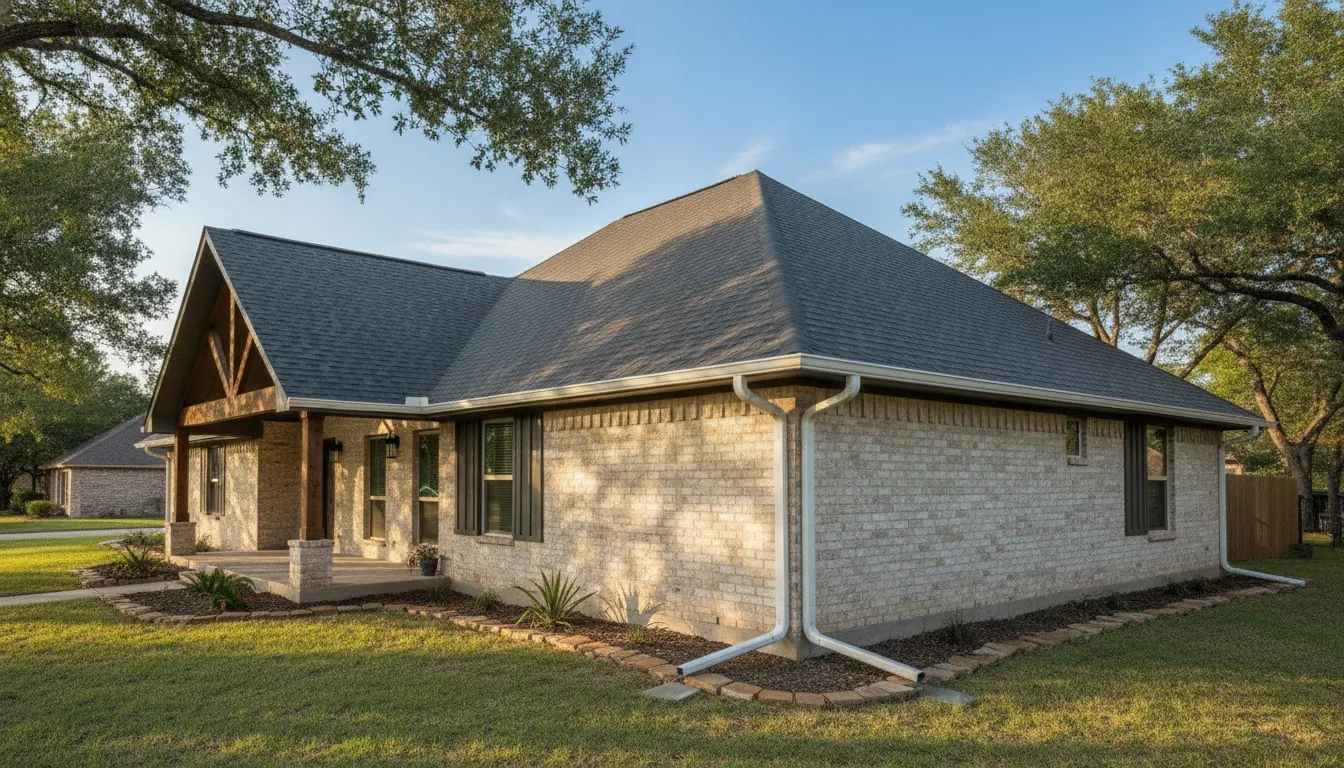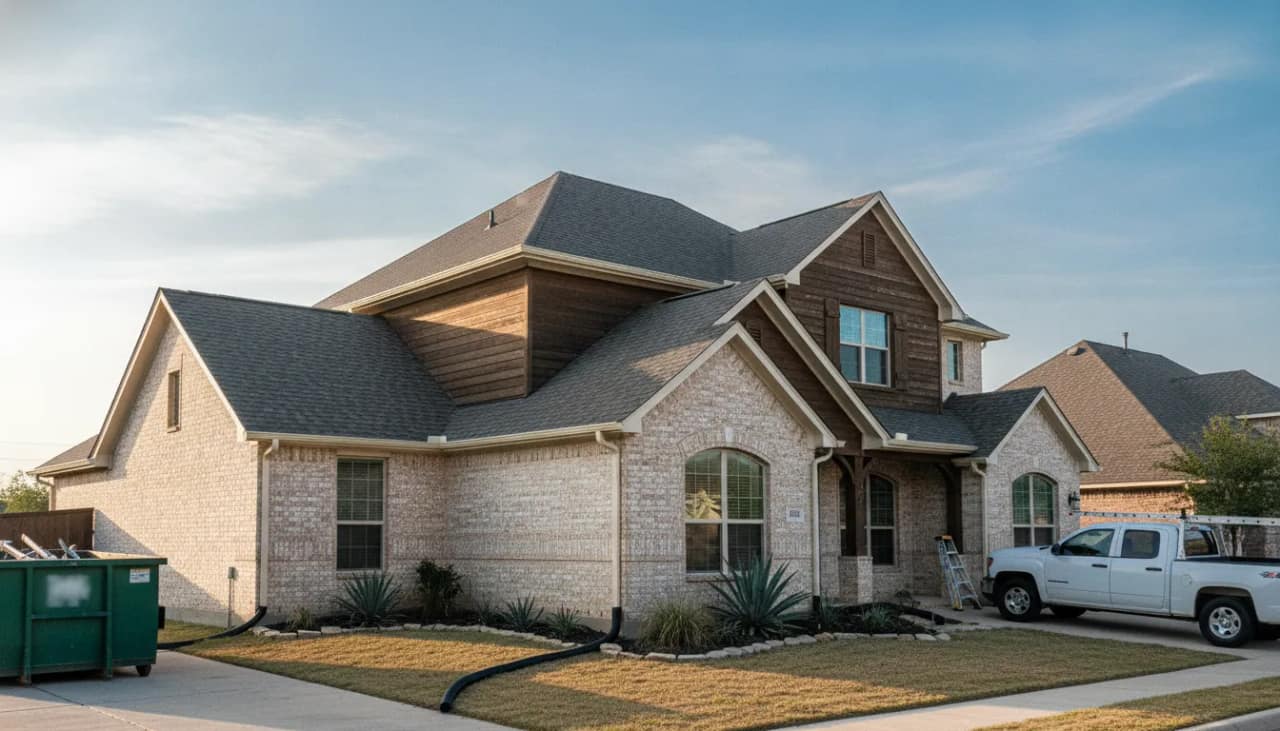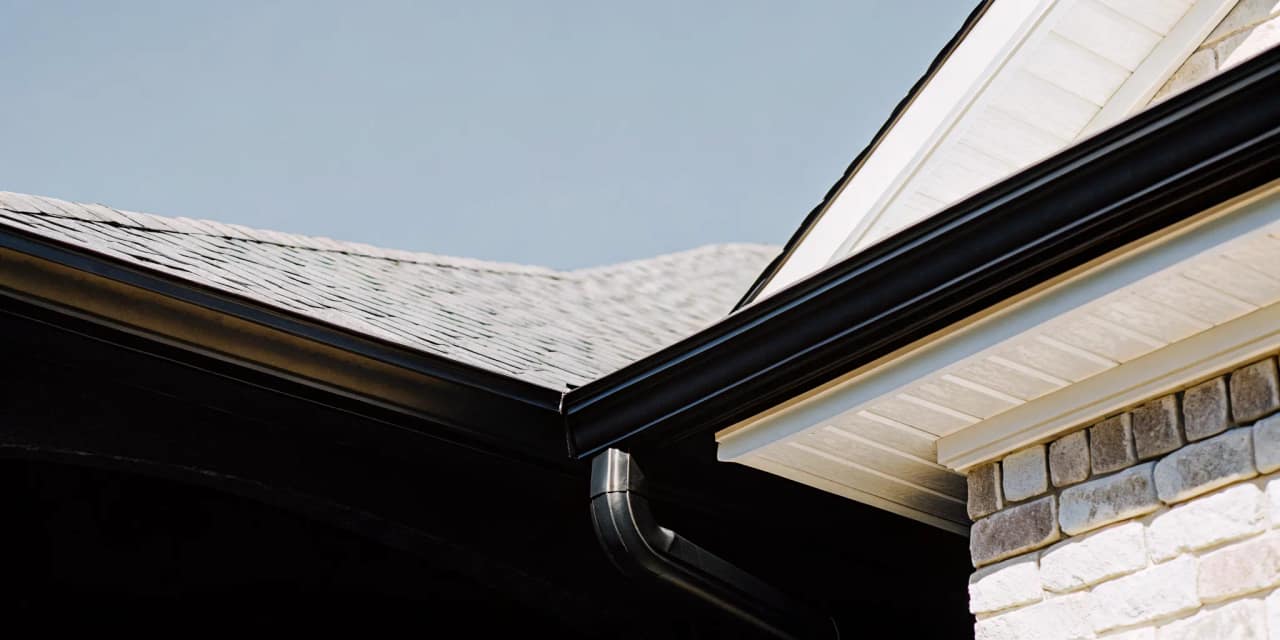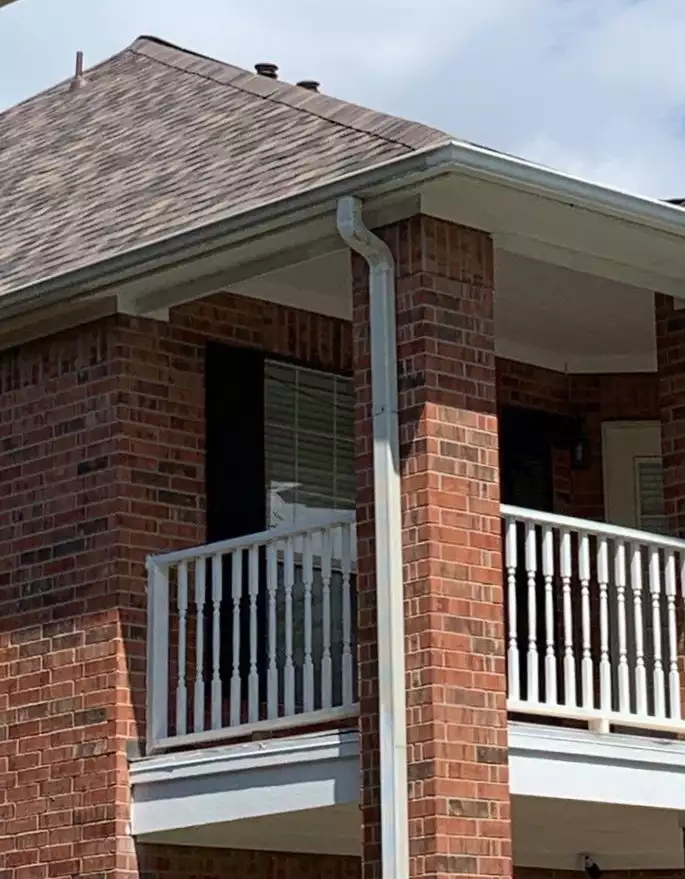
Gutters are one of the least glamorous parts of a home and one of the most important. They quietly route thousands of gallons of rainwater away from your roof edge, siding, and foundation every year. So when a homeowner across Greater Houston or the Austin metro asks us how long their residential gutters should last, the honest answer is: it depends almost entirely on the material they are made of and how hard the Texas climate has been working against them.
Below is a realistic lifespan breakdown by material, the specific Texas-climate factors that shorten those numbers, the warning signs that your gutters are near the end, and how to decide between repair and full replacement. No guesswork, just what we see on roofs every week.
Gutter Lifespan by Material
The single biggest predictor of how long your gutters last is what they are made of. Here is how the common residential options stack up under normal conditions, before Texas weather is factored in.
- Vinyl: 10 to 20 years. The budget-friendly choice and the easiest to install. Vinyl is also the most vulnerable to our climate. Relentless UV makes it brittle, and it can crack or warp in heat and hard freezes, so it tends to land at the lower end of that range here.
- Galvanized steel: 20 to 25 years. Strong and impact-resistant, which helps against hail. The trade-off is rust. Once the zinc coating wears, standing water and Gulf Coast humidity accelerate corrosion at the seams and low points.
- Aluminum: 20 to 30 years. The most popular residential choice in Texas for good reason. It is lightweight, rust-resistant, and available in seamless runs. Its weakness is denting from hail and impact, which can shorten its working life.
- Zinc: 30 to 50 years. Durable and naturally corrosion-resistant, though less common on homes because of the higher cost and specialized installation.
- Copper: 50-plus years. The premium, long-haul option. Copper resists corrosion, develops a protective patina over time, and can outlast several roofs, at a significantly higher upfront cost.
One more variable worth naming: seamless versus sectional. Sectional gutters are joined every few feet, and every joint is a future leak point. Seamless gutters, cut to length on-site, have far fewer seams and typically last longer with fewer maintenance headaches in our wet, expansion-and-contraction climate.
What Shortens Gutter Life in Texas
Those lifespan ranges assume a forgiving climate. Texas is not forgiving. Several local factors routinely pull years off a gutter system's life.
- Intense UV and heat. Long, brutal summers bake gutters daily. Vinyl grows brittle, paint and finishes fade and chalk, and expansion-and-contraction cycles loosen fasteners and stress every seam.
- Hail. Texas sits squarely in hail country. A single significant hailstorm can dent aluminum, crack vinyl, and leave steel coatings chipped and primed to rust. The same storm that batters your shingle roof is often denting the gutters right below it.
- High winds and tropical systems. On the Gulf Coast, hurricanes and tropical storms drive wind and debris that tear sections loose, bend hangers, and pull gutters away from the fascia.
- Heavy rain and humidity. Sudden downpours overwhelm undersized or clogged gutters, and constant humidity feeds corrosion in steel and rot in the fascia board behind the gutter.
- Debris and standing water. Oak catkins, pecan litter, and Hill Country cedar clog runs and trap water, and standing water is the enemy of every gutter material. This is why gutter upkeep directly affects how long they last.
- Improper installation. Wrong slope, too few hangers, or poorly sealed joints can cut a gutter's life dramatically, regardless of material quality. Installation is not the place to cut corners.
Signs Your Gutters Are Near the End
Material age is a guideline, not a verdict. The gutters themselves will tell you when they are failing. Watch for these, ideally during or just after a rain.
- Cracks, splits, or holes in the channel, common in older vinyl and rusted steel.
- Rust streaks or flaking on steel gutters, or visible corrosion at the seams and low points.
- Sagging or sections pulling away from the fascia, often from failed hangers or rotted wood behind them.
- Persistent leaks at the joints that reseal for a season and reopen, a telltale sign of worn sectional gutters.
- Peeling exterior paint or water stains on the siding and fascia directly below the gutter line.
- Pooling water against the foundation after storms, which means water is no longer being carried away the way it should be.
One or two minor issues usually point to a repair. Several of these at once, especially on gutters already near their expected age, usually mean the system is done.
Repair or Replace? How to Decide
When gutters start to fail, the practical question is whether to patch them or replace the whole run. A few honest guidelines:
- Lean toward repair when the gutters are well within their lifespan, the damage is localized to a section or a few joints, and the fascia behind them is sound.
- Lean toward replacement when the gutters are at or past their expected age, leaks and sags are spread across multiple runs, or you are already replacing the roof, since coordinating both protects the vulnerable roof edge as one system.
That last point matters more than most homeowners realize. Gutters live at the exact seam where shingles, drip edge, fascia, and soffit meet, the same edge our team examines during a professional roof inspection. If a storm has battered your gutters, it has very likely affected that roof edge too, which is often a storm repair matter your insurance may help cover.
How to Get the Most Years Out of Your Gutters
Whatever material you have, a little routine care meaningfully extends its life. The fundamentals:
- Clean them on a Texas schedule, typically late spring and late fall, and more often under heavy tree cover, so debris and standing water never get the chance to do damage.
- Check them after every major storm for dents, detached sections, and bent hangers.
- Keep the fascia healthy. Catch wood rot early, because a failing fascia takes the gutters down with it.
- Fix small problems fast. A resealed joint or a re-secured hanger today prevents a full replacement years sooner. This is the heart of good roof maintenance.
Done consistently, this kind of upkeep can push aluminum and steel gutters toward the top of their range instead of the bottom.
Let Elevation Check Your Gutters and Roof Edge Together
If your gutters are aging, leaking, or simply older than you can remember, it is worth knowing exactly where they stand, and whether the roof edge behind them is holding up. As a GAF Preferred Contractor with a 5-star Google rating serving over 100 Texas communities for more than nine years, Elevation Roofing & Restoration looks at your gutters, drip edge, and fascia as part of a single system, not in isolation.
Schedule your free, no-obligation inspection, a $399 value, and we will give you an honest read on how much life your gutters have left and whether repair or replacement makes more sense for your home. Reach us anytime at (832) 271-1726, and if a recent storm is the reason you are asking, we will help you navigate any insurance claim along the way.