Roof fascia is the finishing board along the edge of a roof, often directly behind the gutter. It helps cover the ends of roof framing and may provide a place to secure compatible gutters. For homeowners and property managers in Houston, Austin, and nearby Texas communities, understanding roof fascia makes it easier to notice changes and decide what to check next.
Schedule a roof-edge assessment
What Is Roof Fascia, and Where Is It Located?
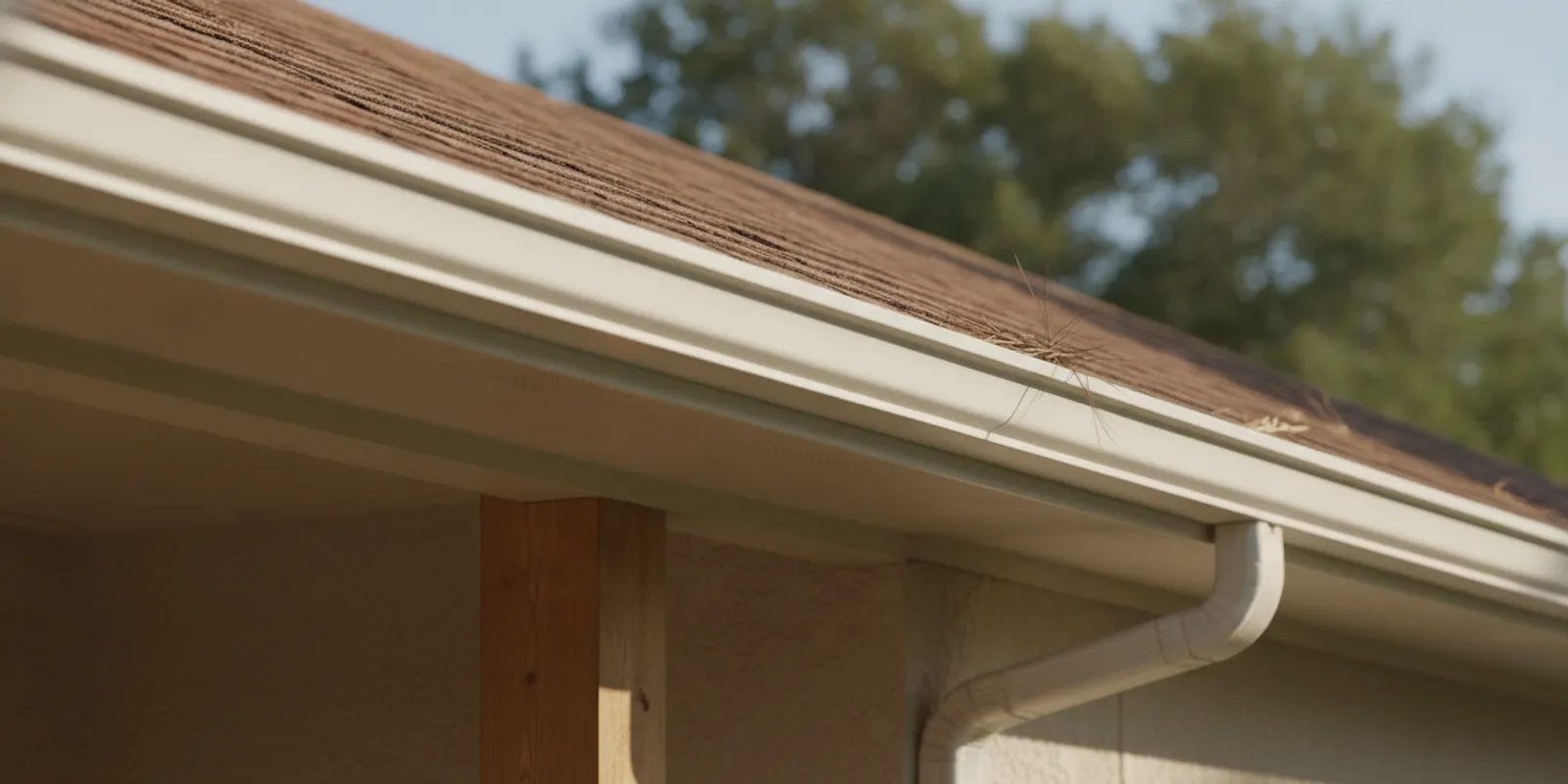
Fascia runs along the outer edge of the roof, where the ends of the rafters meet the exterior. It creates a finished line at the eave and may cover exposed framing. On many buildings, a gutter is attached to fascia, although the exact arrangement depends on the roof design and drainage system. Fascia faces outward at the roof edge; soffit covers the underside of an overhang. The two meet near the eave but perform different functions.
Fascia may be made from wood, engineered wood, vinyl, or aluminum. The suitable material depends on the building, exposure, appearance, and the way adjacent roof and gutter components connect. The BYU construction text notes that fascia is often made from 2 × 4 material, with wider sizes used for some roof styles (Framing Construction Processes and Materials). That is a general construction reference, not a specification for every property. The existing framing and intended use need to be considered in context.
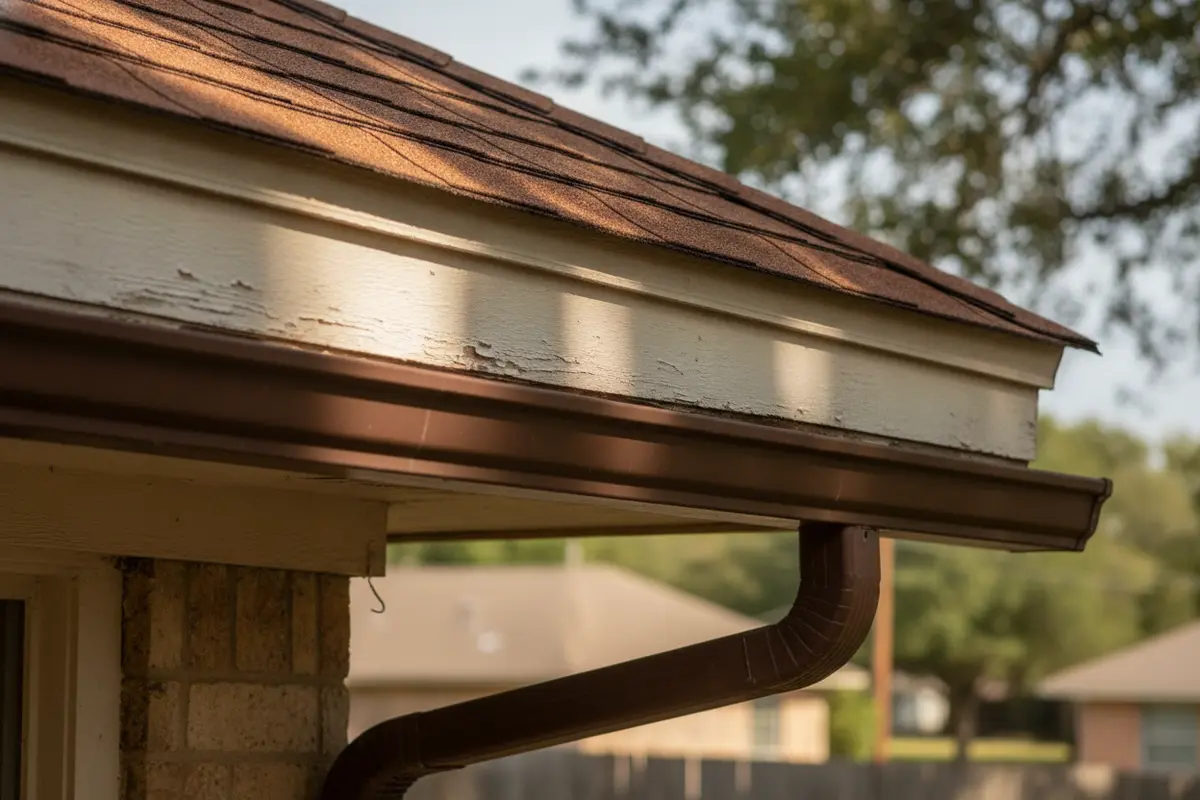
When looking at a building from the ground, the fascia is the narrow band immediately below the roof edge. A gutter may hide much of it, so a clean-looking gutter line does not necessarily show the condition of the board behind it. The roof covering, edge metal, fascia, soffit, and gutter form a connected area, but each component should be assessed for its own condition.
How Does Roof Fascia Help Protect a Building?
Fascia is one part of the roof-edge assembly. It does not replace roofing, flashing, drip edge, or drainage components. Depending on the design and condition, fascia can:
- Cover the ends of rafters and give the roof edge a finished appearance.
- Provide a surface where compatible gutters may be secured.
- Help shield exposed roof-edge framing from direct weather exposure.
- Create a transition between the roof edge and exterior wall trim.
Water management depends on the whole assembly. Roofing, edge metal, flashing, gutters, downspouts, and fascia need to work together. If water regularly spills behind a gutter or collects near the eave, fascia may not be the original cause. A clogged downspout, poor gutter slope, loose fasteners, or a damaged roof-edge detail could also be involved. For drainage concerns, compare your observations with Elevation's gutter installation and repair information.
For example, water staining on fascia directly below a gutter joint may point to a leak at the joint, while a long area of peeling finish may indicate repeated wetting or weather exposure. Neither clue proves the source by itself. The useful question is what is allowing moisture to reach the material, and whether adjacent components are also affected. Replacing only a visible strip without checking that path can leave the underlying cause in place.
What Signs Suggest Roof Fascia Needs Attention?
From the ground, look for changes in the roofline or finish. Do not climb onto the roof or lean a ladder against a gutter to investigate. Possible warning signs include:
- Peeling, bubbling, or discolored paint along the roof edge.
- Trim that looks swollen, cracked, warped, soft, or out of alignment.
- Gutters that appear uneven, detached, or pulled away from the roofline.
- Persistent dark stains or visible deterioration near joints and corners.
- Gaps that may allow insects or animals near the roof edge.
- Water marks on nearby soffit, siding, or an interior ceiling.
One clue does not identify the cause. A sagging gutter might have loose fasteners or excess weight; damaged fascia could also make a secure gutter connection difficult. If you notice indoor moisture, compare it with these common signs of a roof leak. A closer roof inspection can help evaluate nearby components when the source is uncertain.
Pay attention to patterns as well as individual marks. Is deterioration confined to one corner, directly below a downspout, or repeated along a whole side of the building? Did you first notice it after heavy rain or a storm? A pattern can help a professional decide where to look, but it should not be treated as a diagnosis. If a gutter seems loose, keep people away from the area below it and do not try to push or pull it back into place.
How Can You Check Roof Fascia Safely?
A ground-level review can help you decide whether to request a closer assessment. Choose a dry day, walk around the property, and keep a safe distance from the roof edge. Use binoculars or a phone camera with zoom if useful, rather than climbing to reach a better view.
- Scan the full roofline. Look for gaps, loose trim, stains, or sections that appear out of alignment. Compare one side of the building with another, and note whether the change is localized or continuous.
- Look around gutter joints and corners. Staining or peeling finish near seams and downspouts may help identify where water is collecting. Notice whether a gutter appears to pull away, but do not touch or load it.
- Observe drainage during ordinary rain. From a sheltered location, note whether water overflows, spills at a joint, or seems to run behind the gutter. Do not stand beneath active overflow, and do not go outside during dangerous weather to inspect it.
- Check accessible interior areas cautiously. If you can safely view an attic from a stable floor, look for moisture near the eaves. Do not step on unsupported ceiling material, move insulation, or enter a space that is unsafe.
- Record what you notice. Take photos from the ground and note when the change began, whether it followed a storm, and whether it appears during rain. A short written timeline can make a later discussion more precise.

Keep the check observational. Do not poke a soft-looking board, remove gutter sections, scrape paint, or climb onto the roof. Those actions can create a fall hazard or disturb a fragile area. If you see active water entering the building, protect belongings if safe to do so and arrange appropriate help. Elevation serves property owners in Houston, Austin, and surrounding Texas communities.
Request a free roof inspection to discuss what you observed.
Which Roof Fascia Materials May Be Used?
Material choices are not interchangeable in every assembly. A repair should suit the existing roof edge, local exposure, maintenance preferences, and gutter attachment. The table is a general comparison, not a product specification or recommendation for a particular property.
| Material | Common consideration | Questions to ask |
|---|---|---|
| Wood | Can be cut and finished on site; paint and moisture exposure need attention. | How will water be directed away, and how will exposed surfaces be protected? |
| Engineered wood | Manufactured alternative; handling and installation depend on the specific product. | Is it approved for this use, and how will edges be sealed? |
| Vinyl | Often has low routine painting needs, but fastening and appearance still matter. | How will movement and attachment be accommodated? |
| Aluminum | May serve as trim or cover a substrate, depending on the assembly. | Is the material beneath it sound, and how will seams be finished? |
The visible surface may not tell the full story. If a contractor proposes covering fascia, ask whether the underlying board has been assessed and how any gutter will be secured. A cover can change the appearance without showing whether the substrate is sound. Ask how the work will handle corners, seams, and transitions to the roof edge so that water is not directed into a vulnerable joint. You can review the company's broader roofing services and other exterior services when deciding which type of assessment fits the concern.
What Can Cause Fascia Damage in Texas?
Moisture is one possible concern because fascia sits at an exposed roof edge. Water from a roof leak, overflowing gutter, poorly draining section, or vulnerable joint can contribute to deterioration. Sun and changing weather can wear finishes over time. Wind or debris may loosen trim or affect nearby gutters during a storm. These are possibilities to investigate, not proof that a specific event caused a particular mark.
Consider two common observation patterns. If the board looks damaged only below a gutter seam, someone assessing it may check that connection and the gutter's flow path. If damage appears along several eaves, the review may need to consider broader exposure, roof-edge details, or multiple drainage points. If the concern appeared after wind or hail, the roof covering and adjacent parts of the assembly may also need attention. Elevation's page on storm-related roof repairs describes that service path.
Finding the water path matters. Replacing a board without addressing the source can leave new material exposed to the same conditions. A closer review may consider the roof covering, edge details, flashing, gutter attachment, and surrounding trim together. If you are comparing what work may be relevant, the company's pages for roof repair and roof maintenance provide additional context.
Should You Repair or Replace Roof Fascia?
A small area of finish damage may call for a different response than a soft, rotted, or detached board. An assessment can help determine how far the damage extends and whether the board remains suitable for its intended connection. Repair may be considered when the affected area is limited and the cause can be addressed. Replacement may be considered when deterioration is extensive or the board cannot reliably support a gutter or another connection. The exact scope depends on what is found, not simply on how much of the board is visible.
Before work begins, ask the contractor to explain:
- What visible evidence indicates damage, and where is it located?
- Is the issue limited to the surface, or does it continue behind trim or a covering?
- Could a gutter, roof edge, or flashing detail be contributing?
- What material and attachment method are proposed, and why do they fit this assembly?
- How will nearby roofing and exterior components be protected during the work?
- How will the area be checked after the source of moisture is addressed?
For a useful comparison, request an explanation of the proposed scope rather than choosing only by the visible board. A clear plan should identify the affected area, related components to inspect, and any remaining uncertainty. If two proposals differ, compare whether each addresses the same source, includes the same adjacent components, and explains how the gutter attachment will be handled. A lower or higher total alone does not tell you whether the scopes match.
Elevation Roofing & Restoration provides inspection, repair, replacement, and restoration services. You can read customer reviews and learn about the company. If your roof-edge concern is part of a larger roofing project, information about roof replacement may also help frame the discussion.
Schedule a free roof inspection and discuss the next step.
Frequently Asked Questions
Is roof fascia the same as soffit?
No. Fascia runs along the outside roof edge. Soffit covers the underside of an overhang. They meet near the eave but are separate components, and a concern affecting one does not automatically mean the other is damaged.
Can a gutter be attached to fascia?
Many gutter systems attach to fascia, but the suitable method depends on the building and gutter design. The board and fasteners need to suit that connection. If the gutter is loose, avoid handling it and ask for an assessment of both the gutter and the material supporting it.
Can I replace fascia myself?
Roof-edge work involves fall risks and may reveal hidden damage behind trim or gutters. Ground-level observation is safer. Leave roof-edge repairs to qualified professionals, especially when the board is elevated, loose, or connected to a gutter.
Does damaged fascia always mean the roof is leaking?
No. Gutter problems, weather exposure, or other conditions can affect fascia. Reviewing the roof edge, drainage, and nearby components can help identify the source rather than assuming the roof covering is the cause.
Make the Next Step an Informed One
Roof fascia is a small but important part of the roof edge and gutter assembly. If you notice deterioration, loose trim, or recurring water concerns, document what you can observe safely and arrange an assessment to identify the source before deciding on repair or replacement.