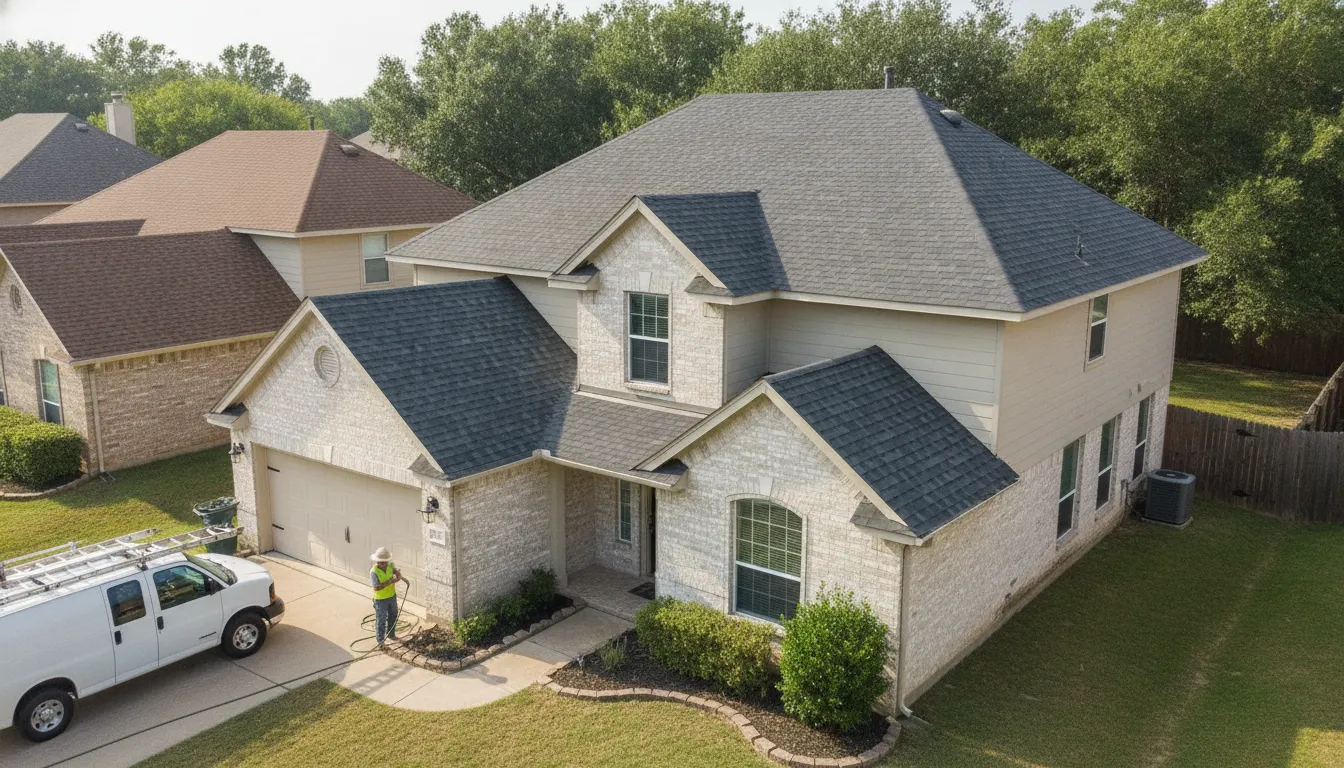
For Houston and Austin homeowners, a roof replacement is a major decision, especially when heat, hail, wind, and aging materials are already creating concern. The right system should protect the home today while making sense over its full service life.
Call Elevation Roofing & Restoration at (832) 271-1726 for a free roof inspection and estimate.
Standing seam metal roof installation can provide a durable, low-maintenance roofing option with clean lines and concealed fasteners. Current systems can deliver weathertight performance for 40 years or more, according to industry research. Your total investment will depend on the home's size, roof design, panel selection, and installation details.
Before comparing costs or scheduling an estimate, it helps to understand how these panels connect, seal, and manage water. That basic design explains why standing seam systems perform differently from traditional shingles.
What Is a Standing Seam Metal Roof?
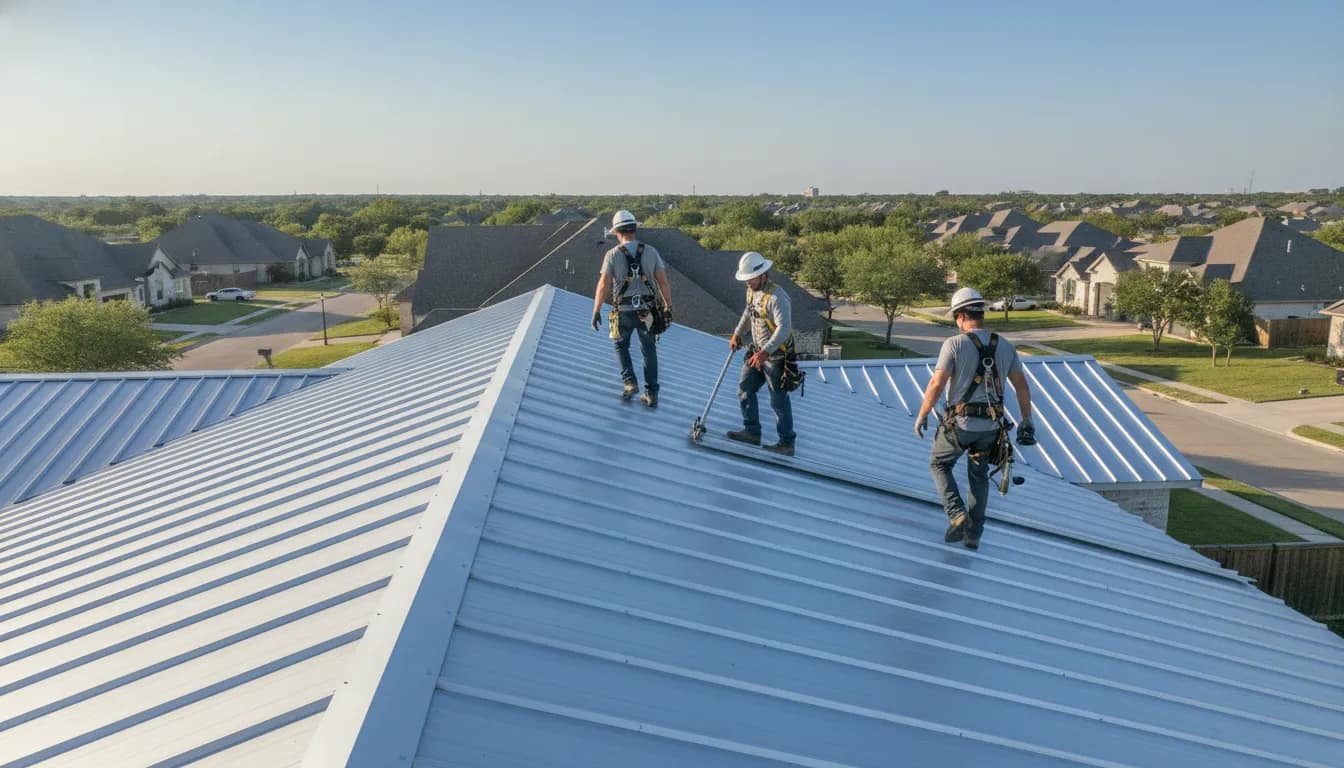
A standing seam metal roof is a panel system designed to create a continuous, weather-resistant covering over a home. Instead of exposing rows of screws across the face of each panel, the system connects adjacent panels through raised vertical seams. The result is a clean roof profile with fewer exposed attachment points and a structure designed for long-term performance.
How the hidden-fastener panel design works
Each metal panel has a raised edge, or seam, along its long sides. During installation, one panel edge locks into the next. Depending on the product, the seam may snap together or be mechanically seamed for a tighter connection. Clips or fasteners hold the panels to the roof deck beneath the seam, so the fasteners remain concealed after the panels are joined.
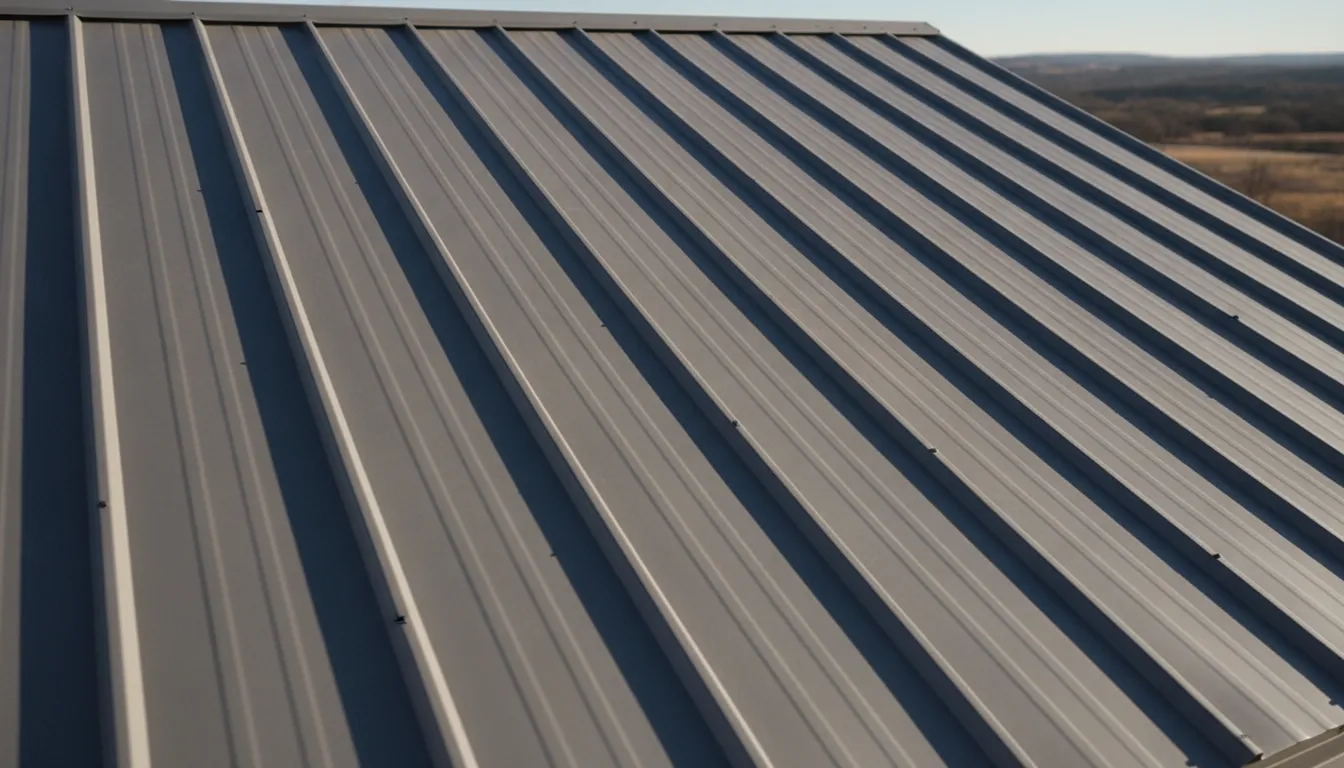
This detail matters because exposed fasteners can become maintenance concerns as weather, movement, and age affect the roof. A properly designed standing seam system keeps the attachment hardware protected inside the panel connection. Factory-engineered roof curbs and openings can also place fasteners inside the curb, helping eliminate potential leak points. Learn more about concealed fasteners and standing seam performance.
Why the raised seams create a sealed surface
The seams stand above the main panel surface, which helps direct rainwater toward the eaves instead of across rows of screw heads. The panels are also manufactured to work as one coordinated system, including the seams, clips, trim, flashing, and penetrations. When those components are measured and installed correctly, the roof acts more like a monolithic steel surface covering the building than a collection of separate shingle pieces. Industry research identifies this monolithic design as a factor that helps reduce leak potential.
That does not make the roof maintenance-free or immune to installation errors. Roof pitch, panel layout, flashing details, penetrations, and fastening methods all affect the final result. A standing seam metal roof installation should begin with an inspection of the deck and existing roof conditions. Followed by careful measurements and a panel plan suited to the home.
For Texas homeowners in Houston, Austin, and nearby communities, the design is especially relevant when evaluating exposure to heavy rain, hail, and strong wind. The right panel profile, substrate preparation, edge details, and installation quality matter as much as the metal itself. A professional assessment can determine whether the system fits the roof structure and the property's storm-risk profile.
What Are the Benefits of Standing Seam Metal Roof Installation?
For homeowners in Houston and Austin, a standing seam metal roof can offer more than a modern appearance. Its concealed-fastener design, durable steel panels, and reflective finish can support long-term protection, comfort, and value when the system is selected and installed correctly.
Long service life and dependable strength
Standing seam metal roof systems are proven to deliver weathertight performance for 40 years or more, according to Buildings.com. That long service life can make metal an appealing choice for property owners who want to avoid replacing an aging roof every few decades.
The system's structural details also matter. Steel-rod bracing can retain its strength without stretching or sagging over time. Proper panel layout, flashing, trim, and fastening remain essential, especially in a region exposed to heat, wind, and severe weather. Homeowners should also avoid common metal roof installation mistakes that can undermine an otherwise durable roof.
Lower heat gain and improved indoor comfort
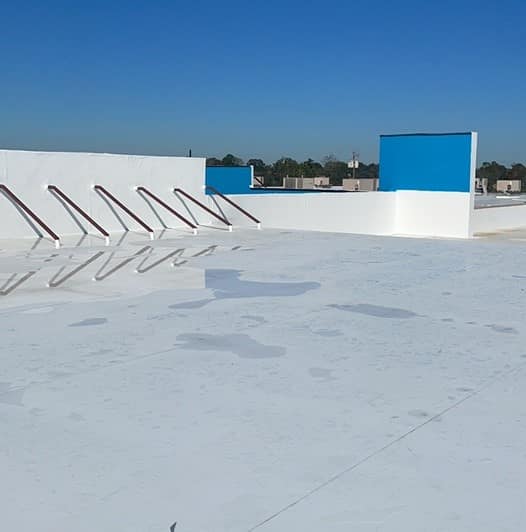
A reflective metal roof finish can reduce the amount of solar energy absorbed by the roof. The U.S. Department of Energy reports that, under the same conditions, a reflective roof could stay more than 50 degrees Fahrenheit cooler than a conventional roof on a sunny afternoon.
That difference can be especially relevant during a Texas summer. Cool roofs can lower maximum indoor temperatures in non-air-conditioned residential buildings by 2.2 to 5.9 degrees Fahrenheit, according to the U.S. Environmental Protection Agency. Actual results depend on the roof color, insulation, ventilation, building layout, and cooling system. Reflectance is not a substitute for sound attic insulation, but it can complement a well-designed roof assembly.
Less maintenance and stronger long-term value
Metal roofing owners reported spending 3.5% of total installed costs on maintenance over the expected service life. Compared with 28.5% for asphalt roofing, according to the Buildings.com source above. This does not mean a standing seam roof is maintenance-free. It still deserves periodic inspections, debris removal, sealant checks, and prompt attention after hail or high winds.
- Potential for a service life of 40 years or more.
- Reflective finishes that can reduce roof temperatures and support indoor comfort.
- Lower reported maintenance costs than asphalt over the expected service life.
- Steel bracing that helps the roof retain strength over time.
- Potential energy-related tax incentives or utility rebates, depending on current eligibility.
- Performance and longevity that may enhance a property's market value.
Energy efficiency can also create opportunities beyond monthly comfort. Roofing choices may affect eligibility for government tax incentives or utility rebates, but programs change and must be confirmed for the specific project. A durable, efficient roof may also support resale appeal. Buildings.com identifies roofing-system selection as one factor that can affect a building's market value.
The best decision depends on your roof's slope, condition, drainage, ventilation, and exposure to Houston or Austin weather. A professional evaluation can determine whether standing seam metal roof installation fits the property and how to detail it for dependable performance.
What Does Standing Seam Metal Roof Installation Cost?
There is no responsible one-size-fits-all price for standing seam metal roof installation in Houston or Austin. The final estimate depends on the roof itself, the metal system selected, and the work required before panels can be installed. A simple roof with accessible slopes may involve a different scope than a larger home with multiple valleys, penetrations, dormers, or difficult access.
Panel style and metal gauge can affect material and labor requirements. Roof size matters as well, but square footage is only one part of the calculation. A professional estimate should account for the existing roof condition, deck repairs, underlayment, flashing, trim, ventilation, removal, and site access. These details are why online price calculators rarely reflect the actual cost of a Texas roofing project.
Which factors influence the installation estimate?
- Square footage and the number of roof planes.
- Panel style, seam design, finish, and metal gauge.
- Roof pitch, valleys, dormers, skylights, chimneys, and other penetrations.
- Condition of the decking, fascia, flashing, and existing roofing layers.
- Underlayment, ventilation, edge metal, ridge caps, and other installation details.
- Removal, disposal, material delivery, and access conditions.
The upfront installation cost also deserves context. A roof is often about 10% of a building's total construction cost, yet it can represent up to 60% of lifecycle maintenance costs, according to industry research. That makes the quality and expected maintenance of the system important parts of the decision, not just the initial invoice. Read the supporting research on roofing lifecycle costs.
One study cited a lifecycle cost of approximately 30 cents per square foot per year for metal roofing. Compared with 37 cents for asphalt and 57 cents for single-ply roofing, based on expected service life. Those figures are not a quote for your home, and actual results vary by product, installation, climate, repairs, and maintenance. They do show why comparing roofing systems only by their starting price can miss long-term value.
For a useful comparison, ask the contractor to explain both the initial scope and the expected maintenance considerations. Elevation Roofing & Restoration can inspect your roof, discuss suitable panel options, and prepare a free estimate for your property. Schedule professional roofing services for your Houston or Austin home by calling (832) 271-1726.
What to Expect During the Installation Process
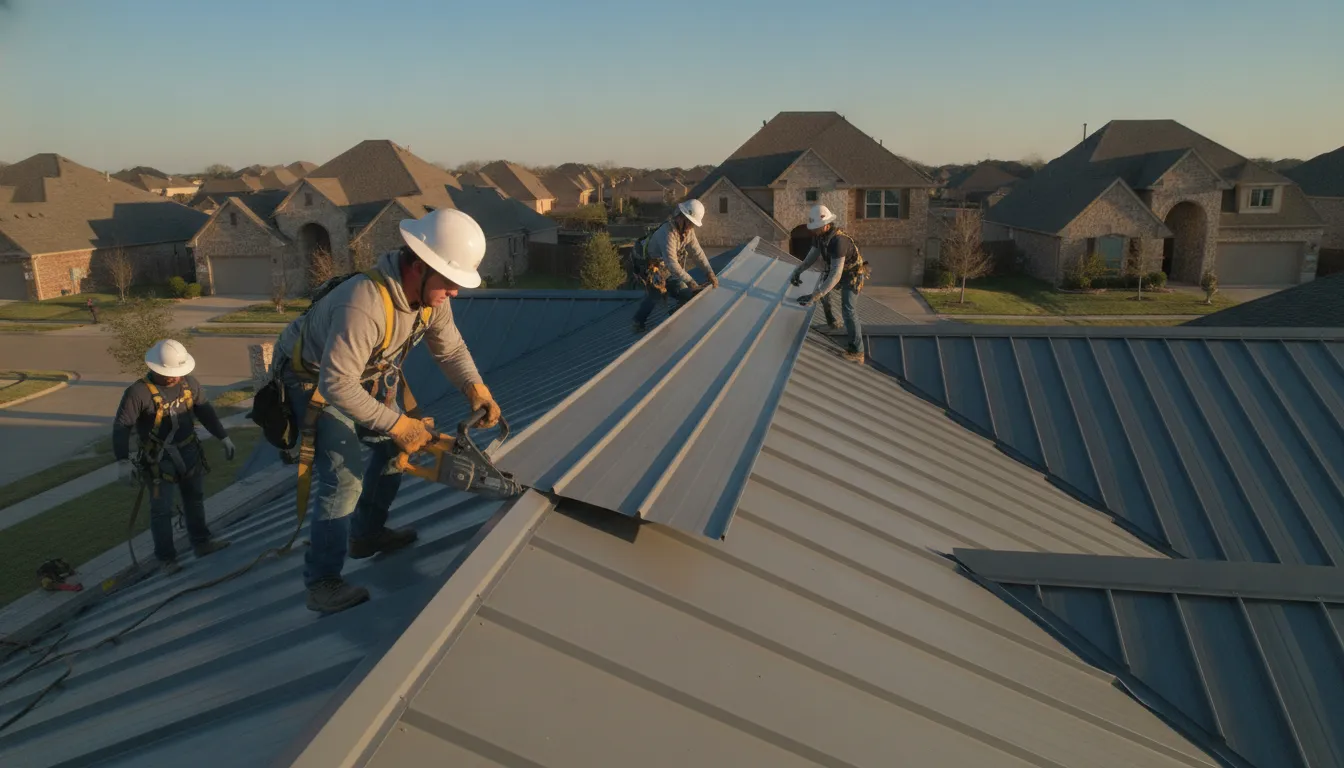
A standing seam metal roof installation follows a deliberate sequence. Each stage affects how well the finished roof sheds water, handles movement, and performs through Texas weather. An experienced crew verifies the structure first, prepares a clean surface, and pays close attention to every seam, edge, and penetration.
- Inspect and measure the roof. The crew begins by evaluating the existing roof, slope, decking, penetrations, drainage, and areas that may require repair. Accurate measurements determine panel lengths, trim quantities, flashing details, and the layout around vents, chimneys, skylights, and other roof openings. This planning stage helps prevent rushed cuts and unnecessary joints later.
- Prepare and clean the roof deck. Old roofing materials are removed as needed, and the exposed deck is checked for rot, moisture damage, loose areas, or uneven surfaces. Damaged decking should be replaced before the metal panels cover it. The crew then removes debris, protruding fasteners, and contaminants so the underlayment can lie flat and bond or secure properly.
- Install the underlayment membrane. A suitable underlayment is placed over the prepared deck to provide an additional water-shedding layer beneath the metal. Installers carefully overlap courses and seal vulnerable areas according to the system requirements. Extra attention is important at valleys, eaves, ridges, penetrations, and transitions where water can collect or move laterally.
- Lay out the panel system. Before fastening panels, the crew establishes reference lines and confirms the direction, spacing, overhangs, and alignment of the standing seams. Panel layout must account for roof geometry and fixed details such as valleys, walls, and vents. Good layout keeps the seams straight and helps the trim fit cleanly at the edges.
- Secure the concealed-fastener panels. Standing seam panels are attached with clips or other system-specific components that keep fasteners beneath the seams instead of exposing them across the weather surface. Concealed fasteners reduce exposed penetration points and allow the metal to accommodate normal expansion and contraction. The Buildings report describes factory-engineered concealed fasteners as a way to eliminate potential leak points: see the research on standing seam systems.
- Seam the adjoining panels. The installer connects the panel edges using the specified seam design. A snap-lock system joins panels through an interlocking profile, while a mechanically seamed system uses a tool to fold and tighten the seam after the panels are positioned. The correct choice depends on the product, roof design, and project requirements. Seams must be aligned and formed consistently. Small errors can affect water resistance, appearance, and the panels' ability to move as temperatures change.
- Install ridge caps, trim, and flashing. The crew completes the areas where the roof meets walls, edges, valleys, vents, chimneys, and other penetrations. Ridge caps close and protect the roof peak, while trim and flashing direct water away from vulnerable transitions. These details require specialized skill because flashing mistakes can create leaks even when the field panels are installed correctly. A standing seam roof is not complete until these perimeter and penetration details are properly integrated.
- Complete cleanup and the final inspection. After installation, the crew removes scrap metal, protective materials, and job debris from the roof and surrounding property. The final inspection checks panel alignment, seams, fasteners, flashing, trim, ridge caps, drainage paths, and visible damage. The goal is a continuous, monolithic sealed surface with as few leak opportunities as possible. Because seam formation and flashing require specialized training, professional installation is an important part of protecting the roof's performance.
When these steps are completed carefully, concealed fasteners and the connected metal surface work together as part of a cohesive water-shedding system. The installation quality matters as much as the material choice, particularly on homes in Houston and Austin that face intense sun, heavy rain, and severe storms.
Standing Seam Metal vs. Traditional Roofing
For Texas homeowners, the right roofing material depends on more than the first installation quote. Houston heat, Austin sun, hail, wind, roof complexity, and long-term maintenance all affect the value of a roof system. Standing seam metal and asphalt shingles can both protect a home, but they make different tradeoffs.
Tile is another strong option for some Texas homes, especially when appearance and material longevity are priorities. To compare the major material choices in more detail, explore how metal and clay roofing materials compare. The table below focuses on standing seam metal and traditional asphalt shingles because they are common choices for residential replacement projects.
| Factor | Standing Seam Metal | Asphalt Shingles |
|---|---|---|
| Lifespan | Modern systems can provide weathertight performance for 40 years or more when properly designed and installed. Buildings.com reports this service-life expectation for standing seam systems. | Service life varies by shingle type, installation quality, ventilation, sun exposure, and storm activity. Replacement timing should be evaluated from the roof's actual condition. |
| Maintenance | Owners reported spending 3.5% of total installed cost on maintenance over the expected service life. | Owners reported spending 28.5% of total installed cost on maintenance over the expected service life. Both figures come from the same industry comparison, so they provide useful context rather than a promise for one home. Review the maintenance study. |
| Energy efficiency and reflectance | A reflective metal finish can reflect more sunlight and absorb less solar energy. Under the same conditions, a reflective roof could stay more than 50 degrees Fahrenheit cooler than a conventional roof. The U.S. Department of Energy explains cool-roof performance. | Standard dark shingles generally absorb more solar energy than reflective roofing. Shingle products with cool-roof properties can perform differently, depending on their surface reflectance and thermal emittance. |
| Cost over time | A lifecycle study placed metal roofing at 30 cents per square foot per year, based on expected service life. | The same study placed asphalt at 37 cents per square foot per year. Initial price, roof design, tear-off needs, repairs, and local labor still affect the actual project cost. See the lifecycle cost comparison. |
| Storm resistance | Concealed fasteners and a continuous panel surface can reduce potential leak points, but performance depends on proper engineering, flashing, attachment, and installation. Severe hail can damage any roof material. | Individual shingles can be lifted, cracked, or displaced by hail and high winds. Product rating, installation quality, roof age, and storm severity affect the outcome. |
In practice, standing seam metal can make sense when a homeowner values long service life, lower reported maintenance, and reflective performance. Asphalt may fit a different budget or design preference. A professional evaluation should account for slope, decking, ventilation, flashing, drainage, and the home's exposure before choosing a material.
Is a Standing Seam Metal Roof Right for Your Home?
A standing seam metal roof can be a strong fit for Texas homeowners, but the right choice depends on your home's design, priorities, and replacement plan. Start with the roof itself. Slope, drainage, penetrations, and the desired panel exposure affect how the system should be detailed. A qualified installer can confirm whether the existing structure and deck are ready for the proposed panels.
Your budget should account for more than the initial installation. Standing-seam systems are designed for long service, and current systems can provide weathertight performance for 40 years or more, according to industry research. That does not make metal the lowest upfront option in every project. It does make lifecycle value important when comparing replacement frequency, maintenance, energy performance, and the disruption of future reroofing.
How should Texas storm exposure affect the decision?
Houston and Austin homeowners should discuss hail and wind exposure before selecting a roof assembly. Metal's strength and interlocking panel design may appeal to owners who want a durable covering. But performance depends on the product, installation details, attachment, flashing, and the condition of the underlying structure. Ask the contractor how panel selection and installation will address the conditions common in your neighborhood. Elevation Roofing serves the Houston and Austin service areas, so the inspection can be based on the home rather than a generic material comparison.
- Confirm that the roof slope, drainage, and panel exposure suit the planned system.
- Compare the initial investment with expected service life and maintenance needs.
- Review hail, wind, flashing, and attachment considerations for your property.
- Ask whether the existing roof can support a retrofit or requires full removal.
Can a metal roof improve efficiency and resale appeal?
Metal roofing systems can be adapted for retrofit and reroof applications, including replacement of older, less efficient roofs. If replacement is already due, choosing a cool covering is generally the easiest and least expensive time to add cool-roof performance. The U.S. Department of Energy explains that a cool roof reflects more sunlight and absorbs less solar energy. The product's surface solar reflectance, meaning the outermost layer exposed to the sun, is the primary factor in whether it qualifies as cool. Review the specific finish and reflectance information rather than assuming every metal color performs the same way.
Long-term performance can also support resale appeal. Roofing choices affect a building's energy use and market value, and metal's durability may be meaningful to future buyers. For a tailored recommendation, review your roof condition and goals with a contractor experienced in standing seam metal roof installation. The best decision balances structural fit, storm considerations, replacement timing, and value over the years you expect to own the home.
Get a Free Standing Seam Roof Estimate
Call (832) 271-1726 to schedule a free roof inspection and estimate with Elevation Roofing & Restoration. We serve Houston, Austin, and the surrounding Texas communities with hands-on assessments, honest scoping, and quality installation you can count on.
Frequently Asked Questions
What is the process for standing seam metal roof installation?
Installation typically begins with a roof inspection, measurements, and a review of the existing deck. The crew prepares the surface, installs the appropriate underlayment, and plans panel placement around valleys, walls, vents, and other roof features. Panels are then secured with concealed fasteners and joined at their seams. The final steps include ridge caps, trim, flashing, and a detailed cleanup.
How do you prepare the roof deck for a metal roof?
The roof deck should be inspected for damage, rot, uneven areas, and fastening concerns before panels are installed. Any necessary repairs come first. The installer then applies the specified underlayment and checks that penetrations, edges, and transitions are ready for properly fitted flashing. A sound, clean, and well-prepared deck gives the metal panels a stable base.
What is the difference between snap-lock and mechanically seamed metal panels?
Snap-lock panels have edges that fit together and lock over a supporting seam. Mechanically seamed panels are folded together with a seaming tool after installation, creating the specified seam profile. The right choice depends on the roof design, slope, panel system, and project requirements. Your installer should confirm the panel and seam specifications before work begins.
Why is thermal expansion clearance important in metal roof installation?
Metal panels expand and contract as temperatures change. Proper clearance at terminations, penetrations, and trim allows the system to move as designed instead of stressing fasteners, seams, or flashings. Installation details should account for panel length, roof layout, local weather, and the manufacturer's requirements.
Ready to Explore Standing Seam Metal Roofing?
A professional evaluation can help you compare your home's roof design, material options, and installation needs before making a decision. Call (832) 271-1726 to schedule a free roof inspection and estimate with Elevation Roofing & Restoration. Our team can discuss practical next steps for your Houston or Austin home and help you understand which roofing solution fits your property.