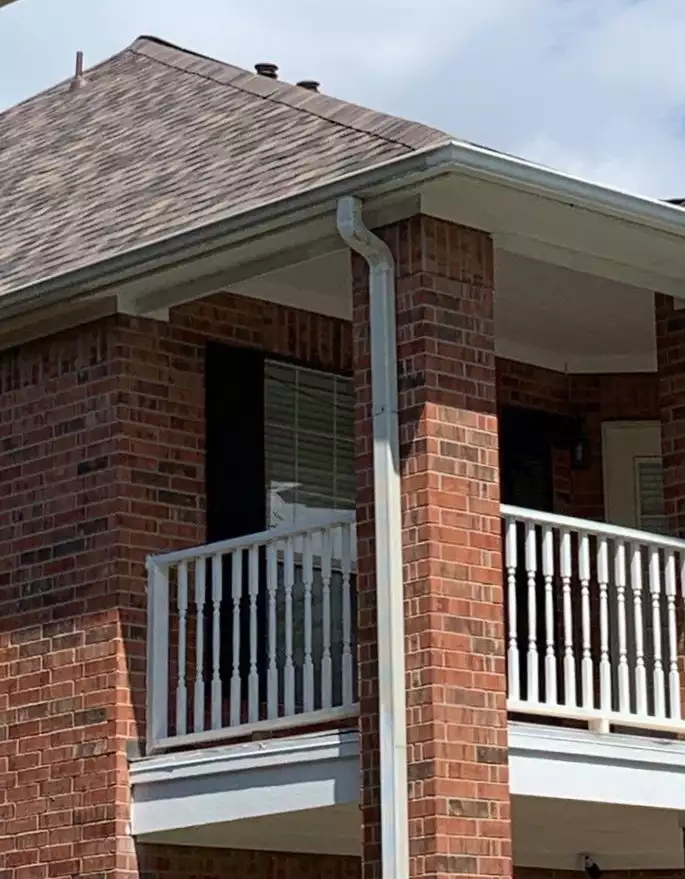
When a Houston or Austin homeowner finally decides to upgrade their gutters, the first surprise is usually how many options exist. "Gutters" is not one product. It is a combination of a profile (the shape), a size, a material, and a construction method, and the right combination depends entirely on your roof, your rainfall, and the trees around your house. In a state where a single afternoon storm can dump several inches of rain on the Gulf Coast, choosing the wrong style is not a cosmetic mistake. It is a water-management one.
This guide walks through the main types of gutters by shape and material, explains where each one fits, and points out the choices that matter most under the intense heat, hail, and downpours we deal with across more than 100 Texas communities. Think of it as the conversation we have on-site, written down.
Gutter Styles: The Five Profiles That Matter
The "profile" is the cross-section shape of the gutter, what you would see if you sliced it in half. It drives both how much water the gutter can carry and how the finished roofline looks.
K-Style Gutters
K-style is the most common residential gutter in America, and the default on most Texas homes for good reason. Its flat back and decorative front (which loosely resembles crown molding) let it carry a large volume of water for its size, and the angular shape pairs cleanly with modern and traditional fascia alike. If you have a steep roof shedding fast-moving water in a downpour, K-style's capacity is a real advantage. The trade-off: the inside corners and grooves can trap debris, so they reward regular cleaning.
Half-Round Gutters
Half-round gutters are exactly what they sound like, a smooth semicircular trough. Because they have no inside corners, debris and water flow through more freely, so they clog less and are easier to rinse clean. They suit historic, traditional, and architecturally distinctive homes beautifully, and they pair especially well with tile and slate roofs. The catch is capacity: a half-round holds less water than a same-width K-style, so on a large or steep roof you may need a wider size or more downspouts to keep up with Texas rain.
Box Gutters
Box (or trough) gutters are oversized, high-capacity channels, often square or rectangular and frequently built into the roof structure rather than hung on the fascia. They move serious volumes of water, which makes them a workhorse on commercial buildings, large homes, and properties with flat or low-slope roofs. On the heavy-rain Gulf Coast, that capacity is genuinely useful. They are a more involved install and are worth specifying when the roof's drainage demands it.
Fascia Gutters
Fascia-style gutters are formed from a single tall piece of metal that doubles as the fascia board cover, giving a clean, continuous, minimalist line that contemporary homes love. Because they are deeper than standard profiles, they also hold a good amount of water. The minimalist look comes with a maintenance note: their integrated design means repairs are best left to a professional rather than swapped section by section.
Seamless vs. Sectional
This is a construction method rather than a shape, but it matters as much as the profile. Sectional gutters are pre-cut pieces joined every few feet, and every joint is a future leak point, a real liability in our expand-and-contract climate. Seamless gutters are formed on-site from a single coil and cut to the exact length of each run, so the only seams are at corners and downspouts. Fewer joints means fewer leaks and less maintenance, which is why seamless aluminum is the most popular choice we install for Texas homes.
Gutter Materials: What Survives Texas Weather
Shape decides capacity and looks. Material decides how long the gutter survives our UV, hail, and humidity.
- Aluminum is the everyday Texas favorite, lightweight, rust-resistant, affordable, and available in seamless runs and dozens of colors. Its weakness is denting from hail, but for most homes it is the best balance of cost and durability.
- Galvanized steel is stronger and more impact-resistant than aluminum, which helps in hail country, but it can rust at the seams over time once its coating wears, especially in humid Gulf Coast air.
- Vinyl is the cheapest and easiest to install, but Texas is hard on it. Relentless UV makes vinyl brittle, and it can crack or warp in extreme heat and the occasional hard freeze, so it tends to be a short-term solution here.
- Copper and zinc are the premium, decades-long options. They resist corrosion, need little upkeep, and look stunning on the right home, at a significantly higher upfront cost.
Don't Overlook Size and Downspouts
The most over-specified detail and the most overlooked one. Standard residential gutters come in 5-inch and 6-inch widths. On the Gulf Coast and across Central Texas, where rainfall can arrive fast and heavy, a 6-inch gutter paired with larger 3x4-inch downspouts often makes sense over the default 5-inch setup, simply because it moves far more water before overflowing. An undersized gutter on a big, steep roof will spill over the front edge in a hard rain no matter how well it is installed, dumping water exactly where you do not want it, against your foundation.
Slope, hanger spacing, and downspout placement matter just as much as the parts themselves. A correctly pitched, properly hung gutter outlasts and outperforms a premium gutter that was installed in a hurry.
Matching Gutters to Your Roof and Home
There is no single "best" gutter, only the right fit for your situation. A few quick guidelines we use:
- Steep or large roof in a heavy-rain area: 6-inch seamless K-style or box gutters in aluminum or steel for maximum capacity.
- Traditional, historic, or tile/slate home: half-round gutters, ideally in copper or aluminum, for the right look and easy flow.
- Modern, minimalist home: fascia-style gutters for that clean, uninterrupted roofline.
- Heavily wooded lot: any profile, but prioritize seamless construction and consider gutter guards to fight constant debris.
Because gutters live at the exact edge where your shingles, drip edge, fascia, and soffit all meet, they are inseparable from your roof's health. The same edge our crew examines during a professional roof inspection is the edge your gutters protect, which is why we look at both as one system. If a storm has battered your gutters, it has almost certainly touched the roof edge too, often a storm repair matter your insurance may help cover.
Let Elevation Help You Choose the Right Gutters
Picking gutters is easier when someone can stand on your driveway, look at your roof pitch, your trees, and your fascia, and tell you which profile, size, and material actually fit. As a GAF Preferred Contractor with a 5-star Google rating serving Greater Houston and the Austin metro for more than nine years, Elevation Roofing & Restoration installs and repairs every gutter style covered here, and we treat your gutters as part of the roof edge, not an afterthought.
Schedule your free, no-obligation inspection, a $399 value, and we will recommend the right gutter system for your home and your Texas weather, no pressure. Reach us anytime at (832) 271-1726, and if a recent storm is the reason you are upgrading, we will help you navigate any insurance claim along the way.