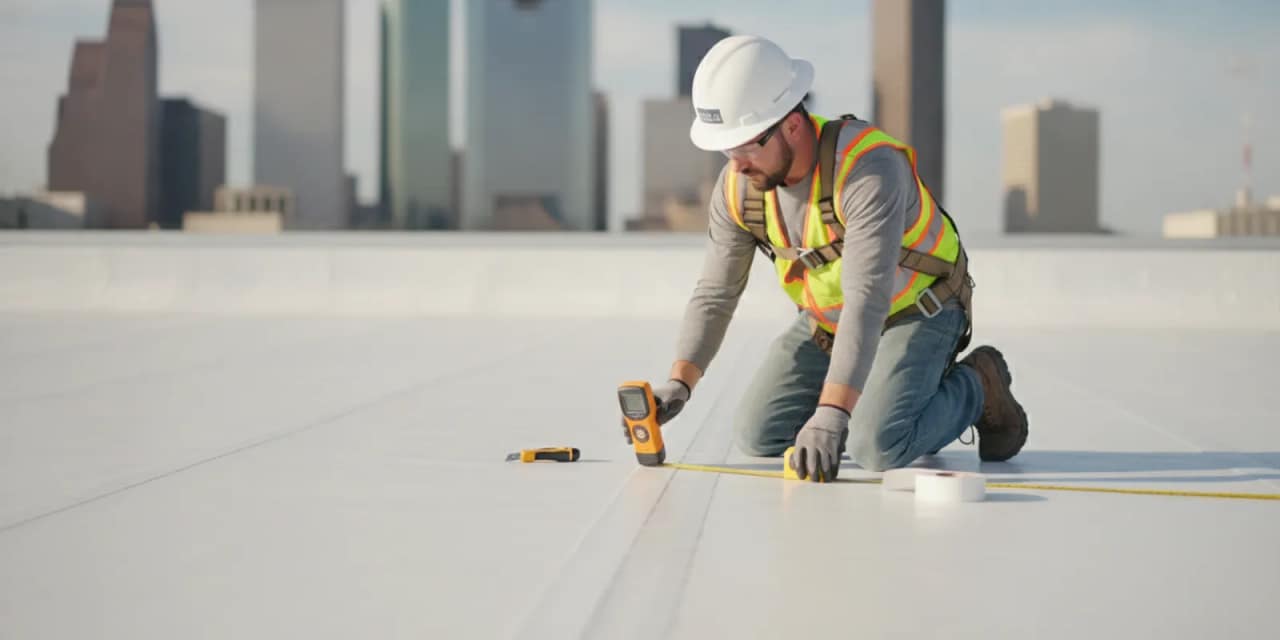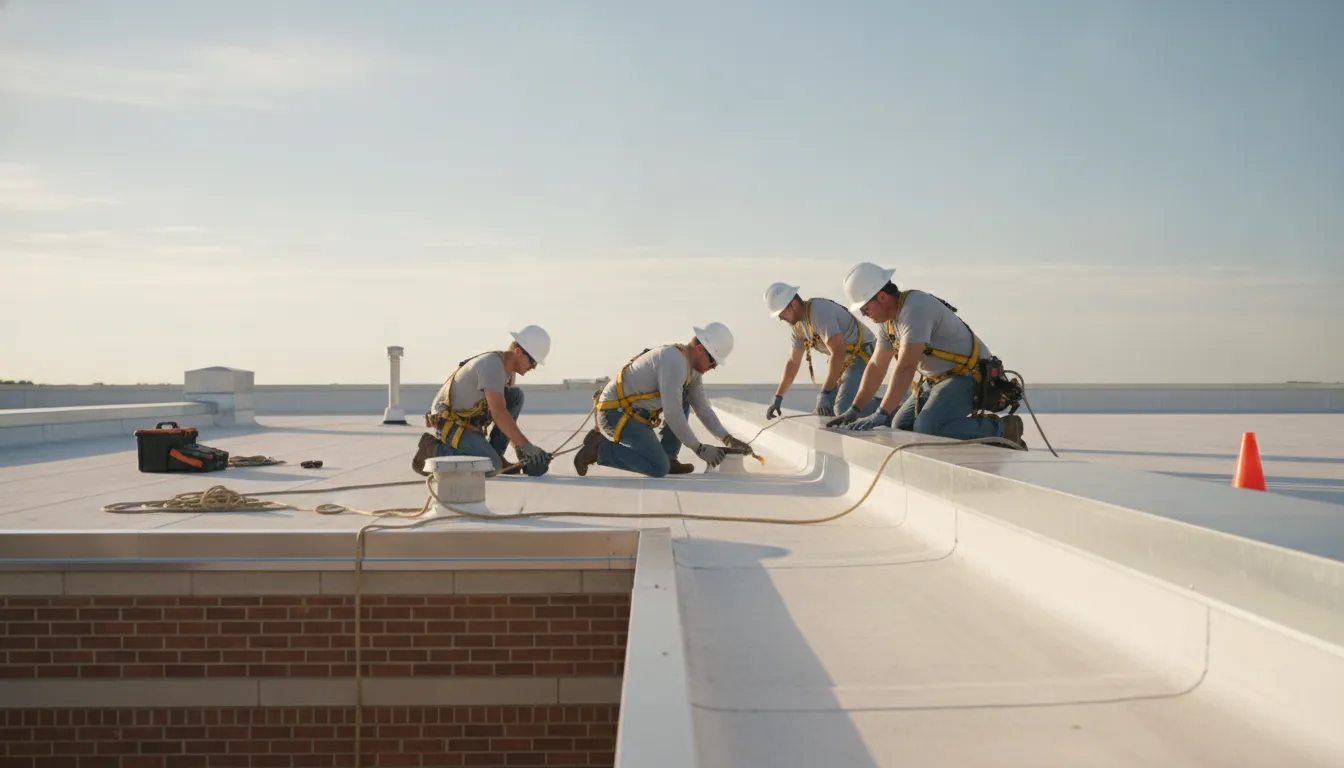
If you own or manage a commercial building in Greater Houston or the Austin metro, your roof is one of the largest and most overlooked assets on the balance sheet. Unlike a sloped residential roof, a flat or low-slope commercial system carries standing loads, drains slowly, and bakes under relentless Texas UV for most of the year. When it fails, it does not just leak: it threatens inventory, interrupts operations, and triggers emergency repair pricing. This guide walks Houston business owners through the three workhorse commercial roofing systems, the maintenance programs that extend their life, and how to budget for a roof that protects your bottom line.
Why Commercial Roofs Are a Different Animal
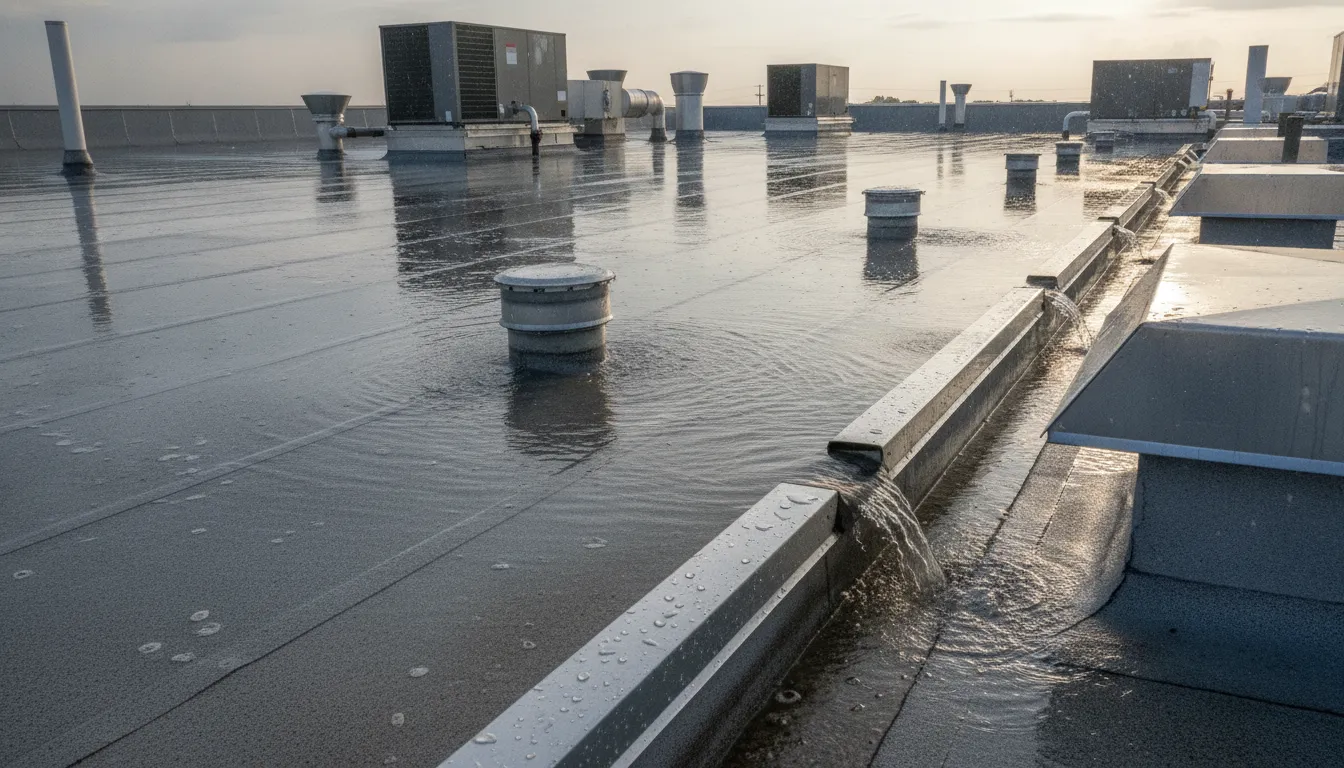
Houston sits on the Gulf Coast, which means your building faces a punishing combination of intense heat, heavy rain, high winds, and hurricane-season threats. Low-slope roofs are engineered to handle this, but they have far less margin for error than a steep residential roof. Water that would shed instantly off a shingle roof can pond on a flat membrane for hours. A small puncture or a failed seam quietly admits moisture into the insulation and decking, where it spreads for months before it ever shows up as a ceiling stain inside your space.
That is the core reason commercial roofing rewards proactive owners and punishes reactive ones. The cost of catching a seam separation during a scheduled inspection is a fraction of the cost of replacing soaked insulation, drying out an interior, and replacing damaged stock. Understanding your flat and low-slope roof system is the first step toward managing it like the investment it is.
The Three Workhorse Commercial Systems
Most Houston commercial buildings use one of three proven low-slope systems. Each has a clear set of strengths, and the right choice depends on your building's use, foot traffic, rooftop equipment, and budget horizon.
TPO (Thermoplastic Polyolefin)
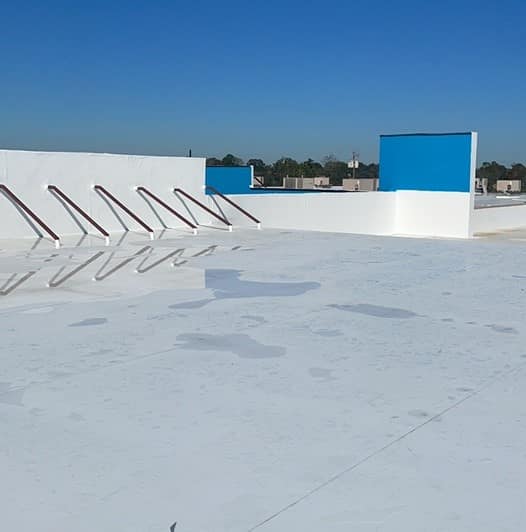
TPO is the most popular single-ply membrane on new commercial construction, and for good reason in our climate. Its bright white surface reflects sunlight rather than absorbing it, which lowers rooftop temperatures and can meaningfully reduce summer cooling loads, an attractive feature when Houston runs the AC nearly year-round. TPO seams are heat-welded rather than glued, creating a continuous watertight bond that resists wind uplift and the seam failures common to older membranes.
- Best for: warehouses, retail, offices, and any building where energy efficiency matters.
- Strengths: reflective, lightweight, strong welded seams, competitive cost.
- Watch for: proper installation is everything. A welded seam is only as good as the crew that runs the welder.
Modified Bitumen
Modified bitumen is a multi-layer asphalt-based system reinforced with polyester or fiberglass and rolled out in sheets that are torched, adhered, or self-adhered into place. It blends the time-tested durability of traditional asphalt roofing with added flexibility, so it handles Houston's thermal expansion and contraction cycles without cracking. The layered build makes it forgiving of moderate foot traffic, which is useful on roofs with HVAC units, vents, and equipment that technicians service regularly.
- Best for: buildings with rooftop equipment and frequent maintenance access.
- Strengths: redundant waterproofing layers, puncture resistance, proven longevity.
- Watch for: heavier than single-ply; the system rewards a contractor who knows the detailing. Explore the specifics on our modified bitumen roofing page.
Built-Up Roofing (BUR)
Built-up roofing is the classic "tar and gravel" system, constructed from alternating layers of bitumen and reinforcing fabric, then topped with a gravel or mineral surface. It is one of the oldest and most reliable low-slope approaches, prized for its thick, monolithic membrane and excellent resistance to the UV and physical wear that define a Texas summer. The gravel cap also adds fire resistance and ballast against high winds.
- Best for: larger flat roofs where long-term durability outweighs upfront cost.
- Strengths: multiple redundant layers, heavy-duty surface, decades of track record.
- Watch for: heavier installation and a longer install timeline than single-ply membranes.
Maintenance Programs: The Cheapest Insurance You Will Buy
No commercial roof, regardless of system, is install-and-forget. The single biggest predictor of how long your roof lasts is whether it is inspected and maintained on a schedule. Drains and scuppers clog with debris and cause ponding. Pitch pockets dry out. Seams and flashings around equipment loosen. None of these are dramatic on their own, but together they are how a 20-year roof fails in year nine.
A structured roof maintenance program typically includes scheduled inspections, drain and gutter clearing, seam and flashing checks, and minor repairs caught before they spread. We recommend at least two inspections a year for Houston commercial roofs: one before hurricane season and one after, when wind and hail damage is most likely to have occurred. Documented maintenance also protects your manufacturer warranty, which many owners do not realize can be voided by neglect.
Leak Prevention and Minimizing Downtime
The goal of commercial roof management is not just to fix leaks, it is to never reach the point where a leak shuts you down. Most commercial leaks originate at penetrations: HVAC curbs, vents, skylights, drains, and the perimeter edge. These details are where membranes are cut and re-sealed, so they are the first places to age. A trained inspector knows to probe exactly these spots.
When repairs are needed, timing and sequencing matter for an operating business. A good commercial crew works around your hours, isolates work zones so one section of roof is open at a time, and protects interior areas below active work. The objective is to keep your doors open and your stock dry while the roof gets the attention it needs. If a storm has already caused damage, fast assessment is critical, our storm repair team documents conditions thoroughly, which also matters if you file a claim.
Budgeting for a Commercial Roof
Smart commercial roof budgeting separates three distinct line items so they do not collide unexpectedly:
- Routine maintenance: a predictable annual or semi-annual cost that is the smallest and most valuable spend you will make.
- Repairs: a reserve for the inevitable seam, flashing, or penetration issue that maintenance catches.
- Replacement reserve: a sinking fund set aside over the roof's life so that re-roofing is a planned capital project, not an emergency.
Knowing your roof's age, system type, and condition lets you forecast replacement years in advance instead of scrambling. For owners weighing the numbers, a professional roof inspection gives you a condition baseline, and our team can help you compare repair-versus-replace economics honestly. Financing is available for larger projects through our financing options, so a major re-roof does not have to land as a single lump-sum hit.
Why Houston Businesses Work With Elevation
Elevation Roofing & Restoration has spent more than nine years serving Greater Houston and the Austin metro across more than 100 Texas communities. We are a GAF Preferred Contractor with a 5-star Google rating and a 100% satisfaction guarantee, and we install and repair the full range of commercial low-slope systems, TPO, modified bitumen, and built-up, alongside our residential work. That breadth means our recommendation is driven by what your building actually needs, not by the one system we happen to sell.
Your commercial roof protects everything underneath it. The most cost-effective decision you can make is to know its condition before the next Gulf storm tests it. Schedule a free roof inspection, a $399 value at no cost, and get a clear, honest report on where your roof stands and what it needs to keep your business running. For owners specifically weighing replacement, continue with this Texas commercial roof replacement guide.