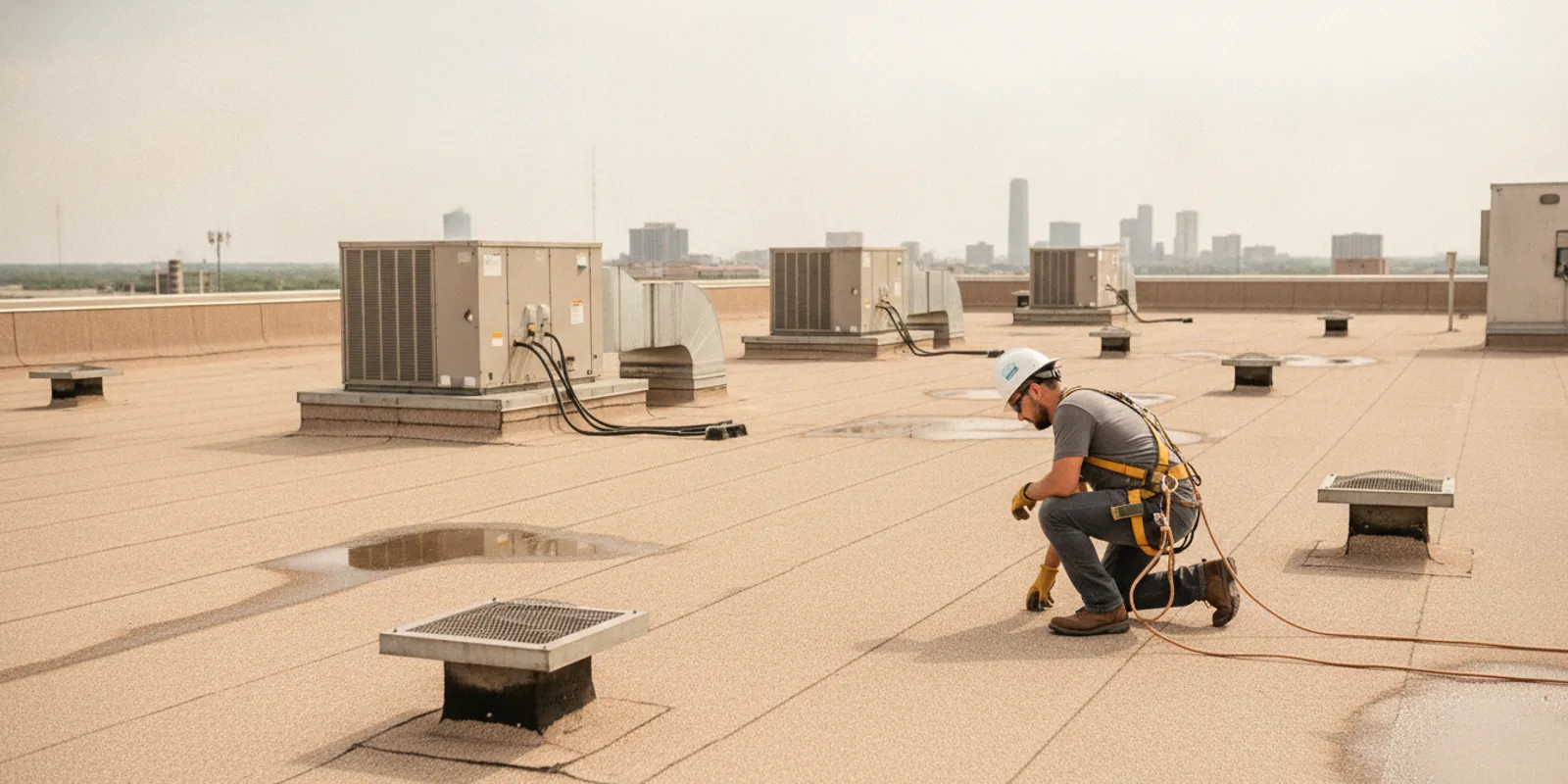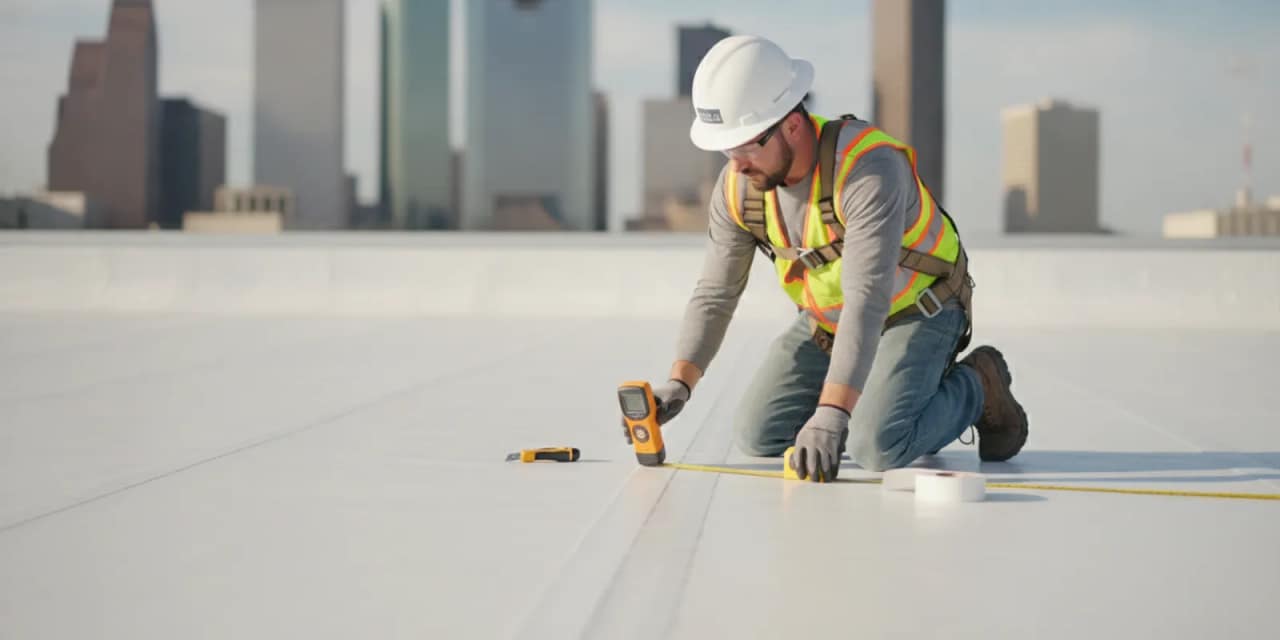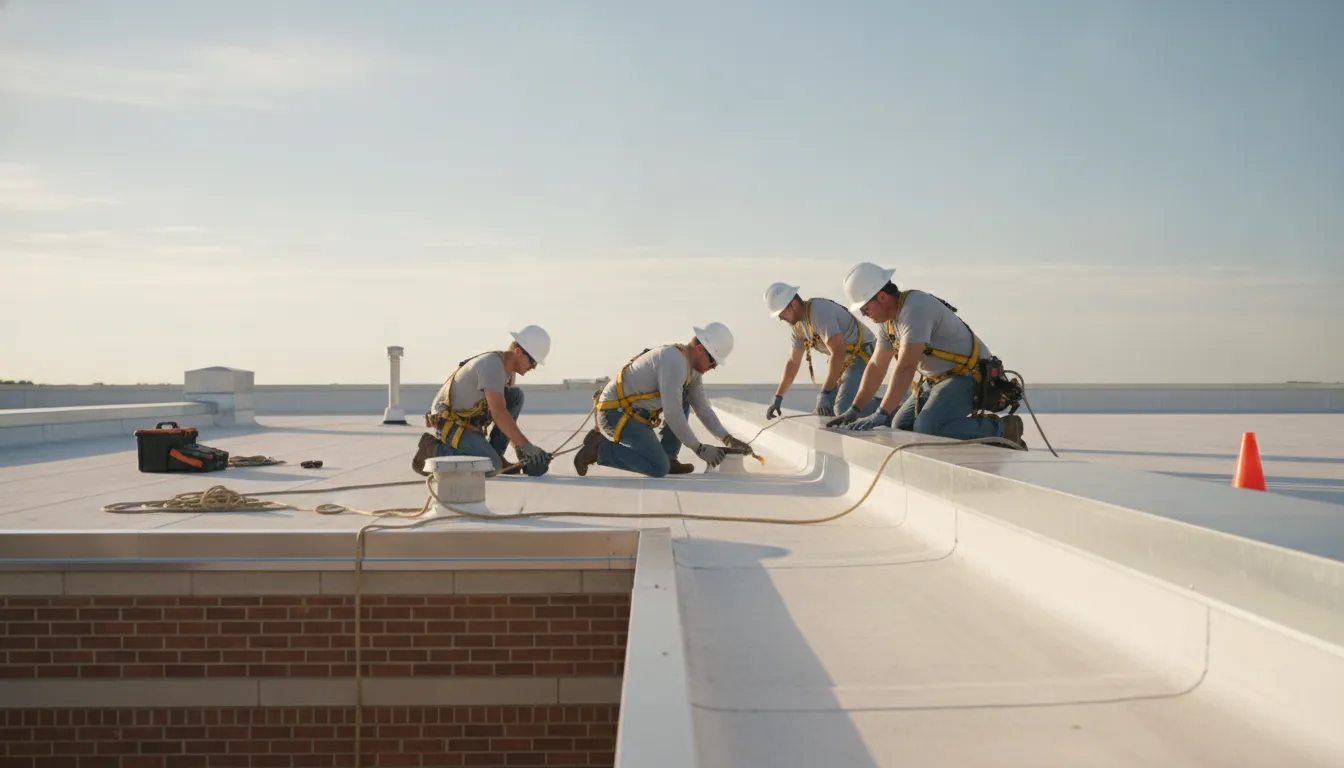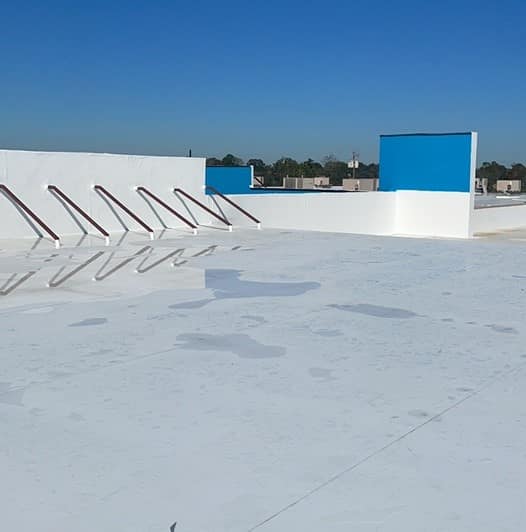
A flat roof rarely fails all at once. It fails quietly, layer by layer, long before anything looks wrong from the parapet. That is the trap of the standard walkthrough: a property manager or maintenance tech climbs up, sees no obvious tears, no standing water on a dry day, and signs off, while a sheet of saturated insulation slowly spreads across the deck below the membrane. For commercial buildings and low-slope residential additions across Greater Houston and the Austin metro, the gap between what you can see and what is actually happening is where the expensive surprises live. This guide breaks down exactly what a visual inspection catches, what it cannot, and how to find trouble before it finds your interior.
Why Flat Roofs Hide Their Damage So Well
A pitched shingle roof sheds water fast and shows its age openly. A flat or low-slope roof is a different animal. It is a layered system, typically a membrane (such as modified bitumen, TPO, or a built-up assembly), insulation boards, a cover board, and the structural deck, all bonded or fastened together. Water that breaches the top layer does not run off. It travels sideways between layers, pools in low spots, and soaks into insulation that can hold moisture for months without a single drip reaching the ceiling.
In Texas, that hidden behavior is amplified by climate. Relentless summer UV bakes and embrittles the surface. Gulf Coast humidity and heavy rain keep trapped moisture from ever drying out. Hail bruises the membrane without puncturing it. And the daily thermal swing, scorching afternoons followed by rapid evening cooling, makes the whole assembly expand and contract thousands of times a year, working seams and fasteners loose. By the time damage is visible from above, the system below has often been compromised for a year or more.
What a Visual Inspection Actually Catches
To be clear, a careful surface walkthrough is valuable and should happen at least twice a year and after every major storm. A trained eye can spot real problems:
- Ponding water that lingers more than 48 hours after rain, a sign of poor drainage or deck deflection.
- Membrane defects such as cracks, surface blisters, open laps, or punctures from foot traffic and dropped tools.
- Loose or lifted flashing around HVAC curbs, vents, skylights, and parapet walls, the most common entry point for leaks.
- Clogged drains, scuppers, and gutters that back water up onto the field of the roof.
- Debris, vegetation, and granule loss that accelerate surface breakdown.
These are real findings, and catching them early is exactly why routine roof maintenance pays for itself. But every item on that list is a surface symptom. The failures that drain budgets are the ones that never make that list.
The Failures Your Eyes Will Never See
1. Saturated Insulation Below the Membrane
This is the big one. A pinhole at a seam or a hairline crack at a flashing detail lets water seep into the insulation layer. The membrane above still looks intact, so a visual check passes it. Meanwhile the wet insulation loses its thermal value, adds hundreds of pounds of dead load, corrodes fasteners, and rots the deck beneath it. Wet insulation does not heal, it spreads, and it is the single most common reason a flat roof reaches end of life years early.
2. Seams That Look Sealed but Aren't
On TPO and modified bitumen systems, the seams are where the roof lives or dies. A seam can appear perfectly bonded to the naked eye while the adhesive or heat-weld below has begun to delaminate. It holds in dry weather and opens under the stress of a heavy downpour or thermal expansion, then closes back up. Intermittent leaks that "come and go" are almost always a seam telling you it is failing.
3. Hail Bruising Without a Puncture
Central Texas and the Houston corridor see serious hail. On a flat roof, hail often does not punch a clean hole. Instead it fractures the membrane's reinforcement and crushes the insulation underneath, leaving a soft "bruise" that looks fine but has lost its integrity. Months later, UV and water exploit that weak spot. This is precisely the kind of damage that should be documented for an insurance claim, and it is easy to miss on a walkthrough. Our storm damage repair team knows exactly what to probe for after a hailstorm.
4. UV Degradation and Slow Embrittlement
Texas sun ages a membrane from the top down. The surface loses flexibility gradually, so there is no single day it "looks bad," yet the material is steadily approaching the point where it cracks under normal thermal movement. Without measuring it, you cannot eyeball how much service life is actually left.
5. Structural Deflection and Hidden Ponding
A deck that is sagging slightly between supports creates low spots you may not notice on a dry day. Those depressions hold water during every rain, concentrating UV damage and load exactly where the deck is already weakest, a self-reinforcing problem that a one-time visual pass simply cannot quantify.
How Professionals Find What the Eye Misses
This is where a real diagnostic inspection separates from a glance. The goal is to see through the membrane, not just across it:
- Infrared (thermal) scanning reveals wet insulation by detecting where the roof holds heat differently after sunset. Saturated areas retain warmth and glow on the scan, mapping the moisture you cannot see.
- Capacitance and moisture meters confirm and quantify trapped water at specific points.
- Core sampling physically opens a small test section to verify the condition of insulation, deck, and the number of existing roof layers, critical before any repair-or-replace decision.
- Seam and adhesion testing checks the bond strength that a visual pass assumes is intact.
The output is not just "the roof looks okay." It is a moisture map, a documented condition report, and a clear picture of how much usable life remains, the foundation for warranty compliance and a defensible insurance file. That is the difference a comprehensive roof inspection delivers.
Repair, Restore, or Replace?
Once you actually know the condition, the decision gets straightforward. If moisture is isolated and the deck is sound, a targeted repair stops the problem cold. If the membrane is aging but the substrate is dry, a roof restoration or recoat can add years of waterproof, reflective service life at a fraction of replacement cost, a smart play for the Texas heat. But if wet insulation has spread or the deck is compromised, a full replacement on a clean, properly drained assembly is the only honest fix. As a GAF Preferred Contractor installing GAF lifetime and RhinoRoof-certified systems, we build flat and low-slope roofs to handle our UV, hail, and Gulf moisture for the long haul.
Don't Wait for the Drip
On a flat roof, by the time water reaches your ceiling, the system has usually been failing for a long time, and the repair bill has grown right along with it. The cheapest insurance is finding the hidden damage early. With 9-plus years serving more than 100 communities across Greater Houston and the Austin metro, a 5-star Google rating, and a 100% satisfaction guarantee, our team looks past the surface to tell you what is really going on under your membrane. Schedule your free roof inspection, a $399 value, or contact us to get a straight read on your flat roof before the next storm tests it. If replacement is appropriate, use our commercial roof replacement guide to prepare for the decision.