Owning a home in Texas means owning a roof that works harder than almost any other in the country. In a single year, the same shingles bake under months of brutal UV, get pelted by hail, ride out high winds from Gulf tropical systems, soak through afternoon downpours, and occasionally brace against a hard freeze. If you are a homeowner in Greater Houston or the Austin metro, the smartest thing you can do is stop treating your roof as something you only think about after a leak appears.
These essential roof tips are written as a practical playbook, not a vague checklist. They cover what to actually look for, what habits matter most, and where the line falls between a safe do-it-yourself task and a job worth handing to a professional. Master these and you will catch problems while they are still cheap to fix, instead of after water has found your ceiling.
Know What Texas Weather Does to Your Roof
You cannot protect your roof from threats you do not understand. The reason a Texas roof needs more attention than one in a milder climate is that it faces several forms of stress stacked on top of each other, all year long.
- Heat and UV: Long, intense summers dry out the oils in asphalt shingles, make them brittle, and loosen the protective granules that shield the mat underneath. This is the slow, invisible wear that ages roofs before their time.
- Hail: Texas sits in one of the most active hail corridors in the nation. Hail rarely punches an obvious hole. Instead it bruises the shingle and fractures granules, creating weak spots that fail months later.
- High wind: The outer bands of Gulf hurricanes and ordinary spring thunderstorms both lift shingle edges and tear at flashing.
- Heavy rain: When several inches fall in an afternoon, every seam, valley, and clogged gutter is tested at once.
The takeaway is simple: in Texas, damage is usually subtle and cumulative. That is exactly why the tips below focus on early detection rather than waiting for something dramatic to break.
Tip 1: Inspect From the Ground Routinely
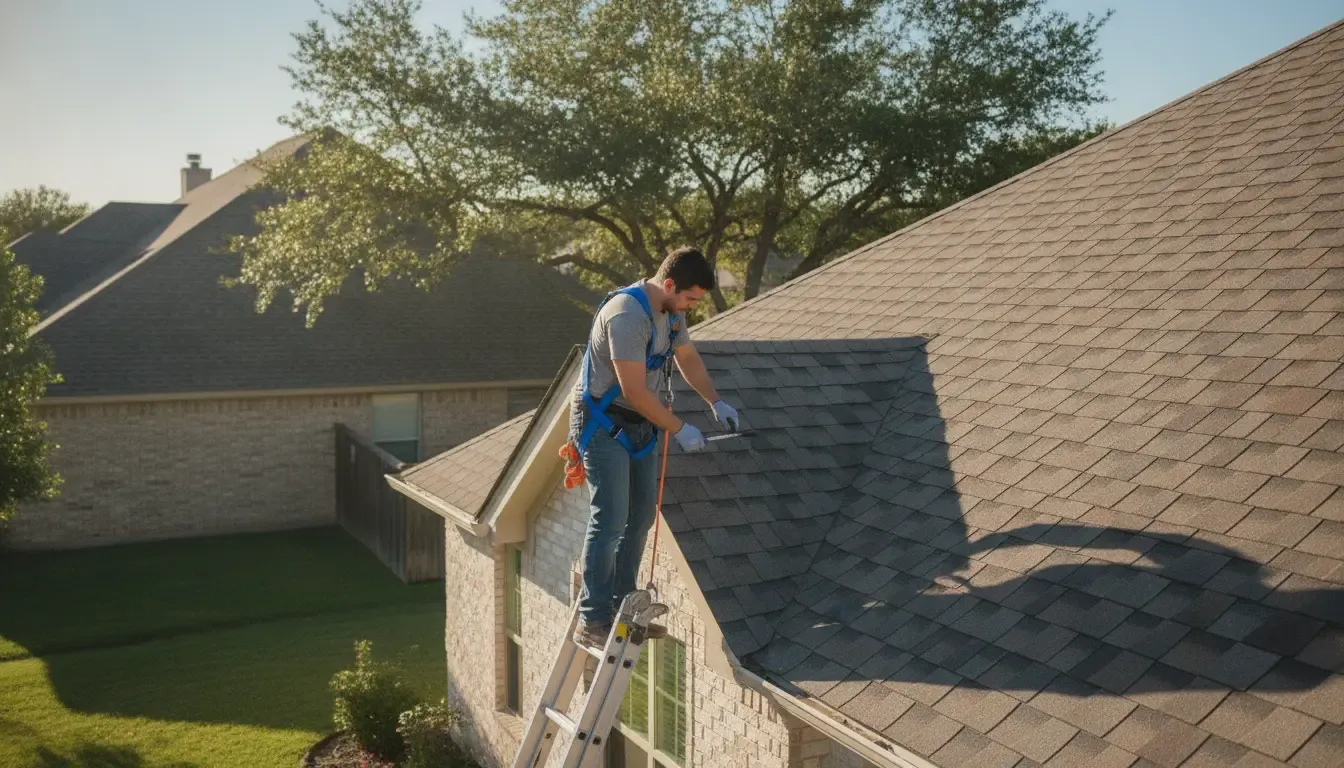
You do not need to climb a ladder to spot most early warning signs. A few times a year, and after any major storm, walk the perimeter of your home and look up. From the ground or an upstairs window, scan for:
- Shingles that are missing, curled, cracked, or lifted at the edges
- Dark streaks, bald patches, or shiny spots where granules have worn away
- Granules collecting in your gutters or at the bottom of downspouts
- Sagging rooflines, damaged flashing, or dented metal vents and caps
This five-minute habit is the single highest-return move on this list. If something looks off, that is your cue to schedule a professional roof inspection before a small issue spreads.
Tip 2: Keep Water Moving Off the Roof
A huge share of roof damage is really water-management failure. When gutters clog, water backs up under the shingle edge, rots the fascia and decking, and overflows against your foundation. Before every rainy stretch, especially heading into spring storm season and fall leaf-drop, clear your gutters and downspouts so heavy rain has a controlled path away from the house. On a single-story home this is a safe task; on a steep two-story roof, it is worth hiring out.
Tip 3: Check the Inside of Your Home, Too
Some of the earliest signs of a roof problem show up indoors, long before you would notice anything from the curb. Make a habit of watching for:
- Water stains or discoloration on ceilings and upper walls
- A musty smell, damp insulation, or visible daylight in the attic
- Peeling paint near the roofline, or a sudden, unexplained spike in your cooling bill
A jump in energy costs often points to failing attic ventilation or insulation, which quietly cooks your shingles from below and shortens the life of the whole roof.
Tip 4: Always Inspect After a Storm
Because Texas hail and wind cause damage that is rarely visible from the ground, every significant storm deserves a follow-up look. Walk your yard for fallen shingles, granule piles, and dented gutters, then check soft metal like vents and air-conditioning fins for hail dimples, which are a reliable tell that your roof took hits too. If you find evidence of damage, bring in a pro for storm damage repairs. We document the damage and work directly with your homeowners insurance on qualifying hail and wind claims, so you are not navigating the process alone.
Tip 5: Fix Small Problems Immediately
A lifted shingle or a cracked bead of flashing sealant is a few-hundred-dollar fix today. Ignored through two Texas summers, that same breach can rot the decking, ruin attic insulation, and grow into a five-figure repair. Prompt roof repair is the most cost-effective decision in any home-protection budget. The goal is never to let a maintenance issue mature into a replacement issue.
Tip 6: Choose Materials That Match the Texas Climate
When repair is no longer the smart play, the system you choose shapes how well your home is defended for decades. Different materials trade off cost, lifespan, and resilience:
- Asphalt shingles are the most popular choice, and impact-resistant options stand up far better to hail, sometimes earning an insurance discount.
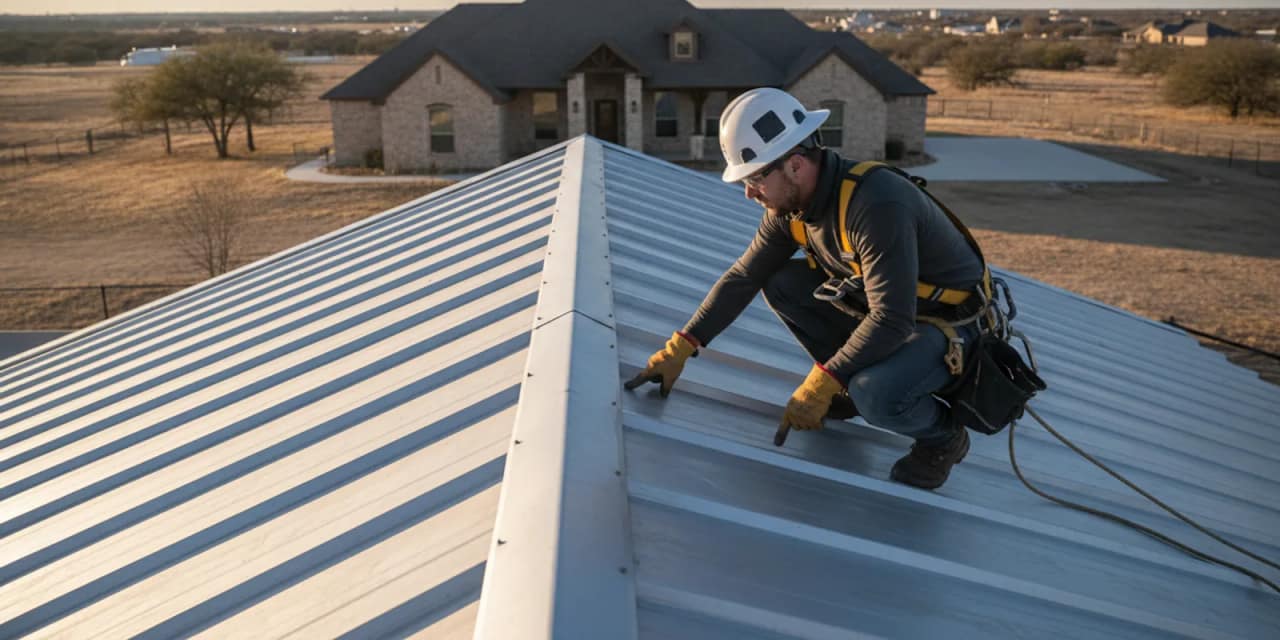
- Metal roofing reflects heat, resists wind, and routinely lasts decades longer than standard shingles, a strong fit for the Texas sun.
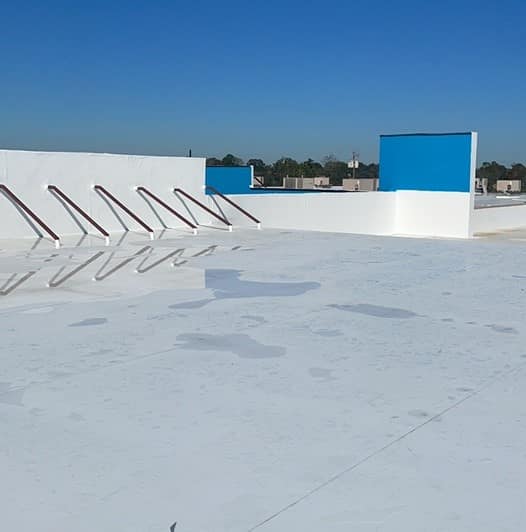
- Flat and low-slope membranes such as TPO and modified bitumen suit modern and commercial structures, but demand attentive drainage in our heavy rains.
As a GAF Preferred Contractor, we install GAF lifetime systems engineered for exactly the punishment a Texas roof absorbs, and we are happy to walk you through which option fits your home and budget.
Tip 7: Know When to Call a Professional
Plenty of these tips are safe from the ground. But Texas roofs are steep, hot, and often slick, and a fall is never worth it. Leave it to a pro when the job involves walking the roof on a two-story or steep home, assessing storm or hail damage, repairing flashing, or producing a documented condition report for insurance or a home sale. A trained inspector catches the bruised shingle and cracked sealant while they are still cheap fixes, and ongoing roof maintenance turns these one-off tips into a system that keeps your roof at its rated lifespan.
Protect Your Home Before the Next Storm
The most valuable roof tip of all is to know the true condition of your roof before a storm decides it for you. A short routine, a few honest looks from the ground, clear gutters, an inside check, and a follow-up after every major storm, keeps your home dry, cool, and protected through whatever the Texas sky sends next.
If it has been a while since anyone looked closely at your roof, or a recent storm has you wondering what is happening up there, let us take a look. Elevation Roofing & Restoration is a GAF Preferred Contractor with 9+ years serving Greater Houston, the Austin metro, and more than 100 Texas communities, and we offer a free roof inspection — a $399 value — with no obligation. We will tell you honestly what we see and what, if anything, needs attention, before a small problem turns into a costly one.