Questions about flat roof insurance often surface after a storm, when water appears inside a building, or when an aging roof needs replacement planning. The most useful starting point is a careful record of what happened, what the roof looked like before the event, and what work is needed now. Your insurer must explain how your policy applies to the reported loss.
Schedule a free roof inspection
What Should You Do First After Flat Roof Damage?
Begin with safety. Do not walk on a wet, unstable, or visibly damaged roof. Stay away from sagging ceilings, exposed wiring, and areas where water may have reached electrical equipment. If water is entering the building, protect people and belongings from a safe location. A qualified roofing professional can describe roof conditions, but only the insurer can interpret policy terms and decide whether a loss is covered.
From a safe location, make a first record of the problem. Note when the weather event occurred, when the damage was discovered, and which rooms or business areas are affected. Take wide and close photographs of interior damage, equipment, stored contents, and any visible roof conditions that can be reached safely. Keep original files rather than relying only on images sent through a messaging application.
- Write down the date and approximate time the leak or damage was noticed.
- Photograph ceilings, walls, flooring, equipment, inventory, and other affected property.
- Record temporary steps taken to limit additional water or protect occupants.
- Keep receipts for reasonable temporary measures and note who performed the work.
- Save inspection reports, maintenance records, repair invoices, and prior photographs.
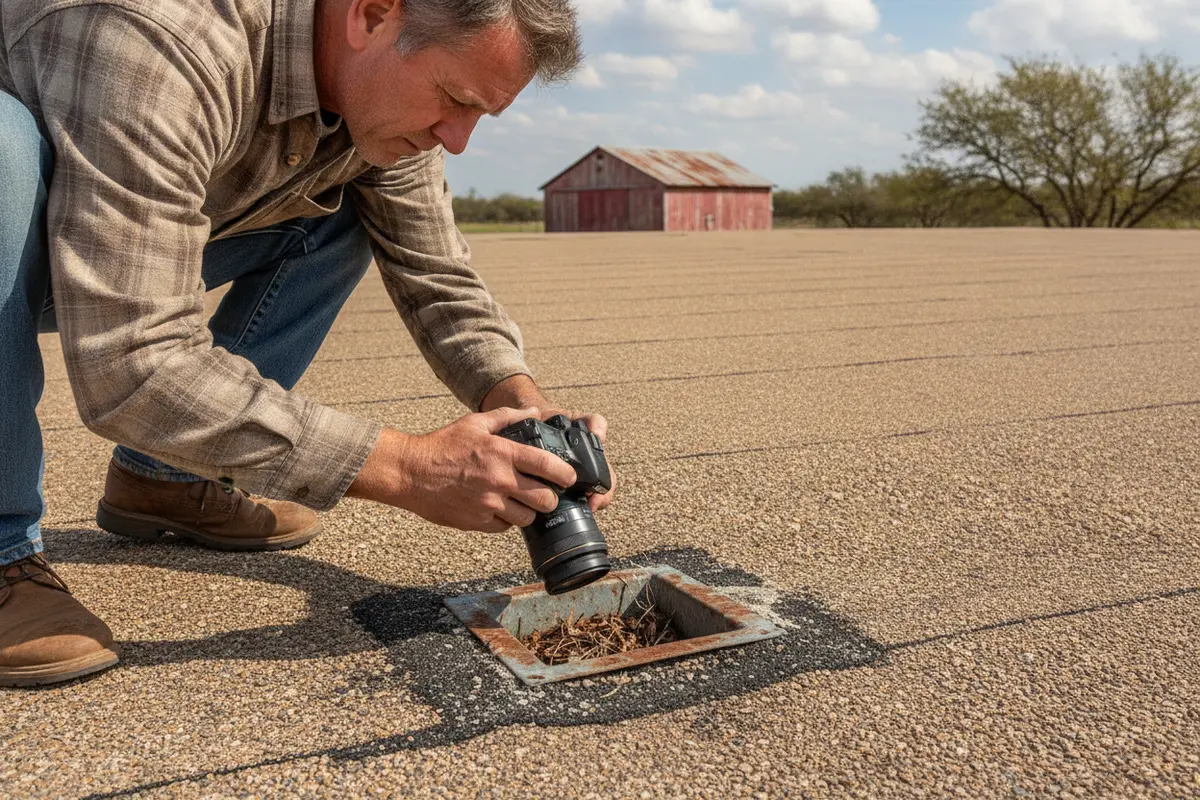
Organize the material in a dated folder. Label photographs by location, keep the original files, and avoid changing details that could make the condition harder to understand. Do not discard damaged materials or authorize extensive permanent work before asking the insurer what it needs, unless immediate action is necessary for safety or to limit further damage. If urgent work is required, document the condition before work begins whenever that can be done safely.
How Does Flat Roof Insurance Relate to Policy Wording?
There is no single answer for every flat roof, leak, or storm event. A policy may address the cause of loss, exclusions, deductibles, limits, notice requirements, and the method used to calculate payment. The roof’s material and condition can also be part of the insurer’s review. Read the policy you have and ask the insurer to identify the provisions that apply to your reported circumstances.
For general policy context, the Texas Department of Insurance guide to roof policies explains that policies may use different approaches to roof payment, including replacement cost or a lower payment basis. That general information does not decide your claim. Ask your insurer how your policy defines the relevant terms and how any deductible or limitation affects the loss.
When you call, have the policy number, property address, date of loss if known, and a short description ready. Ask how to submit photographs and records, whether an inspection is required, and whether your policy sets a deadline for notice or supporting documentation. Request important instructions in writing, and keep a dated log of calls, names, reference numbers, and promised next steps.
Can Roof Condition and Maintenance Affect a Claim Review?
A claim review can involve the roof’s age, prior repairs, visible condition, drainage, and the reported cause of damage. A leak identifies a symptom, not necessarily its cause. Ponding water, blocked drains, worn seams, punctures, failed flashing, and deferred repairs may be observations that professionals discuss, but none of those observations alone determines coverage.
Flat roof maintenance records can help explain the roof’s history. They may show when inspections occurred, what conditions were observed, and which repairs were recommended or completed. Keep records together even when they do not prove that a particular loss is covered.
- Dates and scope of inspections, cleaning, maintenance, and repairs.
- Invoices, contractor reports, product information, and photographs from before and after work.
- Notes about recurring leaks, drainage concerns, or interior symptoms.
- Details about temporary repairs and whether a permanent repair was later completed.
- Correspondence about prior roof conditions or recommendations.

Routine care supports responsible building management, but it cannot guarantee insurance coverage. If the insurer asks about maintenance, provide accurate records and ask what additional information is needed. Elevation Roofing & Restoration offers flat roof inspection, repair, and maintenance services for property owners evaluating their roof’s condition.
Get a no-cost roof inspection and evaluation
What Should You Ask the Insurer and Roofing Professional?
Keep the insurance discussion and the roofing assessment separate. The insurer can explain claim procedures and apply policy language. The roofing professional can inspect accessible areas, describe visible conditions, and explain possible repair or replacement work. Clear questions help prevent one conversation from being mistaken for the other.
| Question or record | Why it helps | Who can answer |
|---|---|---|
| Which policy wording applies to this roof and reported event? | Identifies relevant terms, limits, and exclusions to discuss | Insurer |
| What photographs, receipts, and reports should be submitted? | Creates an organized claim file | Insurer or claim representative |
| What roof conditions are visible, and where are they located? | Provides a clear technical description | Qualified roofing professional |
| What work is urgent, and what can wait? | Separates safety or damage-control steps from planned work | Insurer for claim process, roofer for roof work |
| What is included in the proposed scope and estimate? | Makes repair and replacement discussions easier to compare | Roofing professional and insurer |
Ask the roofer for a written assessment that identifies observed conditions, affected areas, recommended work, and items that could not be inspected. Ask the insurer what it has inspected and what its written estimate includes. If the documents differ, request an explanation of the difference instead of assuming that one document replaces the other.
For broader planning, review Elevation’s roofing services and its commercial and residential roof repair information. These pages can help you identify the type of roofing conversation you need, while policy-specific questions should remain with your insurer.
How Should You Compare Repair and Replacement Planning?
A repair addresses a defined area or condition. Replacement planning considers the roof system as a whole, including its surface, seams, penetrations, drainage, insulation where relevant, and the expected project scope. A recommendation for replacement does not by itself establish insurance coverage, and an insurer’s claim decision does not replace a technical roof assessment.
- Follow the insurer’s instructions for notice, documentation, and inspection.
- Request a written roof assessment that separates visible damage from existing wear or unrelated conditions.
- Ask for an estimate that clearly identifies temporary work, repair work, and replacement work.
- Compare the roofing assessment with the insurer’s documented scope and ask about any differences.
- Before authorizing work, confirm what is urgent, what is planned, and how payment responsibilities will be handled.
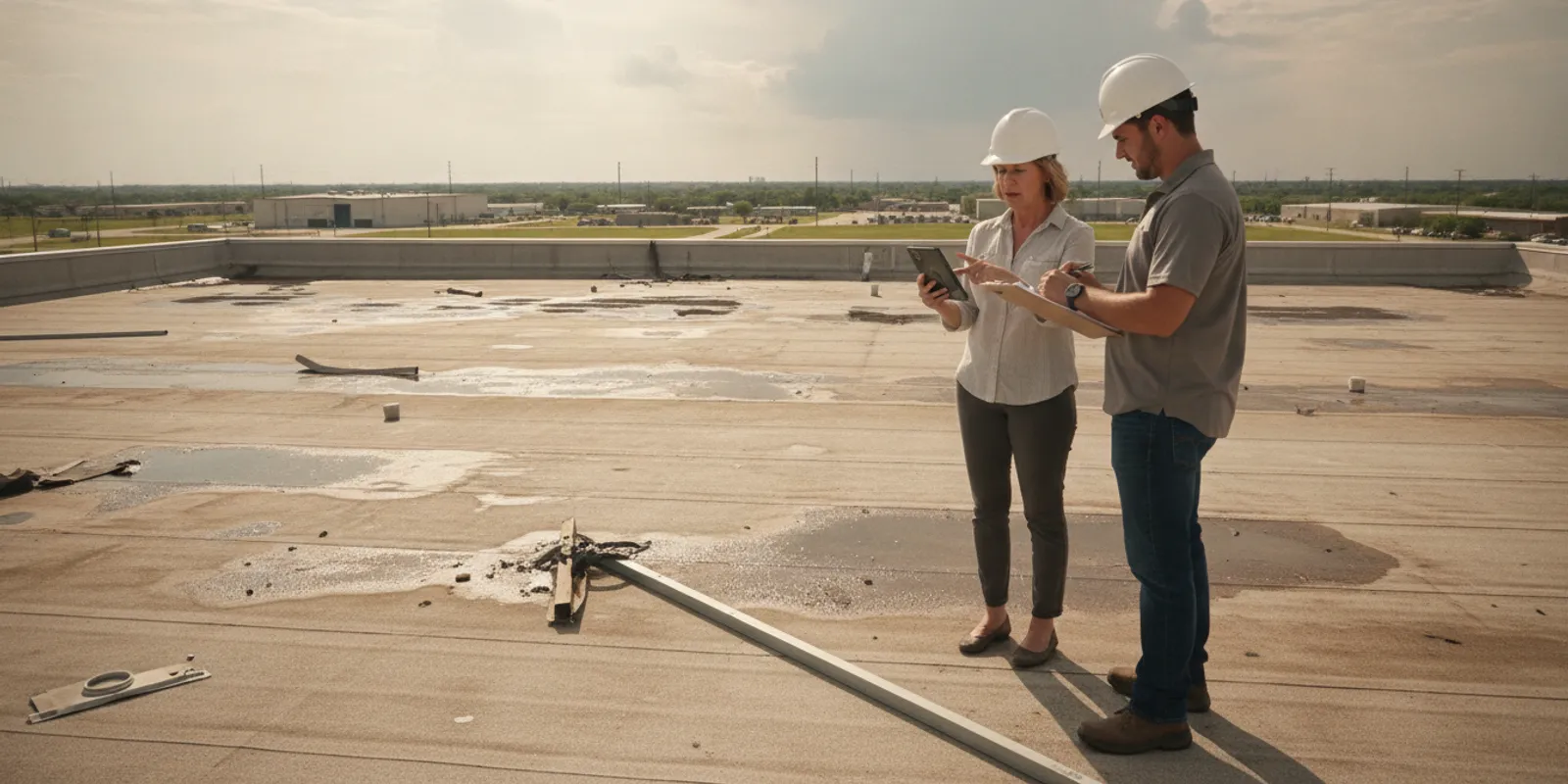
For example, a commercial owner may discover interior staining after a heavy storm. The first task is to protect occupants and equipment, document the staining, and report the event. The insurer may request an inspection. A roofer may then find a damaged membrane area, standing water, or older repairs. Those findings should be recorded distinctly so the owner, roofer, and insurer can discuss the same areas without blending separate conclusions.
Property owners can also review storm-related roof repair services and roof replacement planning. If you manage a building in the Houston or Austin area, check Elevation’s service locations before requesting an appointment.
What Should Commercial Property Owners Keep in Mind?
Commercial roof damage can affect tenants, inventory, equipment, work areas, and daily operations. Document which spaces are affected and when access is restricted. Keep a record of communications with tenants, building staff, property managers, and vendors. Coordinate inspections so the roof, interior areas, and affected contents can be reviewed safely.
Ask the insurer how to document business property and whether it needs separate records for building damage, contents, or temporary measures. Keep copies of service records, photographs, invoices, and written instructions. If a temporary repair changes the condition, record what was done and why. A roofing professional can explain the roof’s observed condition and options, while the insurer determines how the policy applies.
Drainage deserves special attention during flat roof planning. Keep notes about visible drain obstructions, ponding, roof penetrations, and areas where water entered the building, but do not attempt a risky roof inspection. Elevation’s flat roof drainage guide offers additional background for owners preparing questions about drainage and roof maintenance.
Contact Elevation Roofing & Restoration to discuss your roof
Frequently Asked Questions
Does flat roof insurance cover every leak?
No. Coverage depends on the policy wording and the facts of the reported loss, including the cause, roof condition, applicable limitations, and the insurer’s review. Ask the insurer for a policy-specific explanation.
Should I repair a flat roof before the insurer inspects it?
Ask the insurer what to do and how to preserve evidence. If immediate action is needed for safety or to limit additional damage, take reasonable steps, document the condition and work, and keep receipts. Do not delay necessary safety measures while waiting for a routine appointment.
Can maintenance records help with a roof claim?
They can help explain the roof’s prior condition, inspection history, and repair history. Keep dated notes, photographs, invoices, and reports, but do not treat those records as a promise of coverage.
Who decides whether flat roof damage is covered?
The insurer applies the policy terms to the reported loss. A roofing contractor can inspect the roof and describe conditions or recommended work, but cannot make the insurer’s coverage decision.
What if the insurer’s scope differs from the roofer’s estimate?
Ask both parties to explain the difference in writing. Compare the areas, causes, materials, and work descriptions line by line. Keep the documents together and ask the insurer what policy language supports its scope.
Good documentation will not replace your policy, but it can make the facts easier to review. Keep the insurer’s guidance, the roofing assessment, photographs, receipts, and repair decisions together as you plan the next safe step.