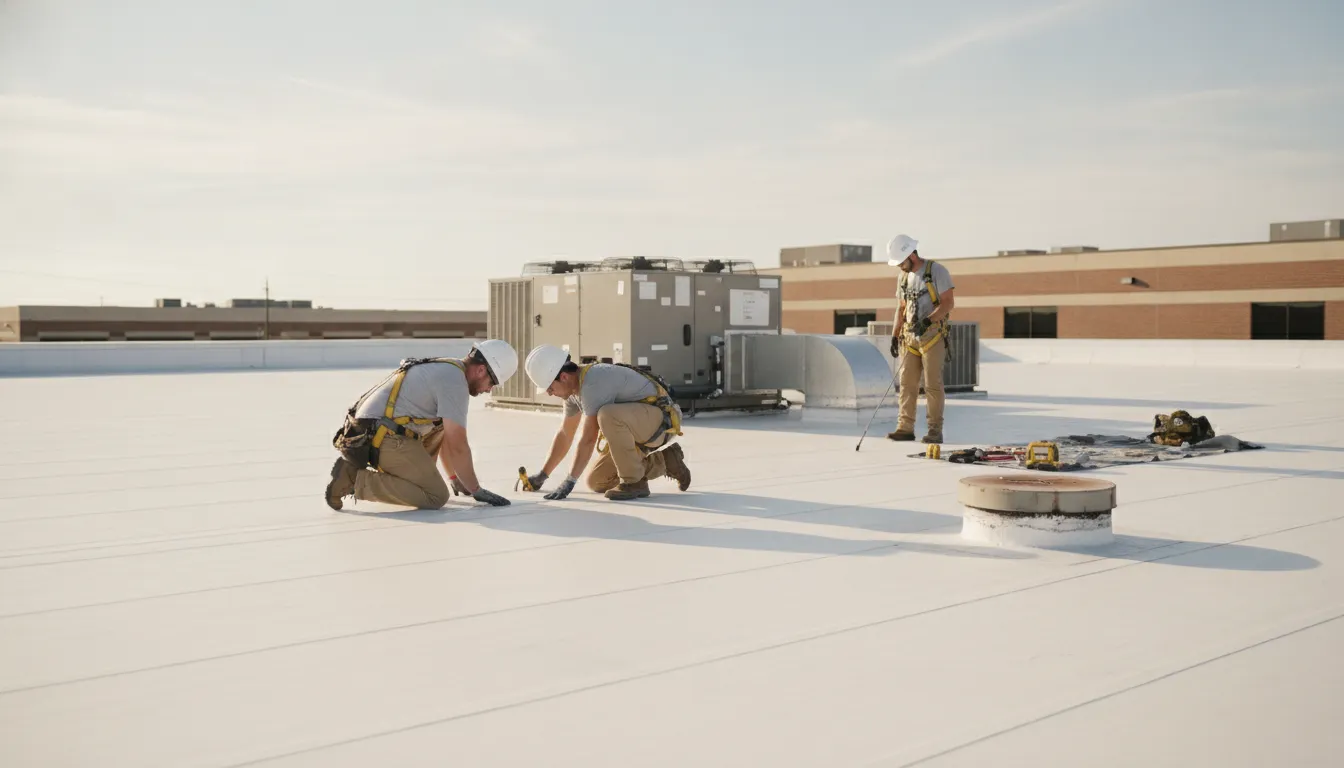
Commercial roof repair is the work of fixing a defined defect on a commercial roof so the building stays dry and in service. A Texas owner should ask whether the defect is still local and whether the repair will hold through the next storm season. A sound repair targets the failed seam, flashing, drain, or panel. It does not hide wet insulation or a roof that has already reached the end of its service life.
Schedule a free roof inspection with Elevation Roofing & Restoration at (832) 271-1726.
This guide covers how commercial roof repair is scoped on Houston and Austin buildings. It names which defects are repairable. It also names the signs that mean you should plan a replacement instead. It does not quote prices. Cost factors for flat roofs live in the flat roof repair cost guide. A full tear-off plan lives in the commercial roof replacement guide.
What Does Commercial Roof Repair Cover?
Commercial roof repair restores a specific failed part of a low-slope or steep-slope commercial roof. The rest of the system stays in place. Typical targets are an open membrane seam, loose edge metal, a clogged or separated drain, a punctured panel, or flashing pulled away from a curb. The goal is to stop water at that point and match the repair to the membrane the building already has.
That is different from three nearby jobs owners often mix together:
- Leak response finds the water path and protects the interior first. The commercial roof leak repair guide covers that first response.
- Maintenance is scheduled care before a defect opens. A commercial roof maintenance plan is the right place for that cadence.
- Replacement removes a roof that no longer has useful life left. Repair is the wrong tool once wet insulation is widespread or the deck is failing.
Elevation Roofing & Restoration repairs commercial systems common in the Houston and Austin markets, including TPO, metal, modified bitumen, and built-up roofs. Crews work in house and follow manufacturer practices for the system on the building. A repair that uses the wrong primer, weld, or fastener can fail at the first hard rain even if it looks neat on the day it is installed.
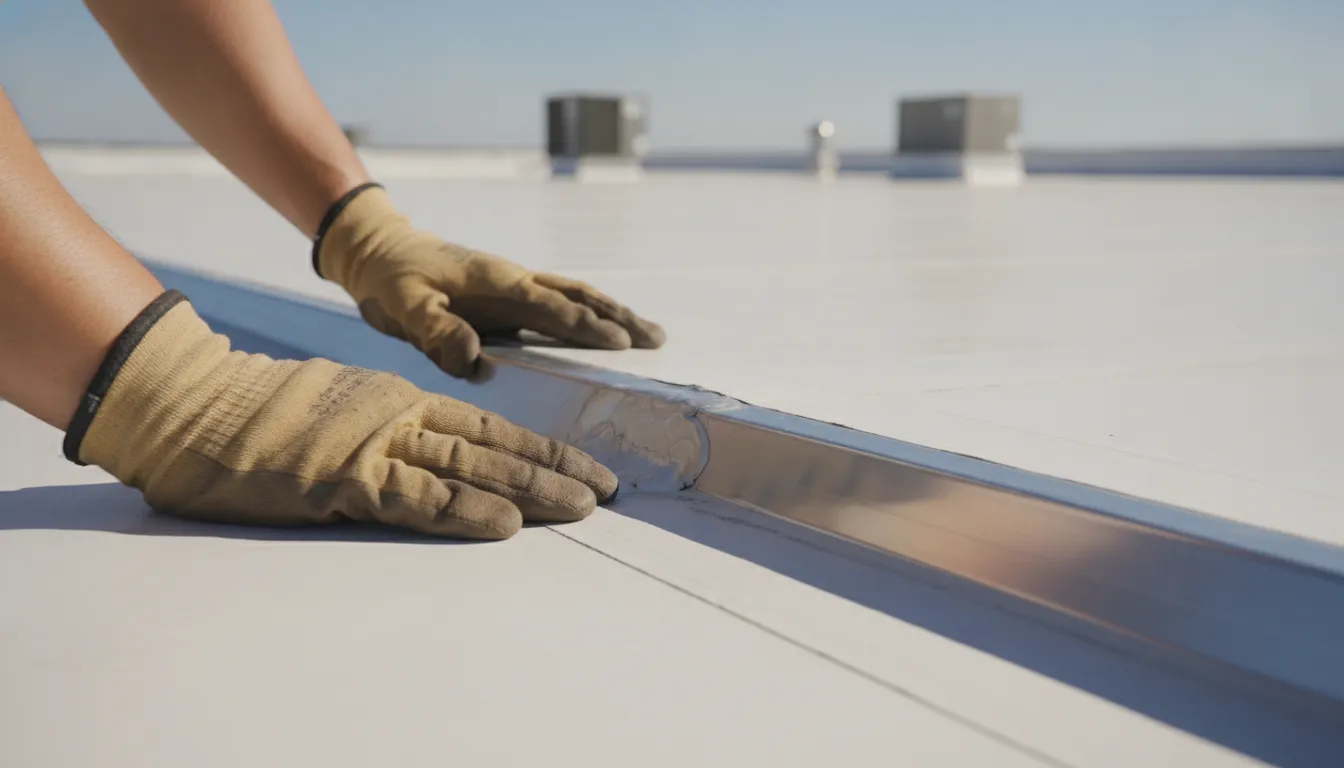
A useful repair file names the system, the defect, the repair method, and the photos that show the condition before and after. That record helps the next inspection, an insurance conversation, and any later decision about replacement.
Which Defects Can a Commercial Roof Repair Fix?
A repair is reasonable when the defect is local, the surrounding membrane is still sound, and the insulation under that area is dry. Houston heat, hail, and wind-driven rain punish seams, edges, and rooftop equipment. The same pattern shows up on Austin buildings after hail and hard summer storms. The defect type tells you whether a repair can hold.
| Defect. | Typical repair. | Repair is reasonable when. | Stop and reassess when. |
|---|---|---|---|
| Open membrane seam or small puncture. | Clean, weld, or patch with compatible material. | The field membrane around it is intact and dry. | Seams are opening across large areas. |
| Loose flashing at a wall or curb. | Reset or replace the flashing detail. | The wall and curb are sound. | Flashing height is already too short for a lasting seal. |
| Blocked or separated drain. | Clear the drain and reseal the clamping ring. | The deck still slopes toward the drain. | Water stands across the field after the drain is clear. |
| Damaged metal panel or fastener. | Replace the panel or fastener and reseal. | The rest of the metal system is tight. | Panels are corroded across the slope. |
| Wet insulation in one spot. | Cut out the wet area and patch the membrane. | Moisture mapping shows one limited wet zone. | Wet areas are scattered or the deck is soft. |
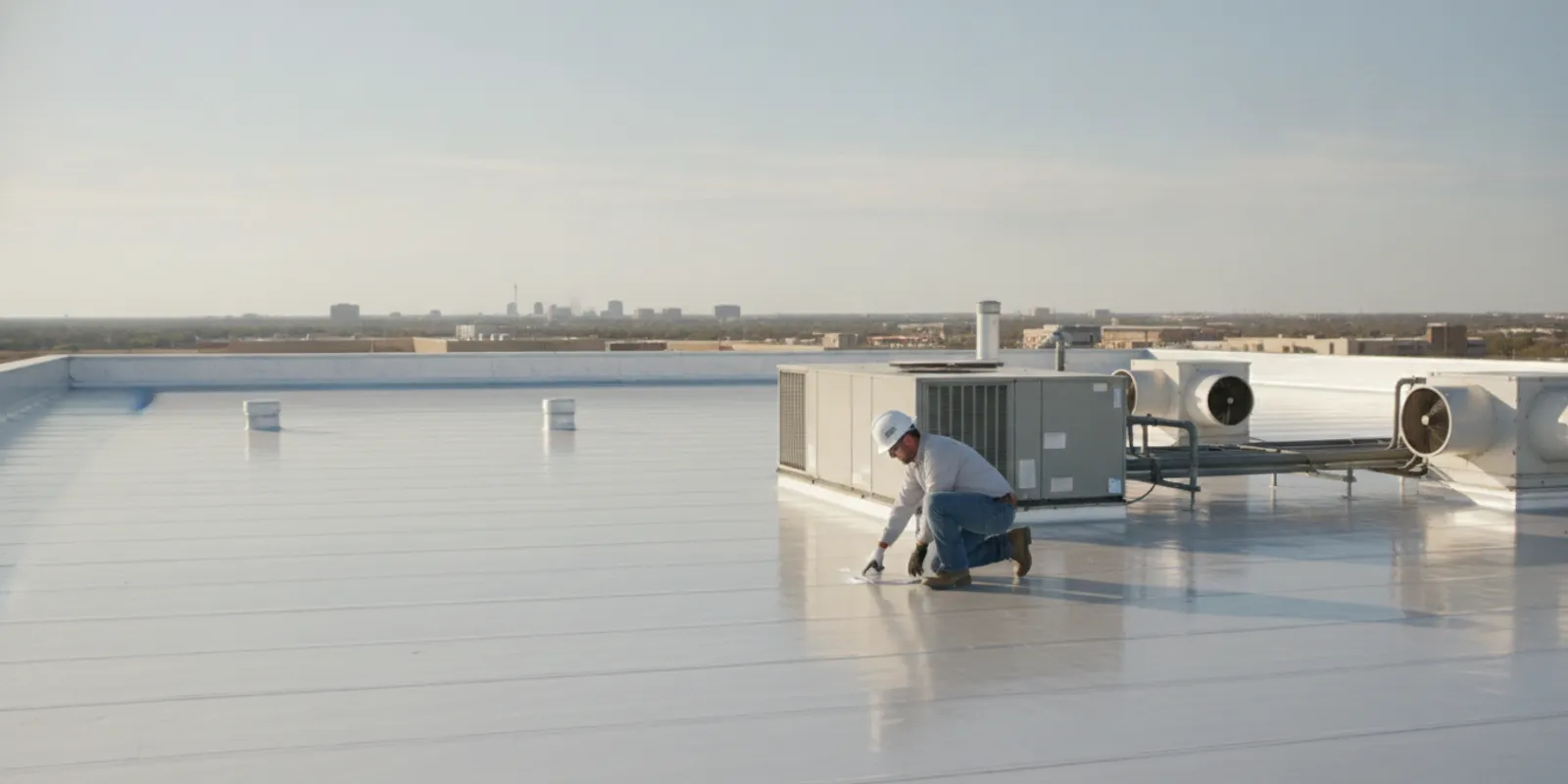
Open seams and punctures are the most common repairable defects on single-ply roofs. The patch has to be the same family of material, and the surface has to be clean. A coating smeared over a dirty seam is not a repair. It is a cover that often peels in the next heat cycle.
Flashing fails where the roof meets a wall, a curb, or a pipe. Resetting that detail is a repair. If the existing flashing is already too short to turn up the wall, adding more membrane on top will not create a reliable seal. That condition belongs in a larger scope.
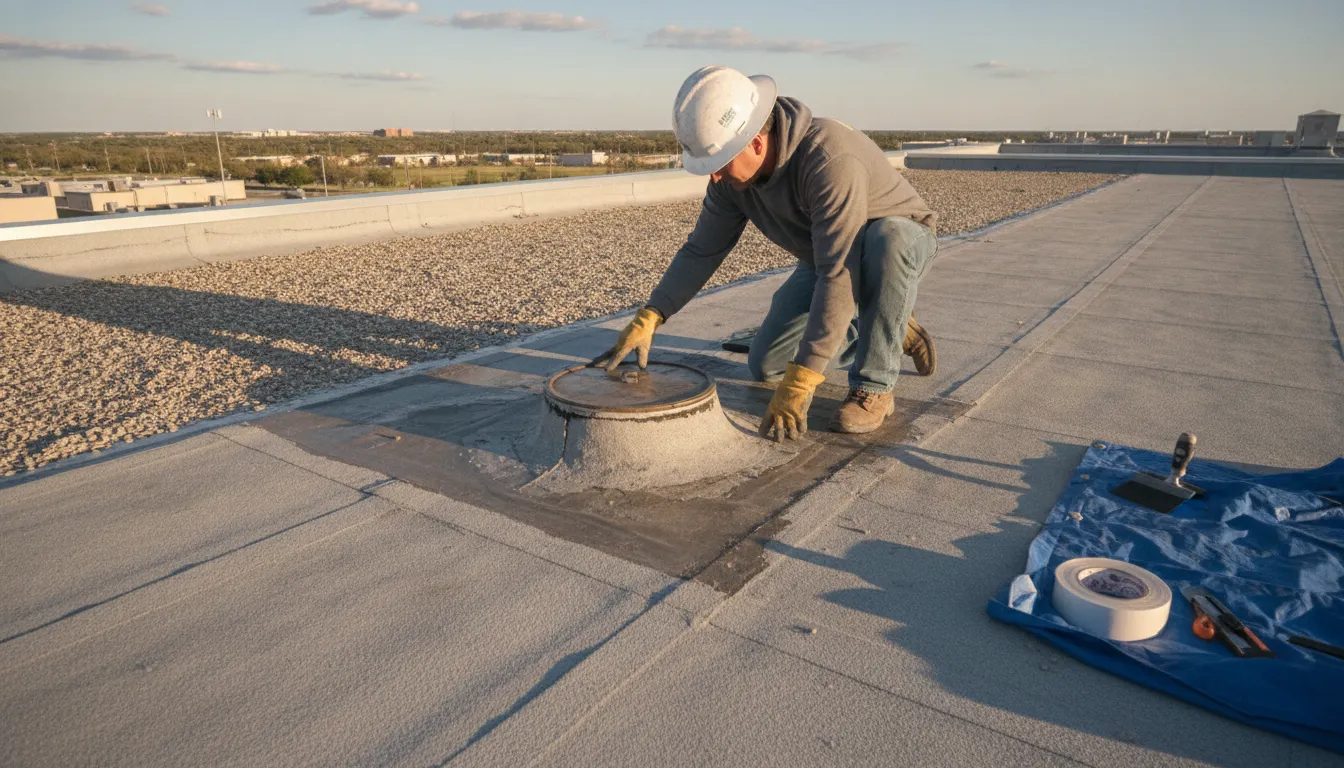
Drains are a Texas-specific weak point because heavy rain has to leave the roof fast. Clearing a drain and resealing the ring is a repair. If water still ponds across the field after the drain is open, the slope is the problem, and a patch will not fix it. The flat roof drainage guide explains how standing water damages a low-slope roof.
How Does a Commercial Roof Repair Get Scoped?
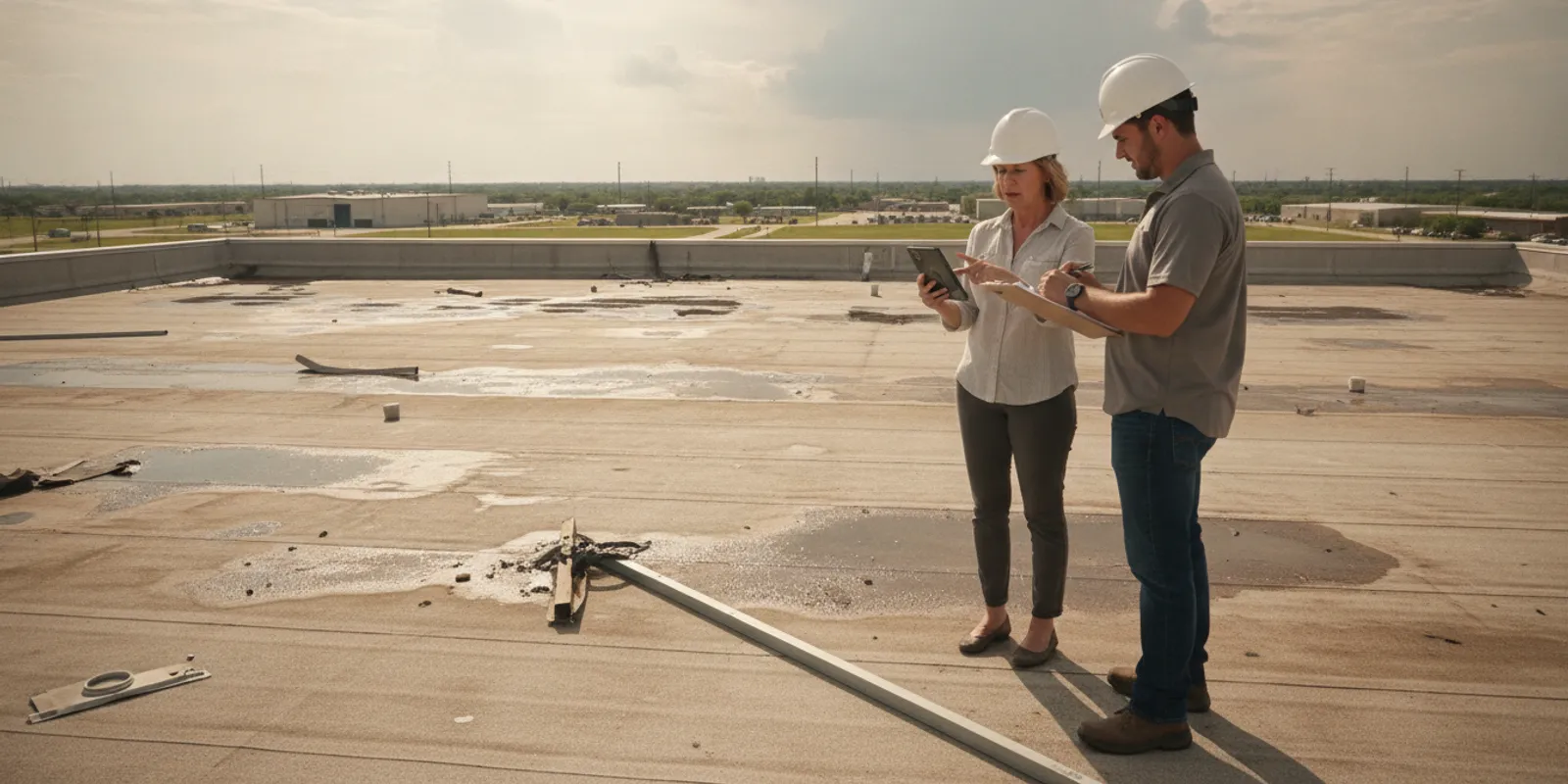
A commercial roof repair should start with an inspection, not a guess from the parking lot. Elevation Roofing walks the roof, checks drains, flashing, and penetrations, and looks for moisture where the surface is soft or stained. The written scope is what you approve. It should be specific enough that another contractor could see what is included and what is not.
Ask the scope to name these items before work starts:
- The roof system on the building, such as TPO, modified bitumen, built-up, or metal.
- Each defect, with a photo and a location you can find again.
- The repair method, including whether wet insulation will be cut out.
- Access, safety, and any rooftop equipment that has to stay running.
- What is excluded, so a local repair is not mistaken for a new roof.
Safety is part of the scope, not an extra. A crew should be able to describe guardrails or a personal fall arrest system before anyone steps onto an open edge. Ask how they will tie off on your roof. A crew that cannot answer is not ready to repair it.
Moisture is the other item that changes the scope. IIBEC says existing roof insulation must meet code rules on trapped moisture before it is reused. A moisture survey should inform that call. Their technical advisory on reusing roof insulation is the reference. One wet spot can be cut out and patched. Widespread wet insulation is not a repair. Leaving it in place traps water against the deck.
TPO has its own repair limits. Many open seams are not a simple patch. Use the TPO roof repair versus replacement guide when the membrane itself is the question.
Get a commercial roof repair scope from Elevation Roofing before the next storm.
When Should You Stop Repairing and Plan Replacement?
Repair is the right call when the roof still has service life and the failed area is limited. Replacement is the right call when another patch would only delay a larger failure. The National Roofing Contractors Association treats wet insulation, a damaged deck. And a surface that is no longer sound as reasons to replace rather than cover the old roof. That guidance is in the NRCA technical library on reroofing.
Use these checks on a Texas building before you approve another repair:
- Moisture mapping shows wet insulation in more than one area, or the deck feels soft underfoot.
- The same seam, drain, or flashing has been repaired more than once and is leaking again.
- Ponding remains after drains are clear, so water sits on the field for days.
- The membrane is brittle, blistered, or shrunk so far that a patch has nothing sound to bond to.
- Edge metal, copings, or curb heights cannot accept a lasting seal without rebuilding the perimeter.
Age alone is not the test. A well-kept roof can be repaired late in its life if the defect is truly local. A younger roof with wet insulation across the field should not be patched and forgotten. If you are unsure how much life is left, the commercial roof lifespan guide separates system type from maintenance history.
Storm damage needs the same honesty. Hail or wind can leave a repairable puncture, or it can bruise a membrane across a whole slope. Document the condition before anyone covers it. If the loss may be an insurance claim, an inspection written for that purpose is more useful than a quick patch. Start with a free commercial roof inspection so the photos and notes exist before the next rain.
Do not treat a coating as a substitute for this decision. Coatings can protect a dry, stable roof. They do not dry wet insulation, and they do not fix a deck that has already moved. If a proposal leads with a coating and never mentions moisture, ask for the survey first.
What Should You Expect During the Repair?
Once the scope is approved, the work itself is usually shorter than owners expect, because the area is limited. The disruption is the part to plan. A repair over an office, clinic, or shop still needs access, material staging, and a dry weather window. Tell the contractor which doors, drives, and rooftop units cannot be blocked.
A straightforward commercial roof repair follows this order:
- Protect the interior and the work area, and confirm fall protection is in place.
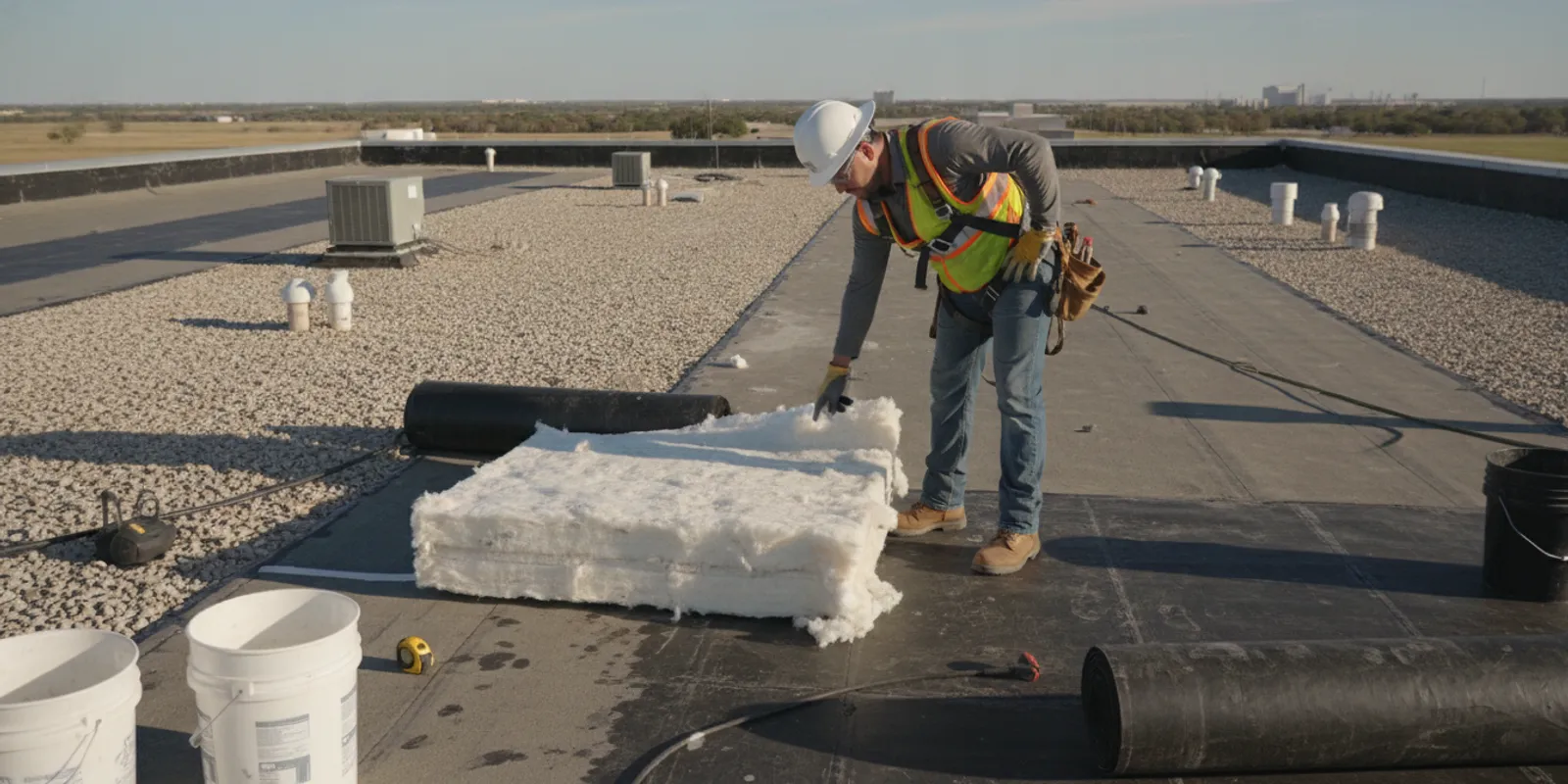
- Open only the failed area. If insulation is wet, cut it out back to dry material.
- Repair the defect with material that matches the existing system.
- Restore flashings, drains, and edge metal that were part of the scope.
- Photograph the finished work and note anything found outside the original scope.
You should get those photos with the invoice. They are the proof that the repair matches what you approved, and they are the baseline for the next inspection. If the crew finds a second wet area or a soft deck, that is a scope change. It should be written up before extra work proceeds, not buried in the final bill.
After the repair, put the roof on a maintenance cadence rather than waiting for the next ceiling stain. Clearing drains before storm season and checking recent patches after the first hard rain catches a failed repair while it is still small. Property owners in the Houston area can start from the Houston service area, and owners in Central Texas can start from the Austin service area.
If the repair reveals that the system is past a patch, stop and plan the larger project. Forcing one more repair on a failing field membrane spends the same access cost twice. The roofing services page is the place to see how inspection, repair, and replacement fit together for the building you actually have.
Book a free roof inspection and get a written commercial roof repair scope.
Frequently Asked Questions
When should a commercial roof be repaired instead of replaced?
Repair it when the defect is local, the surrounding membrane is sound, and any wet insulation is limited to that spot. Replace it when moisture is widespread, the deck is soft, or the same area keeps failing after earlier repairs.
What are the signs that a commercial roof needs repair?
Look for an open seam, a puncture, loose flashing, a separated drain ring, stained ceiling tiles under one spot, or fasteners backing out of a metal panel. A single stain can still be a local repair. Stains in several rooms usually mean a wider problem.
How does commercial roof repair work?
The contractor inspects and writes a scope, protects the work area, removes only the failed material, and patches with a compatible system. Wet insulation in that spot is cut out. You should receive photos of the finished repair.
How long does a commercial roof repair take?
A local seam, flashing, or drain repair is often finished in a day once the roof is dry enough to work. Cutting out wet insulation or resetting edge metal takes longer. Weather and rooftop access change the schedule more than the patch itself.
How much does commercial roof repair cost?
There is no honest single price. The system, the access, and whether insulation has to come out all change the number. Get a written scope from an inspection instead of a per-foot guess, and use the flat roof cost guide only for the factors that move an estimate.
A commercial roof repair earns its cost when the defect is real, the material matches, and the wet spots are actually removed. Start with an inspection and a written scope if you see a stain, an open seam, or a drain that will not clear. Book the inspection before the next storm.