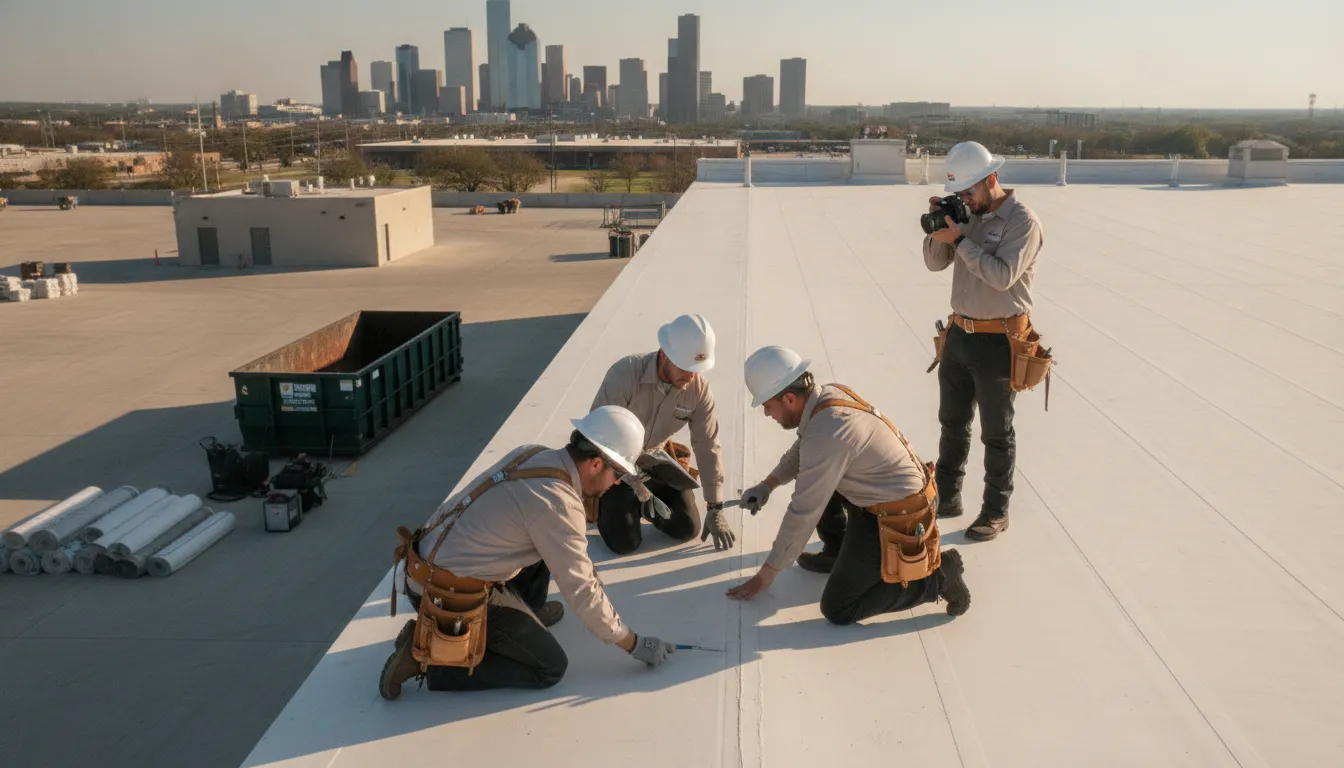
Flat roofs can develop leaks in places that are difficult to see from the ground. And Texas heat, hail, wind, and heavy rain can make small weaknesses more urgent. The right next step is not guessing from a generic price range. It is documenting the roof system, the damage, and the conditions affecting the work.
The most reliable flat roof repair cost estimate comes from an inspection. It should consider the roof's material, size, access, drainage, and leak location. It should also show whether the damage is limited or spread across the system.
An inspection can help distinguish a repairable issue from a condition that may call for restoration or replacement. It also gives property owners a clearer basis for comparing estimates. Before choosing a path, it helps to understand the factors that shape the scope of work in Texas.
What Determines Flat Roof Repair Cost in Texas?
There is no responsible universal number for flat roof repair cost in Texas. A repair estimate should reflect the roof system, the location and extent of damage, and the conditions that made the problem possible. An isolated puncture in a sound membrane is a different project from recurring leaks across an aging roof with drainage problems.
That is why an inspection comes before a useful estimate. In Houston and Austin, property owners may be dealing with heat, heavy rain, wind, or hail. The right repair still depends on what is found on the specific roof. Elevation Roofing serves residential and commercial properties. Access, use, and repair requirements can differ from one building to the next.
Roofing material and damage location
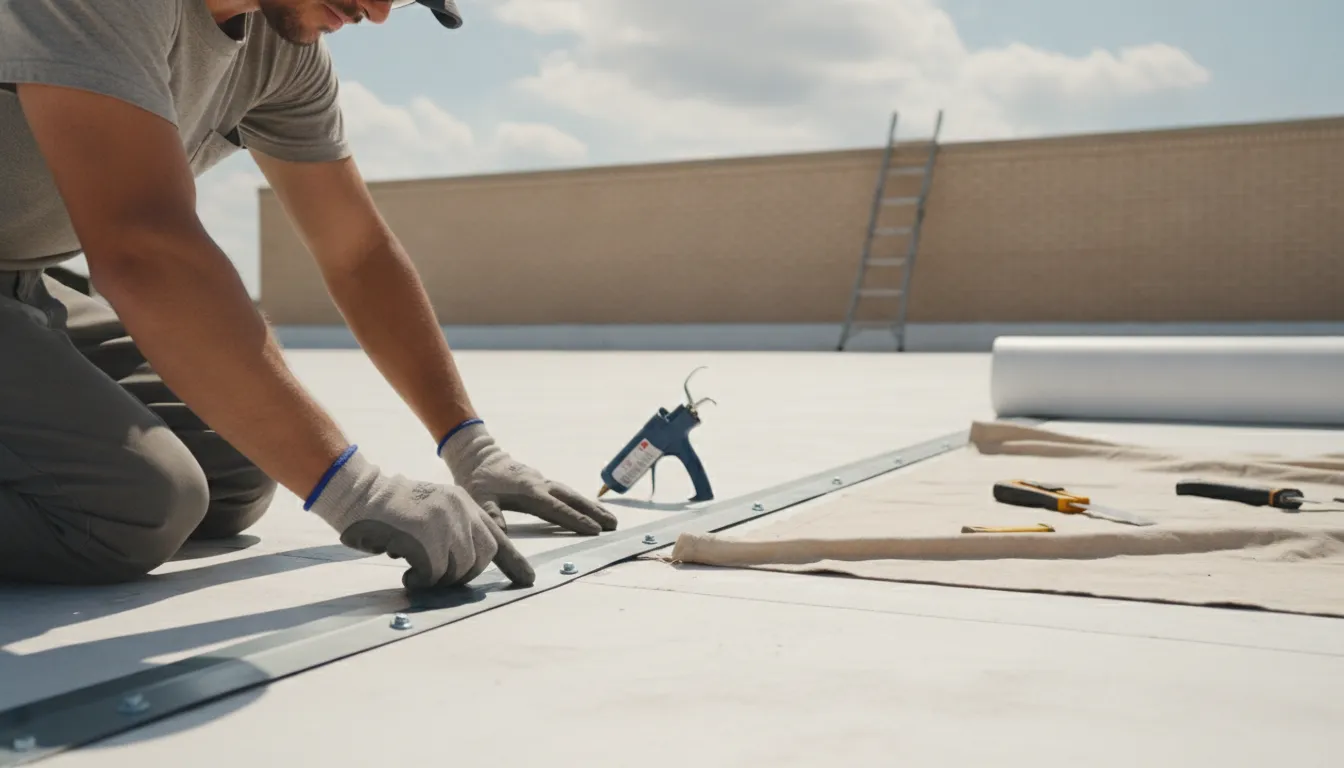
Flat roofs are not all built the same. TPO, modified bitumen, and built-up roofing can require different repair methods, materials, and preparation. The estimate should identify the existing system rather than treating every flat roof alike. It should also locate the actual source of the problem. Water can travel beneath a membrane or along building surfaces. The visible ceiling stain may be well away from a failed seam, flashing detail, vent, curb, drain, or scupper.
Access, size, and setup
Roof size and damaged area matter, but they are not the only labor considerations. A small repair can still require travel, setup, safe access, protective equipment, surface preparation, materials, and cleanup. Difficult access or an occupied commercial property can add planning and safety requirements. The estimate should explain the proposed work. It may involve a localized patch, leak repair, flashing, ventilation, or drainage-related component.
Drainage, age, and prior repairs
Standing water, blocked drains, failing seams, wet insulation, or repeated patches can expand the scope beyond the first leak. Roof age matters because an older membrane may not respond well to an isolated repair, especially when several areas are brittle or compromised. Prior repairs should be reviewed for their condition and compatibility with the existing system. An inspection can include drains, gutters, vents, flashing, moisture, hail damage, and water ingress. Those findings give the owner a clearer basis for comparing repair, restoration, or replacement options.
For a site-specific answer, request a free roof inspection and ask for the observed damage, recommended scope, and any conditions that could affect the work.
Which Parts of a Flat Roof Repair Estimate Matter Most?
A useful estimate should explain the work needed, not just provide a single total. For a residential roof, that may mean tracing one leak, repairing a flashing detail, or addressing a small membrane puncture. A commercial roof may require a broader review of access, drainage, tenant operations, and the condition of several roof areas. Material, damage severity, roof size, access, and drainage all affect the scope and the flat roof repair cost.
Small repairs also have real setup requirements. A contractor may need to schedule safe access, protect surrounding surfaces, bring specialized materials, isolate the repair area, and complete cleanup. That is why a small patch can have a higher cost per square foot than a larger repair. The estimate should show these practical items. That detail makes the scope easier to understand.
Service scope, access, and labor
Look for a clear description of the service call, setup, safe roof access, labor, and cleanup. Access can be straightforward on a single-family home, but a commercial property may involve ladders, rooftop equipment, restricted areas, or coordination with building occupants. The estimate should identify whether the crew is repairing one section or evaluating multiple areas where water may be entering.
Materials and concealed roof conditions
The proposal should identify the existing roofing system and the materials planned for the repair. Flat roofs may use systems such as TPO, modified bitumen, or built-up roofing, and the correct repair approach depends on what is actually installed. A professional should also explain whether the inspection found wet insulation, damaged decking, failed seams, deteriorated flashing, or other conditions that could require additional work. Water does not always stop directly below the visible stain. The source and affected area should be documented before the scope is finalized.
- Service call, setup, access, safety, labor, and cleanup.
- Roofing membrane, patches, sealants, and compatible materials.
- Drainage components, scuppers, flashing, seams, and penetrations.
- Moisture, wet insulation, decking, or other concealed conditions.
- Additional work that is recommended, optional, or excluded.
| Estimate area | What to look for |
|---|---|
| Roof system | Existing membrane and compatible materials. |
| Damage scope | Leak source, affected area, seams, flashing, and moisture. |
| Site conditions | Access, safety, equipment, occupancy, and drainage. |
| Recommended path | Repair, restoration, maintenance, or replacement. |
Drainage deserves special attention. Drains, gutters, vents, flashing, and water-entry points should be considered alongside the membrane itself. A repair that seals one seam but leaves a drainage problem unresolved may not address the underlying issue. For a property in Houston, Austin, or surrounding Central Texas communities, ask the contractor to connect each recommended item to an observed condition. You can review the process with a Houston roof repair inspection and request an estimate based on the actual roof system and findings.
Finally, check that the estimate separates required repairs from possible additional work. A clear document should explain what is known, what may be uncovered after opening the roof, and how approval will be handled if the scope changes. That level of detail makes competing estimates easier to compare and helps residential and commercial owners make a condition-based decision.
How Does Roof Condition Change the Repair Decision?
A flat roof with one isolated puncture is different from an older system with recurring leaks, brittle membrane, and failing seams. That distinction matters when evaluating flat roof repair cost. The least expensive immediate repair is not always the most practical long-term path. The recommendation should follow the inspected roofing system, the extent of damage, and the condition of the materials beneath the surface.
When repair may be the right option
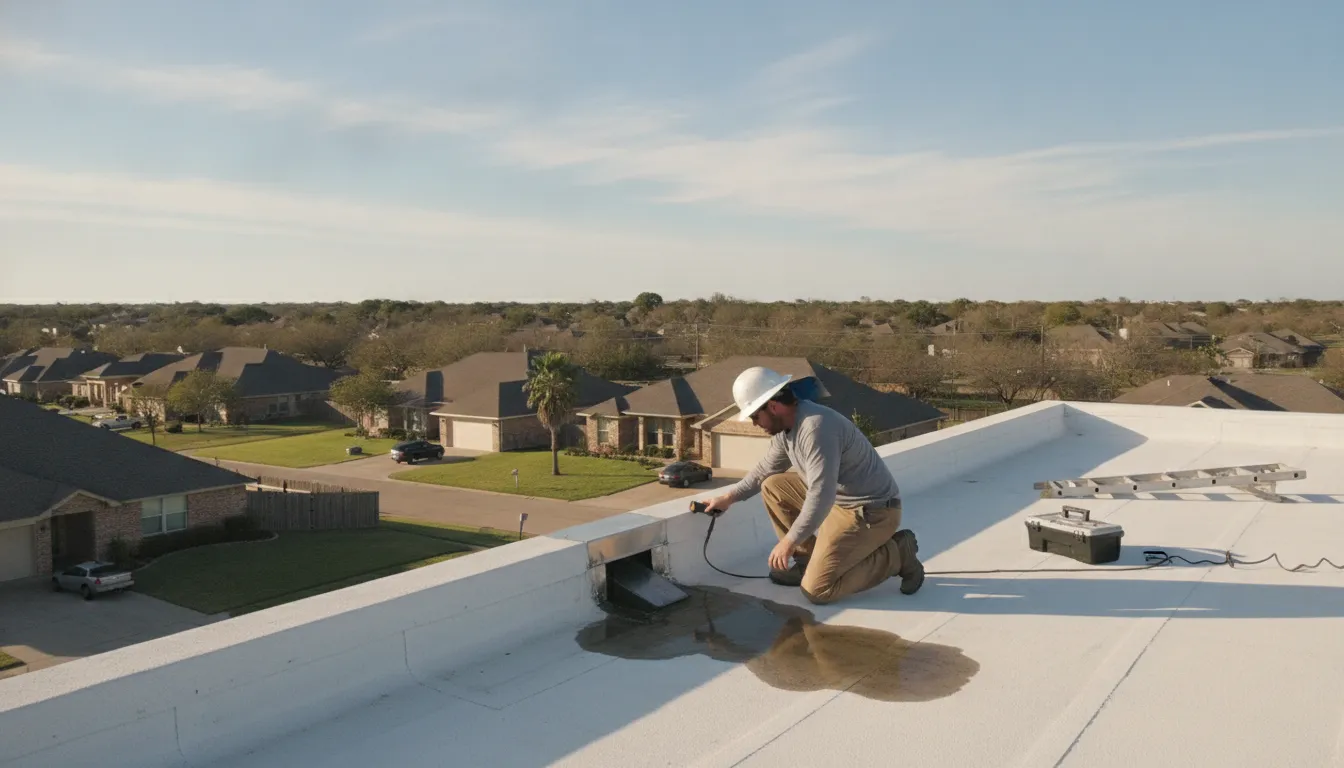
Repair is often appropriate when damage is limited and the surrounding roof remains serviceable. A localized puncture, damaged flashing, isolated seam problem, or a small leak may be addressed without disturbing the entire roof assembly. The inspection should still look beyond the visible opening. Water can travel away from its entry point, so the source of a ceiling stain may not be directly above the damage.
Repair can also address drainage-related components, vents, edges, and general wear. The right scope depends on the membrane or roofing system, the leak history, and whether moisture has reached insulation or decking. A clear estimate should explain what is being repaired and what evidence supports that recommendation.
When restoration deserves consideration
Restoration is not interchangeable with repair or replacement. It may be an option for some metal roofing systems when cleaning, protective coatings, sealant restoration, and minor repairs can extend the useful life of the existing roof. That approach should not be generalized to every flat-roof material. TPO, modified bitumen, built-up roofing, and other systems require recommendations that match their construction and condition.
When replacement may be more practical
Replacement may be appropriate when a roof is older than 20 years, continues to leak, or is beyond cost-effective repair. These are guidelines, not automatic rules. Recurring leaks, brittle or shrinking membrane, wet insulation in multiple areas, and widespread drainage problems all support a closer replacement analysis. The percentage of affected roof area can help with budgeting, but a commonly cited 25 percent threshold is a practical rule of thumb, not a universal engineering requirement.
Maintenance and timely inspections can identify smaller issues before they develop into broader restoration or replacement work. When the evidence points toward a new system, review Houston roof replacement options alongside the inspection findings, rather than choosing based on age or one leak alone.
What Should a Texas Flat Roof Inspection Document?
A useful inspection report does more than say whether a roof looks acceptable from the ground. It records the condition of the roof system, identifies likely sources of water entry, and explains which findings may affect the scope of work. That documentation gives a property owner a clearer basis for comparing repair, restoration, or replacement options.
For a Texas property, the report should identify the membrane or other roof assembly being inspected. TPO, modified bitumen, and built-up roofing can have different failure points and repair requirements. The inspector should note visible punctures, cracking, blistering, shrinkage, loose areas, failed sealants, and open or deteriorated seams. Recommendations should match the inspected system rather than treating every flat roof alike.
Drainage and edge details
Flat roofs depend on drainage components working together. The inspection should document drains, scuppers, gutters, downspouts, and areas where water may pond after heavy rain. It should also review flashing around walls, curbs, penetrations, and roof edges. Flashing is the material that helps seal transitions and openings. So a problem there can look like a membrane failure even when the main roof field is in better condition.
Vents and other penetrations deserve their own notes, including the condition of boots, collars, and surrounding sealants. A complete report should include photographs, locations, observed damage, and whether each issue appears isolated or recurring. This level of detail helps distinguish a repairable leak from a broader drainage or detailing problem.
Moisture, storm damage, and hidden conditions
Water does not always remain directly below the point where it enters. It can travel along walls and construction surfaces, causing damage away from the original opening. For that reason, an inspection should document signs of moisture or water ingress in the roof assembly and, when appropriate, affected interior areas. Wet insulation, staining, soft materials, corrosion, or deteriorated finishes may change the repair scope even when the visible membrane damage seems small. A basic visual check may not reveal these conditions. Learn more about hidden flat roof failures that visual inspections can miss.
The report should also record hail impacts, wind-related damage, displaced components, and other storm-related findings without assuming that an insurer will approve a claim. Clear photographs and descriptions can support damage documentation and help a property owner understand the next step.
Access and safety observations
Finally, documentation should explain how the roof was accessed and identify unsafe or restricted areas. Walking on a roof can be dangerous, especially where surfaces are wet, weak, or difficult to reach. Binocular observation can help determine whether closer evaluation is necessary, but a homeowner checklist is not a substitute for professional assessment. For a documented evaluation of your roof's condition, request a free roof inspection from a qualified roofing team.
How Can Property Owners Control Future Flat Roof Repair Cost?
The most reliable way to manage future expenses is to replace guesswork with a documented roof-care plan. A written inspection record gives homeowners, facility managers, and property managers a baseline for the membrane, seams, flashing, drains, and other details that affect the next repair decision. It also makes changes easier to spot after periods of heavy rain, hail, high wind, or intense Texas heat.
Schedule inspections before a small issue becomes a larger one
Regular inspections can identify minor concerns before they require more extensive restoration or replacement. Ask the roofing professional to record the observed condition, location, photographs, recommended action, and urgency for each issue. A useful inspection should look beyond the visible leak and evaluate drains, gutters, vents, flashing, moisture, hail damage, and signs of water ingress. Water can travel away from the point where it appears indoors, so repairing only the stain may not address the source.
Keep the inspection report with prior estimates, invoices, repair descriptions, and roof-system information. This history helps the next contractor understand whether a problem is new, recurring, or connected to earlier work. It also supports a clearer comparison when you request an estimate for repairs or consider whether restoration or replacement is more appropriate.
Keep drainage and maintenance on the schedule
Blocked or neglected drainage components can leave water where it does not belong. Property owners should pay attention to drains, scuppers, gutters, and other drainage-related components during routine maintenance and after major storms. The goal is not to treat every flat roof the same. TPO, modified bitumen, built-up roofing, and other systems have different repair considerations, so recommendations should match the roof that was actually inspected.
Use a qualified provider for roof-level work and document completed maintenance rather than relying on memory. Elevation Roofing offers roof maintenance services for property owners who want a more consistent process.
- Inspect and document the roof at planned intervals and after significant weather.
- Keep drains, scuppers, gutters, and related drainage paths under observation.
- Report interior leaks promptly. Include the date, location, and weather conditions.
- Save photographs, reports, repair records, and material information in one file.
- Ask whether the recommended work is a repair, restoration measure, or replacement decision.
A simple roof-care sequence
- Document the roof system, prior repairs, and any current leak locations.
- Schedule an inspection after significant weather or when a new concern appears.
- Review drainage, moisture, seams, flashing, and access conditions with the inspector.
- Compare the documented recommendation with the roof's age and repair history.
- Keep the report and completed-work records for future maintenance decisions.
Prompt action does not guarantee a lower flat roof repair cost, but it can give you more options. When a roof is leaking, an inspection can clarify the scope before the problem spreads. Call Elevation Roofing & Restoration at (832) 271-1726 for a free roof inspection.
Frequently Asked Questions
Why can flat roof repair estimates vary so much in Texas?
An estimate depends on the roofing material, damage severity, roof size, access, drainage, and the repair area. A small patch may still require setup, safety equipment, materials, and cleanup. Residential and commercial roofs can also have different inspection and repair requirements. An on-site inspection is the best way to define the actual scope.
Does a leaking flat roof always need to be replaced?
No. A localized leak, damaged flashing, drainage issue, or isolated membrane problem may be repairable. Replacement becomes more appropriate when a roof is older than 20 years, leaks repeatedly, or is beyond cost-effective repair. Those are evaluation guidelines, not automatic rules. The recommendation should match the inspected roofing system and its condition.
What should a flat roof inspection look for?
A thorough inspection can review the membrane or other roof material, seams, flashing, drains, gutters, vents, and areas where water may enter. It may also include moisture detection, hail-damage assessment, and evaluation of water intrusion. Because water can travel away from the original leak, the visible stain may not identify the full repair area. Source: Vermont roof inspection guidance.
How often should a flat roof be inspected?
Periodic inspections and maintenance help identify minor issues before they require more extensive restoration or replacement. A government roof inspection checklist recommends inspecting roofs at least once a year, preferably in spring, to identify damage. Texas property owners may also request an inspection after significant wind, hail, or heavy rain.
What information should I request with a repair estimate?
Ask for the observed leak source, affected areas, roofing material, drainage findings, proposed repair method. Materials, labor, access or safety requirements, and any additional work that may be needed. Clear documentation helps you compare repair, restoration, and replacement options without relying on a generic price.
Schedule Your Free Roof Inspection
An inspection can clarify whether your flat roof needs a focused repair, additional maintenance, or a larger replacement plan. Elevation Roofing & Restoration can document the roof condition, explain the available options, and prepare an estimate based on the property rather than a generic price range. To take the next step, request a free roof inspection and talk with the team about your roof's needs.