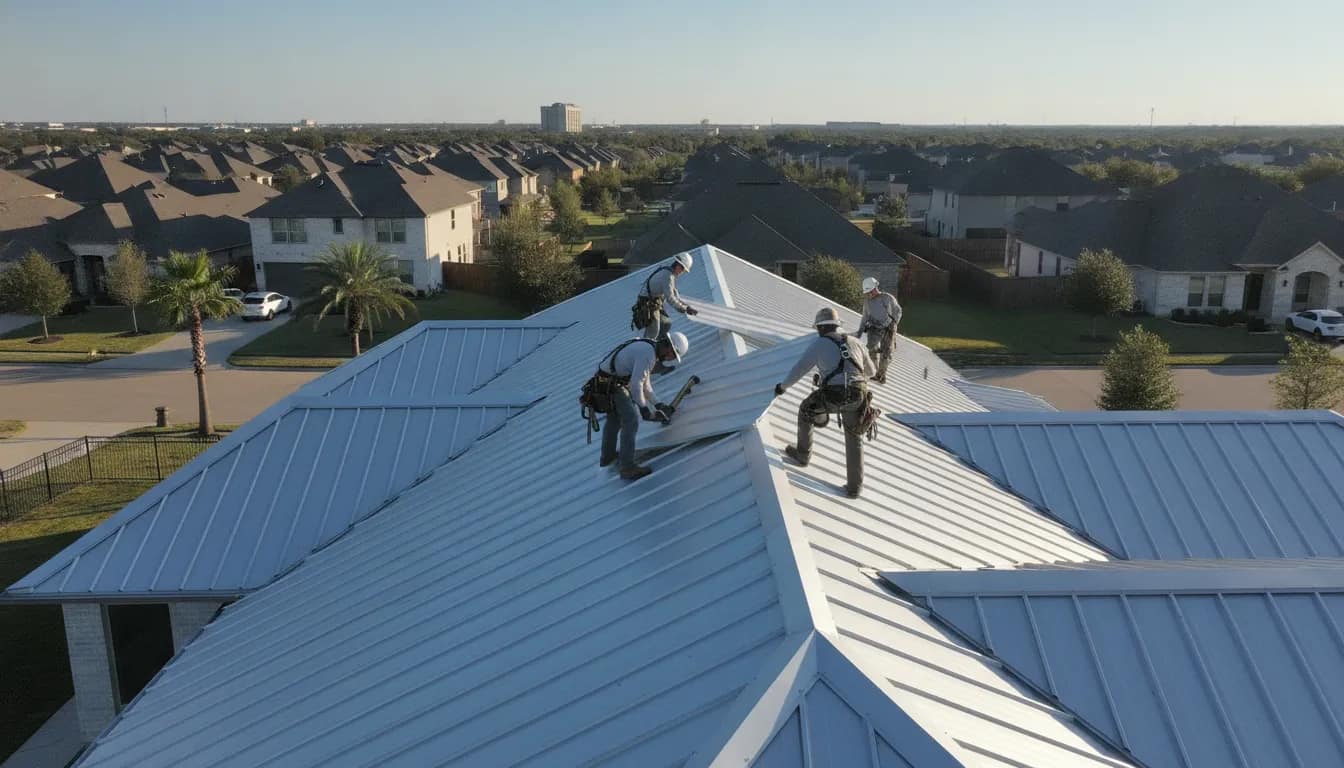
Houston and Austin homeowners face intense sun, humidity, hail, and sudden storms, so choosing a roofing material involves more than appearance. A well-planned metal roof can offer long-term protection, but its performance depends on the roof deck, underlayment, panel system, slope, and installation quality.
Metal roof installation includes inspecting and preparing the existing roof, selecting the right panels or metal shingles, installing underlayment and flashing, and securing the roofing system for local weather conditions. When properly designed and maintained, metal roofing can last about 40 to 70 years, making it a durable choice for Texas property owners.
The right system also depends on your roof's slope, drainage needs, home design, and budget. Understanding each stage makes it easier to compare options and recognize the craftsmanship a professional project requires.
What Does Metal Roof Installation Involve?
Metal roof installation is more than fastening panels over an existing roof. A sound installation begins with an inspection of the roof deck, framing, slope, and attic ventilation. The crew then prepares a suitable base, installs underlayment and flashing. And secures panels in a system designed to manage water, wind, and the expansion and contraction caused by Texas temperature changes.
Depending on the home or building, the installer may recommend standing seam panels or an exposed-fastener system, including corrugated panels. Standing seam panels join with raised seams that conceal most fasteners, while exposed-fastener panels are attached through the face of the panel. The right choice depends on the roof design, slope, appearance, budget, and the level of weather protection the property requires.
Preparing the roof deck and attic
Before panels go on, the deck must be inspected for rot, water damage, sagging, or other conditions that could compromise the new roof. Metal is relatively lightweight compared with traditional tile, but a professional assessment can still identify areas that need reinforcement or repair. In some cases, metal roofing can be installed over an existing roof, which may reduce demolition and waste. That approach is not suitable for every structure, so the existing roof must be evaluated first.
Under the panels, the installer typically places synthetic underlayment or roofing felt over the prepared deck. This secondary water-shedding layer helps protect the structure if moisture reaches the panel seams or flashing. Proper attic ventilation is also essential, particularly in hot Houston and Austin climates. Balanced intake and exhaust ventilation helps limit moisture buildup and supports the long-term performance of the roof system.
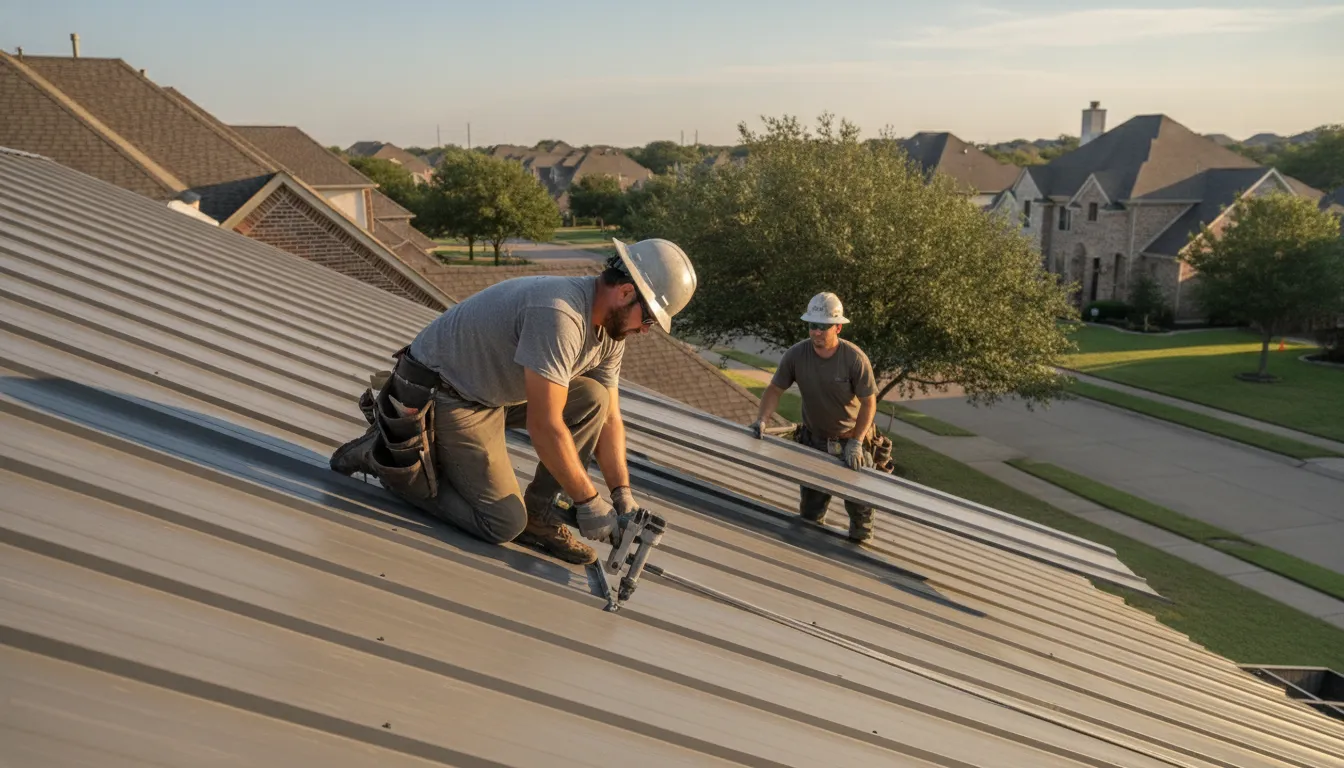
- Inspect and repair the roof deck before covering it.
- Install compatible underlayment, flashing, and edge details.
- Confirm attic ventilation and address moisture concerns.
- Plan for panel movement as temperatures change.
Choosing the panel system and roof slope
Roof slope matters because it affects how quickly water drains from the panels. Metal America's installation guidance lists exposed-fastener and corrugated panels at approximately a 1:12 minimum slope, with better performance at 3:12 or greater. Snap-lock standing seam systems typically require about a 3:12 slope, while some mechanically seamed standing seam profiles can work at 1:12 or less. The exact requirement depends on the product profile and manufacturer instructions, so the slope should be confirmed before materials are ordered.
- Inspect and prepare. Evaluate the roof deck, framing, slope, and attic ventilation, and complete any needed repairs or reinforcement.
- Layer the underlayment. Install a suitable underlayment and flashing to shed water before panels go on.
- Set the panels or shingles. Align panels or metal shingles and secure them so seams stay weather-tight.
- Detail the transitions. Flash around valleys, ridges, vents, and wall junctions, then confirm drainage and clean-up.
For a broader look at durable roofing materials for Texas properties, compare the options with your roof's structure and drainage needs. A careful assessment helps ensure the selected system is attractive, weather-tight, and appropriate for the home.
Metal Panel vs. Metal Shingle Roofs: What's the Difference?
Both systems can provide the weather resistance Texas property owners want, but they create a very different look and installation plan. Large metal panels run vertically from the eave toward the ridge, while metal shingles or shakes use smaller units designed to resemble asphalt, slate, or tile. Metal roofing is resistant to harsh weather conditions, including high winds and hail, and it is also more resistant to fire, mildew, and insects than traditional shingles. Learn more about metal roofing's weather performance.
The right choice depends on your home's architecture, roof slope, budget, and desired maintenance profile. During metal roof installation, the contractor must also plan for panel movement caused by temperature changes and create weather-tight seams. Use this comparison as a starting point, then have the roof structure and drainage details evaluated before selecting a system.
| Consideration | Metal panels | Metal shingles or shakes |
|---|---|---|
| Look and appearance | Clean, modern lines with long vertical runs. Standing seam may have visible ribs or concealed fasteners. | Smaller units create a more textured appearance and can imitate asphalt, slate, or tile. |
| Seams | Fewer long seams, with standing-seam connections designed to manage water and expansion. | More individual joints, so layout, flashing, and fastening details require careful installation. |
| Installation speed | Large panels can cover broad areas efficiently when the roof is straightforward and properly prepared. | Smaller pieces generally require more placement and alignment steps. |
| Durability | Offers strong long-term performance when the panel profile, fasteners, and seams are installed correctly. | Provides comparable metal-based weather and fire resistance, with performance depending on the product and installation quality. |
| Cost profile | Material and labor costs vary by metal, seam type, roof complexity, and finishing details. | Product design and the greater number of units can change labor and material costs. A detailed estimate is essential. |
| Best for style | Contemporary homes, low-maintenance commercial buildings, and properties where a bold roof line is desirable. | Traditional, transitional, or historic-inspired homes where the roof should complement an existing shingle or tile look. |
How roof slope affects the choice
Roof pitch can limit which panel system is appropriate. Exposed-fastener panels are commonly specified around a 1:12 minimum slope, with better performance at 3:12 or greater. Snap-lock standing seam systems typically require about a 3:12 slope, while some mechanically seamed profiles can work at 1:12 or less when the manufacturer allows it. These are general guideposts, not a substitute for the selected product's installation requirements. A professional inspection should confirm drainage, substrate condition, flashing, and seam details before work begins.
If you are comparing the benefits of metal roofing, Elevation Roofing can help match the system to your property's style and conditions in Houston or Austin.
How Long Does a Metal Roof Last?
A properly selected and installed metal roof can serve a Texas property for decades. Lowe's estimates a metal roof may last 40 to 70 years, depending on the material and location. By comparison, an asphalt shingle roof commonly needs replacement after about 15 to 20 years. The University of Oregon's roofing comparison also notes that metal roofs can last 50 years or more.
That range is not a guarantee for every roof. Panel quality, installation details, roof design, weather exposure, attic ventilation, and routine inspections all affect service life. Houston humidity, intense sun, hail, and high winds can put additional stress on roofing systems. During a professional metal roof installation, the contractor should evaluate the deck, flashing, fasteners, seams, ventilation, and drainage instead of treating the panels as the only important component.
Why the longer life can justify the investment
Metal roofing typically costs more at the beginning than standard shingles. But the initial investment can pay off over time through durability, lower maintenance needs, and potential energy savings. The longer replacement cycle may also reduce the disruption and disposal associated with repeated reroofing. Metal roofing is recyclable at the end of its useful life, according to the University of Oregon.
- Long service life: Depending on material and location, a metal roof may last 40 to 70 years.
- Less routine maintenance: The University of Oregon reports that metal roofs can require very little or no ongoing maintenance after installation, although inspections remain important.
- Weather readiness: Metal roofing is resistant to several harsh conditions, including high winds and hail.
- Long-term value: A roof that lasts longer may reduce the frequency of full replacement projects.
How metal roofing can improve summer comfort
Longevity is only part of the calculation. Reflective metal can help keep a home cooler during summer and may reduce cooling and energy bills, according to the University of Oregon. The Ohio State University Green Home resource explains that both reflectivity and emissivity influence how effectively a roof manages heat. Reflectivity helps send solar energy away, while emissivity affects how readily the roof releases absorbed heat.
Those benefits depend on the roof assembly and the home's insulation, ventilation, color, orientation, and local climate. A roofing inspection can help determine whether metal is appropriate for your structure and which installation details will support its expected lifespan.
How Much Does Metal Roof Installation Cost in Texas?
There is no responsible one-size-fits-all price for a metal roof in Texas. A Houston bungalow with a simple roofline will require a different scope than a large Austin home with multiple valleys, dormers, and difficult access. The labor cost for installing a metal roof is part of the estimate, but it is only one piece of the final investment. Accurate pricing requires an inspection and measurements of the actual property.
The type of metal is one of the first cost drivers. Steel is often a practical choice for many residential projects, while aluminum may be considered when weight or corrosion concerns affect the material decision. Standing-seam systems typically require more specialized fabrication and installation than simpler exposed-fastener panels. The roof's design also matters because hips, valleys, penetrations, skylights, steep slopes, and detailed flashing increase layout and installation time.
What affects the labor cost?
Labor reflects more than the number of days a crew is on site. A professional crew must prepare the deck, install the correct underlayment and flashing, align panels. Manage fasteners or concealed clips, and create weather-tight transitions around chimneys, vents, and other penetrations. Texas installations also need to account for local code requirements, high winds, and the expansion and contraction of metal panels in changing temperatures.
- Roof size and complexity: Larger roofs use more material, while complex designs require more cuts, detailing, and installation time.
- Existing roof condition: Damaged decking, structural concerns, or moisture issues may need correction before panels are installed.
- Replacement scope: A full tear-off adds demolition, disposal, and preparation costs. In some cases, metal roofing can be installed over an existing roof. Which may reduce demolition cost and waste, but the existing roof must be suitable for that approach.
- Material and system: Steel, aluminum, standing seam, and other panel profiles carry different material and labor requirements.
Metal usually has a higher initial cost than asphalt shingles. However, the long-term comparison can be different because metal may require less maintenance, last longer, and reflect solar heat that can reduce cooling costs. The Ohio State University Green Home program notes that the higher initial investment may pay off over time through lower maintenance, lower energy costs, and a longer lifespan. Those potential savings depend on the selected system, installation quality, home efficiency, and local conditions.
For a reliable local number, schedule a free inspection and estimate with Elevation Roofing. The team can evaluate whether a re-roof is appropriate, identify hidden preparation needs, compare material options, and provide pricing for your Houston or Austin property. See the details for professional metal roof installation before choosing a system.
Should You DIY Metal Roof Installation or Hire a Pro?
For a Texas homeowner, installing a metal roof is not a simple weekend upgrade. The panels may look straightforward, but the finished system must manage water, wind, heat, and movement over many years. So, is it difficult to install a metal roof yourself? Yes. Metal roof installation is technically demanding, and a small error can create leaks or shorten the life of the roof.
A professional crew brings the tools and experience needed to prepare the roof deck, set panels accurately, and create weather-tight seams. That distinction matters in Houston and Austin, where intense heat, heavy rain, hail, and high winds place added demands on the roofing system.
Why metal roofing is challenging to install
Metal panels expand and contract as temperatures change. Fasteners and seams must be placed so the roof can move without loosening, buckling, or allowing water beneath the panels. The installer also needs specialized tools and expertise to form and seal weather-tight seams, a key defense against leaks. Professional installation is recommended for this reason, rather than relying on trial and error.
Ventilation is another part of the system that is easy to overlook. Proper attic ventilation helps control moisture buildup, and it is especially important in hot Texas climates. The roof deck, underlayment, flashing, penetrations, and edge details must also work together. A roof that looks neat from the ground can still have weaknesses around vents, valleys, chimneys, and wall transitions.
- Accurate panel layout and fastening that accommodates expansion and contraction.
- Sealed seams, flashing, and penetrations designed to keep rain out.
- Appropriate attic ventilation to reduce moisture and heat-related stress.
- Installation practices that meet local building codes for high-wind Texas areas.
The value of professional installation
Hiring a qualified roofing contractor gives you more than labor. A professional assessment can identify deck or structural concerns before panels are installed and confirm that the selected system fits the property. Professional installation also supports compliance with local building codes, which is particularly important in high-wind areas of Texas.
There can be financial value after a storm as well. Elevation Roofing helps property owners handle insurance claims for storm-damaged roofs, including situations where a metal roofing system may be appropriate. The company also backs metal roof installations with a 100% satisfaction guarantee. Those safeguards are difficult to replicate with a DIY project.
This guidance is different from a checklist of common installation mistakes. The larger decision is whether you have the equipment, roof-access safety practices, technical knowledge, and time to install an entire system correctly. For most homeowners, professional metal roof installation is the more reliable path. Once the work is complete, consistent metal roof maintenance can help protect the investment.
Why Texas Homeowners Choose Metal Roofing
Houston and Austin homeowners ask a lot of their roofs. Intense summer heat, sudden storms, hail, and strong wind events can all test the roof's materials and installation. Metal roofing is an excellent option for properties in both markets because it combines weather resistance with long-term performance. The material can also reflect solar heat, helping keep the home cooler during hot Texas summers. Research from the University of Oregon notes that reflective metal can help reduce cooling needs and energy bills.
Storm performance is another reason property owners consider metal. A properly fastened system is designed to resist wind uplift, which matters in storm-prone regions. Metal roofing also provides significant protection against storm damage, a common concern across Central and South Texas. The result is not a promise that damage is impossible, but a roofing system selected with local exposure in mind.
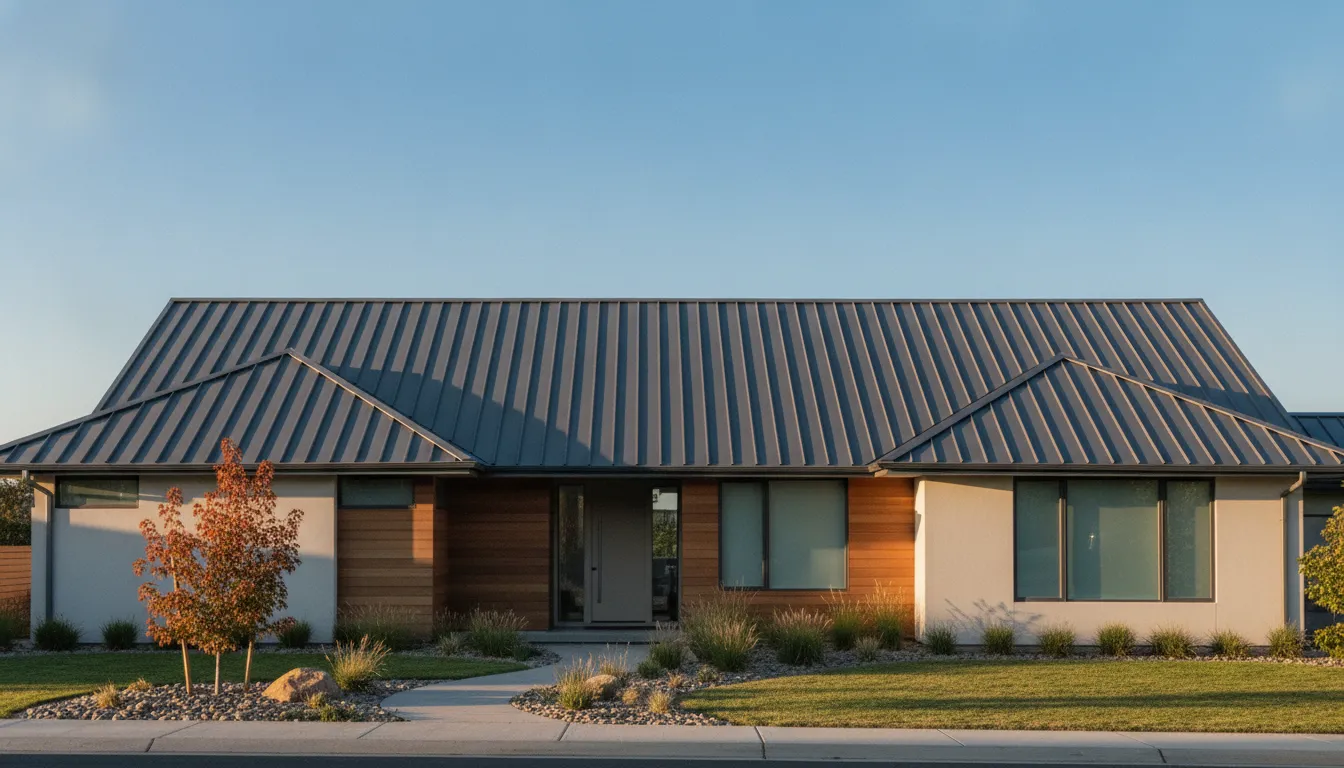
What makes metal roofing practical for Texas properties?
- Heat management: Reflective metal surfaces can help limit solar heat gain during long summer afternoons.
- Storm readiness: Correct fastening and professional detailing support resistance to wind uplift, hail, and severe weather.
- Long-term value: Metal roofing is durable and fully recyclable at the end of its service life, reducing waste. The University of Oregon identifies recyclability as one of its sustainability advantages.
- Local fit: A roof should be evaluated for the property's structure, slope, drainage, and exposure rather than selected from a generic checklist.
Installation quality remains central to those benefits. Elevation Roofing provides inspections to determine whether metal is suitable for a particular residential or commercial structure. The company is Owens Corning and GAF Certified, offers a 100% satisfaction guarantee, and helps property owners navigate insurance claims after storm damage. Those services can make the decision easier when a replacement follows hail or wind damage.
Drainage deserves attention, too. New panels should work with properly planned runoff management, so gutter improvements may complement a metal roof installation. Elevation Roofing offers gutter services alongside roofing work, helping homeowners consider the roof and drainage system together instead of treating them as unrelated projects. To discuss options, explore professional metal roof installation or review the company's Houston and Austin locations.
Frequently Asked Questions
What is the biggest problem with metal roofs?
Metal roofs can experience leaks or premature wear when panels, fasteners, flashing, or seams are installed incorrectly. Texas temperature changes also cause metal to expand and contract, so the installation must allow for that movement. Proper attic ventilation helps control moisture and heat, especially in Houston and Austin.
Do you need anything under a metal roof?
Yes. A metal roofing system typically needs a suitable underlayment over a sound roof deck, along with correctly installed flashing and ventilation. The exact assembly depends on the panel type, roof condition, slope, and local requirements. An inspection can identify damaged decking or structural concerns before panels are installed.
Is metal roof installation difficult to do yourself?
It can be risky for a homeowner because the work involves roof safety, specialized tools, precise panel alignment, weather-tight seams, and correct flashing. Professional installation also helps ensure the system meets local building requirements for Texas wind conditions. A qualified roofer can assess the structure and handle complex details before they become leak problems.
How long can a properly installed metal roof last?
Metal roofs can last 50 years or more, according to the University of Oregon, although service life varies with the material, installation quality, climate, and maintenance. Read the source comparison for additional context on metal and shingle roofing.
Ready to Plan Your Metal Roof Installation?
A professional inspection can help you understand your roof's condition, suitable metal roofing options, and the work your home may need. Get a free metal roof inspection and estimate, or call Elevation Roofing & Restoration at (832) 271-1726 to discuss your project with the team.