Drive through the newer pockets of Houston's Heights, East Austin, or any of the infill neighborhoods rising across Texas right now, and you'll notice a shift in the skyline. The steep, deep-gabled roofs that defined the suburbs are giving way to clean horizontal lines, parapet walls, and broad flat planes. This isn't a passing aesthetic fad. Urbanization is reshaping how Texas builds, and flat and low-slope roofs are riding that wave from commercial districts straight into residential design.
At Elevation Roofing & Restoration, we install and service flat roofs across more than 100 communities in Greater Houston and the Austin metro, so we have a front-row seat to the trend. Here is what's actually driving the flat roof boom in Texas cities, the real benefits behind the look, and what homeowners and building owners should know before they commit to a low-slope system.
What's Fueling the Flat Roof Trend in Texas
The pull toward flat roofs in urban Texas isn't one factor. It's several pressures converging at once as cities grow denser and lots get tighter.
Denser lots and modern infill
As Houston and Austin fill in, builders are putting more home on smaller, narrower lots. Flat and low-slope rooflines let a structure climb to the maximum allowable height without the wasted volume of a tall pitched roof, squeezing more usable living space out of every square foot. For townhomes, ADUs, and stacked multifamily, the geometry simply works better in a dense urban grid.
Modern and contemporary architecture
The clean, minimalist aesthetic that defines today's Texas design language, all crisp horizontal lines and large glazing, lives or dies on the roofline. A flat roof is the natural finish for contemporary, mid-century-modern, and industrial styles that buyers in urban cores increasingly want.
Usable rooftop real estate
When your lot is small, the most valuable land you own might be on top of your house. Flat roofs unlock rooftop decks, container gardens, solar arrays, and HVAC platforms, turning dead overhead space into an entertaining area with a skyline view. In a dense city, that's a meaningful upgrade.
Energy and cost pressure
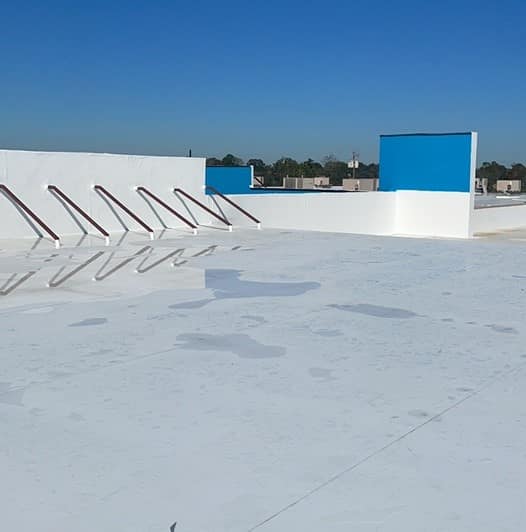
Under a relentless Texas sun, a flat roof's broad, uninterrupted plane is an ideal canvas for cool-roof coatings and reflective membranes that bounce solar heat instead of soaking it up. Combined with generally lower material and labor costs than a complex multi-plane pitched roof, the economics appeal to budget-conscious urban builders.
The Real Benefits of Flat and Low-Slope Roofs
Trends only stick when they solve real problems. Here's what a well-built flat roof actually delivers for a Texas property:
- Maximized usable space both inside (taller ceilings, full-height rooms) and on top (decks, gardens, equipment).
- Lower cooling bills when paired with a reflective flat roof membrane or cool-roof coating that cuts attic heat gain through a brutal Houston August.
- Easier, safer access for inspections, solar maintenance, and HVAC service, no steep pitch to navigate.
- Cleaner integration of equipment, hiding condensers and ductwork behind parapet walls instead of bolting them to a wall or pad.
- Modern curb appeal that holds resale value in neighborhoods where contemporary design commands a premium.
That said, a flat roof is only as good as the system beneath the surface. The look is the easy part; the waterproofing is where Texas weather separates the professionals from the pretenders.
Choosing the Right Flat Roof System for Texas
"Flat" is slightly misleading, since every quality low-slope roof is built with a subtle pitch to drain. The system you choose determines how it handles our UV, heat, hail, and Gulf Coast rain. The materials we install most often:
TPO membrane
A single-ply, heat-welded membrane that's bright white by default, making it one of the most reflective and energy-efficient options for the Texas sun. Its welded seams resist the wind uplift that comes with coastal storms, and it has become a go-to for both modern homes and commercial buildings.
Modified bitumen
A tough, multi-layer asphalt-based system that's highly resistant to foot traffic and punctures, a smart pick for rooftops that double as decks or host frequent equipment service. Learn more about modified bitumen roofing and where it fits.
Built-up roofing
The classic "tar and gravel" assembly of alternating layers, valued for its durability and the way its surface ballast protects the membrane from UV. It remains a dependable choice for larger low-slope expanses.
Whichever membrane you choose, three things decide whether a flat roof lasts: proper slope and drainage, meticulous seam and flashing work, and quality insulation that won't trap moisture. Standing water is the enemy of every flat roof, and in our humid Gulf climate, a system that doesn't drain fast becomes a problem fast. Explore the full range on our roof types overview if you're weighing your options.
What the Trend Means for Maintenance
A flat roof rewards attention and punishes neglect more than a pitched roof does, because water that breaches the surface has nowhere to run. Twice-a-year inspections plus a check after every major storm keep small issues from becoming saturated-insulation disasters. Clearing drains, scuppers, and gutters of debris is non-negotiable, and a periodic recoat can extend a membrane's reflective, waterproof life for years. A consistent roof maintenance plan is what turns a trendy roofline into a 20-plus-year asset.
If you're buying or building in Houston or Austin and a flat roof is part of the design, the smartest first step is getting a professional read on the structure and drainage before problems start. Whether you need a fresh roof installation on new construction or an honest assessment of an existing low-slope roof, the system details matter far more than the silhouette.
Build the Trend the Right Way
Flat roofs are surging across urban Texas for good reasons, more usable space, modern looks, and real energy savings, but the trend only pays off when the roof is engineered for our climate. As a GAF Preferred Contractor installing GAF lifetime and RhinoRoof-certified systems, with 9-plus years serving the region, a 5-star Google rating, and a 100% satisfaction guarantee, our team builds flat and low-slope roofs to handle Texas UV, hail, and Gulf moisture for the long haul.
Thinking about a flat roof for your home or commercial property? Schedule your free roof inspection, a $399 value, or contact us and we'll give you a straight read on the right low-slope system for your build and your budget.