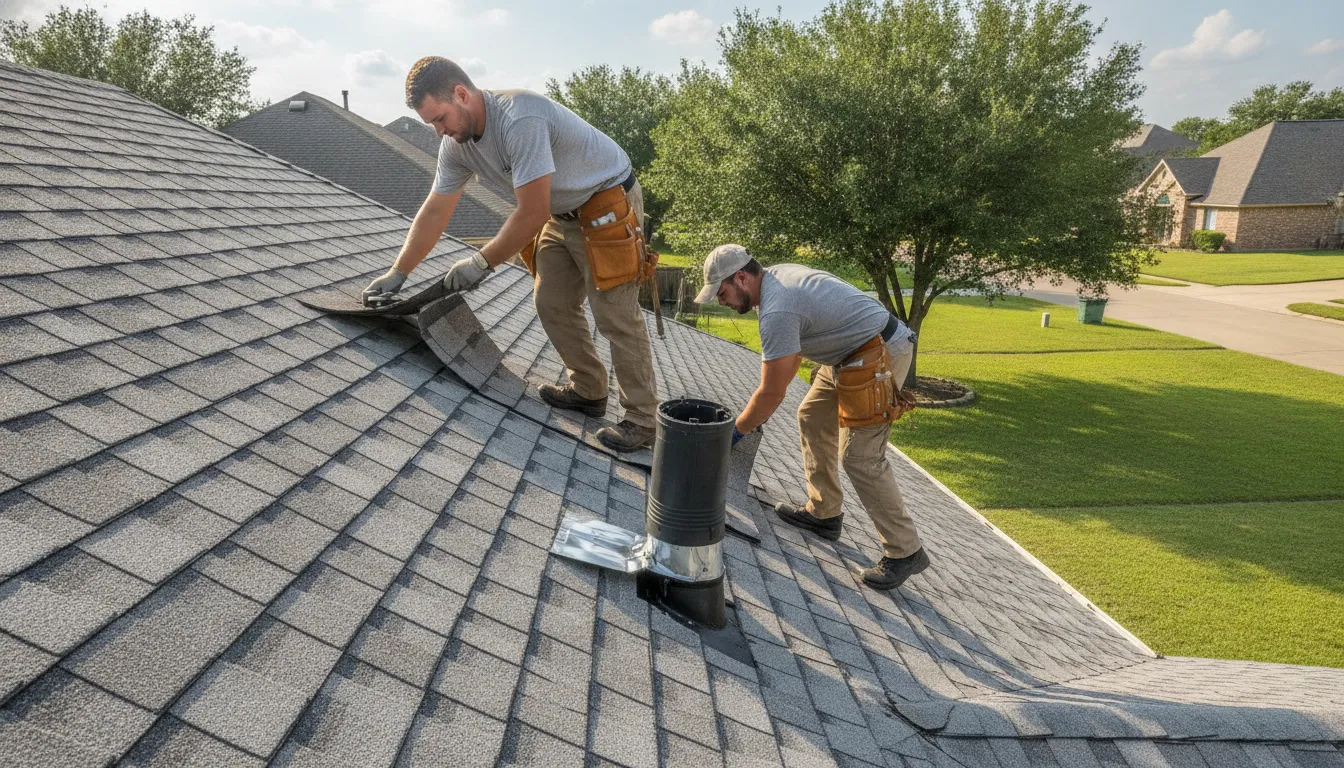
A roof leak is a symptom, not a diagnosis. In a Texas home, water may enter through damaged shingles or tile. It can also enter at failed flashing, a roof-wall joint, a valley, or a vent, chimney, or skylight. The right repair depends on which part failed, and on whether the materials around it can still protect the home.
Leaking roof repair means correcting the specific defect. That can be a replaced shingle, rebuilt flashing, or a new seal around a penetration, plus a check for moisture damage nearby. A professional inspection shows whether a focused repair is reasonable. Age, condition, and how far the damage spread decide if replacement is the better option.
Building America guidance identifies roof penetrations and roof-wall intersections as common weak points and recommends layered flashing that directs water down and out. That is why a lasting repair starts with the failed component, then addresses the surrounding drainage and water-control details. Understanding what each repair is meant to correct makes the assessment and repair sequence much easier to follow.
Schedule a free roof inspection with Elevation Roofing & Restoration at (832) 271-1726.
What Does Leaking Roof Repair Actually Fix?
Leaking roof repair begins after the source of the water is identified. A ceiling stain shows where water became visible, but it may be several feet away from the roof defect. The lasting repair addresses the opening, failed material, or damaged roofing component that allowed water into the home. That is different from covering the stain or applying a quick patch without understanding the path the water took.
Roof penetrations deserve particular attention because vents, flues, chimneys, skylights, and similar openings create weak points in the roof system. The Building America Solution Center explains that flashing at these locations should shed water in overlapping, shingle-fashion layers so water drains down and out. It also recommends inspecting existing flashing and repairing or replacing material that is missing or poorly installed around penetrations, roof-wall joints, and valleys. Read the Building America flashing guidance.
On a Houston or Austin home, a crew usually repairs one of these defects.
- Failed pipe boots: The rubber or metal seal around a plumbing vent can crack, shrink, or separate, allowing water around the penetration.
- Lifted or damaged flashing: Flashing around roof penetrations, walls, or other transitions can pull loose or stop directing water over the roofing surface.
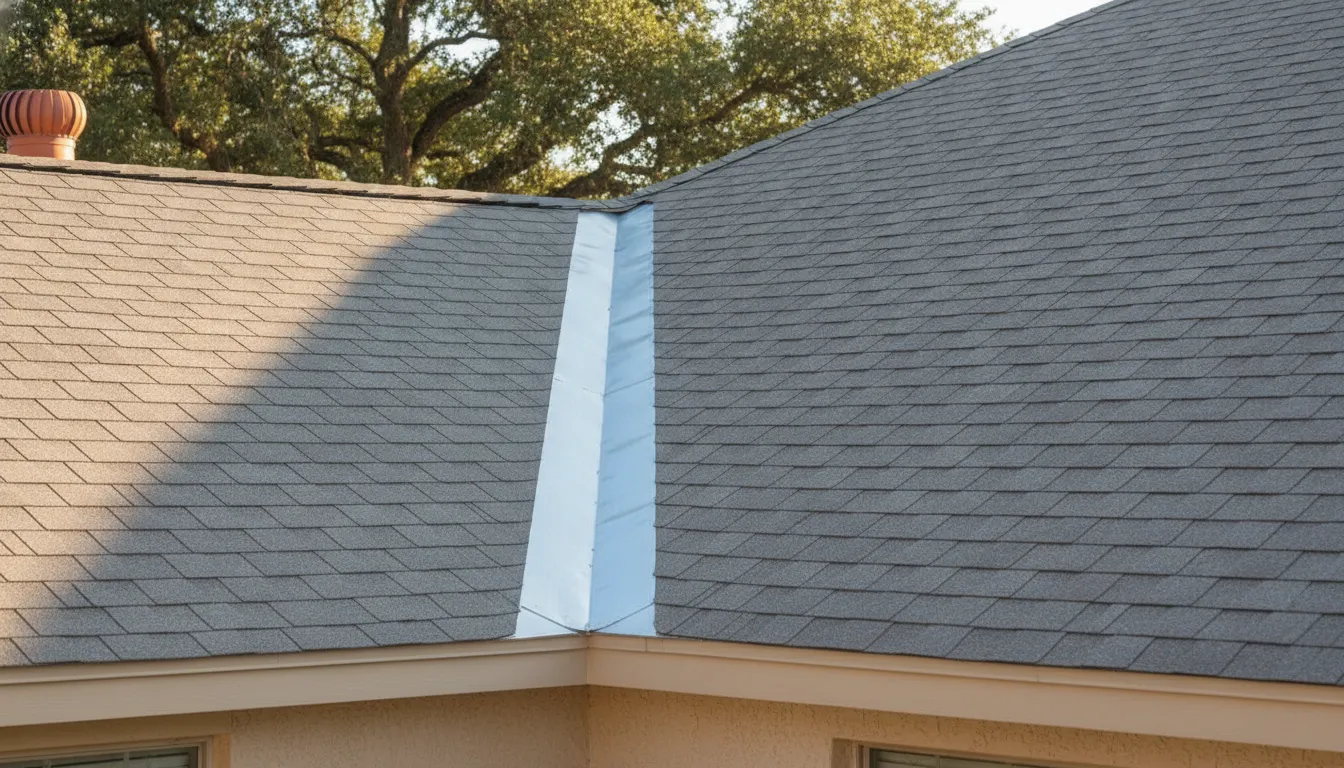
- Open valleys: Valleys collect runoff from two roof planes. Gaps, damaged materials, or poor coverage there can let water beneath the roof covering.
- Cracked or missing shingles: A broken, displaced, or absent shingle can expose the water-shedding layers below to direct weather.
- Nail pops: Roofing nails that rise above the shingle surface can create a small opening and may also loosen the surrounding material.
The right repair depends on what the inspection finds, the condition of the surrounding roof, and whether water reached the decking or interior materials. A professional should also check nearby components rather than repairing only the first visible defect. If you need help finding the source, start with the signs and likely entry points, then have the roof evaluated before choosing a repair. For the repair itself, Elevation Roofing's roof repair service can address the specific failure instead of treating only the symptom.
Which Leaking Roof Repair Matches the Defect?
The right leaking roof repair depends on where water is getting past the roof system, not simply where the stain appears indoors. A targeted repair may involve replacing a failed component, rebuilding a water-shedding transition, or correcting drainage before new roofing materials are installed.
Use the comparison below as a starting point for understanding what a contractor may recommend. Roof details often overlap, so a visible defect that keeps returning may require inspection of the surrounding underlayment, decking, flashing, and drainage path.
| Defect | Typical repair | When it is not enough |
|---|---|---|
| Pipe boot | Replace the cracked, deteriorated, or improperly sealed boot and integrate its flashing with the surrounding roof. | If the leak has damaged the roof deck or the penetration flashing was installed incorrectly, replacing the boot alone may leave the water path open. |
| Step or kick-out flashing at a wall | Repair the step flashing where the roof meets the wall. Add kick-out flashing so runoff goes into the gutter, not behind the wall. The Building America Solution Center guide explains this roof-wall transition. | New flashing will not solve problems caused by damaged siding, missing counterflashing, an obstructed gutter, or water entering higher up the wall. |
| Valley | Rebuild the valley with correctly layered underlayment and flashing. A self-sealing bituminous membrane is used at valleys and around deck penetrations beneath the roofing felt, with flashing extending along the valley. | A small valley patch may not hold if debris, runoff, or bad decking keeps feeding the leak. |
| Missing or cracked shingles | Replace the affected shingles and renew the fasteners and sealant as appropriate, matching the existing roof as closely as practical. | Widespread brittle shingles, repeated storm damage, or exposed underlayment may call for a larger repair or a replacement. |
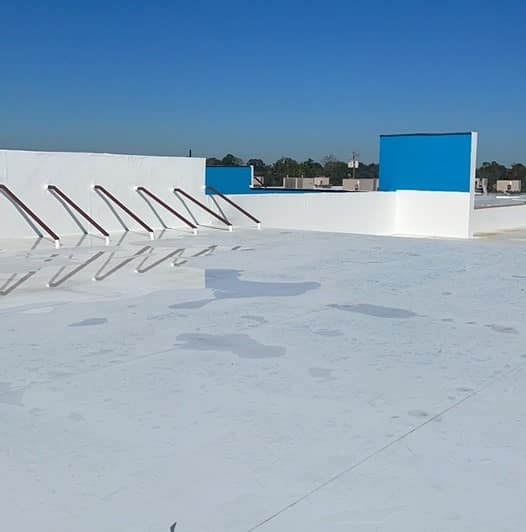
| Low-slope ponding | Correct the drainage path, such as a blocked drain, scupper, or edge, and repair the roof membrane or affected materials. Low-slope roofs should not be truly flat; a minimum slope of 1/4:12 helps water reach a drain, scupper, or edge. | Clearing one drain is not enough when the roof lacks adequate slope, has sagging decking, or has membrane damage from repeated standing water. See our guide to flat-roof drainage in Texas for related considerations. |
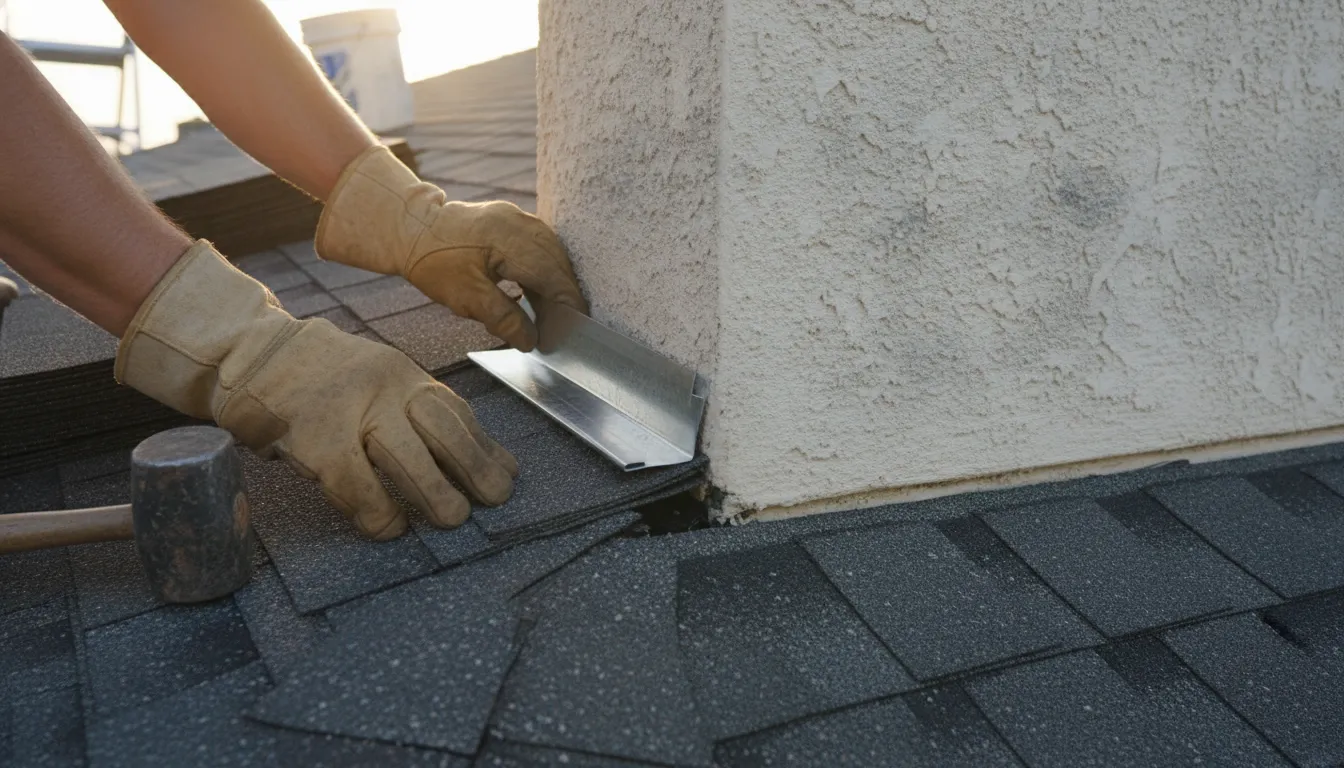
For a broader look at damaged roof-wall transitions, see our guide to roof flashing repair in Texas. The most durable repair addresses the defect and the way water moves around it.
Get a leaking roof repair plan from Elevation Roofing & Restoration at (832) 271-1726.
How Does a Crew Sequence Leaking Roof Repair?
- Protect the interior and document the wet area. The crew looks at the indoor signs and protects finishes and belongings where practical. They record where it is wet inside, not only what shows on the roof.
- Confirm the entry point from the roof. Water can travel along roofing materials, underlayment, framing, or other surfaces before it appears on a ceiling. A professional crew traces the likely path from above and checks nearby areas rather than assuming the stain sits directly below the failure.
- Remove only the failed material. Once the source is identified, the crew carefully opens the affected section. The goal is to expose enough of the assembly to make a sound repair while preserving roofing that is still performing properly. This also gives the technician a better view of the underlayment and deck.
- Rebuild the flashing or roofing field in shingle fashion. Depending on the cause, the repair may involve new flashing, underlayment, shingles, tile components, or another compatible roofing material. Water-control layers should overlap so water drains down and out. For a helpful explanation of common flashing details, see this roof flashing guide for Texas homes.
- Check nearby penetrations and the deck. Vents, chimneys, skylights, roof-wall intersections, valleys, and other penetrations can be weak points. The crew checks these surrounding details and looks for damaged or softened decking before closing the repair. If adjacent defects contributed to the leak, they should be noted rather than covered up.
- Clean up and explain what to watch. After the repair, the crew removes loose roofing debris and job materials from the work area. They review what was found and what was repaired. They also note what should trigger a follow-up inspection.
Elevation Roofing & Restoration uses in-house crews rather than subcontractors. If the source is unclear, or the damage followed a storm, schedule a free roof inspection before you choose a repair.
When Should You Stop Repairing a Leaking Roof?
Repair is often the sensible choice when a leak comes from one localized defect and the rest of the roofing system remains sound. A roofer can often fix damaged flashing or a small group of shingles without opening the whole roof. The decision changes when the problem points to broader deterioration rather than one repairable entry point.
Another leaking roof repair may no longer be the best plan. The guide to roof repair versus replacement walks through that choice.
- Soft decking in multiple areas: Spongy or weakened roof decking in more than one location can indicate that moisture has affected the roof structure beyond the original leak.
- The same slope keeps leaking: If a proper repair is done and water still enters on that slope, the failure is probably wider than one spot.
- Brittle shingles across the field: Shingles that crack across a wide area are different from a few damaged pieces. Widespread brittleness makes spot repairs less dependable.
- The roof is nearing the end of its planning range: With maintenance, many roofs last about 20 years. Some materials last 30 years or more. That is a general planning range, not a diagnosis. Material, installation quality, ventilation, maintenance, and Texas weather all affect the actual condition.
Age alone does not automatically require replacement. A newer roof with one failed flashing detail may need only a focused repair. A younger roof with widespread storm damage may need a broader look. An inspection can assess the shingles, decking, flashing, ventilation, and moisture conditions together before you commit to either path.
If replacement is on the table, review Elevation Roofing & Restoration's roof replacement service. Then compare materials in the guide to types of roofs. A clear assessment should say what is damaged and what can still be repaired. It should also say why replacement is the better protection when repair is no longer enough.
How Do Texas Storms Change the Repair Plan?
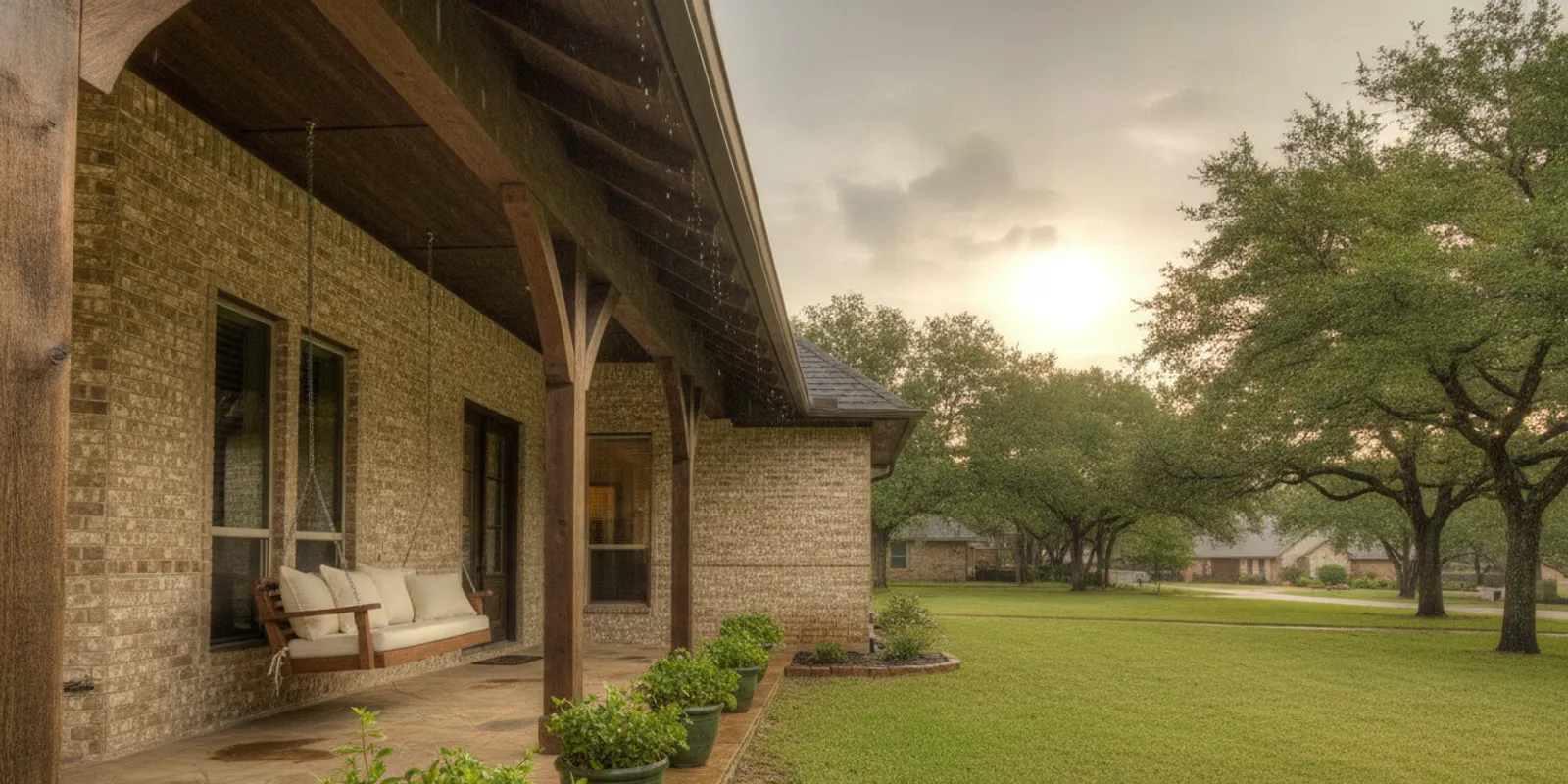
In Houston and Austin, a roof can take on more than one kind of weather damage at once. Hail and wind may lift a shingle, open a seam, or bruise the shingle mat beneath the surface. From the yard, the roof may still look intact. An inspection can reveal damage that will shorten the roof's service life or allow water in during the next storm.
Heat changes the repair decision, too. Texas sun can bake sealant patches until they dry out and crack, turning a temporary fix into another entry point for water. A lasting repair may require correcting the damaged roofing material, underlayment, or flashing rather than adding another layer of sealant. The right scope depends on what the inspection finds and whether the surrounding roof system remains sound.
Heavy rain can expose a flashing detail that was easy to miss during dry weather. A missing kick-out flashing can send runoff behind the wall instead of into the gutter. The result may be wet siding, wall damage, or interior moisture that appears far from the actual roof entry point. That is why a storm-damage repair assessment should look beyond the ceiling stain.
- Hail and wind damage can be hidden in shingles that look normal from ground level.
- Heat-damaged sealant may crack and fail when it is treated as a permanent repair.
- Heavy rain can turn a flashing defect into water intrusion behind a wall.
Elevation Roofing & Restoration helps homeowners plan storm-damage repairs and assists with the insurance claim process. That help does not replace an inspection, and it does not decide the claim. It does keep the assessment and the repair plan connected. For more context, read this Texas storm-damage repair guide and review roof leak insurance coverage in Texas before deciding what work your roof needs.
What Should You Watch After the Repair?
A finished leaking roof repair is not the last thing to look at. The next hard rain is the real test. Watch the old ceiling stain, the wall below a roof-to-wall joint, and any closet or attic spot that was wet. A faint ring that does not grow is often old damage drying out. A new drip, a widening stain, or a musty smell means water is still moving and the repair needs another look.
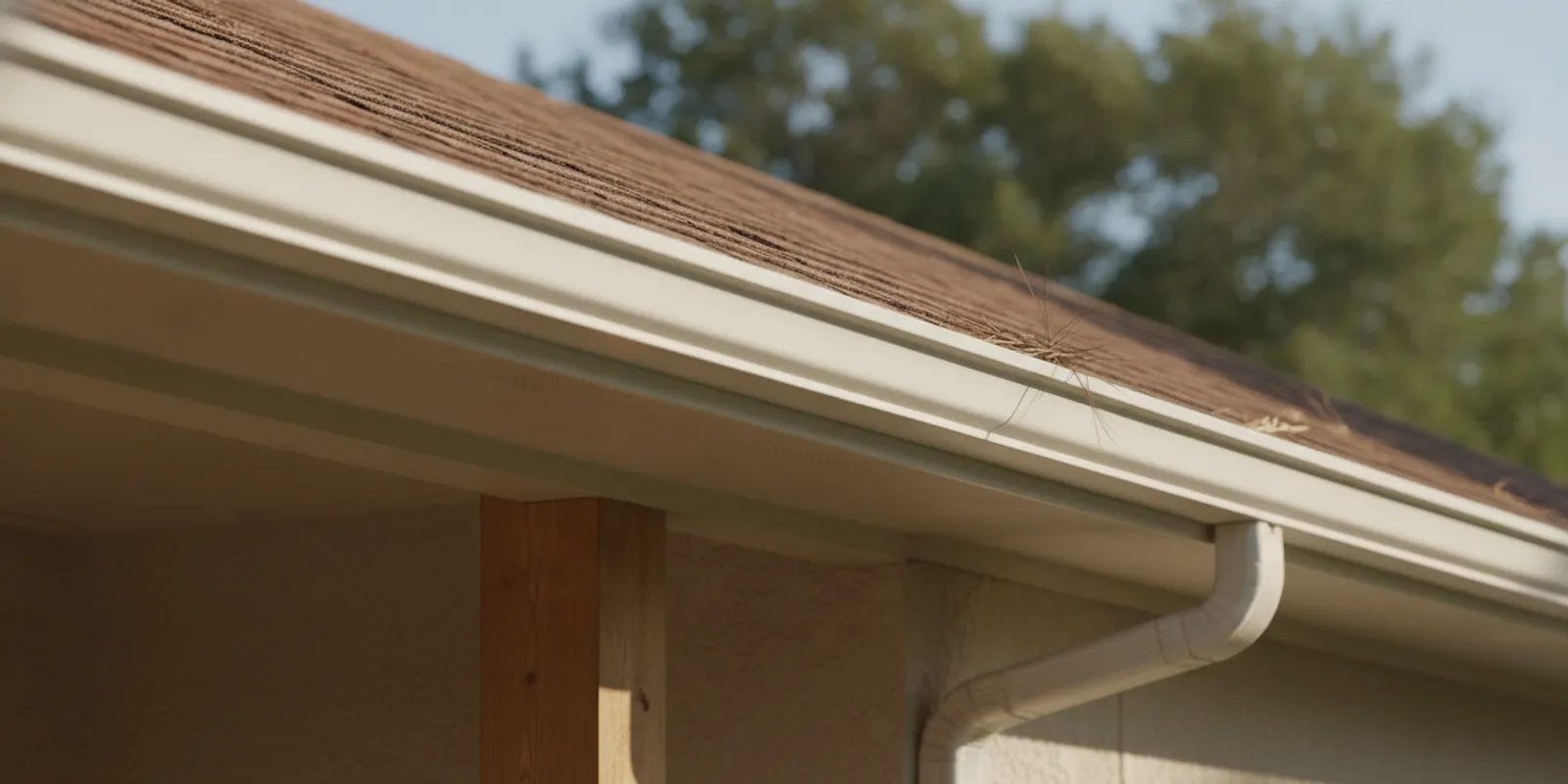
Keep the path off the roof clear. Leaves in a gutter can push water back under the eave and make a sound repair look like it failed. If the downspout dumps water against the foundation or a low roof, that backup belongs in the same conversation as the roof. Elevation Roofing & Restoration also handles gutter work when the drainage, not the shingles, is what keeps the ceiling wet.
- Check the old stain after the next heavy rain, not only on a dry afternoon.
- Clear gutters before storm season so water cannot back up under the edge.
- Note any new granule piles, lifted flashing, or a soft spot near the repair.
- Book maintenance before hail season instead of waiting for the next stain.
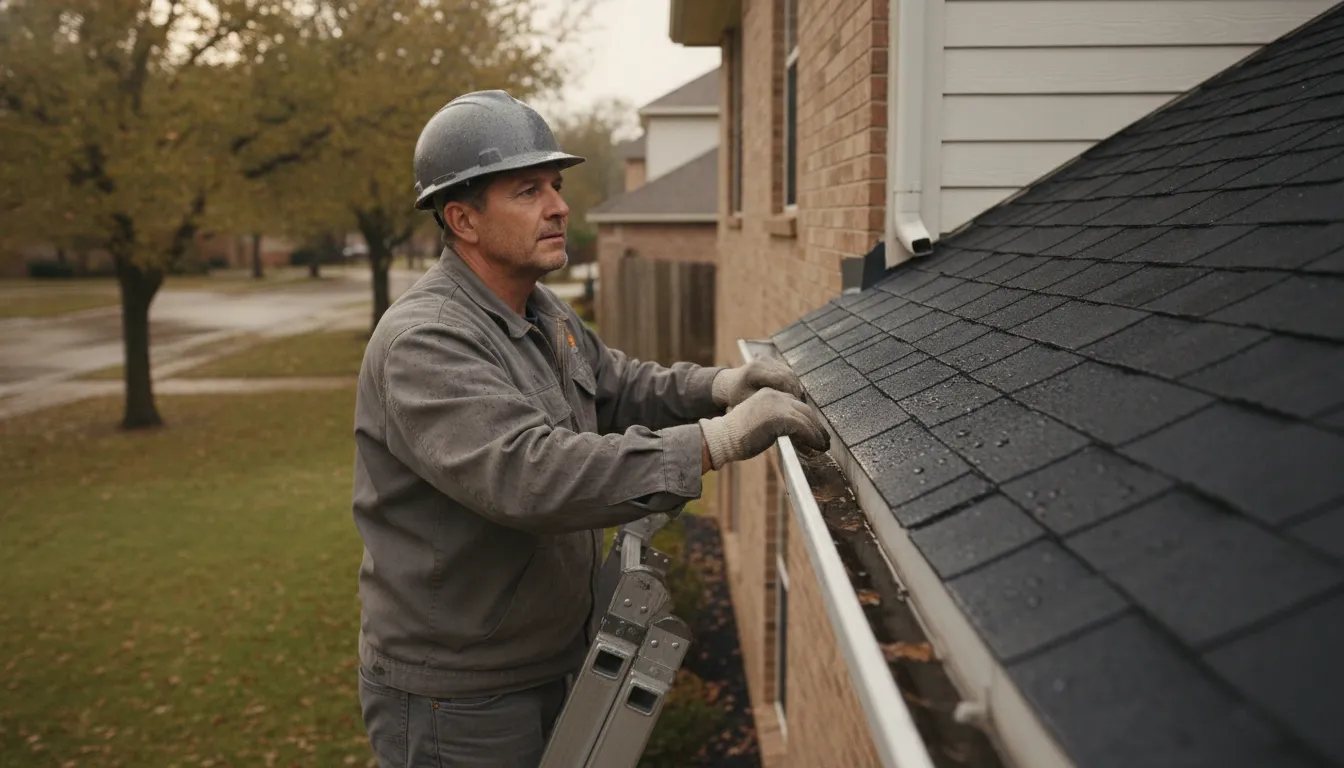
A simple maintenance visit catches the next loose boot or open valley while it is still small. The longer guide on preventative roof maintenance covers what that visit should include. If the repair is larger than you planned to pay at once, financing is available to review. It is an option, not a requirement, and the terms depend on credit.
Homeowners around Houston and Austin can see where crews work on the locations page. The reviews page shows what other owners reported.
Call Elevation Roofing & Restoration at (832) 271-1726 to schedule a free roof inspection.
Frequently Asked Questions
Will a sealant patch stop a leaking roof?
A sealant smear can slow a drip for a short time, and Texas heat often cracks that patch later. It is not a lasting leaking roof repair when the boot, flashing, or shingle underneath has failed. Use a patch only to limit damage until a roofer rebuilds the failed detail.
Does homeowners insurance cover a leaking roof?
Sometimes, when a covered storm opens the roof. Slow wear, an old failed boot, or a leak you left alone is often treated differently. Coverage depends on the policy and the cause. Start with the guide to roof leak insurance coverage in Texas, and do not assume a claim is approved before an adjuster reviews it.
How long does a localized roof leak repair take?
A single failed boot or a small flashing repair is often finished in one visit once the roof is dry enough to work on. A soft deck, a long valley, or hidden wall damage takes longer because the crew has to open more of the assembly. No visit length is guaranteed until someone sees the roof.
Do tile and metal roofs use the same repair as shingles?
No. Shingles are usually replaced in a small field and woven back into the course. Tile often needs the surrounding tiles lifted so the underlayment, not just the tile face, can be repaired. Metal leaks more often at fasteners, seams, and flashing than in the middle of a panel. The tile roofing page and the types of roofs guide show how those systems differ.
Get the Leak Fixed Before the Next Rain
If water is already inside, start with an inspection that names the failed detail and the matching repair. Elevation Roofing & Restoration will look at the entry point, the surrounding flashing, and whether the deck is still sound.
Schedule a free roof inspection with Elevation Roofing & Restoration at (832) 271-1726.