A commercial roof maintenance plan is a written, repeatable approach to inspecting a roof, recording its condition, completing routine care, and prioritizing repairs. Instead of waiting for a leak or storm problem to interrupt operations, a property owner or manager uses the plan to understand what needs attention and when.
Call Elevation Roofing & Restoration at (832) 271-1726 for a free roof inspection and estimate.
For Texas commercial properties, the right plan should account for the building's roof system. Drainage, penetrations, flashing, access patterns, age, prior repairs, and exposure to heat and severe weather. It should also create a useful record. That record helps decision-makers separate routine maintenance from urgent repair or eventual replacement. The sections below explain what to include. They also show how to put a practical plan into action.
What Is a Commercial Roof Maintenance Plan?
A commercial roof maintenance plan is a property-specific schedule and recordkeeping system for keeping a roof in serviceable condition. It usually combines planned inspections, cleaning and drainage work, minor corrections, documentation, and a process for escalating larger defects. The plan is not a promise that a roof will never leak. It is a way to find conditions early, make informed decisions, and keep roof care from becoming an afterthought.
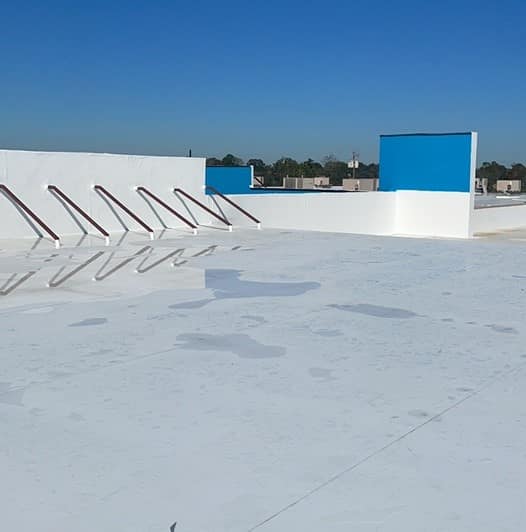
The scope should match the actual building. A low-slope membrane roof may need close attention to seams, penetrations, edge metal, drains, and areas where water can pond. A metal system may require checks for corrosion, fasteners, sealants, and flashing movement. Other commercial systems have their own details. A useful plan names the roof areas and components rather than relying on a vague instruction to "check the roof."
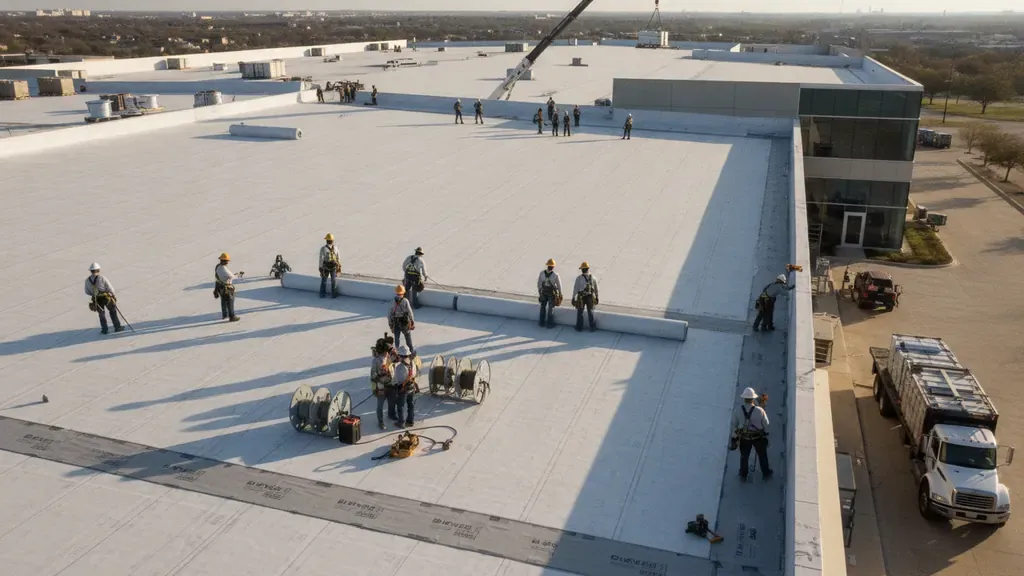
It should also clarify who is responsible for access and records. A commercial-roof checklist published by KPost recommends recording who goes on the roof, noting observed conditions, and checking for leaks, visible damage, and debris. Those simple habits create a clearer maintenance history for owners, managers, and contractors. Commercial roof maintenance services can then be matched to the property's condition instead of handled as a one-size-fits-all package.
Finally, keep this plan separate from a capital improvement or multi-year portfolio plan. A capital plan looks at larger financial and replacement decisions across time. A maintenance plan focuses on the actions that keep a particular roof observed, documented, clean, and repairable between major projects.
What Should a Commercial Roof Maintenance Checklist Include?
A useful checklist covers the roof surface, water-management path, edges, penetrations, and the condition of related components. The University of Minnesota roof inspection checklist identifies debris, drainage, physical damage, walkways, equipment, parapet walls, parapet caps, sealants, penetrations, gutters, drains, and vents as inspection areas. Virginia's government checklist also calls attention to ponding, membrane damage, flashing, parapets, insulation affected by moisture, gutters, scuppers, and downspouts.
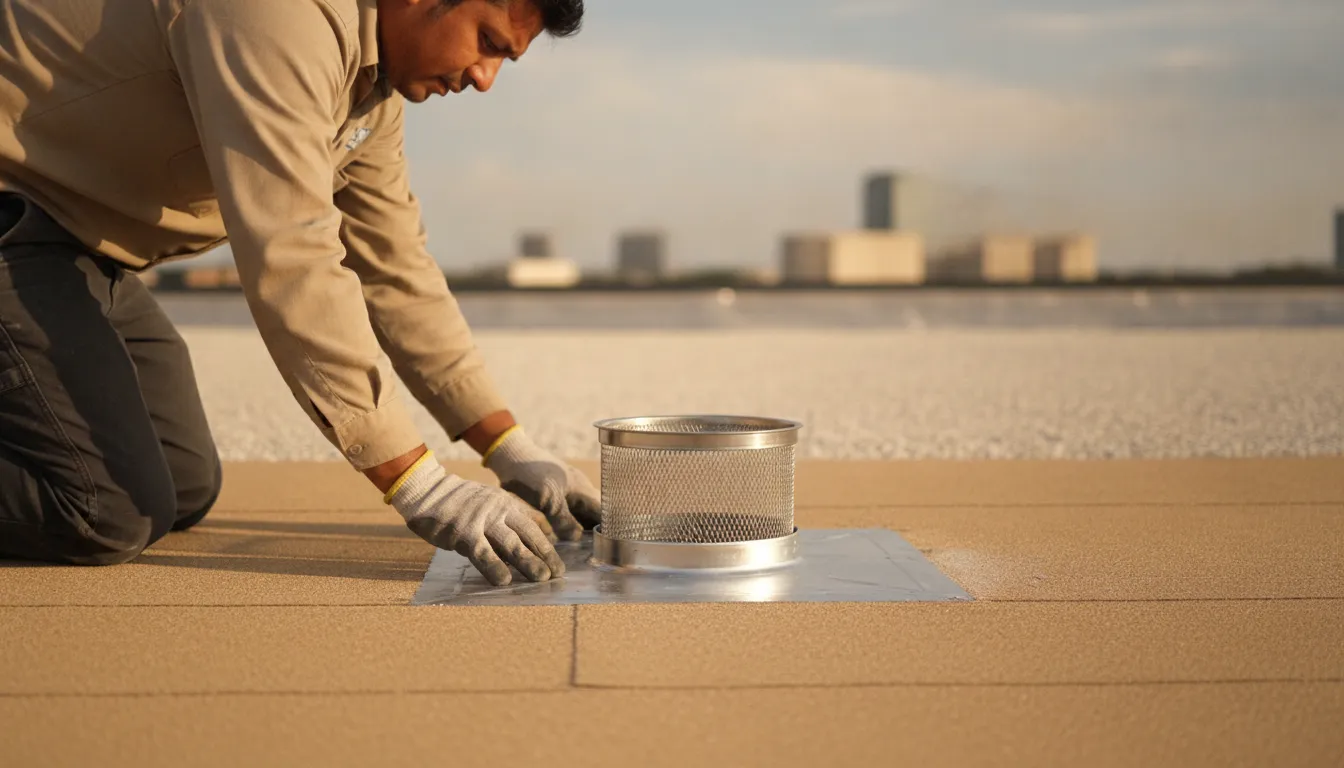
For a practical commercial roof maintenance plan, organize the checklist into four groups.
- Surface and membrane: Look for punctures, worn or deteriorated areas, blisters, seam failures, loose areas, corrosion, and other visible damage appropriate to the roof system.
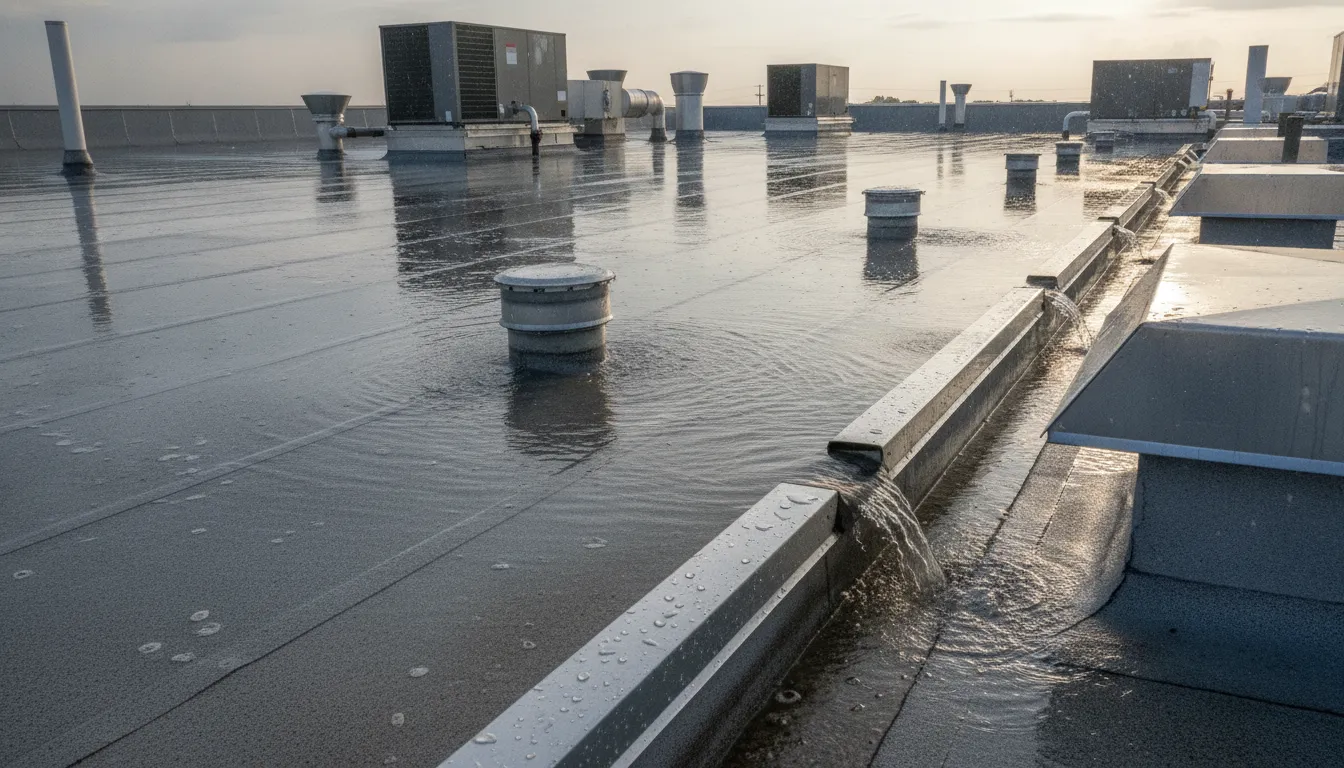
- Drainage: Check roof drains, strainers, gutters, scuppers, downspouts, and low areas for clogging, debris, damming, or ponding. Confirm that water has a clear path away from the building.
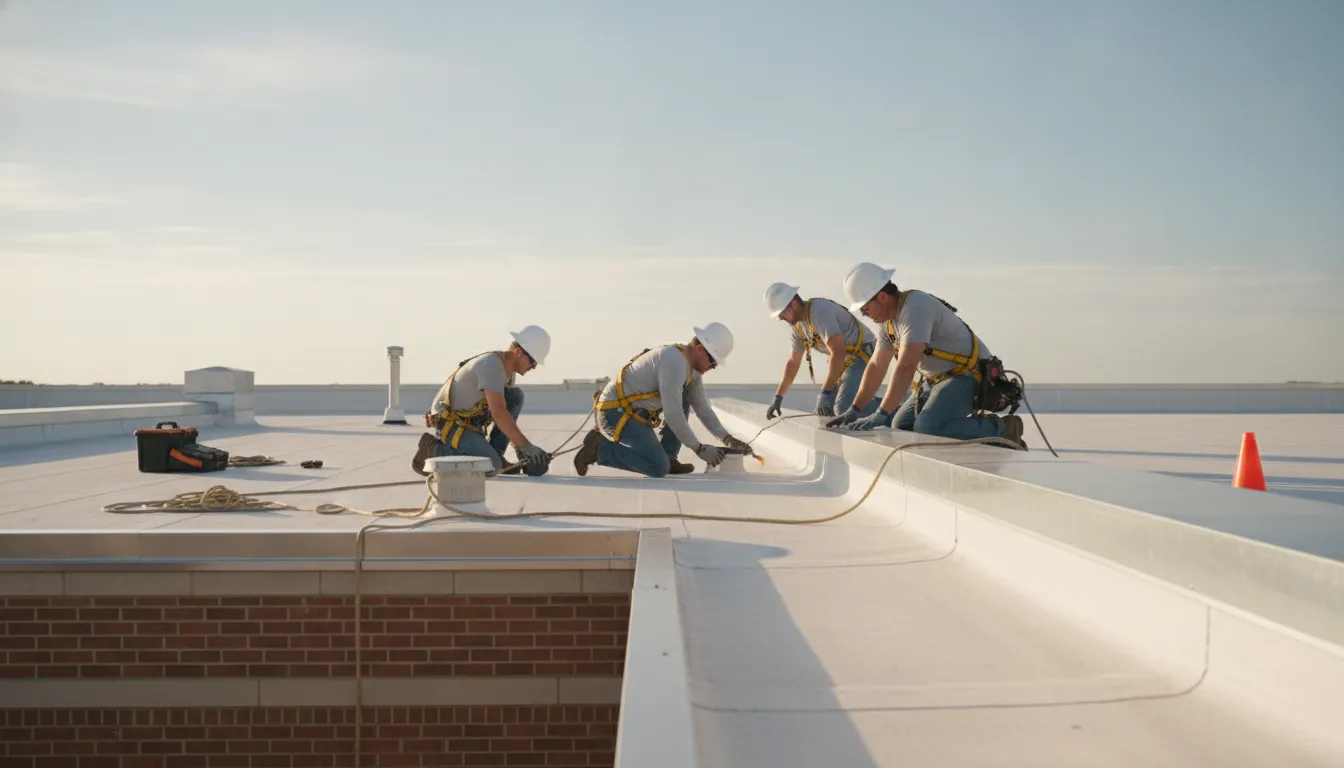
- Edges and penetrations: Inspect cap and base flashings, edge metal, parapet caps, pipe boots, pitch pockets, vents, equipment curbs, fasteners, and sealants. These transitions deserve careful attention because they connect the roof field to other building elements.
- Operations and records: Note roof access, unsafe conditions, observed deficiencies, completed maintenance, open repairs, photos, exact locations, and the next recommended action.
The checklist should not be used as permission for untrained staff to walk an unsafe roof. A facility manager can track access and visible concerns, while a qualified roofing professional evaluates areas that require roof-system knowledge or specialized equipment. The goal is a consistent record, not a risky inspection shortcut.
Documentation is what turns a list into a plan. The University of Minnesota form asks for details about completed work, deficiencies, roof-area sketches, before-and-after photos, locations, remaining work, cost estimates, and scheduling estimates. That level of detail helps a property team decide what is routine, what needs prompt attention, and what should be included in a larger repair or replacement discussion.
How Often Should Commercial Roof Maintenance Be Scheduled?
There is no single maintenance frequency that fits every commercial roof. The schedule should reflect the roof system, age, drainage design, occupancy, access, recent weather, prior leaks, nearby trees or debris, and the consequences of a failure. A newer roof with a clean history may need a different cadence from an older roof with recurring ponding or repeated repairs.
Use the roof's history to set a baseline. Start by gathering installation or replacement records, warranty information, prior inspection reports, repair invoices, leak locations, and photos. Then ask a qualified professional to identify the components that need routine observation. If the property has experienced hail, high winds, heavy rain, or construction activity nearby, add a condition check when appropriate rather than waiting for an interior symptom.
Published facility plans show why schedules should be documented. Western Kentucky University's roof maintenance plan directs that campus roofs be walked on a rotating quarterly schedule. That is an example of a formal institutional schedule, not a universal rule for every Texas commercial property. The right timing for your building should be set from its needs and the recommendations of the roof-system manufacturer and qualified roofing professional.
A practical calendar can separate recurring housekeeping from condition assessments. Drainage and debris concerns may need attention after weather or seasonal buildup. A more comprehensive inspection can review the roof surface, flashings, penetrations, parapets, and interior signs of moisture. Record the date, areas reviewed, conditions found, actions taken, and unresolved items each time.
For more context on inspection timing and Texas conditions, see this guide to commercial roof inspections in Texas. If conditions change, update the plan. A calendar is useful only when it reflects what the roof and building are actually experiencing.
What Are the Benefits of Preventive Commercial Roof Care?
Preventive commercial roof care gives a property team a clearer view of condition between major projects. Instead of treating every roof concern as an emergency, the team can document the issue and evaluate its urgency. The next step may be cleaning, a minor correction, a larger repair, or a replacement conversation.
One benefit is earlier visibility into water-management problems. Ponding water, clogged drains, deteriorated sealants, flashing failures, and membrane punctures are among the conditions identified in commercial roofing repair guidance. A maintenance plan does not guarantee that these problems will be avoided, but it creates a process for looking for them before they become harder to understand.
A second benefit is better operational planning. Clear photos and location notes help an owner explain a roof issue to a contractor, compare conditions over time, and prioritize work around building use. Records can also support conversations with insurers after a storm, although coverage decisions always depend on the policy and insurer.
A third benefit is more informed lifecycle planning. Maintenance cannot turn an unsuitable roof into a new one, and it cannot eliminate normal wear. It can, however, show where a system is performing, where defects are recurring, and where repair spending should be weighed against replacement. The related guide to commercial roof lifespan in Texas provides additional context for that broader decision.
For a Texas property owner, the value is practical: fewer unknowns, a more organized response to defects, and a shared record for the people responsible for the building. Elevation Roofing's maintenance services cover routine care as well as inspection, repair, replacement, and restoration pathways when the condition calls for a different solution.
How Can Texas Property Owners Put a Plan Into Action?
Start with one commercial property and build a record that a facility manager can use. The first version does not need to be complicated. It needs to identify the roof system, document known concerns, assign a next action, and make it easy to see what changed after each visit.
- Collect the baseline: Gather roof age, system type, installation or replacement records, previous repairs, warranty documents, known leak areas, and existing photographs.
- Schedule a condition assessment: Have a qualified roofing professional review the roof surface, drainage, flashings, penetrations, edges, parapets, vents, and interior signs of moisture. A professional assessment is especially important when access is difficult or the roof has safety concerns.
- Create a prioritized list: Separate immediate safety or active-water concerns from routine cleaning, minor maintenance, and longer-term capital work. Avoid treating every observation as equally urgent.
- Document the work: Record the exact area, observed condition, photograph, action taken, remaining work, and recommended timing. Keep the record with the property's other maintenance documents.
- Review after Texas weather: Houston and Austin properties can face intense heat, wind, hail, and heavy rain. After a significant weather event, review the roof for changed conditions through a qualified professional rather than assuming the old record still tells the full story.
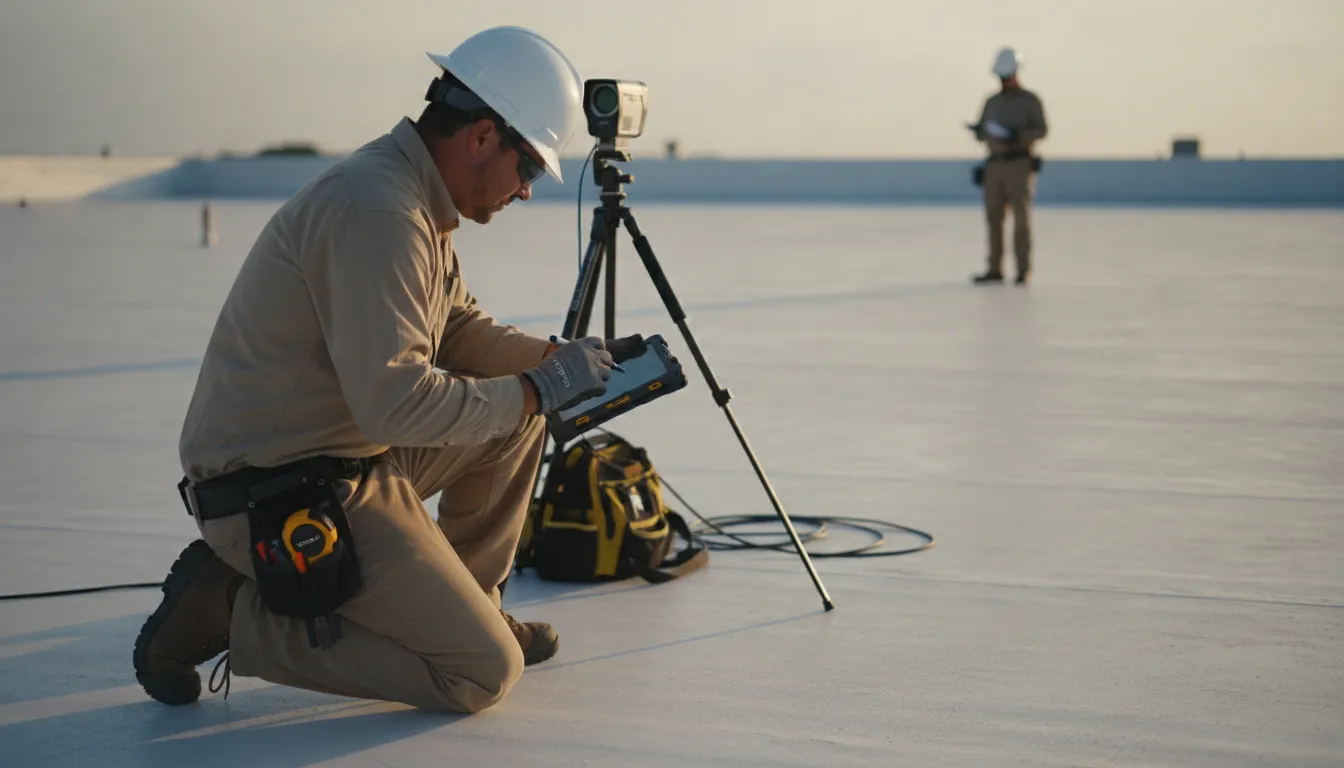
Elevation Roofing serves commercial properties in Houston, Austin, and surrounding Central Texas communities. Its documented service portfolio includes roof inspection, maintenance, repair, replacement, and restoration across multiple commercial roof systems. When damage may involve a storm, the team can also help property owners understand the insurance-claim process.
If the property record is incomplete or the roof's condition is unclear, begin with a professional inspection. A commercial roof inspection can give the maintenance plan a reliable starting point.
When Should a Maintenance Plan Lead to Repair or Replacement?
A maintenance plan should make escalation clearer, not force a property owner into a repair or replacement before the condition is understood. Move from routine care to a professional repair evaluation when the record shows active leaks, recurring water entry. Damaged membrane areas, failed seams, deteriorated flashing, blocked drainage, or defects that are growing between visits.
| What the record shows. | Reasonable next discussion. |
|---|---|
| Debris, blocked drainage, or minor sealant concerns. | Routine maintenance or a focused correction, followed by documentation. |
| Punctures, seam failures, flashing damage, or recurring leaks. | Prompt commercial roof repair evaluation and a review of related areas. |
| Widespread deterioration, repeated repairs, or a system nearing the end of its useful service. | Compare repair, restoration, and replacement options for the property. |
| Storm-related damage or suspected moisture in insulation. | Professional condition assessment and, when applicable, insurance documentation. |
Inspection checklists commonly look for membrane damage, blistering, splits, loose laps, rust, open flashing laps, popped fasteners, parapet deterioration, wet or soft insulation, clogged gutters, and drainage problems. These observations do not determine the final scope by themselves. Roof type, extent, location, prior work, safety, and the building's use all matter.
Be cautious with simple rules presented as universal answers. A percentage threshold or a generic lifespan estimate cannot replace a property-specific evaluation. If repairs are becoming repetitive or the roof has defects across multiple areas, compare the condition and expected work with a qualified contractor. Elevation's commercial roof replacement planning guide can help frame that discussion, while its commercial roof repair service is a relevant next step when the issue appears localized.
Frequently Asked Questions About Commercial Roof Maintenance Plans
What are the recommended maintenance checklists for commercial buildings?
A checklist should cover the roof surface, drainage, gutters, scuppers, downspouts, flashings, penetrations, parapets, vents, sealants, visible moisture, access, debris, and documentation. The exact items should match the roof system and building. Keep location notes and photos with the record so open work can be prioritized.
How much does a yearly roof maintenance inspection cost for a commercial roof?
There is no responsible universal price. Cost depends on the property's size, roof system, access, condition, number of roof areas, and work included. Ask for a property-specific scope rather than relying on a generic estimate. Elevation Roofing can start the conversation with a free roof inspection request, but the inspection request is not a published price for a commercial maintenance plan.
What is the typical lifespan of a commercial roof?
Commercial roof service life varies by system, installation quality, climate, drainage, maintenance, repairs, and building conditions. A maintenance plan can document how the roof is performing, but it cannot guarantee a fixed lifespan. Review the roof's records and condition with a qualified professional when planning major work.
What is the 25% rule for roofing?
The phrase can refer to a rule of thumb used in some roofing discussions, but it should not be treated as a universal replacement decision. The correct next step depends on the roof system, the extent and location of damage, repair history, applicable requirements, and a professional evaluation. Ask for the basis of any threshold before using it in a capital decision.
Protect Your Commercial Roof With a Practical Maintenance Plan
A commercial roof maintenance plan gives property owners and managers a repeatable way to inspect, document, maintain, and prioritize work. The strongest plan is specific to the building, clear about next steps, and flexible enough to change after repairs or severe Texas weather.
Elevation Roofing & Restoration serves commercial property owners in Houston, Austin, and surrounding Central Texas communities. Its team can help evaluate the roof's condition and identify whether the next step is maintenance, repair, restoration, or replacement.
Schedule a free roof inspection with Elevation Roofing & Restoration at (832) 271-1726.