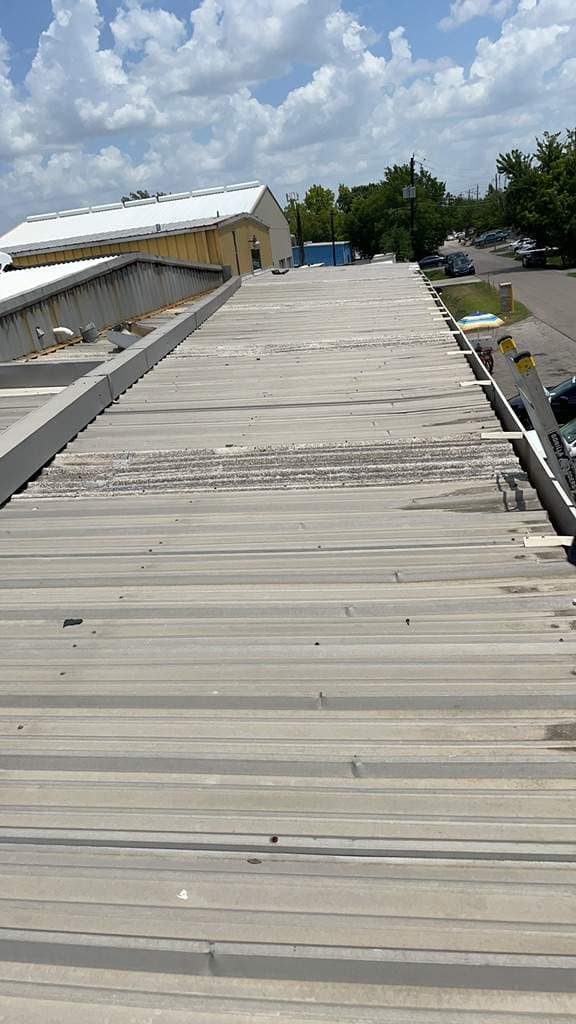
A missing shingle looks like a small thing, a single tab gone from a roof that holds thousands. But that one bare patch is an open invitation for wind-driven rain, and in Texas, the rain always comes. Between Gulf Coast tropical systems, the hail and straight-line winds that hammer the I-35 corridor through Austin, and the daily UV that bakes adhesive loose, our roofs lose shingles more often than homeowners realize. The trick is catching the gap before water finds it.
This guide is built for homeowners across Greater Houston, the Austin metro, and the 100-plus Texas communities we serve. You will learn exactly how to spot missing shingles from the ground, what the surrounding clues are telling you, why Texas weather makes this a recurring problem, and how to respond without ever climbing a ladder. Most of these checks take ten minutes and can save you thousands in roof repair down the line.
Why Texas roofs lose shingles in the first place
Asphalt shingles seal to the course below them with a strip of heat-activated adhesive. That seal is what holds your roof together against the wind. In Texas, three forces work constantly to break it:
- Wind. Even an ordinary thunderstorm gust can lift a shingle edge, crack the adhesive bond, and lay it back down. The shingle looks fine, but it is no longer sealed. The next storm peels it off entirely.
- Heat and UV. A dark shingle on a Houston rooftop can reach 150 to 170 degrees in July. That heat dries out the adhesive and makes the sealant brittle, so it lets go far sooner than it should.
- Storm impact. Hail and flying debris crack and dislodge shingles outright, and hurricanes and tropical storms strip whole sections in a single afternoon.
Because the failure usually starts with an unsealed edge you cannot see, missing shingles tend to arrive in clusters. Find one, and there are often several more loosening nearby.
The ground-level signs of a missing shingle
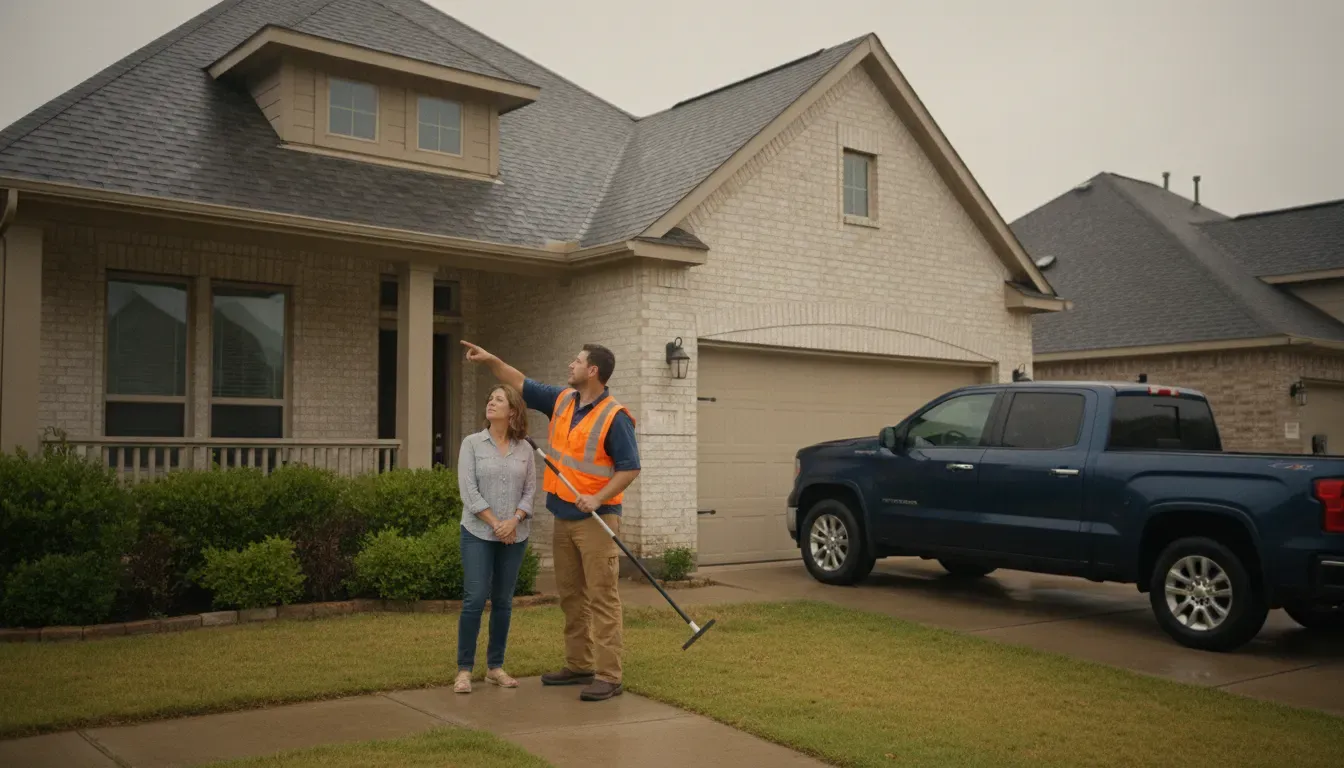
You do not need to get on the roof to find trouble. In fact, you should not. Here is what to look for safely from your yard, ideally the morning after a storm.
1. Shingle fragments in the yard
The clearest sign of all. Walk your perimeter and check the flower beds, the driveway, and the base of downspouts. Whole tabs or jagged asphalt fragments on the ground mean the wind just took something off your roof. Save a piece; it helps your roofer match the existing system.
2. Bare or off-color patches on the roof
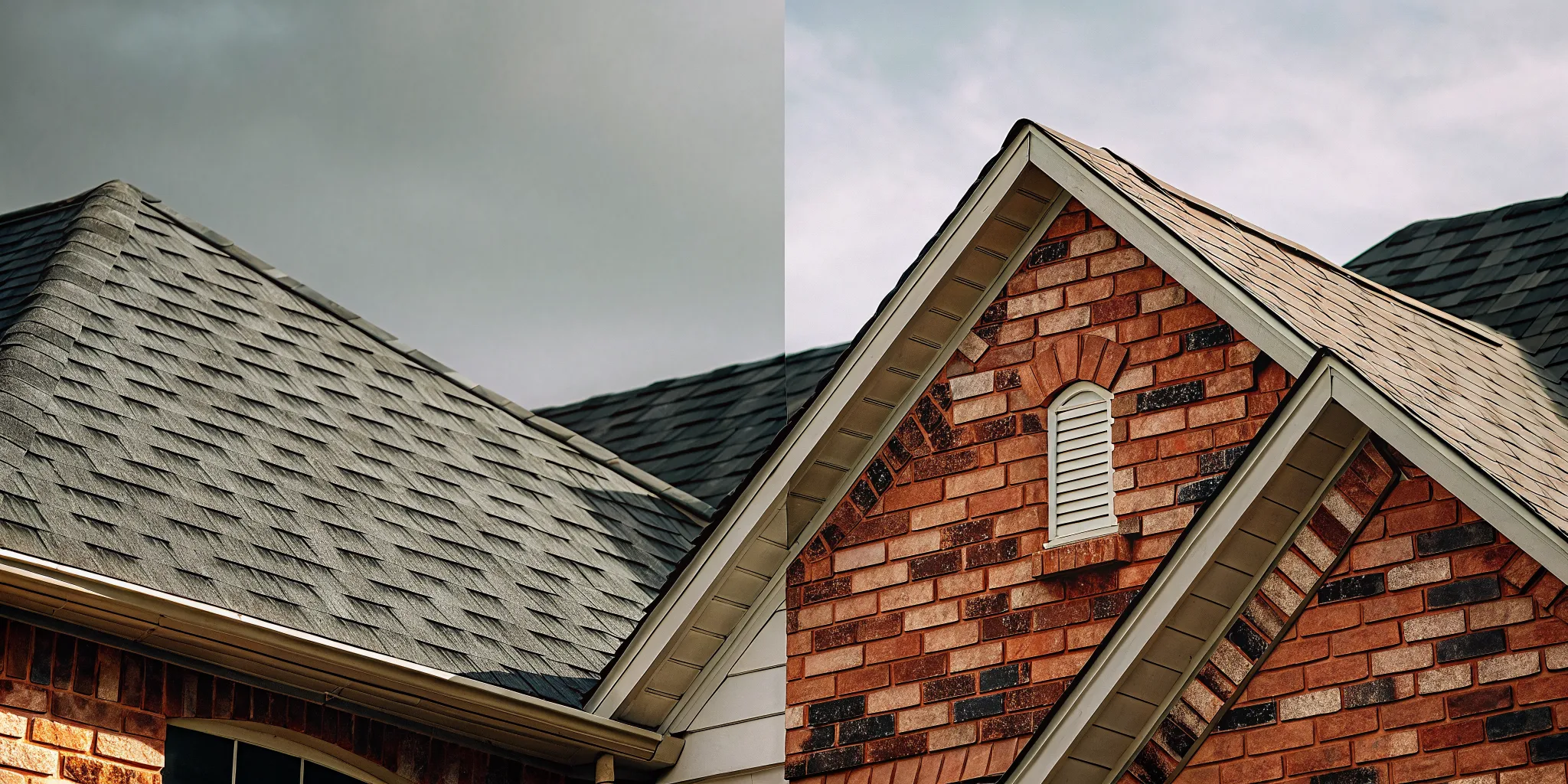
Stand back across the street and scan each slope. A missing shingle leaves a darker rectangle where the underlying mat or felt is exposed, often a slightly different color and texture than the shingles around it. South- and west-facing slopes take the worst UV, so check those first.
3. Shingles that look crooked or lifted
Look for tabs that sit slightly out of line, curl up at a corner, or cast a small shadow where they should lie flat. These are not gone yet, but the seal is broken and they are next. A lifted shingle is a missing shingle in waiting.
4. Granules piling up in gutters and splash zones
Run your hand along the bottom of a downspout or check the splash blocks. A burst of coarse, sand-like granules after a storm means shingles are shedding their protective layer and getting brittle, the exact condition that precedes wind loss. Clear gutters also let you see this debris instead of burying it under leaves.
5. Interior water clues
Missing shingles announce themselves indoors before you ever find the gap. Watch for fresh dark spots or rings on ceilings, peeling paint, a musty smell in closets or the attic, or daylight visible through the attic boards. If water is dripping during a rain, the breach is already well established.
What a missing shingle actually puts at risk
It is tempting to ignore one missing tab on a big roof. Here is why that is a costly bet in our climate. The moment a shingle is gone, the underlayment and decking below are exposed to wind-driven rain. Houston's humidity means that water does not dry out; it sits against the wood, rotting the decking and feeding mold. Because the leak often travels along a rafter before it stains a ceiling, the damage is usually far wider than the original gap by the time you notice it inside.
There is also a domino effect. Each missing shingle exposes the sealed edge of its neighbor to the wind, so a single gap tends to grow into a damaged section. Catching it at one shingle is a quick fix. Catching it at twenty is a conversation about roof replacement.
What to do the moment you spot one
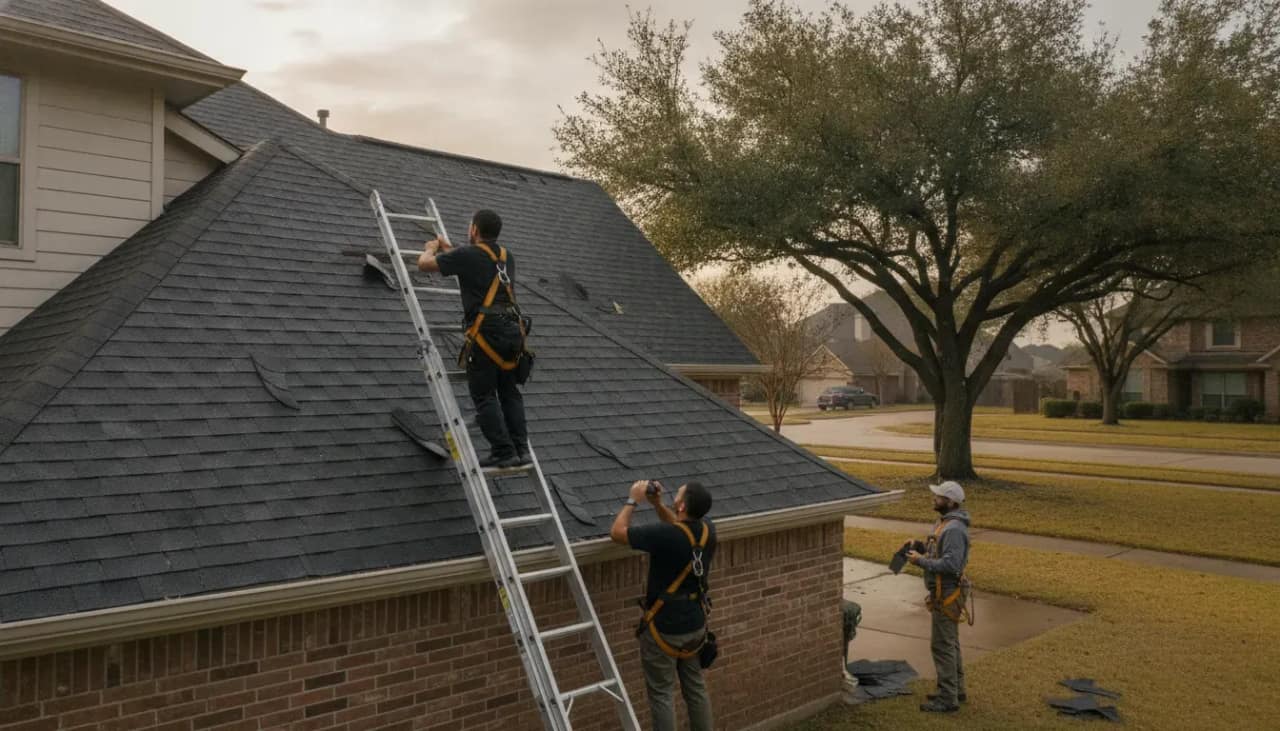
Resist the urge to climb up and nail it back yourself. Roof heights are genuinely dangerous, a single mismatched repair can void a manufacturer warranty, and from a ladder you will miss the lifted, unsealed shingles that are the real story. Instead:
- Photograph everything from the ground, including the fragments in your yard, and note the date. If a storm caused it, this documentation is the backbone of an insurance claim.
- Cover interior leaks, not the roof. Move belongings, place a bucket, and let a professional handle the exterior.
- Book a professional inspection. A trained roofer checks the whole slope for broken seals, tests flashing and pipe boots, and tells you whether you are looking at a single repair or a developing pattern.
If a hailstorm or named tropical system rolled through recently, treat missing shingles as a storm-damage event. Our storm repair team works directly with your homeowners insurance to document the damage and guide the claim, so you are not navigating the paperwork alone.
Preventing the next missing shingle
You cannot stop Texas weather, but you can make your roof far harder to peel. The biggest factors are a quality installation with properly fastened, impact-rated shingles and a sealant designed for high heat, which is exactly why we install GAF lifetime systems engineered for climates like ours. Beyond the system itself:
- Schedule a professional roof inspection twice a year, plus after any hail or tropical storm.
- Keep gutters clear so water cannot back up under the roof edge and lift shingles from below.
- Replace cracked pipe boots and lifted flashing promptly through routine maintenance, before the wind exploits them.
Catch the gap before the storm does
A missing shingle is the cheapest roofing problem you will ever face, if you catch it while it is still just one. For more than 9 years, Elevation Roofing & Restoration has helped homeowners across the Houston and Austin metros stay a step ahead of wind and storm damage. As a GAF Preferred Contractor with a 5-star Google rating and a 100% satisfaction guarantee, we will tell you honestly whether you need a single shingle replaced or a closer look. If you have spotted any of the signs above, or a storm just passed through, book a free roof inspection, a $399 value, and find out exactly where your roof stands. Call (832) 271-1726 to get started.