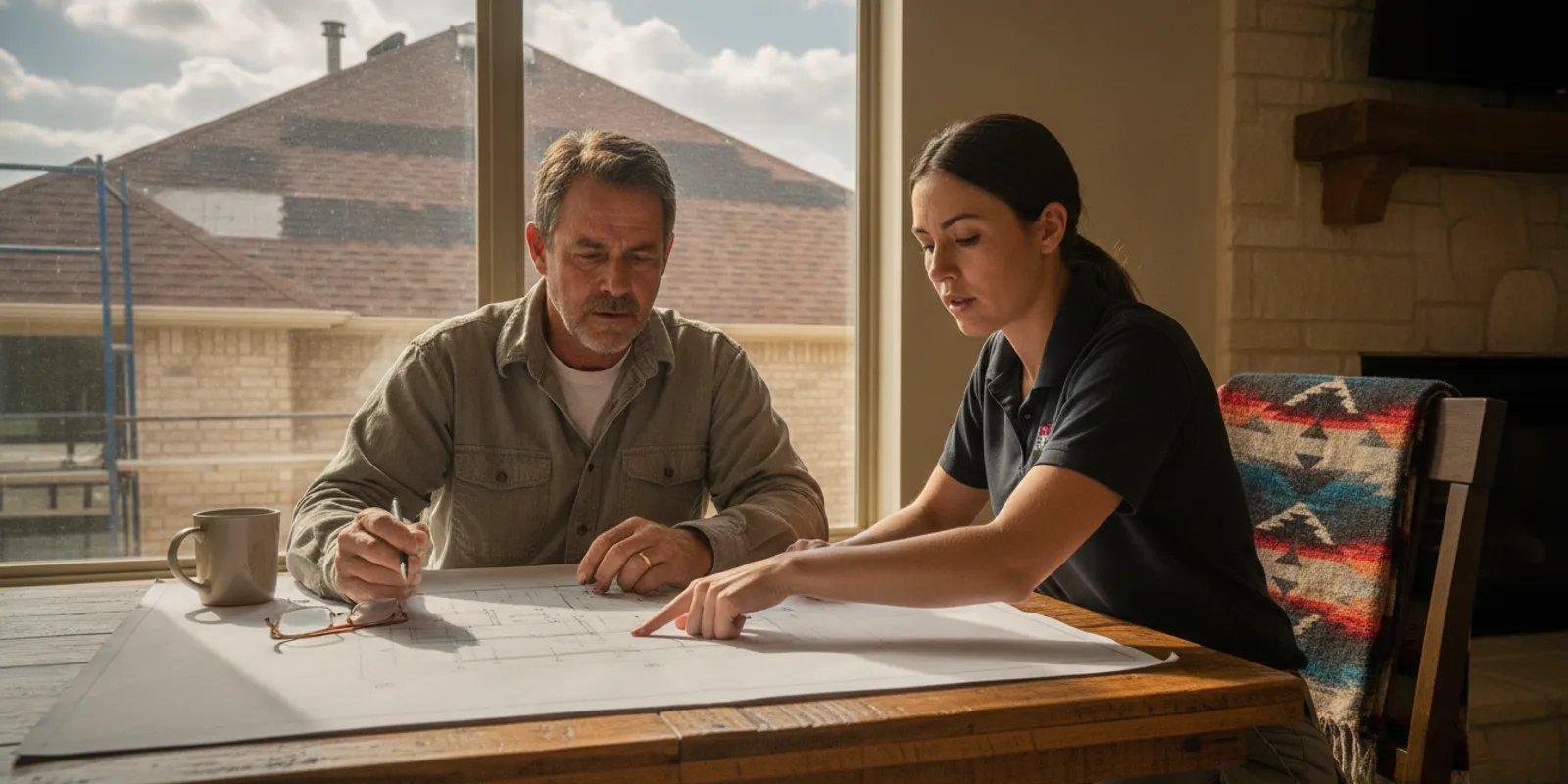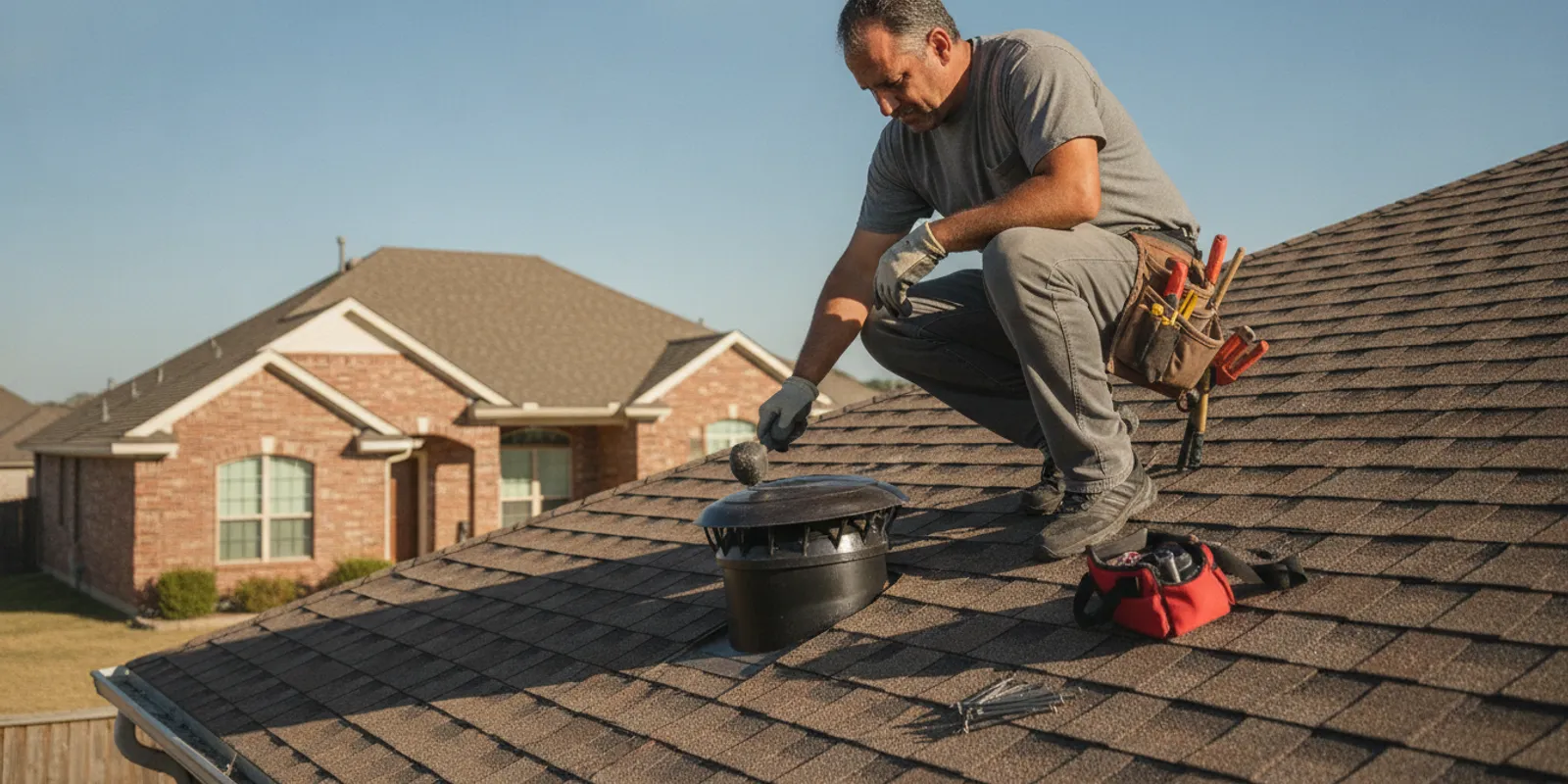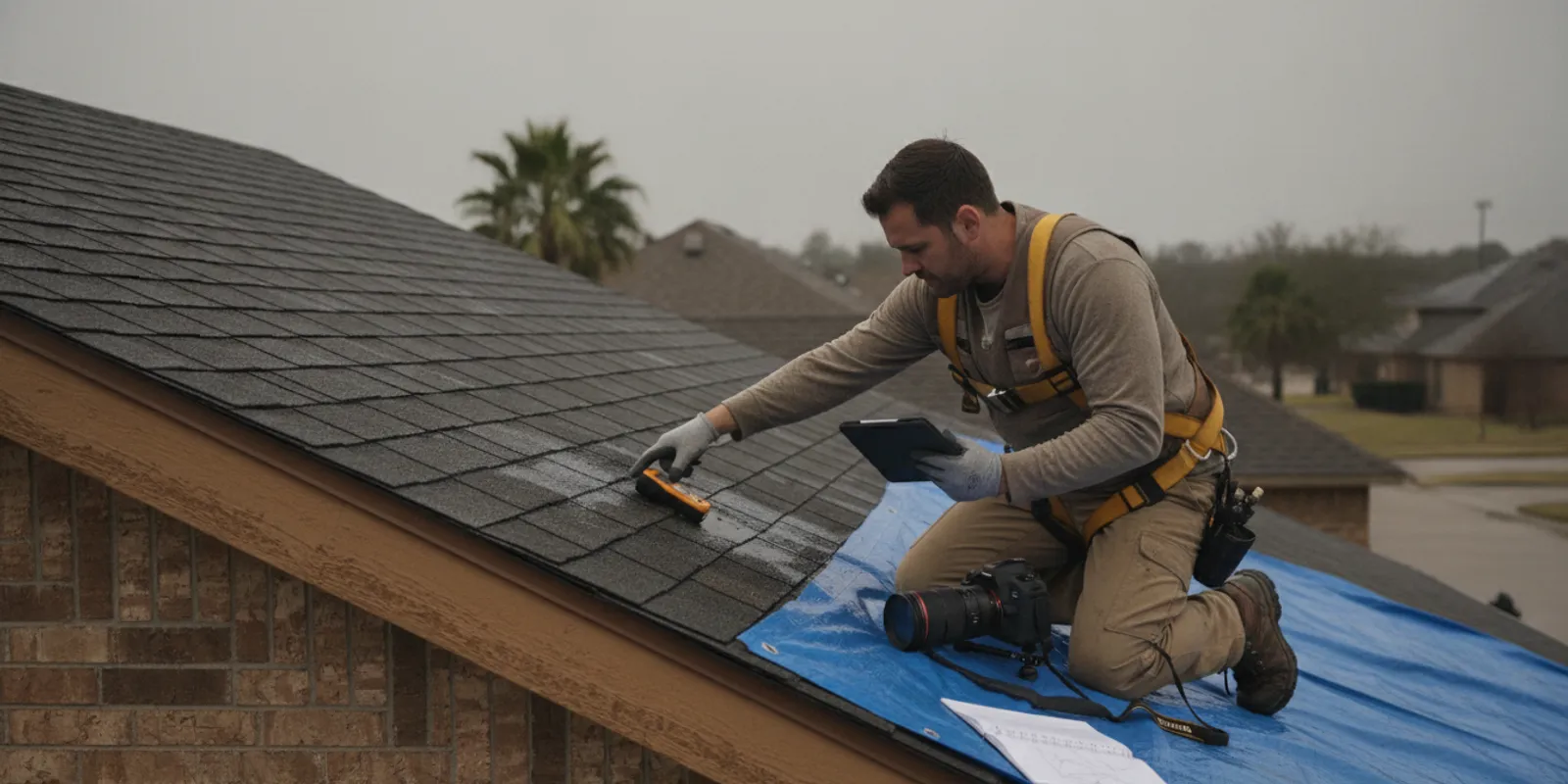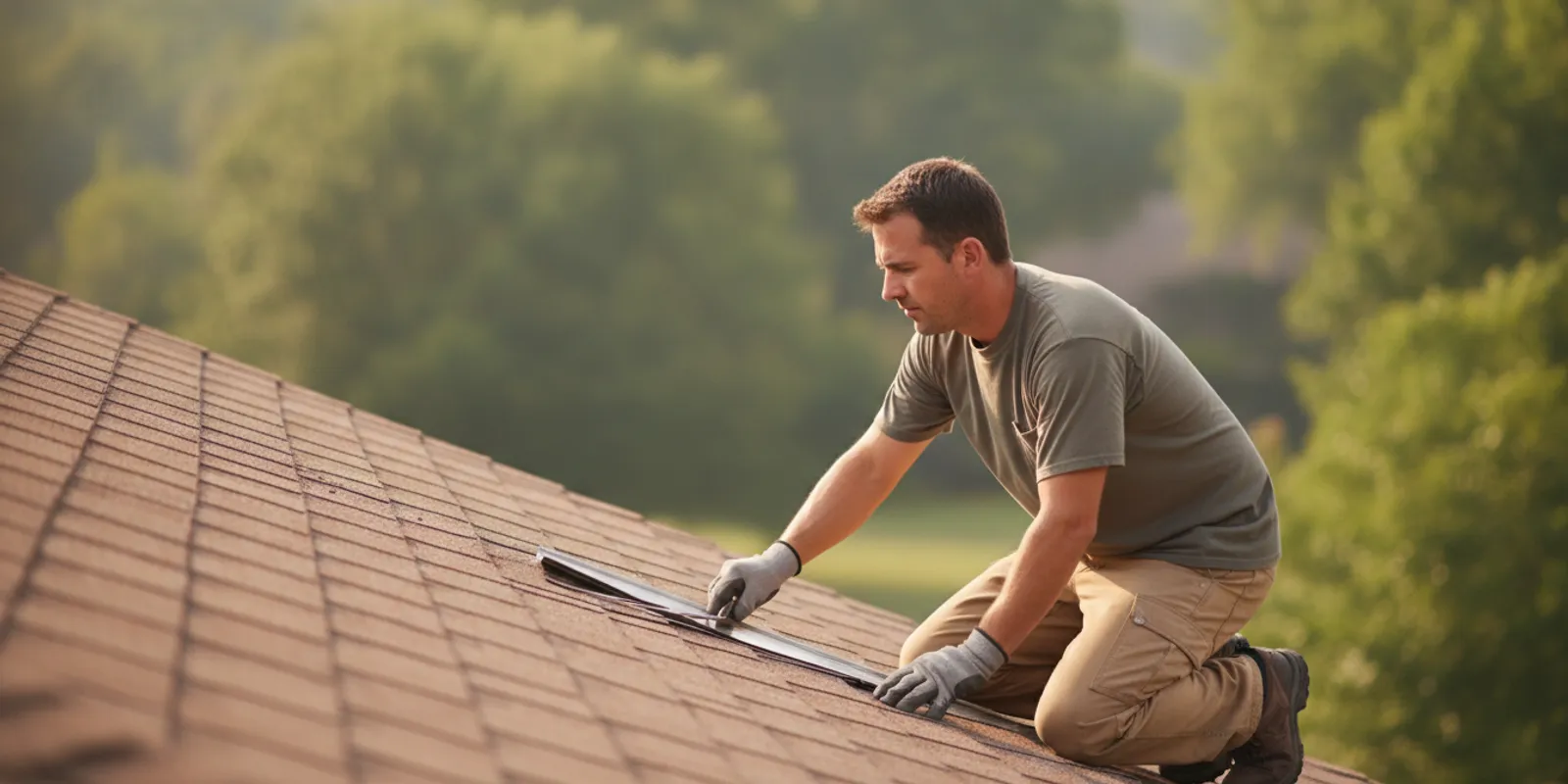
For Georgetown property owners arranging roof repair in Texas, start with the symptoms you have seen, then look at the roof condition and talk through the options. Guessing at the cause from the ground is not enough. A ceiling stain, missing shingles, or marks after a storm can point to a problem without showing the exact opening.
Call Elevation Roofing & Restoration at (832) 271-1726 for a free roof inspection and estimate.
What Does Roof Repair Georgetown TX Usually Involve?
A repair visit gathers information and agrees on a safe next step. The work depends on the roof type, where the damage sits, and whether the concern is active or has developed over time. Water can travel along decking or framing before it shows up indoors, so the stain is a clue, not a map.
For Georgetown homeowners, a practical visit starts with what you noticed. Where conditions allow, it includes a roof assessment, photos of visible concerns, and a discussion of possible repair work. Elevation Roofing & Restoration inspects, repairs, replaces, and restores residential and commercial roofs. The service area includes Houston, Austin, and Williamson County. The company is Owens Corning and GAF Certified and backs the work with a 100% satisfaction guarantee.
- Explain when the problem appeared and whether it changes during rain or wind.
- Point out ceiling marks, damp areas, or shingle changes from a safe location.
- Ask what was inspected and how that condition relates to the proposed work.
- Review the scope and next steps before you authorize repairs.
To learn about service coverage and the local team, see Georgetown roof repair. That page covers Georgetown neighborhoods and local hail exposure. An inspection still decides what your roof needs.
How Should You Prepare for a Roof Repair Visit?
A few notes make the assessment more useful. Do not climb onto the roof or move heavy belongings. Stay off damaged roof areas. If water is entering the home, use reasonable indoor precautions and contact the right professional if there is an immediate safety concern.
Make a short record of what you have seen
Write down the room or exterior area, the approximate date, and whether the issue appeared after rain, wind, or hail. Take photographs from a safe place. For indoor signs, a wide shot shows the room and a closer image shows the mark. Avoid wet electrical fixtures and standing water near electrical equipment.
Share roof and repair history
If you know the roof material, approximate dates, or earlier work, share that. Invoices, inspection notes, and photographs give useful context. If you do not have those details, say so rather than estimating. The roof can still be assessed without a complete record.
Plan access and questions
Tell the company about pets, gates, and areas that should stay clear. If you manage a commercial property, name access rules or operating hours that could affect the inspection. Prepare questions about the visible condition, what a proposed repair includes, and what to watch afterward.
Elevation Roofing offers a roof inspection service for property owners who want a professional assessment. Read more about the company's broader roofing services if you are comparing repair with other work.
Set up a useful conversation
Decide who should hear the findings and approve the next step. If you are not the owner, clarify who can authorize access or work. For a business or managed property, say which entrances, loading areas, tenant spaces, or operating areas need coordination.
Have a way to review photographs during the assessment or afterward. Ask whether the photos match the symptom you reported and whether they show the condition clearly. If more than one roof area is involved, ask that each location stay separate. You do not need technical vocabulary to ask what was seen, what remains uncertain, and which steps are optional.
Separate urgent protection from longer-term repair planning. If the visit finds an immediate concern, ask what short-term action is being considered, how it differs from a lasting repair, and whether a follow-up is needed. If there is no immediate issue, ask what changes to watch for and how to report them.
What Happens During the Roof Assessment?
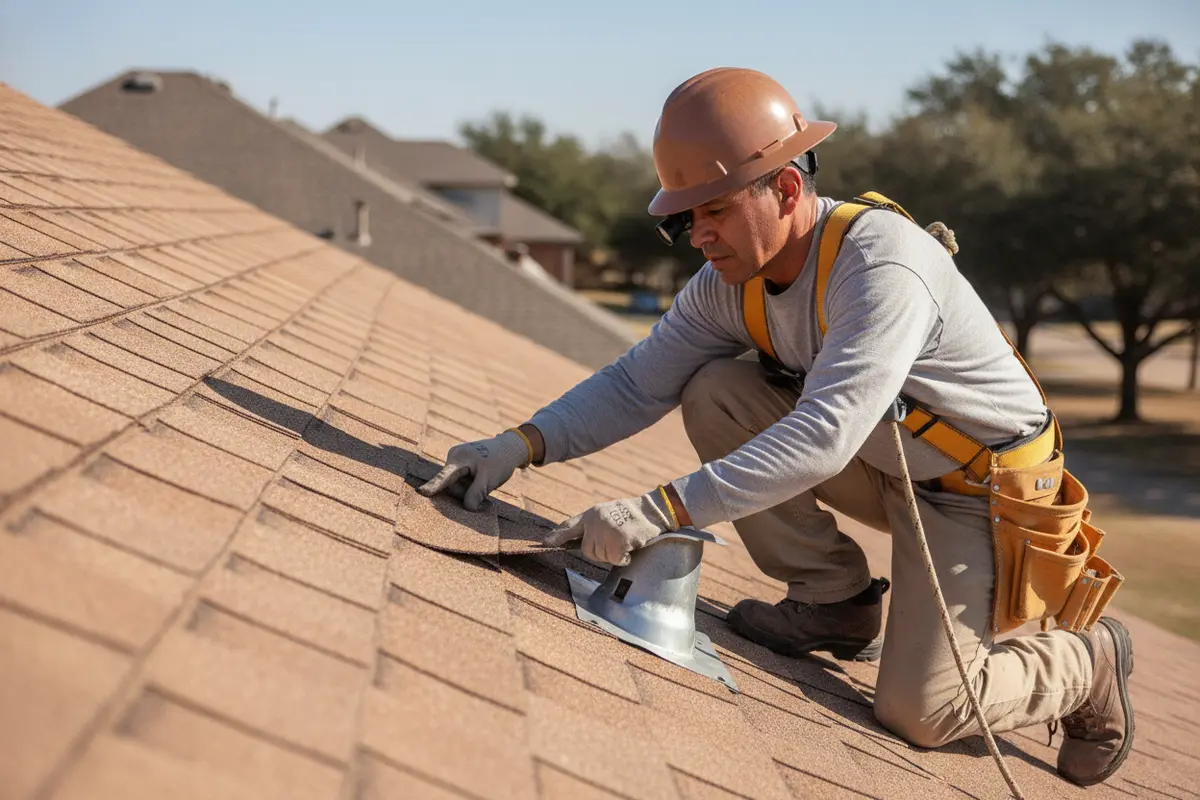
The professional should start by listening to what you already observed. They may then inspect relevant roof areas, depending on access, weather, and safety. That can include roofing material, transitions, flashing, roof edges, and other visible components tied to the concern. An interior check or photographs may connect an indoor symptom with an exterior condition.
Some conditions cannot be confirmed from the ground. Roof access is not always safe, and the method used can vary. Ask which areas could not be examined and what follow-up would clarify the concern. A useful assessment separates direct observations from possible causes that still need evaluation.
Photographs make it easier to understand the findings without climbing a ladder. If a repair is recommended, ask for a clear description of the affected area and the work being proposed. The goal is to understand the condition and scope, not to diagnose the roof yourself.
- Describe the symptom and when it started.
- Review the areas the inspector could safely see.
- Compare the written scope before you approve work.
Why can a repair assessment vary by roof?
Roof systems differ in material, slope, layout, age, and how sections meet. Shingle roofs, tile roofs, and low-slope commercial systems do not use the same materials or repair methods. Tile is common in Cimarron Hills and Berry Creek, and metal shows up in newer hilltop communities. Asphalt shingles are common across newer subdivisions and older homes near the downtown square. A transition, penetration, or edge may need a different review than an open field of roofing. A recommendation should name the location and describe the issue found there.
Weather and access can limit what one visit covers. A professional may postpone a close inspection or explain that some areas could not be reached safely. Ask what the assessment covers that day and whether any follow-up is needed. A clear limit on what was examined is more useful than assuming the whole roof was confirmed.
- Ask which roof sections were observed and which were not accessible.
- Confirm that the photos and notes match the area you reported.
- Find out whether the proposal covers one repair location or several areas.
- Request an explanation of any recommended additional assessment.
What if there is active leaking?
Tell the roofing company where water is entering and whether it is still coming in. Protect belongings if you can do so safely. Avoid areas where ceilings are bulging, materials are falling, or electrical hazards may be present. A temporary measure may be discussed, but do not treat it as a permanent repair. Ask what immediate precautions are reasonable and what lasting work may still be needed.
For damage that appears related to a storm, Elevation Roofing provides storm repair services. The team can also help with insurance claims for storm damage. Keep your own records and talk with your insurer about policy requirements. The Texas Department of Insurance publishes consumer insurance information. Review current guidance and your policy for the details that apply to you.
How Do You Compare Repair Options and Next Steps?
After the assessment, ask for a plain-language explanation of the findings and the proposed work. Compare the identified condition and the scope, not a short label or a single number. Ask whether the proposed repair covers only the visible damage or also related components that were affected.
| Option or step | When it may fit | What to clarify |
|---|---|---|
| Targeted repair | A specific, localized condition can be addressed with repair work. | Which area and materials are included, and what work is excluded? |
| Further assessment | The cause or extent is not clear from the first observations. | What additional access, documentation, or evaluation is recommended? |
| Replacement discussion | Observed roof conditions lead the professional to discuss broader work. | Why is repair not the only option, and what supports that recommendation? |
| Insurance follow-up | You believe damage may relate to a covered event. | What records should you keep, and which questions belong with your insurer? |
This table is a discussion guide, not a diagnosis or a promise that one option fits a particular roof. Request the recommended scope in writing and make sure you understand the materials and affected areas. If broader work is proposed, ask what condition makes that scope appropriate and whether a narrower repair is still available.
Schedule a free roof inspection before you approve repair work.
If you are also weighing the larger roof system, read the guides to roof replacement and roof maintenance. They explain other service paths. A repair assessment should stay specific to the condition that was observed.

What Should You Ask About Roof Repair Georgetown TX Before Approving Work?
Before work begins, confirm the repair scope, access arrangements, and how the company will communicate if more conditions are found. Keep a copy of the inspection notes, photographs, estimate, and any written authorization. These questions help you compare proposals:
- What specific condition did you observe, and where is it located?
- What repair work is included, and what is not included?
- Will the repair involve matching or replacing particular roofing materials?
- What should I do if the same symptom returns or another area changes?
- What documentation should I retain for my records or insurer?
For storm-related concerns, separate the contractor's observations from the coverage decision. A roofing professional can document visible roof conditions and discuss repair work. Your policy and your insurer determine coverage. The Texas Department of Insurance page above is a starting point for general consumer information. Your insurer can explain the terms of your policy.
Check the company's customer reviews. Browse the roofing project gallery as part of your evaluation. You can also review answers to common roofing questions before you call. These resources help, but they do not replace a clear written description of the proposed work.
What should you confirm after a repair?
When the work is complete, ask what was addressed and whether any concerns remain outside the agreed scope. Keep the final paperwork with your inspection notes and photographs. If the original symptom returns, record when it happened and contact the roofing company. Do not assume a recurring mark has the same cause as the first one without a review.
If you coordinate contractors or tenants, share the completion notes with the person who keeps building records. At home, keep the paperwork where you can find it before a later inspection or insurance conversation. Simple records help you compare the roof over time without relying on memory.
Get Georgetown roof repair help with a free inspection.
Frequently Asked Questions
Should I wait for a leak to get worse before calling?
No. If you notice a leak, missing roofing material, or a change after a storm, arrange an assessment rather than waiting for it to spread. Stay off unsafe roof areas and share what you observed with the roofing professional.
Can I tell from a ceiling stain where the roof is damaged?
A stain is a helpful sign, but it does not always show the exact roof opening. Water may travel before it becomes visible indoors, so a roof assessment is needed to evaluate the likely source.
Does every roof repair visit lead to a repair?
No. The assessment may identify a repair, suggest further evaluation, or lead to a discussion of other options. Ask what was observed and why the recommended next step fits that condition.
What should I do if I think storm damage may involve insurance?
Record what you observe from a safe location, keep photographs and documents, and contact your insurer about policy requirements. Elevation Roofing can assist with storm-damage insurance claims, but coverage decisions follow the applicable policy.
Roof repair begins with a clear understanding of the problem and a scope that matches the conditions found. Georgetown property owners can use an inspection, written details, and direct questions to decide the next step.