Intense Texas sun and heavy rain can turn a small TPO roof leak into a major business cost. You need to act fast to guard your building and keep your work running well.
Call Elevation Roofing & Restoration at (832) 271-1726 for a free roof inspection and estimate.
TPO roof repair vs replacement is a big choice for building owners who want to keep their building safe while keeping costs low. Choosing the right path depends on how old your roof is, how much damage there is, and if the insulation is dry. Topline Roof Pros says a TPO roof is usually a good choice for repair if the damage is in one spot. This is true if the system is less than fifteen years old. But if your roof is over twenty years old or has leaks in many places, a full replacement is often needed to stop more costs. The right choice keeps your business dry and saves energy during the hot Texas summer. A roof check can help you find the best way to fix your roof.
To make the best choice for your building, you must first know the materials that are now guarding your business. We will start by looking at What Is TPO Roofing and Why Is It Popular in Texas Commercial Buildings? The path begins with.
Tpo Roof Repair Vs Replacement: What Is TPO Roofing and Why Is It Popular in Texas Commercial Buildings?
Thermoplastic Polyolefin, or TPO, is a type of single-ply roofing membrane. It is a common choice for flat roofs on business buildings. This stuff is a blend of rubber and plastic. It gives you the best of both worlds. It can bend well to handle building moves but is strong enough to resist tears. Most TPO systems are white. This helps them stand out as a top choice for owners who want to save on power.
Texas sun reflection
Texas buildings face high heat and bright sun. TPO is very common in Houston and Austin because it reflects sun rays. Instead of soaking up heat like a dark roof, the white surface sends it back. This keeps the roof cool even on the hottest days. By cutting heat gain, TPO helps lower your bills each month. It also protects the building from rays that can make other roofs brittle.
The strength of TPO goes beyond just heat. This membrane stands up well to rust and chemicals. It stops mold and algae, which grow fast in damp Texas areas. This strength is why a TPO vs. EPDM comparison often shows TPO as the better choice for local weather. It stays tough against storms while helping your building run well. Here are some of the top perks of choosing TPO for your Texas property:
- High solar reflectance to cut cooling costs.
- Strong resistance to UV rays and heat.
- Durable surface that resists mold and algae.
- Flexible material that handles building moves.
Long-term reliability
When you buy a business roof, you want it to last. A high-quality TPO roof can last between 20 and 30 years. This long life comes from the way the sheets are joined. Most TPO roofs use large sheets rolled out over the roof deck. The seams where the sheets meet are then joined with heat. This process creates a bond that is often stronger than the sheet itself.
A roof that lasts three decades cuts the stress of building care. You can focus on your work while knowing your assets are safe. Good care is still needed to reach the 30-year mark. Regular checks find small issues before they turn into big leaks. Since TPO is so strong, it often needs fewer big repairs than older roofs. This makes it a smart long-term move for any Texas business owner.
Heat-weld repair benefits
One of the best things about TPO is how easy it is to fix. The stuff is a thermoplastic. This means it can be melted and cooled many times. If a pro finds a leak, they can use a heat-welder to apply a patch. The new patch fuses with the old membrane to form one solid piece. This is much better than using glue or tape that can fail over time.
This heat-welding process makes TPO a very good choice. Even an older roof can often be patched well if the surface is clean. This lets you extend the life of your roof without a full new one. Picking a roof that is easy to fix saves you money on work. It also gives you peace of mind during storm season when debris can cause fast damage.
What Are the Most Common TPO Roof Problems for Texas Properties?
TPO roofs are a top pick for business buildings in Houston and Austin. These white sheets reflect the sun to keep shops and offices cool. But the hot Texas sun and big storms can still cause harm. Most owners have to think about TPO roof repair vs replacement as the roof gets old. Learning about common flaws can help you fix leaks fast before they get worse.
Seam Leaks and Sheet Shrinkage
The most common TPO problem is a leak at the seams. These sheets are joined with hot air to make a tight seal. Over time, a bad setup or heat stress can make these seams pull apart. In the Texas heat, the roof sheets can also shrink. As the sheets get tight, they pull on the seams and edges. This often leads to small gaps that let rain into your building. If you do not fix these gaps, the wind can lift the sheets during a storm.
Holes from Storms and Foot Traffic
Texas storms often bring high winds and large hail that throw debris onto flat roofs. This can cause deep holes in the sheets. Large hail can crack the top layer and let water through. Good flat roof care tips say to check for these holes after any big storm. People walking on the roof to fix AC units can also cause tears in the TPO sheets. Even a small hole can let in enough water to soak the padding below.
Edge Flaws and Ponding Water
Edges and vents are weak spots where leaks often start. These areas use special seals called flashings to keep water out. If these seals fail, water can run down into your walls and cause rot. Another big fear for flat roofs is ponding water. If a roof does not drain well, water stays in low spots for days. This standing water can speed up roof wear and break down the TPO sheet. Check your drains often to make sure water can flow off the roof.
UV Damage and Heat Stress
Texas sun is very strong and can lead to UV wear. While TPO is made to resist UV rays, long years of sun will take a toll. The roof goes through heat cycles each day. It gets very hot and cools at night, causing the sheets to expand and contract. This constant moving can make the TPO brittle over many years. This is why many TPO roofs start to show more leaks after 15 to 20 years. Regular checks can find these brittle spots before they turn into major leaks.
When Can a TPO Roof Be Repaired Instead of Replaced?
Building owners in Texas often ask if they can fix their roof to save money. A TPO roof is a tough system that can last a long time with good care. In many cases, a few small fixes can stop a leak and add years to your roof life. Choosing expert roof work is the best first step when you see a leak.
When Is a TPO Roof a Good Choice for Repair?
Most TPO roofs are good choices for repair if the damage is in just one small spot. If your roof is less than 15 years old, a fix is often a smart and low-cost path. Look for signs like small holes or loose edges where the roof sheets meet. If the rest of the roof looks good and has no large cracks, a simple patch may be all you need.
But you must act fast when you find a leak. Water that gets under the roof can soak the insulation and lead to rot. If your roof foam stays dry, a fix will likely work well. An expert can check the spot to see if the roof is still strong. You should also think about the cost of many small fixes. If you have a few leaks each year, it might be time to stop fixing and start a new plan. But for a roof that is still young, a pro patch is a great way to save your cash.
What Are the Best Ways to Repair TPO Membrane?
Pros use heat-welding tools to fix most TPO problems. For small holes from hail or boots, a heat-weld patch is the top way to fix the roof. The roofer cleans the spot and welds a new piece of TPO over the hole. This creates a bond that is just as strong as the rest of the roof. It is much better than using glue or tape, which can peel off in the hot Texas sun.
Over time, the seams between roof sheets can lift or pull apart. An expert can use a hot-air tool to seal these edges back together. Fixing leaks near pipes and vents is also a key task. These spots often need new flashing to stop water from getting inside. If the damage is a bit bigger, a roofer might swap out a full section of the roof. This is a good choice when a storm hits one part of the building but leaves the rest safe.
How Much Does TPO Roof Repair Cost in Texas?
The price for TPO roof work in Texas depends on the size of the job. A minor patch for a small hole often costs between $300 and $600. If you have several loose seams, you might pay from $400 to $900. If you have leaks near vents or pipes, the cost to fix the flashing is about $500 to $1,000. A full section swap usually costs between $1,500 and $3,000. These costs are much lower than the price of a full new roof.
It is best to hire a team that knows professional roof repair the right way. Using the wrong tools or glue can ruin the roof and lead to bigger leaks. A team that is Owens Corning and GAF Certified will have the right heat-welding gear for the job. They can help you find out if a fix is enough or if it is time for a new roof.
What Are the Signs That a TPO Roof Needs Full Replacement?
Choosing between a TPO roof repair vs replacement is a big choice for any Texas building owner. While small patches can fix tiny holes, some signs show your roof is at the end of its life. Spotting these red flags early saves you from wasting money on short-term fixes. Our team at Elevation Roofing & Restoration helps you find the best path to keep your building safe.
Roof Age and Wear
The age of your roof is the first thing to check. Most TPO roofs last about 20 to 30 years with good care. But many roofs start to fail after 15 to 20 years in the hot Texas sun. If your roof is older than 15 years and needs many fixes, roof replacement services are often best. A new roof saves you from the stress of constant leaks and high costs.
Old membranes also get stiff over time. When the material gets hard, it can crack or pull away from the edges. This makes it very hard to weld new patches onto the old skin. If your roof is near the 20-year mark, you should get a pro to look at it. We can tell if a simple patch will hold or if you need a new roof.
Widespread Leaks and Wet Boards
Leaks in many spots are a major warning sign. One leak might just be a small hole or a loose seam. But leaks in many areas show the whole system is failing. This widespread damage often means the seams have lost their grip all over the roof. In these cases, fixing one spot just leads to a new leak in another place soon after.
Wet insulation is another big problem that needs a full tear-off. When water gets under the white skin, it soaks the boards below. This trapped wetness can lead to mold and rot in your building. It also stops your roof from keeping the heat out. If we find wet boards, we often suggest a full replacement. You can learn more about this on the Topline Roof Pros site.
High Energy Bills and Damage
A white TPO roof should help lower your power bills. The skin reflects sun rays to keep your shop cool during hot Texas days. If you see your power bills going up, your roof might be the cause. Dirt or damage on the skin can stop it from reflecting heat. Also, if the skin has a lot of sun damage, it cannot protect your building well.
Check for signs of full failure like many small holes or wide seam gaps. Texas storms bring big hail and high winds that hit flat roofs hard. If a storm leaves your roof with many holes, patching is not a good plan. Getting a new roof makes sure you have a tight seal for the next storm. Our repair vs replace guide shows how to check these costs.
A new roof for a business often costs between $4 and $8.50 for each square foot. This cost depends on the size and type of the roof system you choose. While the price is higher than a repair, it offers long-term peace of mind. Putting money into a new TPO system now can prevent costly water damage to your stock and tools in the future.
TPO Roof Repair vs. Replacement: Cost Comparison for Texas Businesses
Budgeting for roof care helps Texas property owners save money over time. While a new roof is a big cost, small repairs keep your bills low if you find leaks early. A typical TPO roof fix may cost only one-tenth of the price of a full new roof. This makes regular checks a smart move for any business.
What Are the Typical TPO Repair Costs?
Repair prices for a TPO roof depend on the damage and how much area it covers. Small problems like a tiny hole or a loose seam are quick to fix. If you ignore these small leaks, they can lead to wet insulation and more costly commercial roofing work later. Pros use heat-welding tools to fix most local TPO problems without a full tear-off.
In many cases, your insurance might cover storm damage. It is helpful to work with a team that has insurance claim help to ensure you get the right support. Quick action prevents water from reaching the roof deck and causing rot.
How Do Repair and Replacement Costs Compare?
Deciding between a fix and a new roof often comes down to the age of the system. Small patches are best for roofs under 15 years old. But when a roof is old, many repairs can cost more than one new roof. The table below shows common price ranges for TPO roof work in Texas.
| Service Type | Typical Cost | Life Boost | Best Choice For |
|---|---|---|---|
| Minor Patch | $300 - $600 | 1-3 Years | Small holes |
| Seam Repair | $400 - $900 | 2-5 Years | Loose edges |
| Flashing Fix | $500 - $1,000 | 3-7 Years | Leaks near pipes |
| Section Swap | $1,500 - $3,000+ | 5-10 Years | Local storm damage |
| Full New Roof | $4.00 - $8.50 / sq ft | 20-30 Years | Old or failing roofs |
When Is a New Roof More Cost-Effective?
A new roof is a better deal when your repair bills start to add up. If more than one-fourth of your roof needs work, a new white roof is likely the best choice. New systems often come with long-term pacts that protect your money for years.
Texas weather can be hard on buildings. High heat and heavy rain test your roof every year. Data on roof repair costs shows that a new roof can save you from the high price of water damage cleanup inside your shop.
How Does Texas Climate Affect TPO Roof Maintenance and Energy Savings?
The extreme weather in Texas plays a big role in how long your commercial roof lasts. Between high heat and sudden storms, your roofing system stays under constant pressure. Knowing these factors helps you decide between TPO roof repair vs replacement as your building ages. Proper care lets you manage these risks while keeping your power bills low.
What are the energy benefits of white TPO?
The white surface of a TPO membrane is a great tool for energy savings for commercial buildings. Unlike dark materials that soak up heat, white TPO reflects solar radiation back into the sky. This cooling effect reduces the heat island impact and lowers the load on your air conditioning units. By reflecting sunlight, the membrane keeps the building interior cooler during hot months.
Texas businesses often see lower power costs after they fix or set up a white TPO system. According to Elevation Roofing, these reflective properties are key for managing costs in hot climates. A clean and well-kept roof ensures the surface stays bright enough to deflect the sun well. Keeping the membrane clean is the best way to maintain these benefits over time.
How does Texas heat impact TPO maintenance?
While TPO is built to handle UV rays, long exposure to Texas sun can lead to membrane shrinkage. This thermal cycling happens as the roof heats up during the day and cools down at night. Over time, this movement stresses the seams and flashing. Regular checks are needed to find small cracks before they turn into major leaks. High heat can also dry out the material and make it less flexible as it gets older.
Severe weather like hail and high winds also creates unique maintenance needs. Fallen debris from seasonal storms is a major cause of punctures in Texas membranes. If you ignore these small holes, water can seep into the insulation and cause hidden damage. Owners should look for flat roof maintenance tips to find these issues early. Simple steps like removing debris can prevent water from ponding on the surface.
Why are semi-annual roof inspections important?
Professional flat roof maintenance should happen at least twice a year. We suggest scheduling these visits in the spring and fall to prepare for the most extreme seasons. These inspections let a crew check the strength of heat-welded seams and the flashing around vents. Finding a loose seam early often means a simple repair instead of a costly full replacement.
Regular care does more than just stop leaks; it helps your roof system last longer. By keeping the surface clean and the drains clear, you avoid the heavy weight of standing water. A proactive plan ensures your commercial roof stays a strong shield for your business assets. Consistent maintenance is the most effective way to protect your investment from the harsh Texas climate.
How Do You Decide Between TPO Roof Repair and Replacement?
Choosing between TPO roof repair vs replacement is a big choice for any Texas business owner. A small leak might only need a quick patch, but hidden damage can lead to a full roof failure. You must look at the age of your roof and how much damage it has before you spend money on a fix. Our team helps people in Houston and Austin make the best choice for their budgets.
Call Elevation Roofing & Restoration at (832) 271-1726 for a free roof inspection and estimate.
Start with an Expert Check
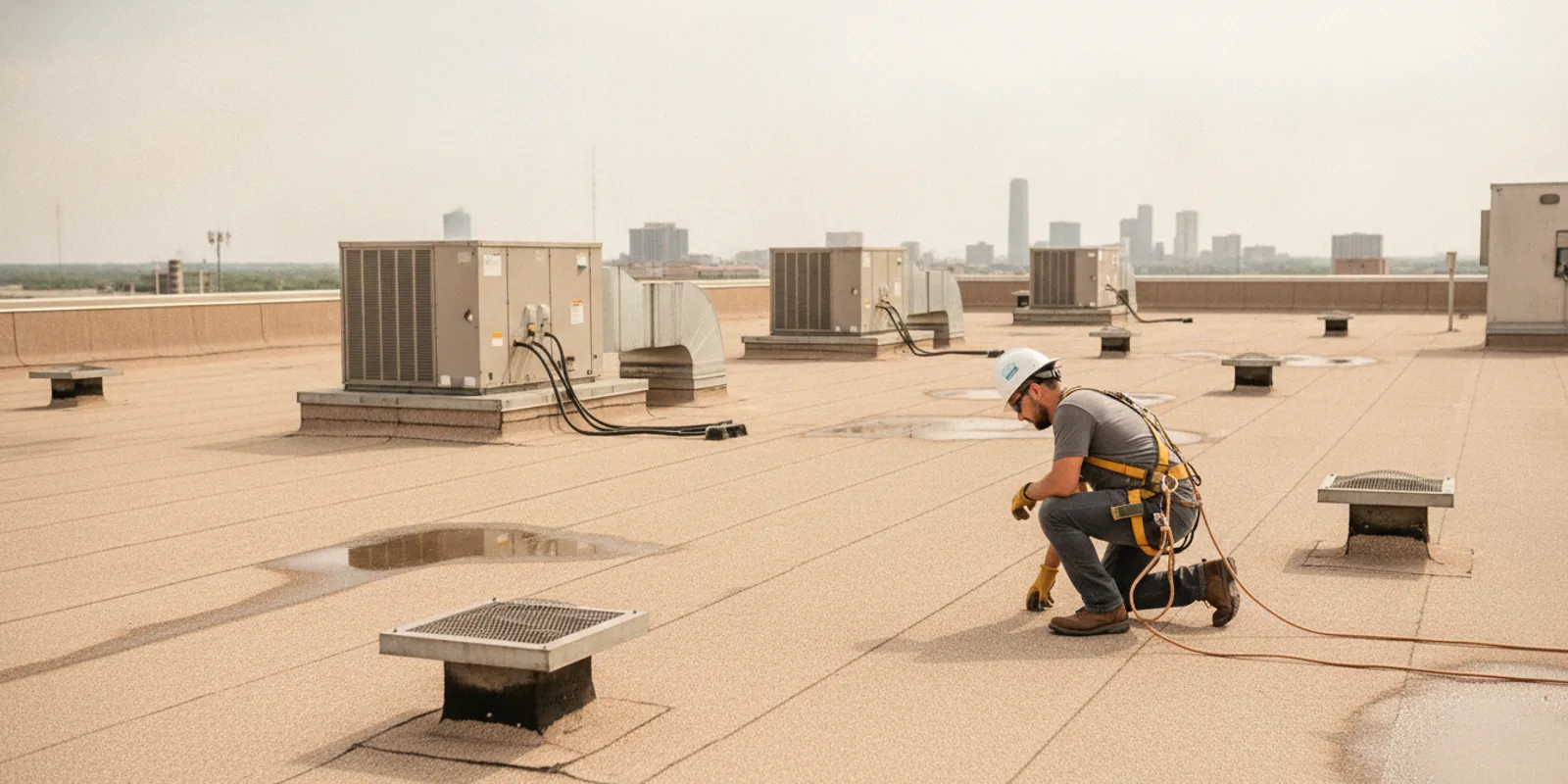
The first step in your plan is to get a pro to look at the roof. A roof expert can find issues that the naked eye might miss. We offer a free check for business buildings, which is a $399 value for our customers. This check includes looking at the membrane, the seams, and the areas where water might sit. Finding these weak spots early can save you from a huge bill later.
Check Roof Age and Damage Size
Most TPO roofs last about 15 to 20 years in the hot Texas sun. If your roof is near the end of its life, a small fix might only buy you a little more time. You should also check how much of the roof is bad. If more than one-fourth of the roof area has issues, a new roof is often the better long-term move. Small holes from hail or storm debris are usually easy to fix with heat-weld patches. We have the right tools to make these repairs last for years.
Test for Wet Insulation and Think of the Future
Hidden moisture is the biggest threat to your building. If water gets under the membrane, it can soak the insulation and cause rot. We use special tools like infrared scans to find these wet spots. If the insulation is dry, you can likely stick with repairs to save money. You should also think about your future goals for the site. If you plan to sell the building soon, a new roof can add a lot of value to the sale price.
- Get an expert check. Schedule a professional roof inspection to find every leak and weak spot.
- Look at the age. See if your TPO roof is older than 15 years, as old roofs fail more often.
- Find wet spots. Test the insulation below the membrane to make sure water is not trapped inside.
- Do the math. Compare the price of many small repairs to the cost of one full replacement.
- Think of the future. Choose a plan that fits your goals for the building and its value.
As an Owens Corning and GAF Certified roofer, we provide full commercial roofing services to keep your business safe. Using white TPO can also help you save on cooling costs by reflecting the sun. You can learn more about these savings in the Guidelines for Selecting Cool Roofs from the Department of Energy. Regular maintenance, such as cleaning drains and checking seams, can also help your roof last much longer. We serve Houston, Austin, and all nearby areas with high-quality work.
Frequently Asked Questions
How long does a commercial TPO roof repair usually take?
Most minor TPO roof repairs can be finished in a single day. An expert crew can patch small holes or fix leaky seams in just a few hours. Larger jobs that involve fixing roof flashing or replacing wet insulation might take two or three days to complete. According to ASRmo, the time depends on the weather and how much work is needed to make the roof watertight.
Can a roof coating help me avoid a TPO roof replacement?
Yes, a high-quality roof coating can often add five to ten years of life to a TPO roof. This is a great choice if the roof is still solid but is starting to show its age. As noted by ASRmo, these coatings protect the membrane from the strong Texas sun. This helps you save money by delaying a full roof replacement while keeping your building safe.
Does insurance pay for TPO roof repairs after a Texas storm?
Many business insurance plans cover TPO roof repairs if the damage comes from a sudden event like hail or high winds. Since Texas gets many severe storms, it is important to check your plan for storm damage coverage. According to Elevation Roofing, getting an expert inspection is the first step. A detailed report helps you file a claim and prove the damage was caused by a storm.
Is it safe to walk on a TPO roof after it has been repaired?
You can walk on a TPO roof once the heat-welded patches have cooled, but you should still be very careful. Heavy foot traffic is a common cause of new punctures and membrane wear. Colony Roofers explains that sharp tools or debris on boots can easily damage the roof surface. It is best to keep walking to a minimum for maintenance to keep the roof in top shape.
What happens if I wait too long to repair a TPO roof?
Delaying repairs on a TPO roof can lead to much bigger problems like wet insulation and mold. Small leaks from separated seams or punctures can allow water to seep into the building frame. As stated by Top Line Roof Pros, water trapped under the membrane will rot the roof deck and cause total failure. This makes a simple repair impossible and forces you to pay for a full roof replacement instead.
Are You Ready to Fix Your Texas Business TPO Roof Issues Today?
Ignoring small leaks on your business TPO roof now will lead to wet insulation, mold growth, and very high repair bills for your Texas shop. Fixing minor gaps and cracks this week stops major water damage that halts your work, ruins your gear, and hurts your profits during the storm. Starting your expert roof check today gives you the best chance to save your roof and avoid the high cost of a new roof.
Ready to book your service? Call (832) 271-1726 to schedule a free roof inspection and estimate with a local expert and protect your business property from the harsh Texas weather and rising repair costs now.