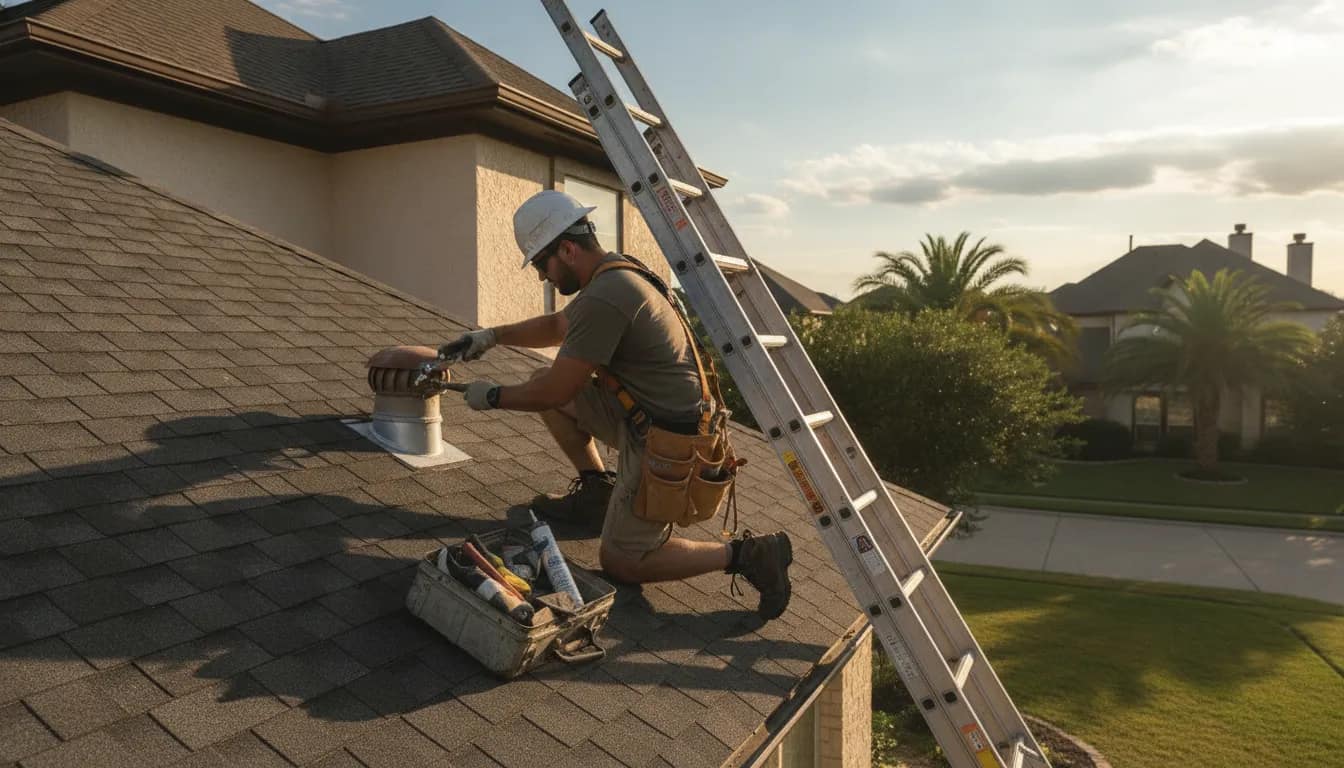
A dripping ceiling is never just a cosmetic problem. When a roof leaks, water can reach insulation, decking, framing, and even electrical components before you spot the stain. For Houston and Austin homeowners, storms and intense heat take a toll on roofing year after year. So the question is less about whether a leak can happen and more about what it will cost to fix.
The typical cost to fix a leaking roof ranges from roughly $500 to $1,500 for most residential repairs, with a national average around $800 to $1,000. Minor fixes can run as little as $150, while a leak that has damaged underlying roof sections can climb to $3,000 or more.
This guide breaks down the average cost to fix a leaking roof in Texas, the factors that move the price. How much common leak repairs run by type, and when a repair stops making sense and a replacement becomes the smarter investment.
What Is the Average Cost to Fix a Leaking Roof in Texas?
National estimates put the typical roof leak repair between $500 and $1,500, with an average around $800 to $1,000. Texas homeowners often face conditions that shape these figures, from hailstorms and high winds to extreme summer heat that dries out sealants and flashing. The exact cost to fix a leaking roof depends on the source of the leak. The roofing material, the age of the roof, and how far moisture has traveled.
Minor, moderate, and major repairs cover different price bands
Understanding where your situation lands can make an estimate easier to compare. The ranges below are general reference points for asphalt shingle roofs, not a quote for a specific property.
- Minor repairs ($150-$450): Sealing around a vent or pipe boot, replacing a few shingles, or fixing a small, contained leak.
- Moderate repairs ($500-$800): Moisture has damaged flashing or a larger section of roofing material and needs careful removal and replacement.
- Major repairs ($800-$1,500+): Multiple problem areas, significant water damage, or repairs on hard-to-reach or steep roof areas.
- Structural work ($2,000-$10,000+): Severe leaks requiring replacement of roof sections or repair of decking and framing.
When a leak is caught early, the project usually stays in the lower bands. Delaying inspection lets water spread to insulation, drywall, and framing, which turns a focused repair into a larger project. In Houston and Austin, catching a leak early also helps you file an insurance claim while the damage is fresh and well documented. For a fuller picture of how local variables change pricing, see the factors influencing roof repair costs.
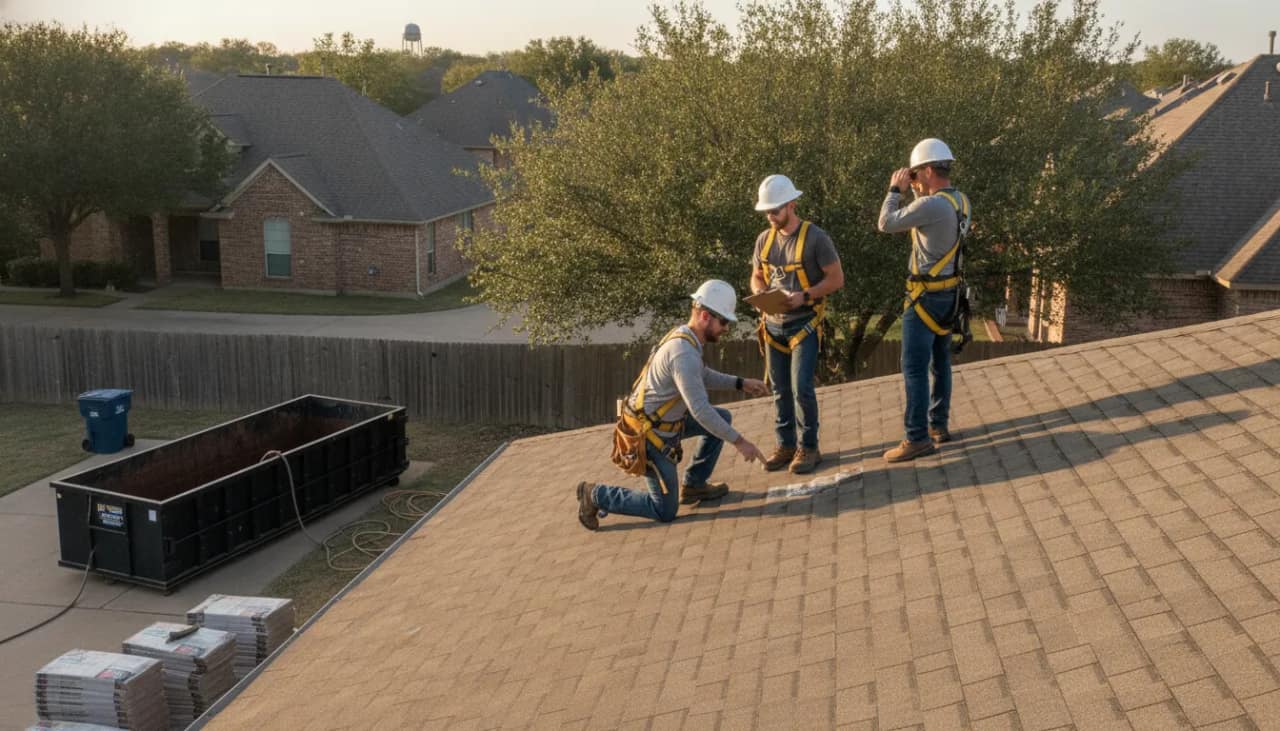
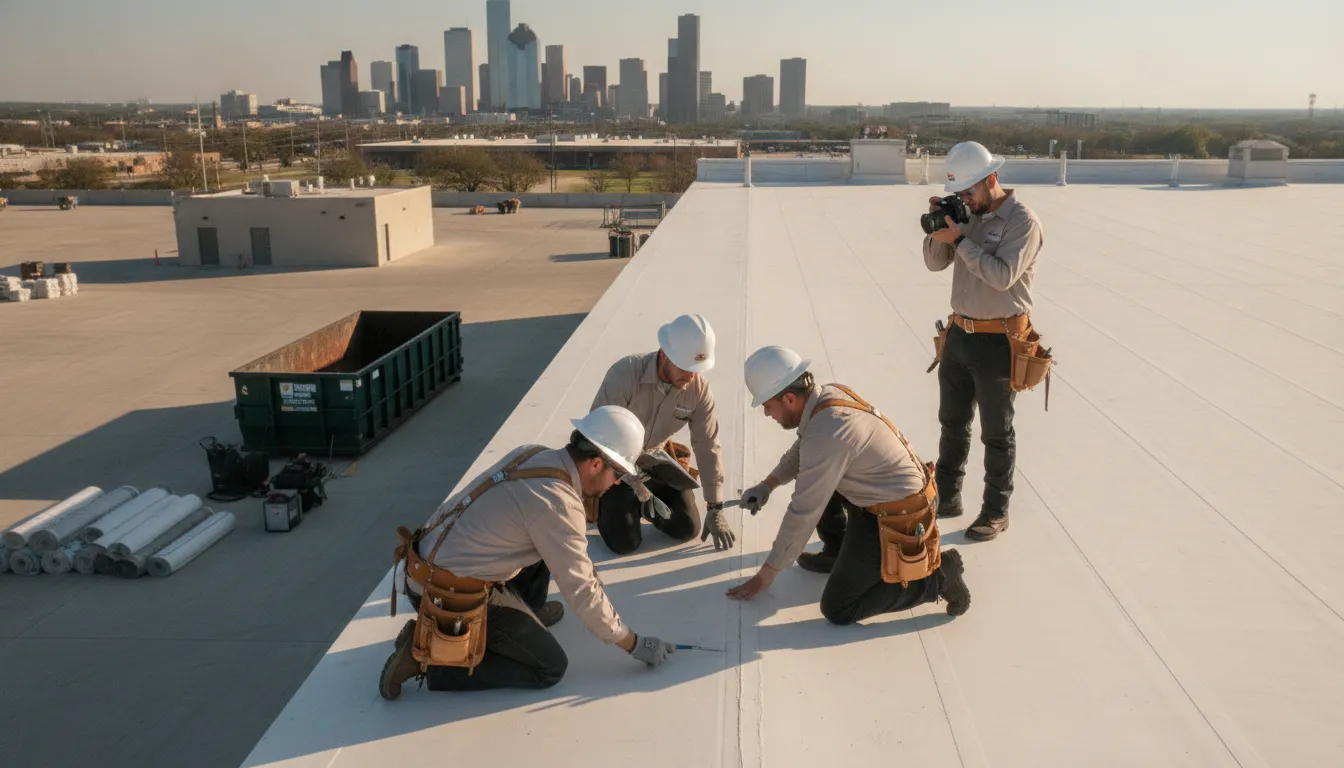
A free inspection is the reliable way to move past estimates and averages. An on-site roofer can confirm where the water is entering, whether the decking stayed dry, and whether a repair or replacement will hold up under Texas weather. Whether you are in Houston, Austin, or the surrounding areas, Elevation Roofing serves Houston and Austin roofing needs with a free inspection and estimate.
What Factors Influence the Cost to Fix a Leaking Roof?
The cost to fix a leaking roof depends on more than the visible drip. A contractor must identify the roofing material, trace the water to its entry point. Evaluate how safely the roof can be reached, and determine whether moisture has damaged the underlying materials. Two homes with similar-sized leaks can therefore receive very different estimates.
Roofing material affects labor and replacement costs
Common asphalt shingle repairs are often the least expensive, with a typical range of $300 to $1,000. Tile repairs may range from $500 to $2,000 or more, while metal roof repairs commonly run from $800 to $3,000 or more. Slate is one of the most expensive materials to repair, with reported costs from $1,000 to $5,000 or more. These ranges are general reference points, not a quote for a specific property. Material availability, matching requirements, roof design, and the extent of removal can all change the final price. For a local view of these variables, compare multiple estimates and read about factors influencing roof repair costs.
Leak location and roof access can increase labor
Water can travel beneath roofing materials, so the spot where it appears indoors may not be the point where it entered. Valleys, chimney areas, vents, and other flashing details can require more specialized labor and equipment because they are harder to reach and more complicated to seal. A leak on a straightforward roof plane may be simpler to isolate than one around a chimney or in a valley.
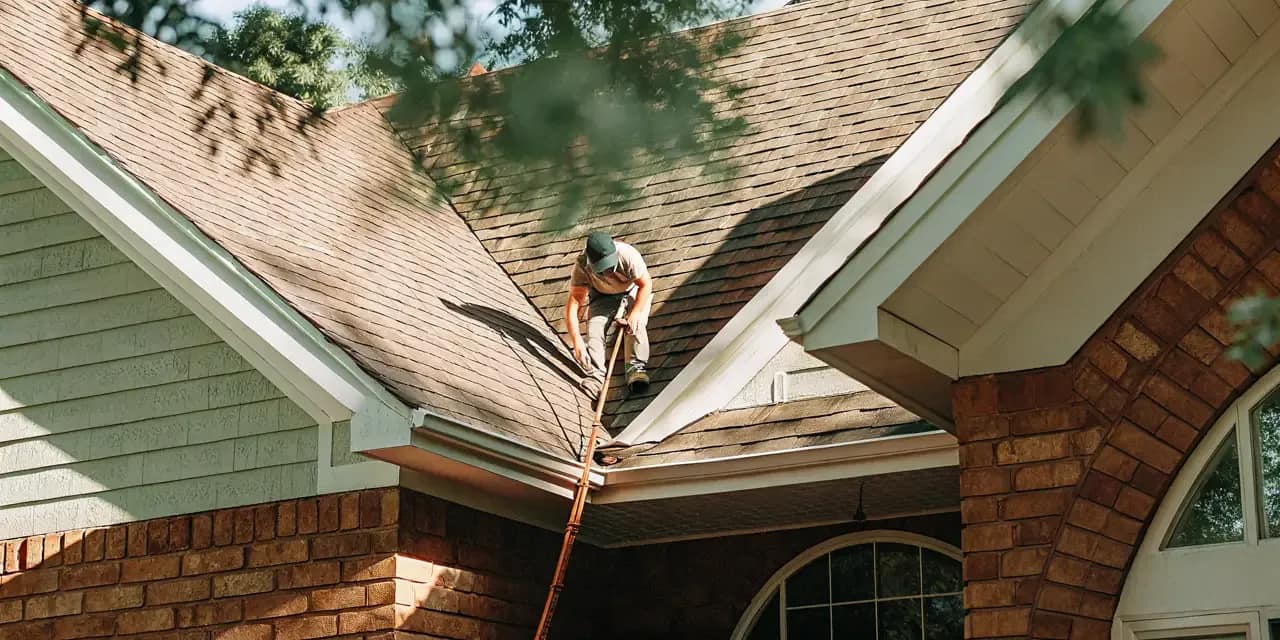
Roof height, pitch, and accessibility also matter. Steep or complex structures present fall hazards and may require additional safety equipment, staging, or time on site. Professional roofers are trained to access these areas more safely than most homeowners. The U.S. Department of Energy advises calling a professional when structural concerns or unsafe conditions are present. Read the federal roof repair safety guidance.
The scope of damage determines whether a repair is enough
A small, isolated failure may involve replacing a limited amount of roofing material. If water has reached the sheathing, insulation, framing, ceilings, or other interior areas, the work can become more extensive. Severe damage that requires replacing an entire roof section may cost $2,000 to $10,000 or more. An inspection helps separate the visible symptom from the actual scope of work, especially when a leak has returned more than once.
For a practical look at the variables that shape an estimate, read about factors influencing roof repair costs. When comparing proposals, ask each contractor to explain:
- Where the leak originated and how it was confirmed.
- Which roofing and underlying materials will be removed or replaced.
- Whether labor, disposal, flashing, and interior damage are included.
- What conditions could change the estimate after work begins.
Choose a contractor who is licensed and insured, and compare multiple detailed estimates rather than selecting solely by the lowest number. A clear scope makes it easier to compare the cost to fix a leaking roof and helps prevent unexpected work from being overlooked.
How Much Does a Roof Leak Repair Cost by Type of Damage?
The source of a roof leak often matters as much as the size of the visible stain on your ceiling. A failed pipe boot may need a focused replacement, while damaged valleys, flashing, or roof sections can involve more labor, removal, and waterproofing. The ranges below provide a planning guide, not a substitute for an inspection. Access, the age of the roof, hidden moisture, and the cost of matching existing materials can all change the final estimate.
For context, published estimates commonly place asphalt shingle leak repairs around $300 to $1,000, while specialty materials cost more to repair. Tile repairs may range from $500 to $2,000 or more, metal from $800 to $3,000 or more, and slate from $1,000 to $5,000 or more. These figures reflect typical published ranges and are best treated as planning guides before a professional inspection.
| Leak type / damage | Typical cost |
|---|---|
| Pipe boot replacement | $250-$500. |
| Chimney or valence flashing repair | $200-$950. |
| Leaking valleys | $500-$1,500. |
| Shingle patch | $300-$1,000. |
| Tile roof repair | $500-$2,000+. |
| Metal roof repair | $800-$3,000+. |
| Slate roof repair | $1,000-$5,000+. |
| Severe damage requiring roof sections | $2,000-$10,000+. |
These figures are best used to understand the type of work an estimate may include. For example, a pipe boot replacement can be relatively contained, but water may have traveled beneath the surrounding material before it became visible. Valleys and chimney flashing can also cost more because they are complex transition points and may be difficult to reach. The underlying guidance notes that hard-to-reach areas often require specialized labor and equipment, which can increase the repair cost.
Before comparing estimates, ask what each roofer plans to repair and whether the price includes removal of damaged material. Replacement of wet decking, flashing work, cleanup, and a water-shedding finish. Useful questions include:
- What is the confirmed entry point, and how was it identified?
- Is the damage limited to the roof covering, or has it reached the sheathing or interior?
- Which materials and labor are included in the written estimate?
- Does the recommended repair address the cause, or only seal the visible symptom?
A professional inspection is especially important when a leak has recurred, when the ceiling is sagging, or when water may have reached electrical components. If the repair requires replacing entire roof sections, costs can rise to $2,000-$10,000 or more. In Houston and Austin, prompt diagnosis can help limit secondary damage from continued moisture and clarify whether a repair or a broader replacement is the more responsible option.
When Does a Leaking Roof Need Replacement Instead of a Repair?
A single damaged shingle, loose flashing detail, or isolated puncture can often be repaired without replacing the entire roof. Replacement becomes more likely when water is entering repeatedly, the damage covers a broad area, or the roof deck and supporting structure are no longer sound. In those situations, another patch may only postpone a larger expense.
Recurring or severe leaks are a key warning sign. When the same area leaks after previous repairs, the visible opening may not be the actual source, or water may be traveling beneath multiple layers of roofing. Extensive damage can also make a full replacement more cost-effective than continuing to pay for temporary fixes. Section replacement alone can range from $2,000 to $10,000 or more, depending on the roof and the work required. Deciding between roof repair and replacement requires looking at the roof's overall condition, not just the stain on the ceiling.
Use the repair cost as part of the decision
A commonly used rule of thumb is to compare the proposed repair with the cost of replacement. If the repair is expected to exceed roughly 50% of a comparable replacement, replacement may provide better long-term value. This is not an automatic cutoff. The roof's age, remaining service life, material, workmanship, and the extent of hidden damage all matter. Ask for a written estimate that separates the immediate repair from any recommended replacement work, so you can compare the options clearly.
- Repair may be appropriate: The leak is isolated, the roofing material is generally in good condition, and the underlying deck is sound.
- Replacement deserves consideration: Leaks recur, damage affects several areas, or the roof has widespread deterioration.
- Professional evaluation is essential: The roof deck or structural components appear weakened, sagging, wet, or otherwise compromised.
Do not ignore structural warning signs
Water damage can extend below the shingles into the sheathing, rafters, insulation, or ceilings. A government roof-repair guide recommends a structural evaluation before investing time and money in repairs. If damage compromises the home's structural integrity, consult a qualified professional, such as a professional engineer, before proceeding. Do not climb onto a steep, wet, or complex roof to investigate it yourself. A professional roofer can inspect the roof covering, flashing, penetrations, attic, and accessible structural areas while reducing the risk of injury.
An inspection is the first practical step because it helps distinguish a repairable surface problem from a roof system that is failing in multiple places. It can also identify whether the leak is coming from a nearby valley, chimney, or penetration rather than the spot where water appears indoors. Once the cause and scope are documented. You can make a more informed decision about the cost to fix a leaking roof and whether a repair or replacement is the responsible next step.
Does Homeowners Insurance Cover the Cost of Fixing a Leaking Roof?
Homeowners insurance often covers repair costs when a leak is caused by a sudden event. Such as a hailstorm, high wind, or a falling tree branch that damages the roof. It generally does not cover damage caused by gradual wear, neglected maintenance, or an old roof that fails from age. Because storm damage is common across Texas, many homeowners can recover part or all of the cost to fix a leaking roof through a claim.
The adjuster determines coverage and the replacement decision
When you file a claim, an insurance adjuster examines the roof to assess the damage and decide whether it is covered by your policy. The adjuster also helps determine whether the roof can be repaired or needs to be replaced. This process is why it matters to document damage carefully: take photographs of the roof and the interior from different angles and distances before any repair begins. And keep records of the weather event and any estimates.
- Photograph the roof, ceiling stains, wet insulation, and damaged materials before work.
- Ask the adjuster to see the paid claim for any future claims.
- Get a contractor's written assessment that distinguishes storm damage from normal wear.
- Have repairs reviewed before major work begins so coverage is clear up front.
Navigating insurance claims is a core service Elevation Roofing provides. The team helps homeowners and commercial property owners from assessment through the final claim, which is especially valuable after a storm. In Houston and Austin, responding quickly protects your claim and your home.
How Can You Prevent Costly Roof Leaks?
Many roof leaks are preventable, and the cheapest repair is the one that never happens. Because Houston and Austin see heavy rain, humidity, and intense heat. Small upkeep and an occasional professional inspection go a long way toward protecting your roof and avoiding the cost to fix a leaking roof later.
Regular maintenance catches problems before water gets in
Gutters play a larger role than many homeowners expect. Clean gutters move storm water away from the roof edge and fascia, while clogged gutters let water back up under shingles and over the eaves. Inspect flashing around vents, chimneys, valleys, and skylights, since these transition points are a frequent source of leaks. Mature trees near the home should have overhanging branches trimmed so wind does not drive them into the roof.
- Keep gutters and downspouts clear of leaves, moss, and debris.
- Review flashing, pipe boots, and shingle edges after any major storm.
- Confirm the attic is well ventilated to prevent moisture buildup and rot.
- Watch for discoloration, damp spots, or a musty smell in the attic or ceilings.
Respond quickly when you suspect a leak
If you notice a stain or drip, act before moisture spreads to electrical wiring, insulation, or framing. In an emergency, a tarp can act as a temporary water barrier until a professional arrives. But a tarp is a bridge, not a fix. An attic with poor ventilation can trap moisture and speed up the deterioration of roofing materials. So a professional inspection that checks vents and airflow matters as much as the repair itself.
For help around the roof edge and beyond, Elevation Roofing offers gutter and other roofing services across Houston and Austin.
Frequently Asked Questions
What is the average cost to fix a leaking roof?
Most homeowners spend between $350 and $1,500 on a professional roof leak repair, with a typical national average around $800 to $1,000. Minor fixes can cost as little as $150, while severe leaks that damage roof sections can climb to $2,000 or more.
Does homeowners insurance cover the cost of repairing a leaking roof?
Insurance often covers repair costs when the leak is caused by a sudden event such as a storm, hail, or wind. It generally does not cover gradual wear or neglect. Because storm damage is common in Texas, an adjuster will inspect the roof to determine coverage and whether repair or replacement is justified.
What factors influence the cost to fix a leaking roof?
The main factors are the roofing material, the source and location of the leak, roof height and access, and the extent of the damage. Specialty materials such as tile, metal, and slate cost more to repair, while hard-to-reach areas like valleys and chimneys add labor.
When should you replace a roof instead of repairing a leak?
Replacement usually makes more sense when leaks are recurring or widespread, when the roof is old. Or when the repair cost approaches about half the cost of a full replacement. A professional inspection helps confirm whether the roof system is still sound.
How much does a minor roof leak repair typically cost?
A minor repair, such as replacing a few shingles or sealing a pipe boot, typically costs between $150 and $350. Catching a leak early keeps the job in this lower range and prevents moisture from reaching insulation, drywall, and framing.
Get a Free Inspection for Your Leaking Roof
You do not need to guess what your leak will cost. A free inspection from Elevation Roofing & Restoration gives you a clear, written picture of the source of the water. The scope of the damage, and whether a repair or a replacement is the smarter call for your Houston or Austin home. The team handles shingle, tile, metal, and TPO systems and stands behind the work with a 100% satisfaction guarantee.
As an Owens Corning and GAF Certified contractor serving Houston and Austin, Elevation Roofing helps you protect your home and resolve insurance claims for storm damage from assessment to final payment.