Say the words "ice and water barrier" to most Texans and the response is a shrug. We do not get the kind of snow that buries roofs in Buffalo or Minneapolis, so why would a homeowner in Greater Houston or the Austin metro care about a product built for ice dams? The answer is that the name is misleading. The membrane sold as an ice and water shield is one of the most valuable layers on a Texas roof, and it has very little to do with ice. It is your last line of defense against the wind-driven rain, blowing tropical-storm moisture, and freeze-thaw cycling that actually threaten roofs along the Gulf Coast and the Hill Country.
This guide explains what an ice and water barrier really is, where it belongs on a Texas roof, and why skipping it is one of the costliest corners a contractor can cut.
What an Ice and Water Barrier Actually Is
An ice and water barrier is a self-adhering, rubberized-asphalt membrane that bonds directly to your roof deck beneath the shingles, tile, or metal panels. Unlike standard felt or synthetic underlayment, which is simply laid down and fastened, this membrane is sticky on the back and seals tightly to the wood. Two features make it special:
- It self-seals around fasteners. When a nail or screw punctures the membrane, the rubberized compound grips the shank and closes around it, so the very holes that hold your roof together do not become leak paths.
- It is fully waterproof, not just water-resistant. Felt sheds water that runs off quickly. An ice and water barrier holds back standing water and water that is being driven uphill by wind, which is exactly the kind of moisture that defeats ordinary underlayment.
In short, it is the difference between a layer that helps water leave your roof and one that refuses to let water in. On a Texas roof, that distinction matters far more than the product's snow-country name suggests.
The Real Texas Threat: Wind-Driven Rain, Not Ice Dams
In the snowbelt, the enemy is the ice dam. Snow melts against a warm roof, refreezes at the cold eaves, and the backed-up water creeps under the shingles. We rarely see that here. Our roofs face a different and arguably nastier set of stresses.
- Wind-driven rain. When a thunderstorm or tropical system hammers the Gulf Coast, rain does not fall straight down. It is pushed sideways and even forced uphill against the slope of your roof, sliding under shingle edges where standard underlayment cannot stop it.
- Hurricanes and tropical storms. A storm like Hurricane Beryl can strip shingles outright. When that happens, the underlayment becomes the only thing between the weather and your decking. An ice and water barrier buys you critical hours, sometimes days, of protection until repairs can be made.
- Hard freezes. Texas does get sudden hard freezes, and our occasional sleet or freezing rain can pond in valleys and behind chimneys. The freeze-thaw cycle that follows works moisture into any unsealed seam. A waterproof membrane shrugs it off.
The takeaway: this membrane earns its keep in Texas because of rain and wind, not snow. For a deeper look at how our climate quietly damages roofs, see our guide on how Texas weather silently destroys your roof.
Where the Barrier Belongs on Your Roof
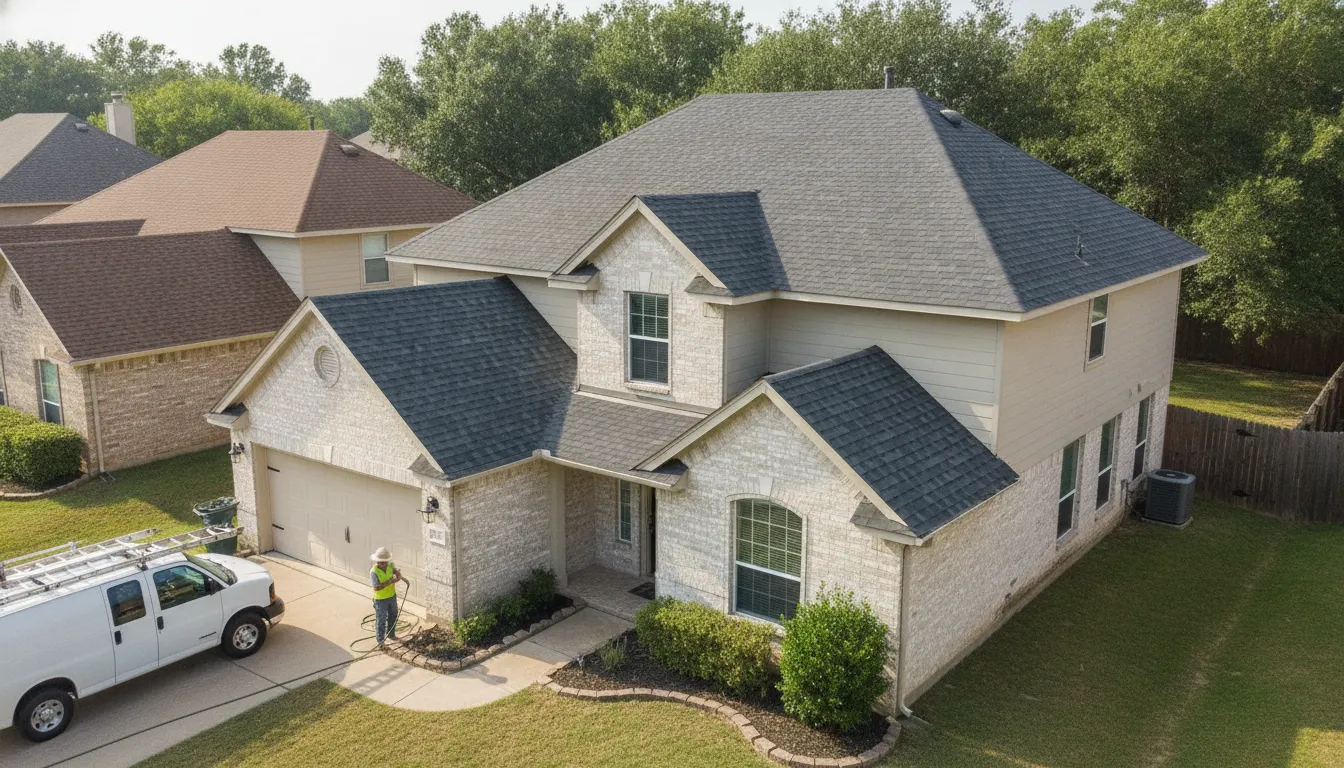
A quality contractor does not waterproof the entire deck with this membrane, nor do they skip it. They place it in the spots most likely to leak. On a properly built Texas roof, you should expect ice and water barrier in the following high-risk areas:
Valleys
Valleys are the channels where two roof planes meet, and they carry the highest volume of water on the entire roof. During a Texas downpour, a valley can run like a creek. This is the single most important place for a waterproof membrane.
Eaves and Roof Edges
The lower edges of the roof are where wind-driven rain is most likely to push water back uphill and under the shingles. Sealing the eaves protects the part of the deck closest to your fascia, soffits, and gutters.
Around Penetrations and Flashing
Chimneys, skylights, plumbing vents, and wall intersections are where the vast majority of roof leaks actually begin. Wrapping these penetrations in a self-sealing barrier is one of the highest-value details on a roof, and it is exactly the kind of work that separates a careful installer from a fast one.
Low-Slope Sections
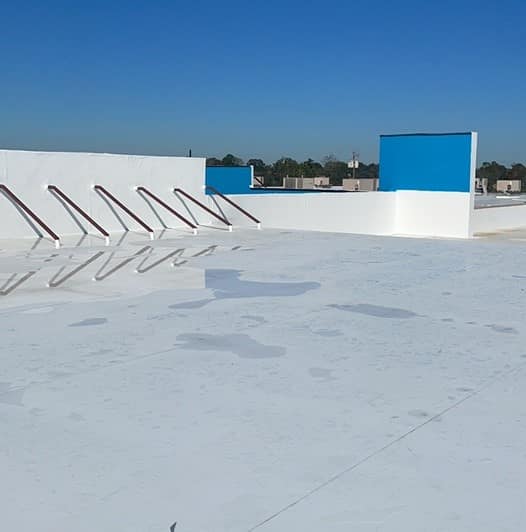
Porches, dormers, and patio covers often sit at a shallow pitch where water drains slowly. These sections behave more like a flat or low-slope roof and need extra waterproofing because gravity is not on their side.
Understanding how these layers stack together helps you ask better questions of any contractor. Our breakdown of the anatomy of a roofing system shows exactly where underlayment and barriers sit in the full assembly.
Why You Cannot See It, and Why That Matters
Here is the uncomfortable truth about ice and water barriers: once the shingles go on, you will never see whether the membrane was installed correctly. From the driveway, you cannot tell a roof waterproofed in all the right places from one that was not. That invisibility is exactly why cutting this corner is so tempting for a low-bid contractor, and so damaging.
A roof that skimps on barrier in the valleys and around the chimney can look identical to a premium roof for the first few years. Then a tropical system arrives, water finds the unsealed seam, and the leak shows up as a brown stain on a bedroom ceiling, or worse, as rotted decking found only during a future roof replacement. By then the repair costs far more than the membrane ever would have.
This is also why a professional roof inspection is so valuable, especially if you are buying a home or inherited a roof you did not have installed. An experienced inspector can often spot the warning signs of inadequate underlayment, persistent leaks at penetrations, staining in the attic, or early decking damage, before they become a structural problem.
Done Right, It Pays for Itself
A proper ice and water barrier is not an upsell gimmick. It is the cheapest insurance on the entire roof relative to what it protects: your decking, your insulation, your ceilings, and your belongings. When this layer is installed correctly as part of a complete roof system, whatever roof type you choose, it extends the life of the whole roof and dramatically lowers the odds of an interior leak during the next big storm.
As a GAF Preferred Contractor installing GAF lifetime systems, we treat underlayment and barrier placement as a core part of doing the job right, not an afterthought. The membrane, the synthetic underlayment, the flashing, and the shingles are engineered to work together as a system, and a warranty is only as good as the layers you cannot see.
Make Sure Your Roof Has the Protection It Needs
Whether your roof is brand new, ten years old, or somewhere in between, you deserve to know what is under those shingles and whether the most vulnerable areas are truly sealed. If your roof has weathered a recent storm, or you simply have never had a professional look closely, now is the time.
Elevation Roofing & Restoration offers a free roof inspection, a $399 value, to homeowners across Greater Houston and the Austin metro. We will check the areas that matter most, tell you honestly what we find, and, if storm damage is involved, work directly with your homeowners insurance on the claim. With more than nine years in business, a 5-star Google rating, and a 100% satisfaction guarantee, we will help you make sure the layer you cannot see is doing the job you are counting on.