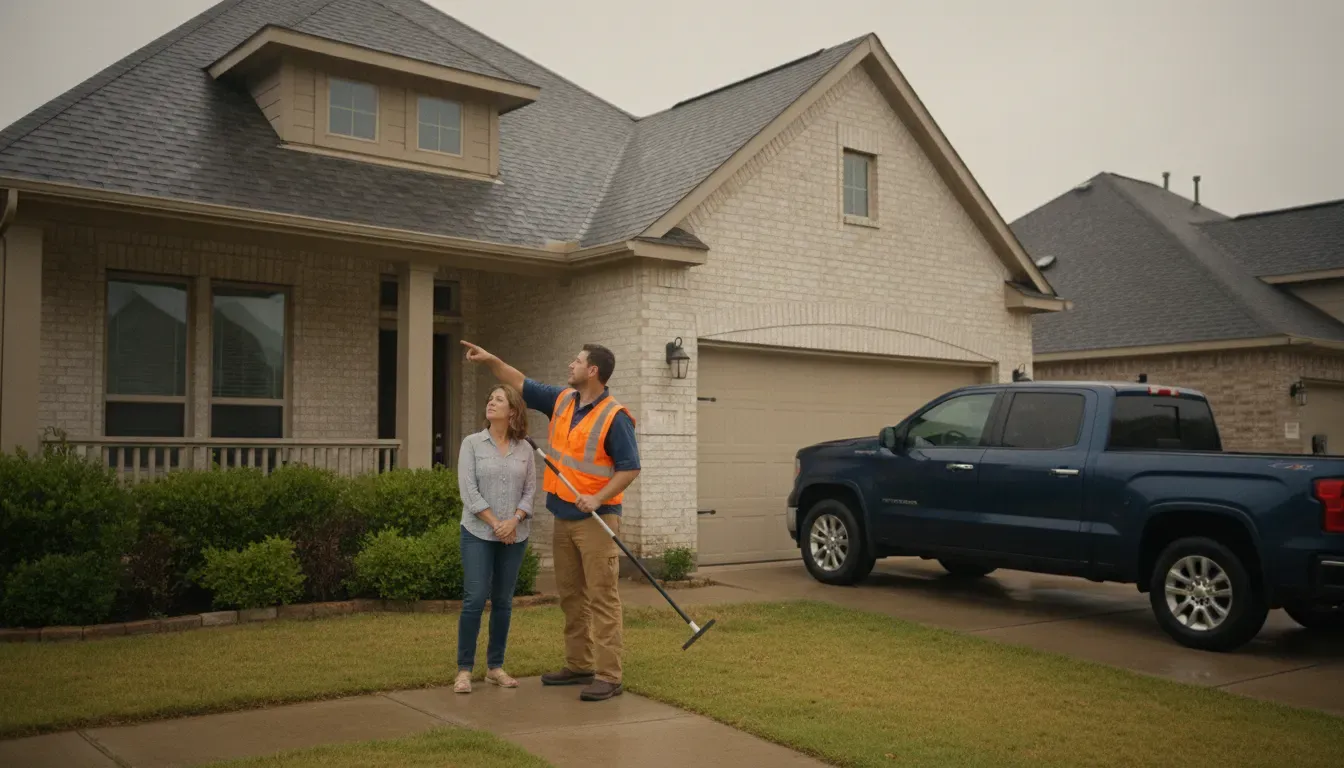
A leaking roof creates two urgent questions: how do you protect your home now, and could your policy help pay for the damage? Roof leak insurance coverage is not automatic. The answer usually depends on what caused the leak, what your policy covers, the roof's condition, and whether the loss was sudden or developed gradually.
Homeowners insurance may cover a roof leak when a covered, sudden event such as wind, hail, or a fallen tree damages the roof and allows water into the home. Policies commonly exclude gradual leaks from wear, age, neglect, or maintenance issues. Only your policy and insurer can determine coverage, so document the damage and review the cause before making permanent repairs.
This guide is for homeowners in Houston, Austin, and nearby Texas communities. It explains the factors that commonly affect a claim without promising approval or replacing advice from your insurance agent, carrier, or another qualified professional.
Does homeowners insurance cover roof leaks?
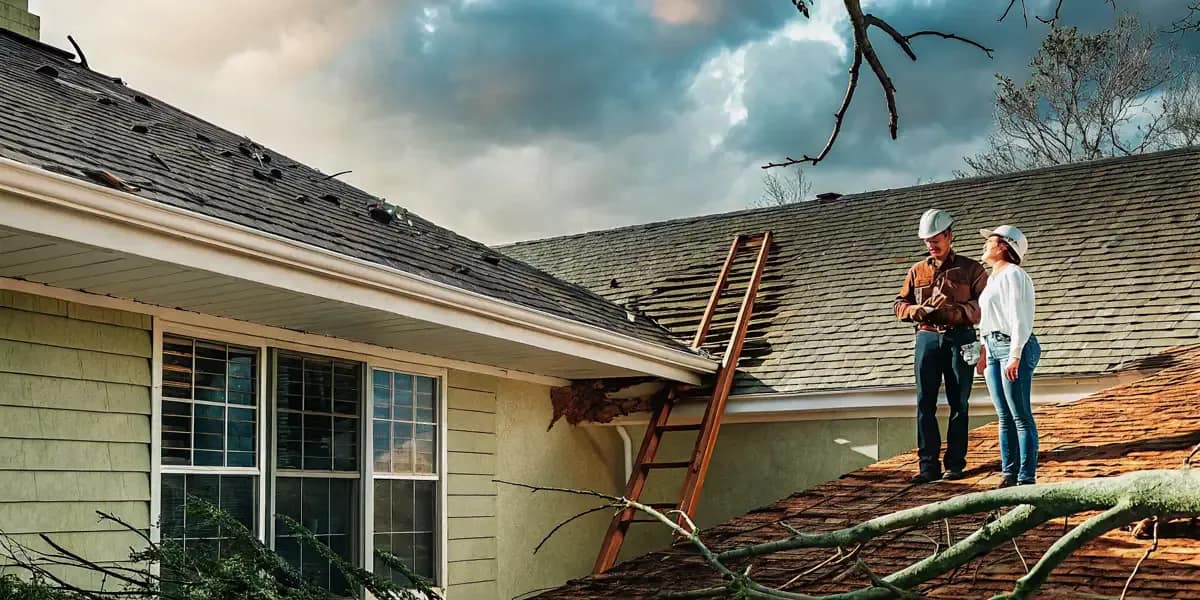
Homeowners insurance may cover a roof leak when a covered peril causes sudden damage. For example, wind may lift shingles, hail may damage roofing materials, or a fallen tree may puncture the roof. If rain enters through that new damage, the policy may also address resulting interior damage, subject to the policy's exclusions, limits, and deductible.
Coverage is different from a roofing diagnosis. A roofing professional can inspect the roof, document observations, and prepare a repair estimate. The insurer reviews the policy and claim evidence before deciding whether the loss is covered. The Texas Department of Insurance explains that a homeowners policy may cover roof damage from a tree and rain entering through a roof damaged during a storm, but homeowners should confirm their own policy terms.
Sudden damage versus gradual damage
| Possible cause of the leak | How it may affect a claim | What to document |
|---|---|---|
| Wind or hail from a recent storm | May be considered a covered event when the policy includes that peril | Storm date, exterior damage, interior water, photos, and inspection findings |
| Fallen tree or other covered impact | May be covered, subject to policy conditions and limits | Impact location, photographs, cleanup records, and temporary repair receipts |
| Age, wear, or long-term deterioration | Often excluded as maintenance or expected deterioration | Roof age, maintenance records, previous repairs, and the inspection report |
| Flooding or water entering from an excluded source | May require separate coverage or may be excluded | Water path, weather timeline, policy language, and professional observations |
This table is a starting point, not a coverage decision. A leak can have more than one contributing factor, and the same visible symptom can result from different causes.
What policy details affect roof leak insurance coverage?
Policy language controls more than the word "leak." Look for the covered perils, exclusions, roof provisions, deductible, loss-reporting requirements, and payment method. A policy may cover sudden storm damage while excluding damage caused by wear. It may also treat roof repairs differently from damage to the home's interior.
Texas homeowners should also check whether the policy uses replacement cost coverage or actual cash value for the roof. The Texas Department of Insurance notes that replacement cost coverage can pay up to current repair costs, while actual cash value accounts for age and wear. The same resource explains that a deductible applies before the insurer pays and that a roof is not replaced merely because it is old.
Replacement cost, actual cash value, and deductibles
- Replacement cost: A policy may pay the cost to repair or replace covered damage at current prices, subject to the policy and deductible.
- Actual cash value: Payment may reflect the roof's current value after depreciation for age and wear.
- Wind or hail deductible: A storm-related deductible may differ from the deductible for another type of loss. Confirm the amount with your agent or insurer.
- Coverage limits and exclusions: A policy may limit certain property, materials, causes, or types of resulting damage.
- Reporting requirements: Your policy may specify how and when you must notify the insurer after discovering damage.
Ask your insurance agent to explain these terms in the context of your policy. Do not assume that a lower deductible, a roof's age, or a contractor's opinion alone determines the result.
Which roof leak causes are commonly excluded?
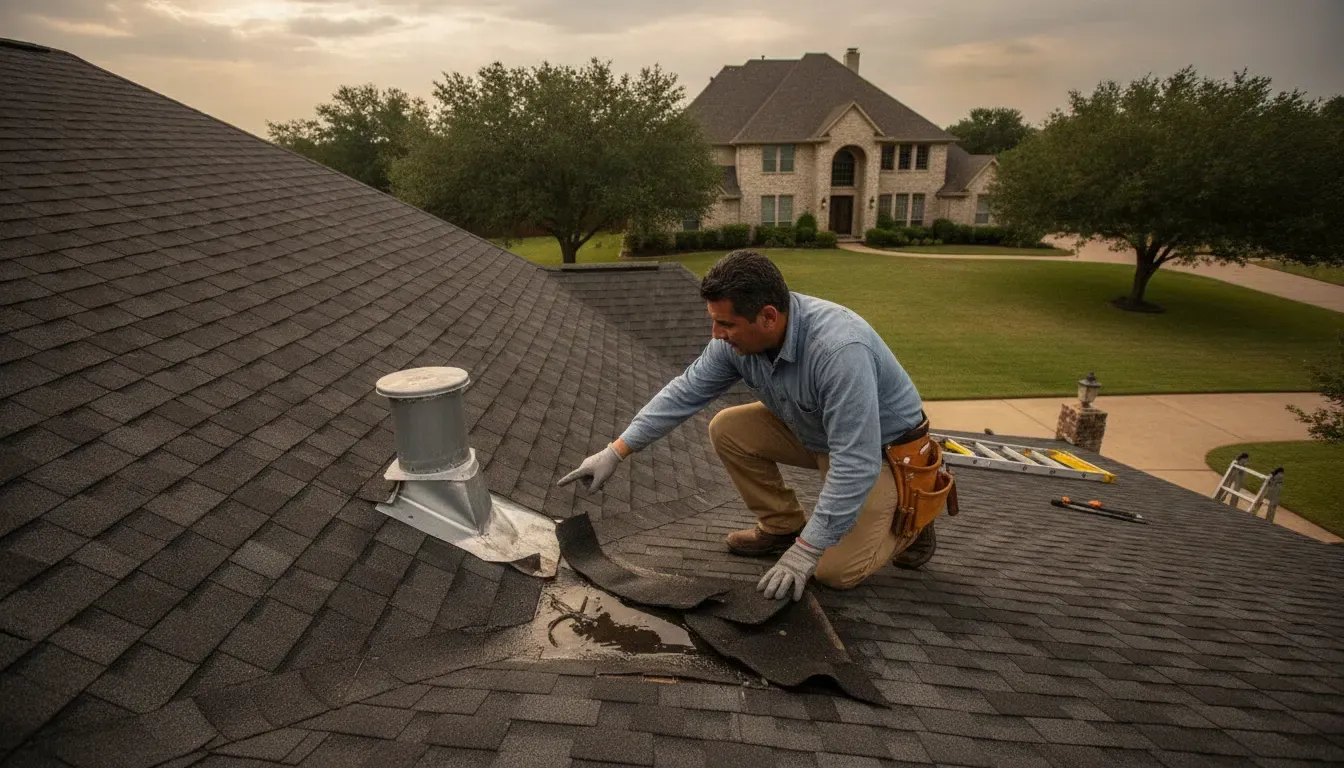
Many homeowners policies do not cover a leak caused only by normal wear, deferred maintenance, deterioration, or a roof reaching the end of its useful life. Other exclusions can apply to flooding, earth movement, pests, faulty workmanship, or a condition specifically excluded by the policy. The exact language matters, and an exclusion for the roof does not automatically answer whether separate interior damage is covered.
Texas Department of Insurance consumer guidance says policies usually do not cover damage from gradual leaks or seepage. It also recommends checking the policy or calling the insurance company when questions arise. Read the carrier's explanation carefully rather than relying on a general rule from a website or social media post.
Why the cause matters
A ceiling stain shows that water reached the interior, but it does not by itself identify when or why the water entered. Water can travel along roof decking, framing, insulation, or drywall before appearing indoors. A professional inspection can look for likely entry points and separate visible storm-related observations from older wear or maintenance concerns.
Do not remove damaged materials or make permanent repairs before documenting them and asking the insurer about the next step, unless immediate action is needed for safety or to prevent additional damage. The Texas Department of Insurance disaster-claims FAQ recommends photographing damage before temporary repairs and keeping records of the work and materials used.
What should you document before reporting a roof leak?
Good records help establish what happened, when you noticed it, and what changed after the event. Start from a safe location. Do not climb onto a wet, steep, or damaged roof to take photographs. If conditions are unsafe, use ground-level photos and request a professional inspection.
- Record the timeline. Note the date of the storm or other event, when you first saw the leak, and when interior damage appeared.
- Photograph the interior. Capture ceiling stains, bubbling paint, wet drywall, damaged flooring, and affected belongings from several angles.
- Photograph the exterior safely. Take ground-level images of missing materials, fallen branches, visible flashing damage, damaged gutters, and other observations.
- Preserve prior records. Gather roof invoices, inspection reports, maintenance notes, warranties, and photographs showing earlier conditions.
- Save communications. Keep the claim number, policy correspondence, estimates, receipts, appointment details, and notes from calls.
- Track temporary work. Record emergency materials and labor used to limit additional damage, and retain receipts.
Documentation should describe what you observed without guessing at coverage or overstating the cause. If you are unsure whether a mark is hail damage or wear, label it as an observation and ask for a qualified inspection.
When should you request a professional roof inspection?
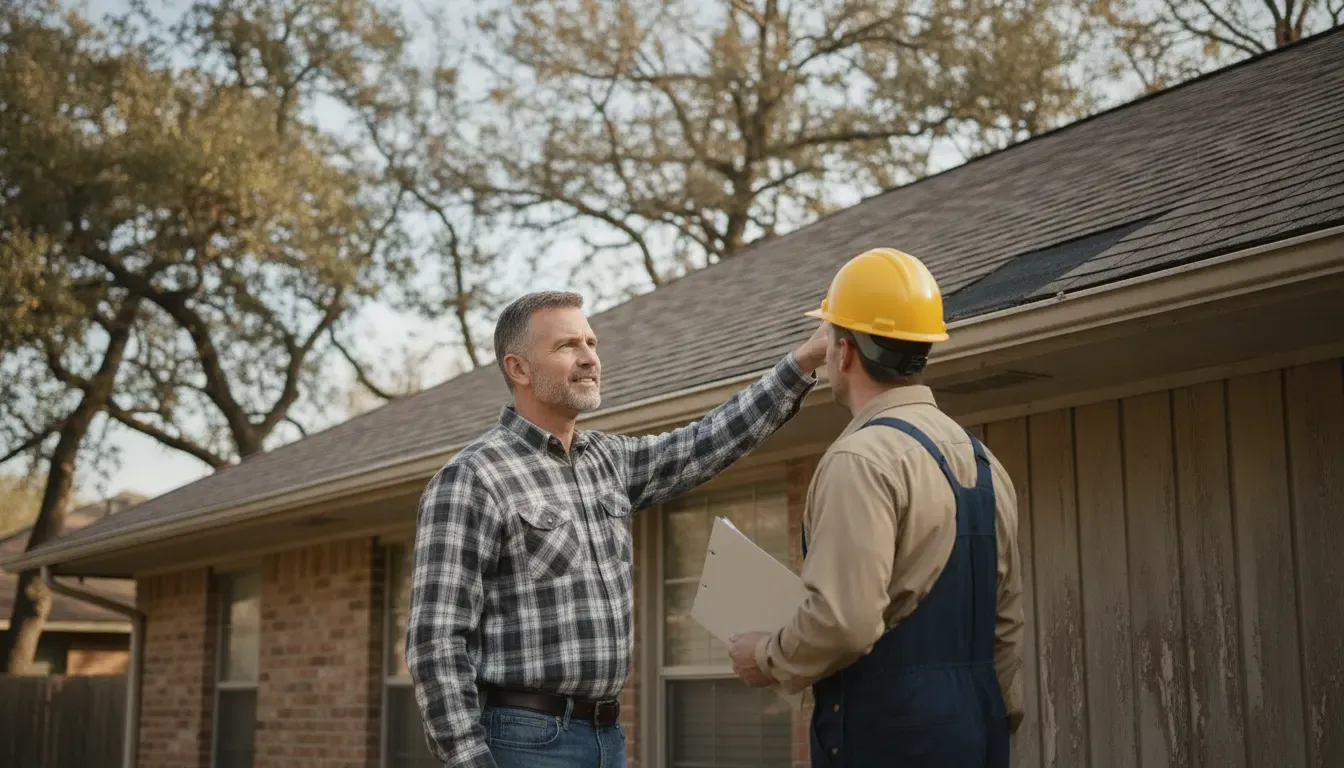
Request an inspection when a leak follows a storm, when the entry point is unclear, when damage is not safely visible from the ground, or when you need a repair scope for your records. An inspection can document roof components, flashing, gutters, attic conditions when accessible, and related interior signs. It can also identify conditions that need temporary attention.
Elevation Roofing & Restoration serves residential and commercial property owners with roof inspection, repair, replacement, and storm-damage services. Its team can help organize roof observations and repair information for a conversation with your insurer. The company does not decide coverage, waive deductibles, or guarantee a claim outcome.
What an inspection can and cannot do
- It can identify visible roof conditions and areas requiring closer review.
- It can document photographs, locations, materials, and repair recommendations.
- It can help distinguish observations that may relate to a recent event from older conditions.
- It can provide a repair estimate or scope for discussion.
- It cannot interpret your policy as the insurer, approve a claim, or guarantee payment.
- It cannot safely determine hidden conditions that are inaccessible without appropriate equipment or authorization.
For related preparation, see Elevation Roofing & Restoration's roof inspection for insurance guide. That article focuses on inspection documentation, while this guide focuses on the coverage factors behind a leaking roof.
What should you do after discovering a roof leak?
Protect people first, then limit additional property damage without destroying evidence. Move belongings away from active water, place containers under drips when safe, and use temporary measures appropriate to the situation. Photograph conditions before moving or covering damaged materials whenever possible.
Next, review your policy and contact your agent or insurer to ask about reporting instructions, an inspection, temporary repairs, deductibles, and documentation. Keep communication factual. If the carrier asks for a permanent repair before its inspection, ask for that instruction in writing and confirm how the original damage should be documented.
If the leak is active or the roof is unsafe, contact a qualified roofing professional for an assessment. Elevation Roofing & Restoration provides roof repair and storm repair services for Texas property owners, with insurance-claim assistance that does not replace the insurer's coverage decision.
Roof leak insurance coverage questions, answered
These quick answers summarize common questions, but your policy remains the controlling document.
Does insurance cover a roof leak from rain?
It may when a covered storm first damages the roof and rain enters through that damage. Rain entering through a roof with gradual deterioration may be treated differently. Ask your insurer how the policy addresses the cause and resulting interior damage.
Will homeowners insurance pay for an old leaking roof?
Insurance generally does not pay to replace a roof solely because it is old or worn out. A covered, sudden event may still affect the analysis, so review the policy, roof condition, and cause of loss with your insurer.
Should I file a claim before calling a roofer?
There is no universal order for every loss. You can request a professional inspection to document conditions, and you should ask your insurer about its reporting and inspection process. Avoid permanent repairs before documenting the damage when possible.
Can a roofer guarantee that insurance will cover the leak?
No. A roofer can inspect the roof, document observations, and prepare a repair scope. The insurance company applies the policy and makes the coverage decision. Be cautious of anyone promising approval or telling you to misrepresent damage.
What if the leak caused interior water damage?
Interior damage may be considered separately from the roof repair, depending on the cause and policy language. Photograph the affected areas, prevent further damage when safe, keep receipts, and ask the insurer how to document the loss.