Across Greater Houston and the Austin metro, fall is the most important and most overlooked roofing season of the year. By October your roof has just survived five brutal months of Texas sun, hail, and tropical-storm wind, and it is about to head into a wet, cold-snap winter with whatever damage the summer left behind. The few mild weeks of autumn are your one clean window to find that damage and fix it. Get it right and your roof sails through the holidays. Skip it and you go leak-hunting in a January downpour.
This is your fall-and-winter game plan, built for the Texas climate rather than the snowbelt advice you will find everywhere else. Below is exactly what to check, what to clear, and what to hand off to a professional before the first real cold front arrives.
Why Fall Prep Matters More in Texas Than You Think
Most homeowners picture roof season as the depths of winter. In Texas, the make-or-break moment comes earlier, in the transition. Our summers are punishing in a way that leaves a roof quietly wounded by September, and our winters then exploit every one of those wounds.
- Sun-baked, brittle shingles: A full Texas summer of intense UV and 100-degree heat dries out asphalt shingles and makes them prone to cracking and granule loss. Those same shingles meet their first cold snap weeks later, when rapid cooling makes brittle material crack even faster.
- Lingering storm and hail damage: Spring and summer hail, high winds, and the occasional Gulf tropical storm leave bruised shingles, lifted edges, and hairline flashing cracks that are nearly invisible from the ground. They do not announce themselves until winter rain finds them.
- Wet, not snowy, winters: Texas winters bring steady cold rain rather than heavy snow. That rain hunts for every compromised seam, and in cold weather it lingers instead of evaporating, giving a small leak far more time to travel into your decking and ceilings.
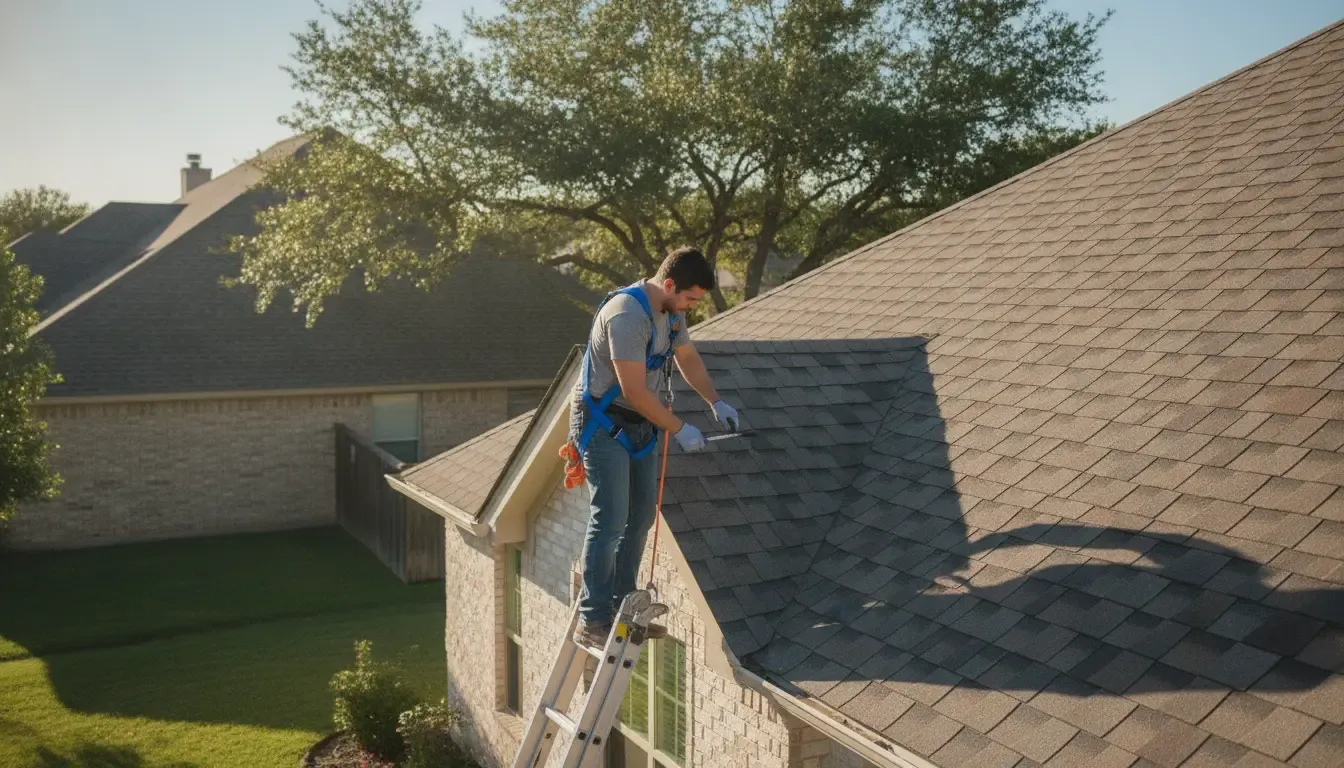
Because almost none of this is visible from your driveway, the single highest-value fall step is a professional roof inspection. It catches the post-summer damage while repairs are still cheap, and it creates a dated record of your roof's condition heading into the season.
Your Fall Roof Prep Checklist
You can handle the early steps yourself from the ground or an upstairs window. Resist the urge to climb up, especially on a two-story home or a steep pitch. Here is the sequence we recommend, in order.
1. Scan the Shingles and Roofline From the Ground
Walk the full perimeter of your home with your eyes on the roof. Look for shingles that are cracked, curled, buckled, or missing, the lingering signature of summer heat and hail. Check the ridge for any sag and the valleys where two roof planes meet, since those channels carry the most water and fail first. On a metal roof, watch for backed-out fasteners, loose panels, or lifted seams that summer thermal expansion can work loose.
2. Clear the Gutters Before the Leaves Drop
This is the highest-return task on the entire list. Houston and Austin oaks, pecans, and elms shed steadily through fall, and gutters packed with leaves and twigs cannot move water. When the first heavy cold-season rain arrives, that water backs up under your shingles and spills behind the fascia into the decking. Flush the gutters, clear the downspouts, and confirm water exits well away from the foundation. Our gutter cleaning guide walks through the safe way to do it. If your gutters are sagging, rusted, or undersized for a Texas downpour, the dry stretch of fall is the ideal time to upgrade them before winter.
3. Trim Back Overhanging Branches
Fall and winter winds turn limbs into battering rams, and dead branches drop without warning. Anything that scrapes the shingles in a breeze or hangs over the roofline should be cut back to a safe distance now. This single step prevents a surprising share of avoidable storm damage and keeps leaf debris off your roof in the first place.
4. Inspect Flashing, Vents, and Penetrations
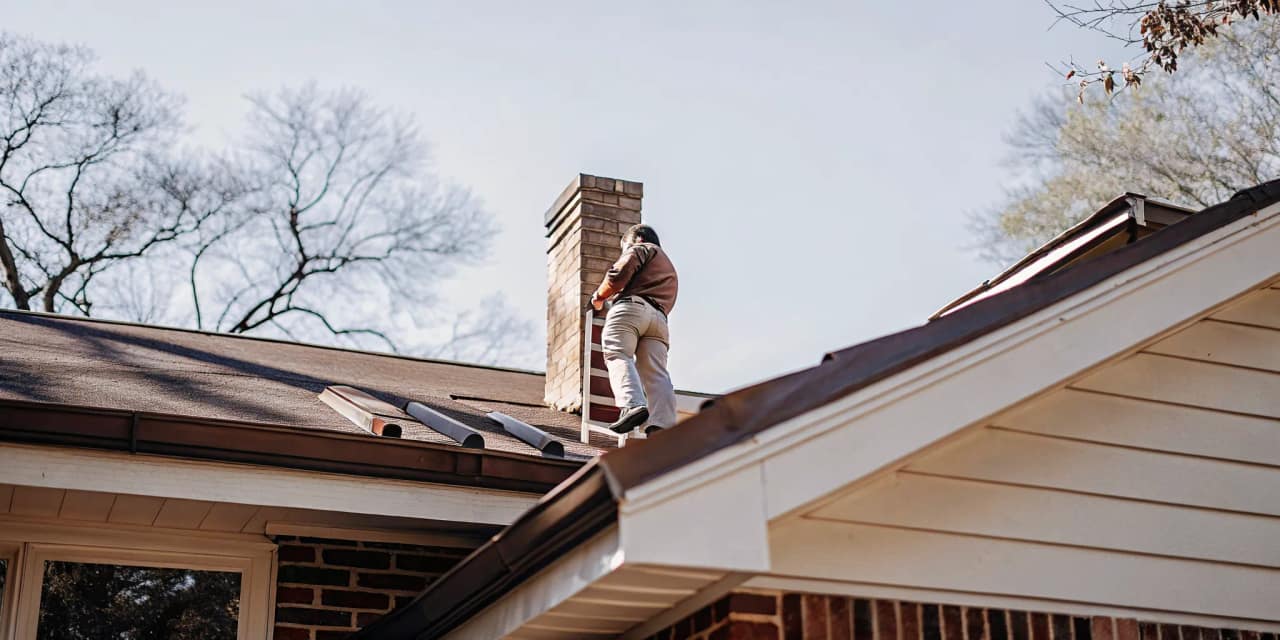
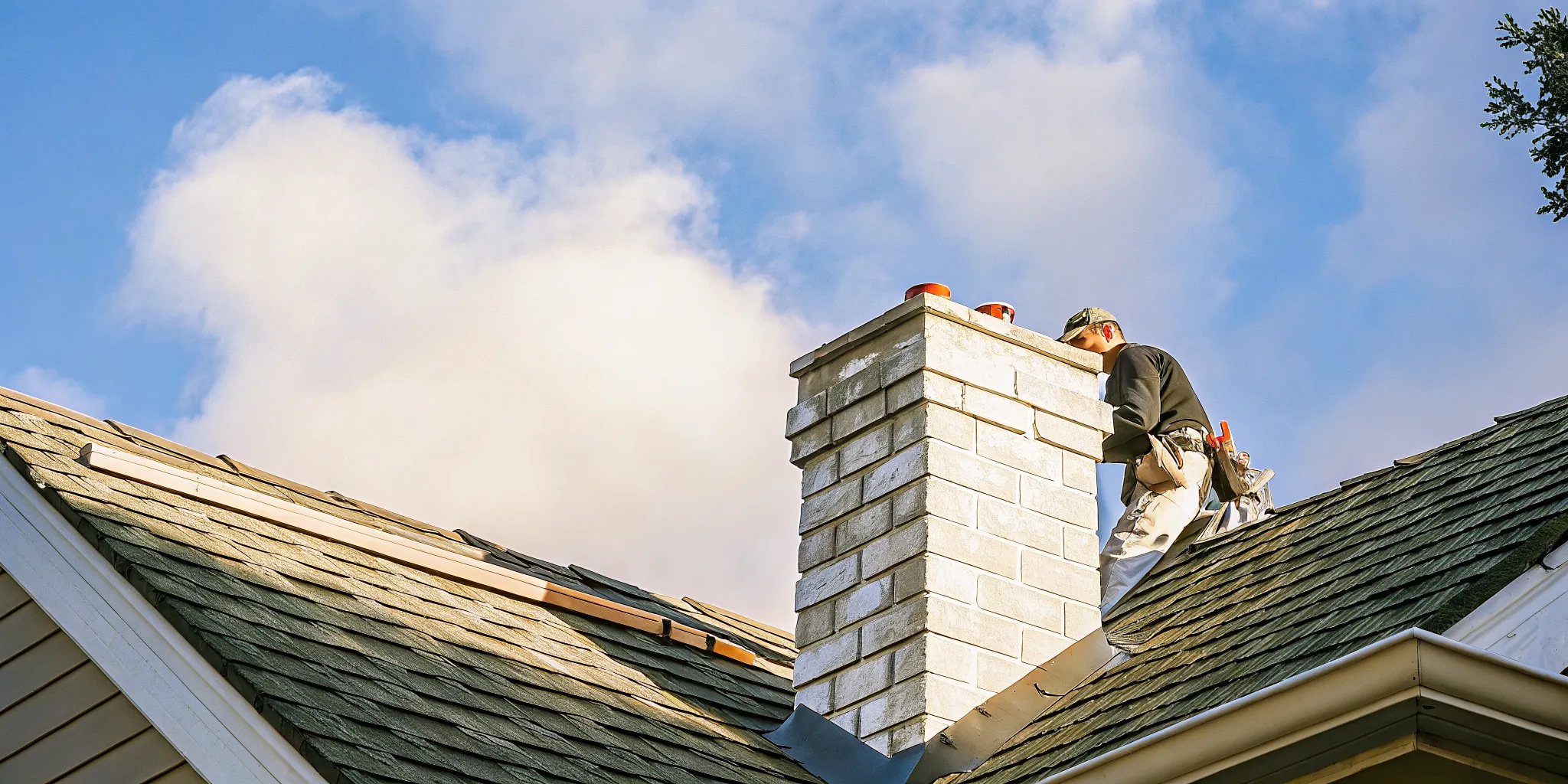
Leaks rarely start in the open field of a roof. They start at the transitions, where the roof meets a chimney, skylight, wall, or pipe. A summer of UV dries out plumbing vent boots and cracks the sealant on flashing, and cold winter rain pours through those gaps. Cracked vent boots are one of the most common cold-weather leak sources we find. From an upstairs window, look for rust, lifted metal, or visibly split rubber boots, and flag them for repair.
5. Check the Attic With a Flashlight
Pick a bright day and head into the attic. Daylight through the decking, water stains on the rafters, damp insulation, or a musty smell all mean your roof is already letting moisture in, and it will only worsen once winter rain settles in. While you are up there, confirm the insulation looks dry and evenly spread.
Don't Forget the Attic: Ventilation and Insulation
Your roof's winter performance is decided largely in a space you almost never visit. As Texas heating kicks on, warm indoor air rises and meets a cold roof deck. Without balanced intake and exhaust ventilation, that warm air condenses on the underside of the deck and quietly rots it and soaks the insulation all season. Good ventilation lets the humid air escape before it does damage.
Adequate, dry insulation does double duty. It keeps your heating bills in check, and it stabilizes the roof deck temperature so it is not heating and cooling unevenly through every cold front. Pairing healthy attic insulation and ventilation with a sound roof is the foundation of cold-weather roof maintenance, and it is far easier to address in mild fall weather than in the middle of a freeze.
Bridging Fall Into Winter
Fall prep and winter prep are really one continuous job. The leaf-clearing, branch-trimming, and flashing checks you do in October set up the freeze-readiness work you will want done before the first hard freeze. Texas cold snaps are short but unpredictable, and they punish a roof through freeze-thaw cycling that loosens fasteners and widens small cracks. For the deeper cold-weather playbook, our guide on preparing your Texas roof for cold weather covers hard-freeze readiness in detail. Tackle fall maintenance first and winter prep becomes a short final checklist rather than a scramble.
When Fall Reveals a Bigger Problem
Sometimes the seasonal once-over turns up more than a quick fix can solve. Widespread granule loss, multiple soft or sagging spots, daylight through the decking, or a roof near the end of its rated life all signal that patching will not get you safely through another Texas winter. Our guide on the signs it is time to replace your roof can help you read the situation. Fall is an excellent time to act: mild temperatures make for clean installations, and a new roof replacement with GAF lifetime systems sets you up for many winters to come. And if summer storms left damage you suspect insurance should cover, we handle storm damage repairs and work directly with your homeowners insurance on the claim.
Head Into Winter With a Roof You Can Trust
You do not need to be a roofer to get the basics done. Clear the gutters, scan the shingles, trim the branches, check the flashing, and look inside the attic, and you have closed off most of the easy paths a winter leak would take. From there, one professional inspection catches everything you cannot see from the ground, right before the season that tests it hardest.
If it has been a while since anyone looked closely at your roof, or this year's storms left you wondering, let us take a look before the first cold front. Elevation Roofing & Restoration offers a free roof inspection, a $399 value, across Greater Houston and the Austin metro. As a GAF Preferred Contractor with a 5-star Google rating, more than nine years of experience, and a 100% satisfaction guarantee, we will tell you honestly what we find and what, if anything, needs attention, so you and your family head into fall and winter with a roof you can count on.