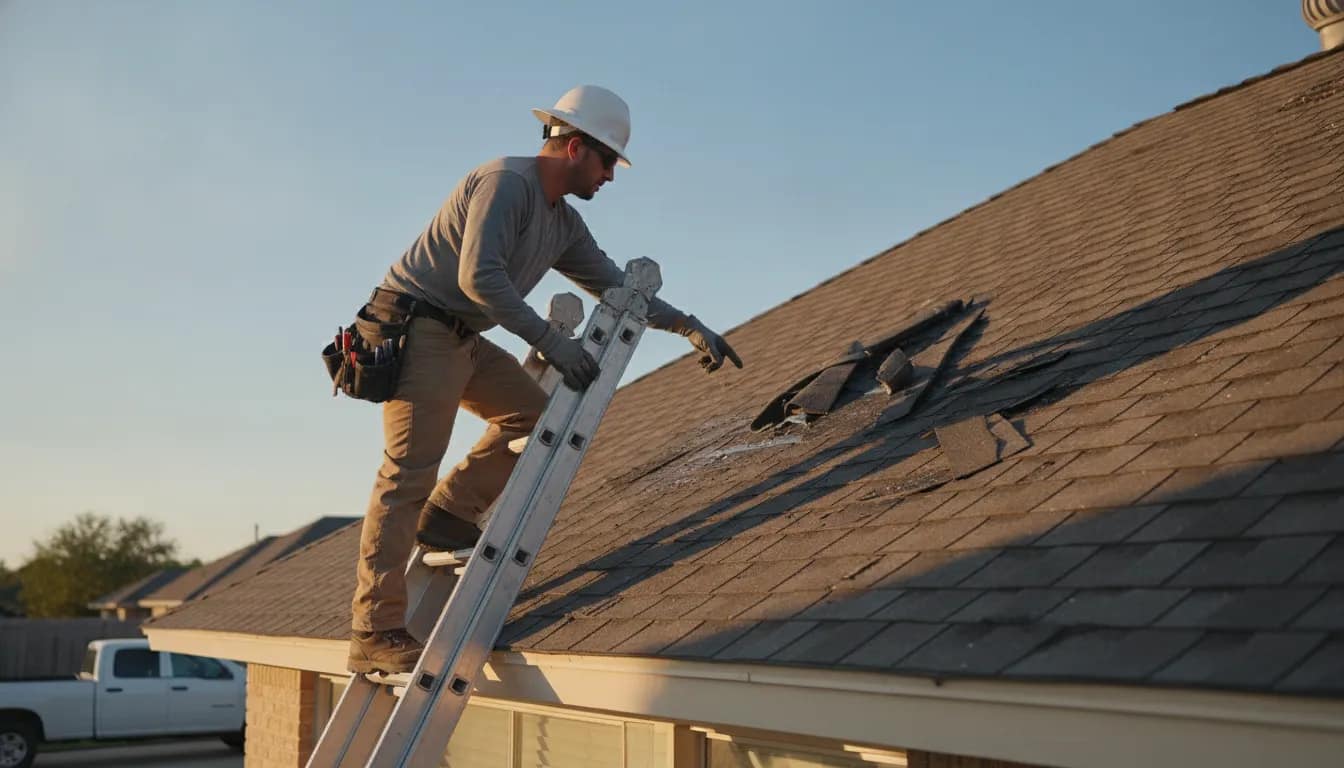
After a Texas hailstorm, wind event, or heavy rain, a roof can look normal from the driveway while damage is already allowing water beneath the surface. Start with safety: inspect from the ground, watch for fallen lines or debris, and do not climb onto the roof.
Call Elevation Roofing & Restoration at (832) 271-1726 for a free roof inspection and estimate.
Most storm-related problems can be repaired when they are identified promptly. Roof storm damage repair may involve replacing missing shingles, addressing hidden hail or wind damage, protecting vulnerable areas from rain, and documenting the findings for an insurance claim. A professional inspection helps establish what happened and what your home needs next.
Knowing what to look for can help you respond without guessing or rushing into a contract. Begin by checking the visible signs of storm damage and noting anything that changed after the weather passed.
How Do I Know If My Roof Has Storm Damage?
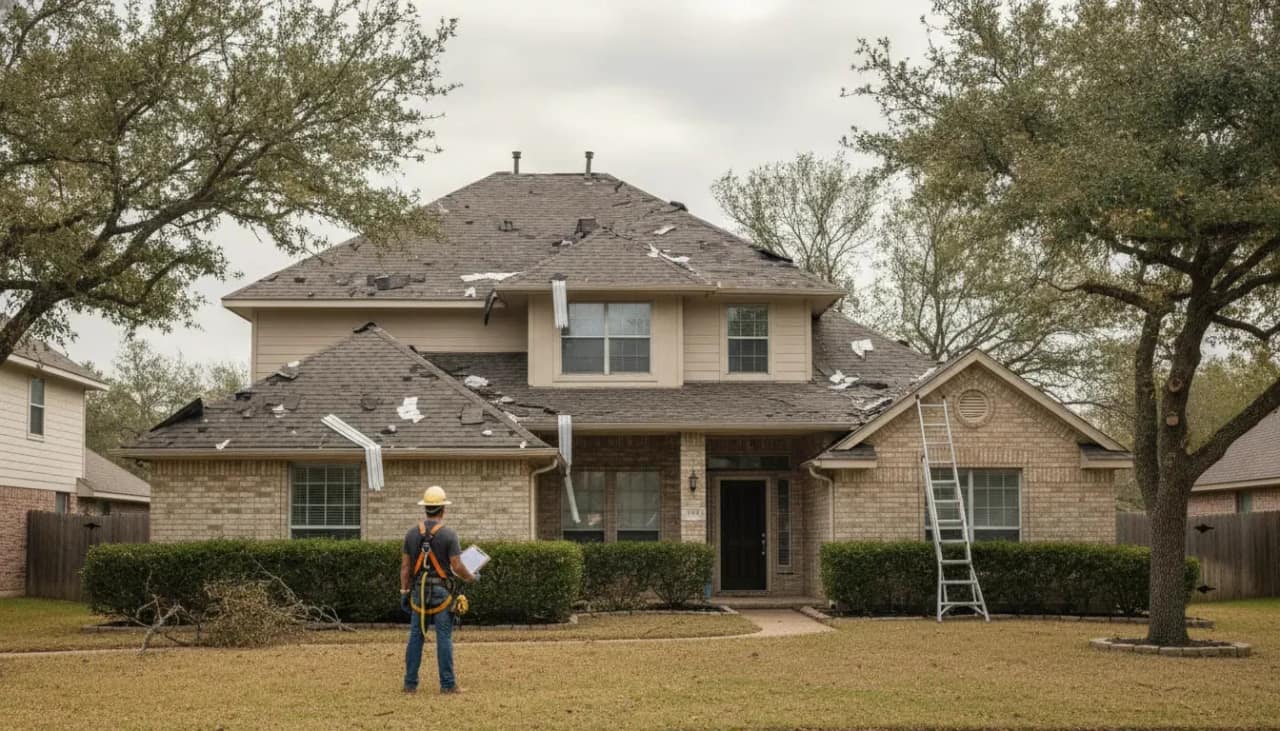
Check from the ground for missing, cracked, or lifted shingles, granules collecting in gutters, debris, and water spots on ceilings or walls. Hail can bruise shingles while wind can lift or tear them, so schedule a professional inspection when any change appears after a storm.
Storm damage is not always dramatic. A roof can look mostly normal from the driveway while hail has bruised shingles or wind has loosened their edges. Start with a careful ground-level check after the weather clears, and do not climb onto the roof. The National Roofing Contractors Association warns that the risk of falling is too great without proper safety systems.
Walk around the property and check the attic and ceilings for clues. Common signs include:
- Missing or damaged shingles: Look for bare patches, cracked surfaces, broken corners, or shingles in the yard. A few missing shingles can still allow water to reach the layers beneath the roof.
- Granules in gutters or downspouts: A sudden buildup of gritty shingle granules may indicate that hail or debris has stripped the protective surface. Granule loss leaves shingles more exposed to ultraviolet damage.
- Water spots on ceilings or walls: Brown stains, bubbling paint, damp insulation, or a musty odor can point to water intrusion. These signs may appear inside the home even when the exterior damage is difficult to see.
- Hail bruising: Hail can create soft, indented areas in shingles that are not obvious to a casual observer. Do not assume the roof is unharmed simply because you cannot see a large hole.
- Wind-lifted, curled, or torn shingles: Strong winds can break the seal or lift shingle edges. Curled or torn shingles leave the roof system more vulnerable to additional water infiltration.
- Roof debris: Branches, broken glass, and other storm debris can puncture or scrape the roofing surface. Check the yard, gutters, and visible roof edges for evidence of impact.
Also look for displaced flashing, loose vents, or damage around roof edges, but leave any close inspection to a qualified professional. If you see downed power lines, unstable structures, or extensive debris, keep your distance and follow local safety guidance.
Damage patterns can vary across Houston, Austin, and surrounding communities. Elevation Roofing & Restoration serves homeowners in these areas and can help assess whether you need roof storm damage repair. Visit the Elevation Roofing service areas page to confirm coverage near you.
When in doubt, schedule an inspection rather than waiting for the next rain. Prompt attention can identify less-visible problems before they become larger interior repairs.
Why a Prompt Professional Roof Inspection Matters After a Storm
A prompt roof inspection helps find less-visible hail bruising, wind-lifted edges, and damaged flashing before water enters the home. Identifying these issues early usually keeps the repair smaller and gives you clearer documentation for the insurance claim.
A roof can look normal from the driveway and still have damage that allows water to enter later. Hail may leave bruising that is difficult for a casual observer to see, while wind can loosen roofing materials or damage components around the edges. The National Roofing Contractors Association recommends having all roofs affected by severe weather inspected, regardless of appearance, and advises hiring a professional as quickly as possible because trained contractors can identify damage homeowners may miss. Read the NRCA's post-storm safety and inspection guidance.
Waiting for a ceiling stain or active leak can turn a manageable repair into a more extensive problem. Prompt attention helps limit water intrusion that may contribute to structural rot, mold, and damage to interior components. In other words, scheduling an inspection is not an admission that your roof needs replacement. It is a practical way to find out what happened and protect the home before a hidden weakness becomes visible inside.
A thorough inspection looks beyond the shingles
Storm damage is not limited to the most visible roofing surface. A qualified inspector evaluates the roof system as a whole, looking for loose attachments and conditions that may not be obvious from the ground. The inspection should include:
- Shingles for bruising, lifted edges, curling, tears, missing areas, and granule loss.
- Flashings around roof penetrations, walls, chimneys, and other transitions.
- Vents and their surrounding seals, which can become vulnerable entry points for water.
- The roof edge, eaves, and other perimeter areas exposed to wind uplift.
- Branches, glass, and other debris that may damage the roof surface or block drainage.
- Signs of water intrusion in the attic or interior, when those areas can be accessed safely.
These details matter during roof storm damage repair because a patch that addresses only one visible shingle may leave the underlying problem unresolved. A professional inspection also creates a clearer record of the damage, which can help when discussing repair needs with your insurer.
Stay safe while you wait for an inspection
Do not climb onto the roof after a storm. NRCA advises homeowners to inspect roof systems only from ground level because the risk of falling is too great without proper safety systems. Watch for downed power lines, unstable debris, and damaged structures around the property. If the building may be unsafe, follow local authorities' instructions before entering it.
If the roof is heavily damaged, temporary repairs or professional tarping may help protect the home from additional weather while permanent work is arranged. A tarp is not a substitute for an inspection, but it can reduce exposure to rain while you wait. For a practical example of the process, review this professional post-storm roof inspection guide.
The Roof Storm Damage Repair and Insurance Claims Process
Storm repair and claims follow a clear sequence. Document the damage safely, schedule a professional inspection, and file the claim with your photos and notes. Confirm the repair scope before signing, then proceed with quality work once coverage is clear.
After a Texas storm, a clear process helps you protect your property without making rushed decisions. Start with safety, preserve evidence, and involve your insurer and a qualified roofing professional before authorizing permanent work. Insurance companies usually require photos and other documentation to support storm-related roof claims, so timely records can make the next steps easier.
Document the damage from a safe location
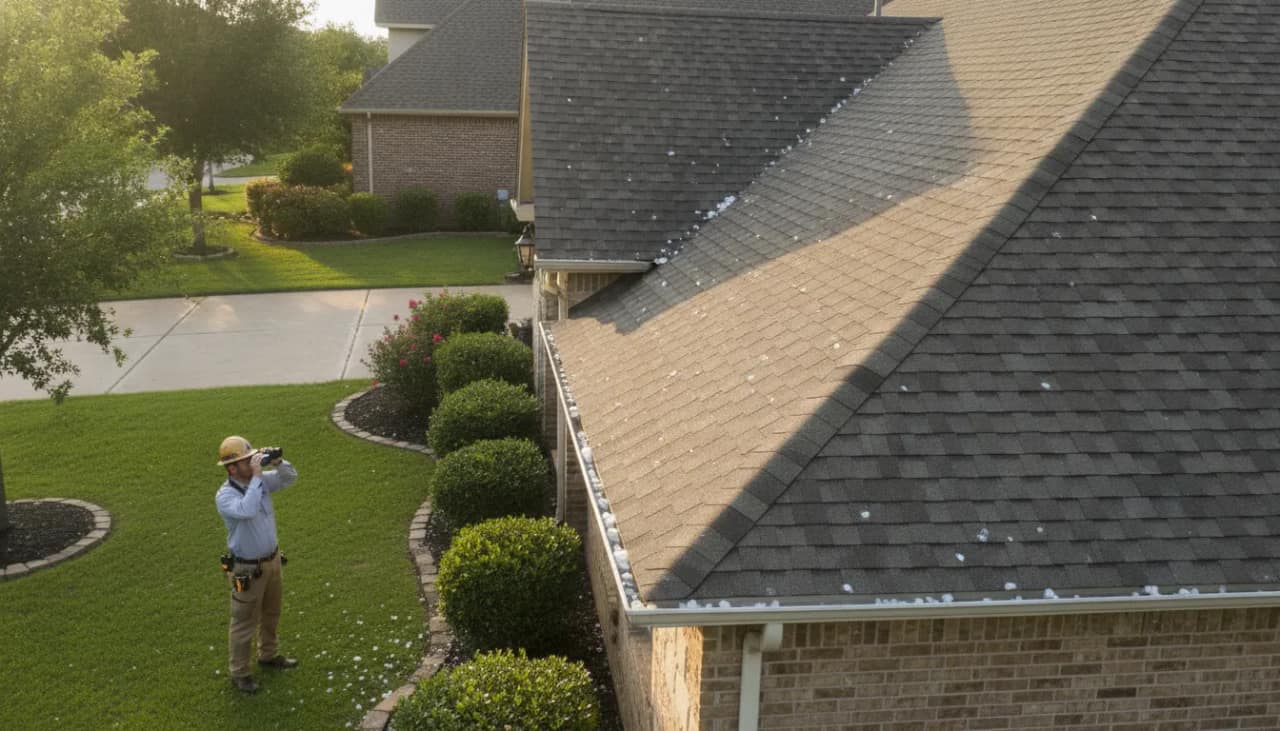
Do not climb onto a wet, damaged, or debris-covered roof. From the ground, photograph missing or lifted shingles, fallen branches, damaged flashing, gutters, siding, windows, and other visible conditions. Take wide photos that show where the damage is located, followed by closer images where it is safe to do so. Inside the home, photograph ceiling stains, damp drywall, and any affected belongings. Write down the date of the storm, when you first noticed the problem, and any changes you observe afterward. Documenting storm damage promptly is a key step in the claim process, and a dated record can help connect the condition to the weather event. If water is entering, use only temporary measures that are safe for your property while you wait for professional help.
Schedule a professional roof inspection
A roof can look acceptable from the yard while still having damage that needs attention. Hail may bruise shingles without leaving an obvious mark, while wind can loosen components at edges, valleys, vents, and flashing. A professional inspection examines the roof system rather than just the most visible shingles. Elevation Roofing & Restoration offers a free roof inspection and estimate for homeowners. Ask the inspector to explain the findings, identify areas requiring temporary protection, and provide clear documentation for your records.
File the insurance claim with your documentation
Contact your insurance company promptly and follow its instructions for opening a storm-damage claim. Provide your photos, notes, inspection findings, and any temporary-repair receipts the insurer requests. Policy language, deductibles, exclusions, and deadlines vary, so do not assume that every repair will be covered. For a more detailed discussion of the claim process after hail, see this Texas hail roof insurance claim guide.
Confirm the repair scope and coverage before signing
Compare the documented damage with the proposed scope of work and ask questions about materials, affected components, and payment responsibilities. A professional roofer can help ensure that all aspects of storm damage are identified and documented for insurance purposes. However, the insurer makes coverage decisions under the policy. Avoid signing a repair contract until the roof has been thoroughly inspected and the claim process is underway. This gives you time to understand the scope instead of committing while the condition is still being evaluated.
Proceed with quality repairs
Once the scope is clear and the work is authorized, schedule repairs that address the complete roof system, not only the first visible defect. Prompt action helps limit water intrusion that can contribute to rot, mold, and interior damage. Elevation Roofing & Restoration helps customers with storm-damage insurance claims from assessment through payment, so homeowners in Houston, Austin, and surrounding areas can keep the repair process organized from inspection to completion.
Hail, Wind, and Rain Damage: What Texas Roofs Face
Texas storms do not damage every roof in the same way. A summer thunderstorm in Austin may bring wind-driven rain and hail, while Houston properties can face intense rain, high humidity, and repeated severe-weather exposure. The visible result may be a missing shingle, but the more serious problem can be hidden beneath the surface. Understanding the difference between hail, wind, and moisture damage helps you respond appropriately and avoid delaying roof storm damage repair.
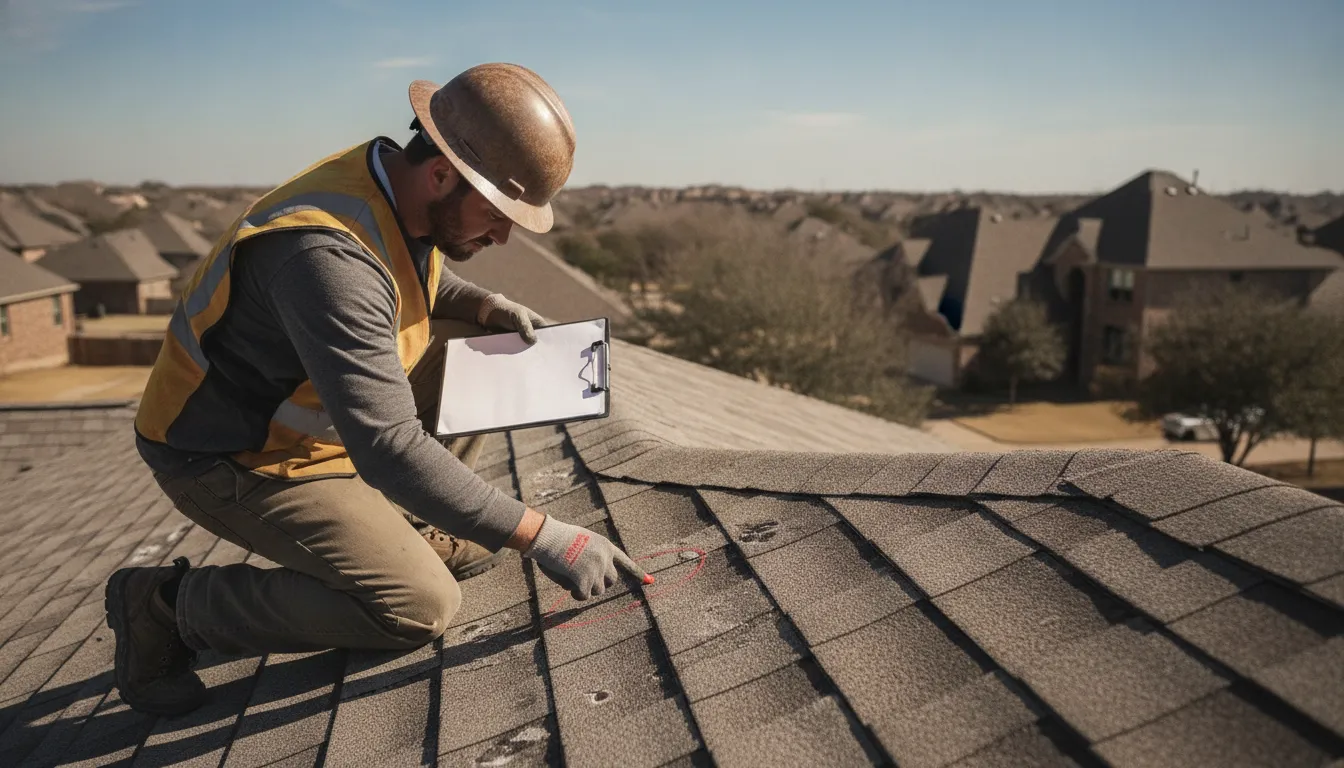
Photo documentation from a safe ground-level view can capture the visible effect of severe weather before it changes.
Hail can bruise shingles without obvious marks
Hail damage depends on more than the size of the hailstone. The stone's size, shape, and angle of impact can create different types of damage across the roof. Some impacts leave cracked or visibly broken shingles. Others create bruising, a soft or damaged area beneath the shingle surface that may not be visible to a casual observer. Hail can also dislodge protective granules. When granules are lost, portions of the shingle are more exposed to ultraviolet light and weathering.
That is why a roof can appear intact from the ground after a hailstorm and still need a closer inspection. Do not climb onto the roof to look for impact marks. The National Roofing Contractors Association recommends that property owners inspect roof systems from ground level because of the risk of falling. A qualified roofer can evaluate the surface safely and identify less obvious damage.
Wind can compromise the roof's protective layer
Strong wind does not need to remove every shingle to create a problem. It can lift shingle edges, curl them, or tear them. Once the shingle's seal or alignment is compromised, wind-driven rain has a clearer path into the roof system. Loose materials, branches, and other debris can also strike the roof and damage its surface. In both Houston and Austin, a storm may leave damage that is concentrated on one roof slope or along exposed edges, rather than spread evenly across the property.
Rain and moisture can turn a small opening into interior damage
Rain often reveals weaknesses created by hail or wind. Water intrusion can contribute to structural rot, mold, and damage to interior components when it is not addressed promptly. In Houston's humid conditions, moisture may remain in roofing materials or attic spaces longer. Elevated humidity and moisture inside a building after a storm can also contribute to indoor air quality issues, according to the CDC.
- Hail: Impact can bruise shingles, remove granules, or cause damage that is difficult to see.
- Wind: Lifted, curled, or torn shingles can weaken the roof's weather barrier.
- Rain and moisture: Water entering through storm damage can lead to rot, mold, interior damage, and air quality concerns.
After severe weather, look from the ground for obvious damage and signs of water inside the home, then arrange a professional assessment. Elevation Roofing provides roofing services for Texas homes in the Houston and Austin areas, helping property owners identify the appropriate next step.
Repair or Replace Your Storm-Damaged Roof?
Repair usually fits when the damage is limited and the roof still has useful service life. Replacement is often wiser when damage is widespread, the roof is over 20 years old, or repeated repairs are adding up. A professional inspection guides the decision.
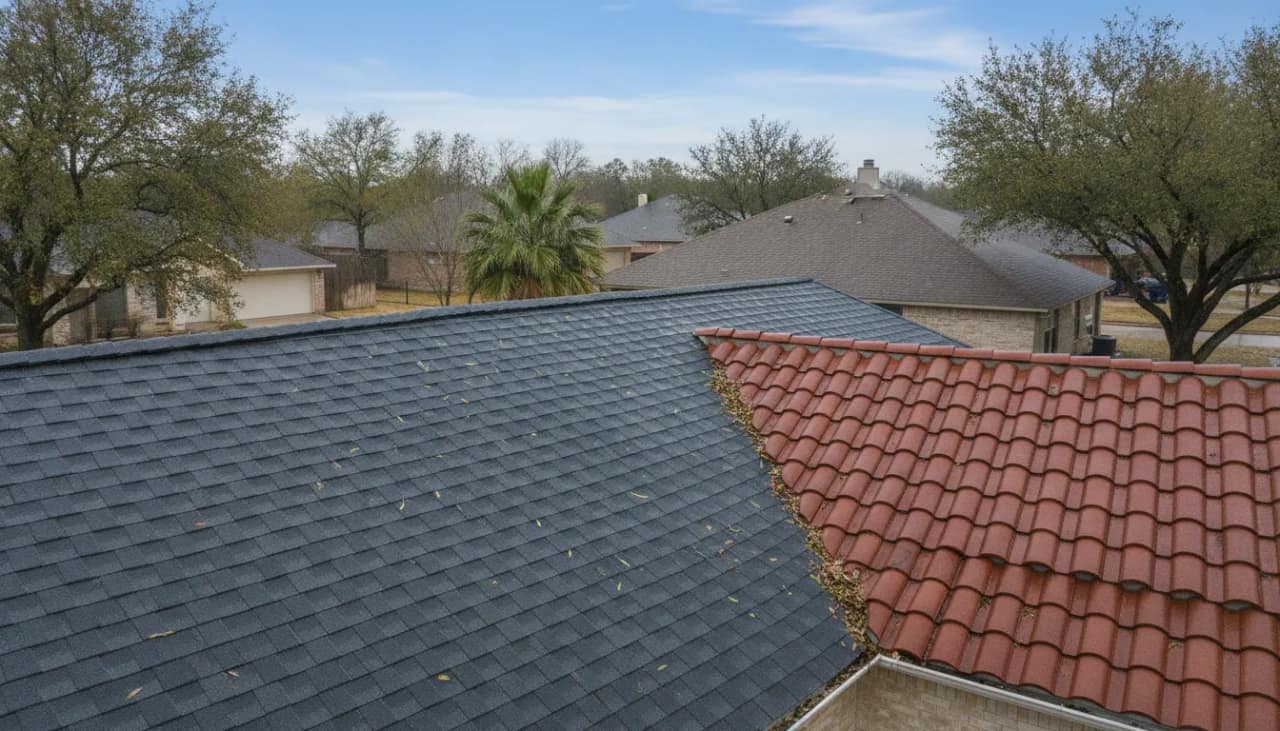
Storm damage does not automatically mean you need a new roof. A focused repair may be the right solution when the damage is limited and the existing roof still has useful service life. Replacement can make more sense when damage is widespread or the roof is already near the end of its expected life. The decision should follow a professional inspection, not a quick look from the driveway.
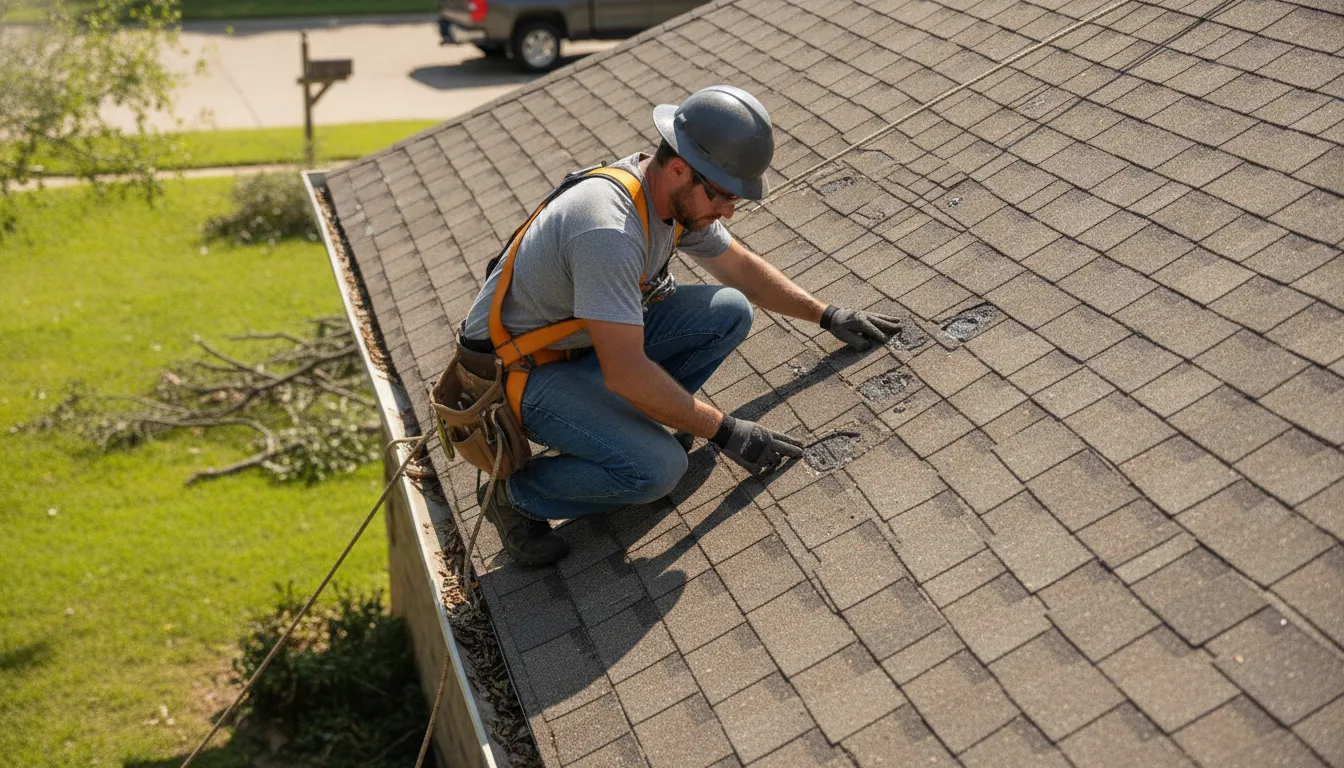
Many homeowners struggle with the repair-versus-replacement decision after severe weather, and a clear photo record of the damaged surface often helps a roofer recommend the right next step.
For context, most asphalt shingle roofs last between 15 and 30 years, and a roof over 20 years old may be better replaced than repaired. Those are useful guidelines, but roof age is only one part of the evaluation. The roof material, installation quality, maintenance history, prior repairs, and severity of the storm all matter. You can also review understanding roof repair versus replacement for more decision-making guidance.
| Consideration | Repair may fit | Replacement may be wiser |
|---|---|---|
| Roof age | The roof is relatively young and has substantial remaining service life. | The roof is more than 20 years old or approaching the end of its expected life. |
| Extent of damage | Damage is confined to a small, clearly defined area, such as several missing shingles. | Hail, wind, or falling debris has affected broad areas or multiple roof components. |
| Cost | A targeted repair addresses the problem without making the rest of the roof unreliable. | Repeated repairs are adding up, or the storm exposed deterioration across the system. |
| Long-term value | Repair restores dependable protection while preserving a sound roof. | A new roof provides a more consistent system when damage and age overlap. |
| Insurance coverage | The documented storm damage supports a covered repair under the policy. | The documented scope supports replacement, subject to the policy and insurer review. |
When does a repair make sense?
- The roof is younger, generally sound, and has no pattern of recurring leaks.
- Damage is limited to specific shingles or a small section that can be properly integrated.
- Underlying decking, flashing, ventilation, and surrounding materials remain serviceable.
When is replacement the wiser choice?
- The roof is over 20 years old and the storm damage adds to existing wear.
- Damage is widespread, hidden beneath the surface, or accompanied by repeated leaks.
- Previous patching has already left inconsistent materials or multiple vulnerable areas.
A qualified roofer should document the condition before you commit to either path. That assessment helps separate isolated storm damage from age-related deterioration and gives you a clearer basis for discussing the scope with your insurer.
Why Choose Elevation Roofing for Roof Storm Damage Repair
Storm damage is stressful enough without trying to coordinate an inspection, emergency protection, insurance paperwork, and permanent repairs on your own. Elevation Roofing & Restoration gives property owners in Houston, Austin, and surrounding communities one local team to help organize that process. The goal is not to pressure you into a replacement. It is to understand what happened, document the condition of your roof, and recommend the work your property actually needs.
That support starts with a free roof inspection. After severe weather, a trained roofing professional can look beyond obvious missing shingles and identify issues that may not be visible from the ground. Elevation can also help manage a storm-damage insurance claim from the initial assessment through final payment, giving you a clearer point of contact while the scope of work is reviewed.
- Local storm-damage experience: Elevation serves Houston and Austin, where hail, wind, and heavy rain can affect different roofing systems and properties.
- Free inspection: A professional assessment helps clarify whether the damage calls for a repair, temporary protection, or a larger project.
- Insurance-claim support: The team helps document damage and manage the claim process from assessment through payment.
- In-house crews: Employees, rather than subcontractors, perform the work, supporting consistent communication and accountability.
- Qualified roofing knowledge: Elevation Roofing & Restoration is Owens Corning and GAF Certified.
- 24/7 storm response: Round-the-clock emergency response is available when a storm leaves your roof exposed.
In-house crews also make it easier to keep responsibility clear. You can ask questions, receive updates, and discuss the repair plan with a company that remains involved throughout the project. That matters when temporary measures are needed to limit additional water intrusion before permanent roof storm damage repair can begin.
Choosing a local roofer should include more than looking at a quick estimate. Take time to review the company's work and customer experience on the Elevation Roofing reviews page. Then ask what the inspection covers, how the damage will be documented, and who will manage communication with your insurer. Those questions help you make a measured decision after an unsettling event.
To take the next step, schedule a free roof inspection and estimate or call (832) 271-1726. Elevation Roofing & Restoration can assess the roof, explain the findings in plain language, and outline a practical path forward for your Houston or Austin property.
Frequently Asked Questions
How do I know if I have storm damage?
Check from the ground for missing or damaged shingles, granules collecting in gutters, debris, or water spots on ceilings. Hail can leave bruising that is difficult to see, while wind may lift, curl, or tear shingles. Do not climb onto the roof. A professional inspection can identify damage that is not obvious from the ground.
Does homeowners insurance cover storm-related roof damage?
Coverage depends on your policy, the cause of the damage, and the insurer's evaluation. Start by documenting the condition with photographs and contacting your insurance company. A professional roofer can help identify and document the roof-system damage needed to support a claim. See your policy or adjuster for the coverage decision.
What should I do immediately after a roof storm damage event?
Put safety first. Stay away from downed power lines and hazardous debris, and do not enter a damaged building until authorities say it is safe. From the ground, photograph visible damage and any interior water intrusion. Arrange a professional inspection promptly. If the roof is heavily damaged, ask about temporary protection, such as tarping, while permanent repairs are evaluated.
Why is a professional inspection important for roof storm damage repair?
Storm damage can affect more than the visible shingle surface. A trained roofer checks flashings, vents, the roof edge, attachments, and other system components for hidden problems. The NRCA recommends inspecting roofs after severe weather even when they appear intact, because prompt identification can help limit water intrusion and related damage.
Schedule Your Free Roof Inspection
A professional inspection can help identify storm damage, document the right repair scope, and make the next steps easier to manage. Schedule your free roof inspection and estimate with Elevation Roofing & Restoration today. Get started with a free roof inspection and estimate, and talk with the team about what your Texas home needs after hail, wind, or heavy rain.