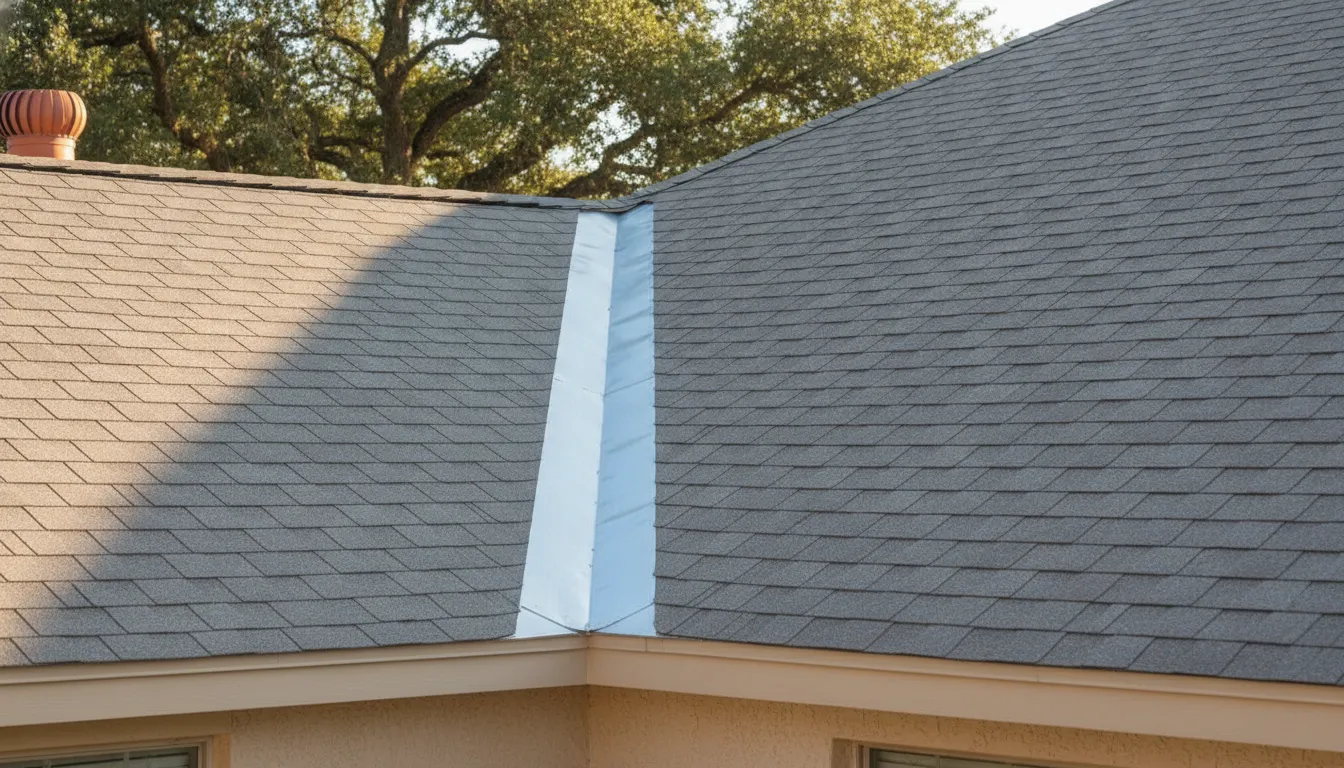
A roof valley is the inside corner where two sloping roof planes meet and send rain toward the gutter. On a Houston or Austin home, that channel can carry water from two large roof sections during a fast Gulf storm. If the lining, shingle cut, or metal is wrong, the leak often shows up far from the valley, in a ceiling or wall below.
Schedule a free roof inspection with Elevation Roofing & Restoration at (832) 271-1726.
This guide explains what a roof valley does, how the three common asphalt-shingle designs differ. What Texas weather does to them, and which warning signs mean it is time for a roofer, not a ladder. Valley repair and replacement sit inside roofing services. For the metal pieces at chimneys, walls, and vents, see our roof flashing guide for Texas. Those details protect different joints. A valley is its own drainage path.
What Is a Roof Valley, and Why Does It Leak First?
A valley is not a ridge and not a hip. A ridge is the outside peak. A hip is an outside corner where two slopes meet and shed water away from the joint. A valley is the opposite: an inside angle that collects water from both sides and forces it into one narrow line.
That concentration is why valleys fail before the open field of the roof. Water moves faster there, leaves and granules pile up, and any gap in the underlayment has a steady stream looking for it. IRC 2021 Section R905.2.8.2 requires asphalt-shingle valleys to use a proper lining or an approved closed-valley method. With corrosion-resistant metal where the assembly calls for it, and to follow the shingle maker's instructions. The point of the rule is simple. A valley needs a planned water path, not shingles pushed together and hoped for the best.
On a typical Central Texas house you will see valleys in a few predictable places:
- A front gable meets the main roof over the entry or garage.
- A dormer cuts into a larger slope.
- An addition or porch roof ties into the original roof.
- An L-shaped or multi-gable plan creates more than one valley.
Dead-end valleys, the ones that dump onto another roof plane instead of into a gutter, are the ones that surprise owners. Water leaves the valley and has to cross shingles sideways. Those spots deserve a closer look after every hard rain.
What Are the Main Roof Valley Types?
Asphalt shingle roofs use three accepted roof valley types. Metal, tile, and low-slope commercial roofs use different assemblies, so the comparison below is for the shingle roofs most Houston and Austin houses still have. The right choice depends on slope, shingle style, and how much water the two planes collect. It is not a style preference you pick from the curb.
| Valley type | How water moves | Best fit | Watch-outs in Texas |
|---|---|---|---|
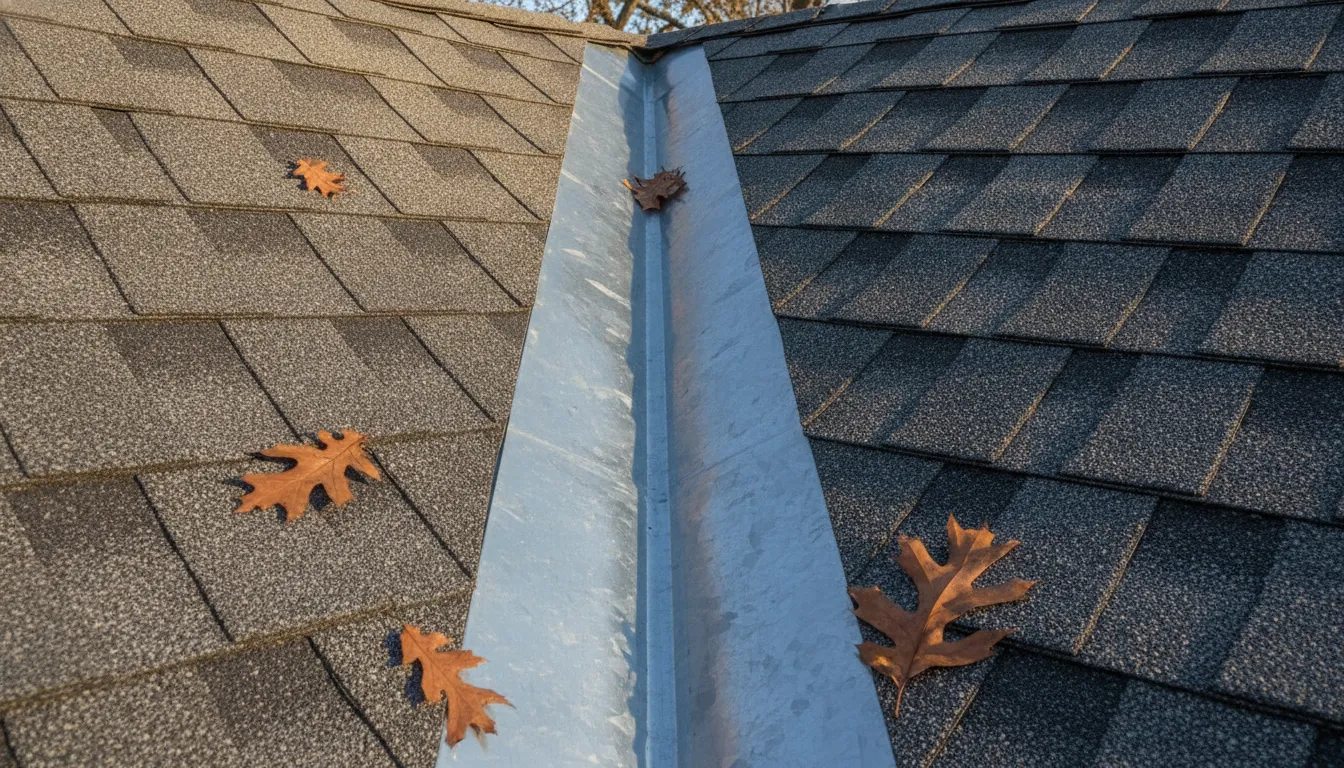
| Open metal | Shingles stop short of the center. Water runs on exposed metal. | Long valleys, lower slopes, and roofs that collect heavy leaf debris. | Metal can dent from hail. A clogged metal trough still overflows. |
| Closed-cut | One side of shingles crosses the center. The other side is cut back in a straight line. | Steeper architectural-shingle roofs where a clean line is wanted. | A cut that is too tight, or sealant smeared in the channel, traps water. |
| Woven | Shingles from both sides lace across the center, one course at a time. | Some three-tab roofs on steeper slopes, when the maker allows it. | Many laminated shingles are too stiff to weave. Hidden wear is harder to see. |
All three still need a continuous underlayment in the valley before any shingle or metal goes down. A common field practice is a wide strip of self-adhering membrane pressed tight to the deck at the center, with the field underlayment lapped over it. The membrane is the backup. The shingles and metal are the first line. NRCA guidance on valley metal also warns that valley metal which is too narrow lets fast water run sideways under the shingles.
Open valleys
An open valley leaves a visible metal channel, often galvanized steel, aluminum, or copper, running from the top of the intersection down to the eave. Shingles are trimmed back so they do not cover the center. Water never has to slip under a shingle to escape. That is why open valleys handle heavy rain and tree debris better than a fully covered valley. You can also see leaves, granule piles, and hail dents without pulling shingles apart.
The metal should be wide enough that fast water does not jump the edge, and fasteners should stay out of the water channel. Nails through the center of the metal are a direct leak path. Clips or nails kept high, under the shingle line, hold the metal without puncturing the flow path.
Closed-cut valleys
A closed-cut valley hides most of the lining. Shingles from the larger or lower roof run across the center. Shingles from the other side are cut in a straight line a couple of inches off center, so water still has a clear slot. The upper corner of each cut shingle is clipped so it does not stick up and catch water. Done well, the valley looks like a neat dark line. Done poorly, the cut wanders, the corners curl, and water is pushed sideways under the overlying shingles.
Architectural shingles, the thicker laminated ones common on newer Texas houses, usually belong in a closed-cut or open valley, not a weave. They are too bulky to lace flat, and a humped weave holds water.
Woven valleys
A woven valley alternates shingle courses from each side across the center. It can look seamless, and on a steep three-tab roof it can shed water well because each course locks the one below it. It is a poor match for low slopes, for heavy laminated shingles, and for valleys that stay full of oak leaves. Wear happens underneath the weave, so by the time you see a stain on the ceiling, the lining may already be the only thing keeping the house dry.
How Should a Roof Valley Drain During a Texas Storm?
Drainage is the whole job of a roof valley. Two slopes become one stream. In the Houston area that stream can arrive in a short, hard burst. In the Hill Country and Austin it often arrives with hail or wind-driven rain that pushes water uphill for a moment before it turns back down the valley. The assembly has to survive both.
A valley that drains well has four traits.
- The center stays clear of leaves, seed pods, and extra roof cement.
- The lining runs the full length, with no gap where two metal pieces meet.
- Shingles are cut or woven so water is steered into the channel, not under a tab.
- A gutter or outlet at the bottom can take the combined flow.
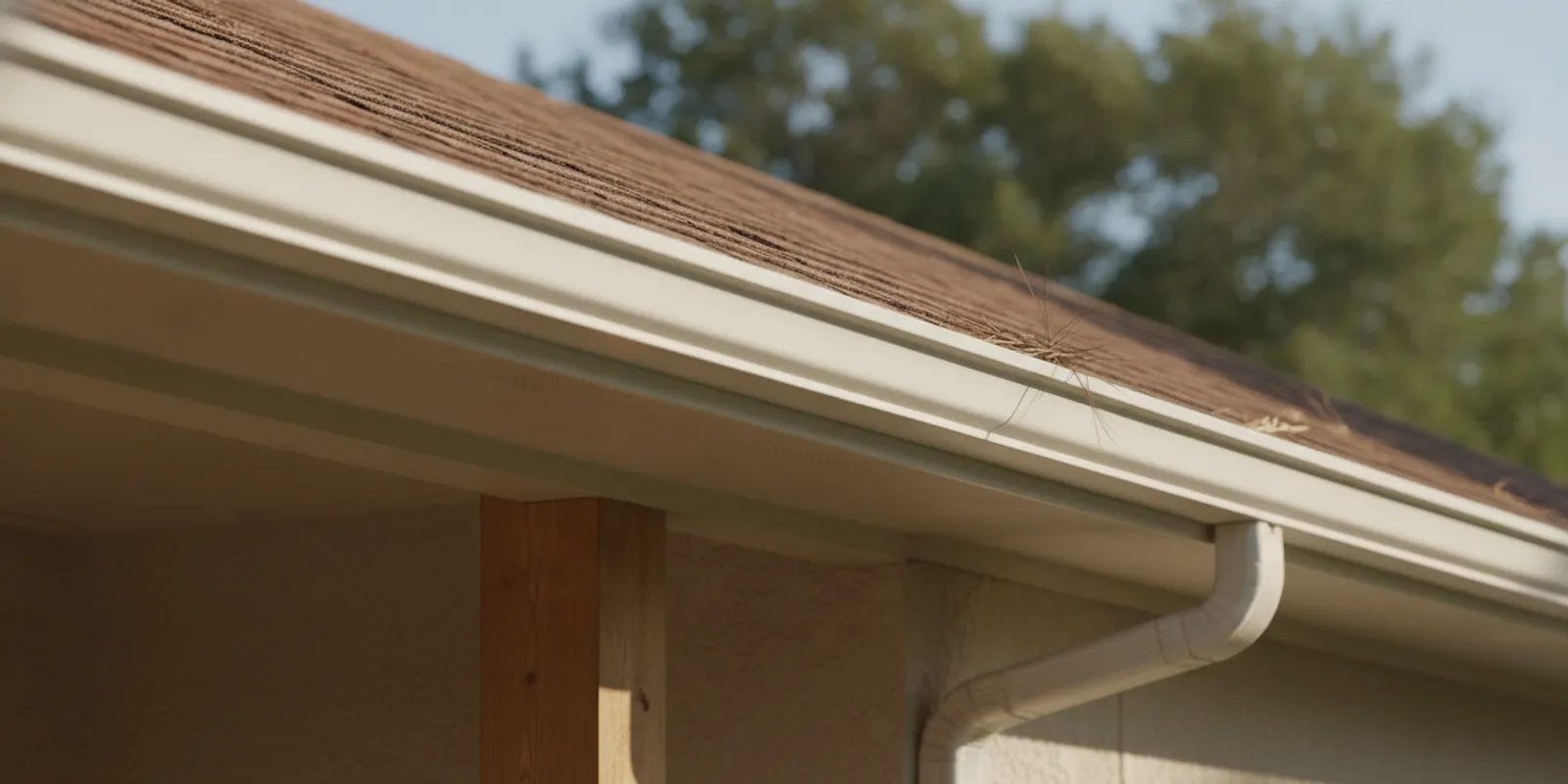
The bottom of the valley is where many leaks start, even when the metal up top looks fine. A valley that dumps into a small gutter, or one packed with the same leaves that were on the roof, lets water stack up. That water then runs backward under the first courses of shingles. Pair valley care with gutter maintenance that protects the roof. The gutter is the end of the same path. Low-slope commercial roofs are a different problem. Those use internal drains and scuppers, covered in our note on flat roof drainage in Texas, not a shingle valley.
Ice-dam details matter less along the Gulf Coast than they do up north, but a self-adhered membrane in the valley is still worth having. It backs up the metal or the closed cut when wind drives rain under the shingle edge. Manufacturer instructions control the exact width and the fastening setback. If those instructions are stricter than the code minimum, the stricter rule is the one that keeps the warranty intact. Elevation Roofing & Restoration installs as an Owens Corning and GAF Certified contractor, so valley work on those shingle lines follows the maker's pattern, not a generic weave.
Which Roof Valley Fits Your Home?
You do not have to name the valley type to get a sound roof. You do need the type to match the shingles and the water load. Use the roof in front of you, not a photo from another climate.
- Heavy tree cover in Houston, Katy, or The Woodlands. An open metal valley is easier to clear and less likely to hold wet leaves against the shingles.
- Steep architectural-shingle roof with short valleys. A closed-cut valley usually looks cleaner and matches how laminated shingles are meant to be installed.
- Older three-tab roof that is already woven and still steep. Leave a sound weave in place until the roof is replaced. Do not "upgrade" it with surface cement.
- Metal roof. Valleys are formed or flashed in metal, not cut from shingles. Mixing a shingle-valley habit onto a metal panel is a common leak source. Our roof types overview separates those systems.
- Tile. Tile valleys use metal channels under the tile, with the tile held back from the waterline. See tile roofing for how that roof is built before you assume a shingle detail applies.
If two slopes are very different in size, the larger slope should usually be the one that runs through on a closed-cut valley. So the heavier flow is not aimed under the smaller roof's shingles. A roofer confirms that on the roof. From the ground, you can only see which side is cut.
Ask Elevation Roofing & Restoration to check a worn roof valley before the next storm.
What Maintenance Does a Roof Valley Need?
Valley maintenance is mostly about keeping the channel open and catching small failures before they wet the deck. It is not a weekend project on a two-story roof. Most of the useful checks happen from the ground, from a window, or from the attic.
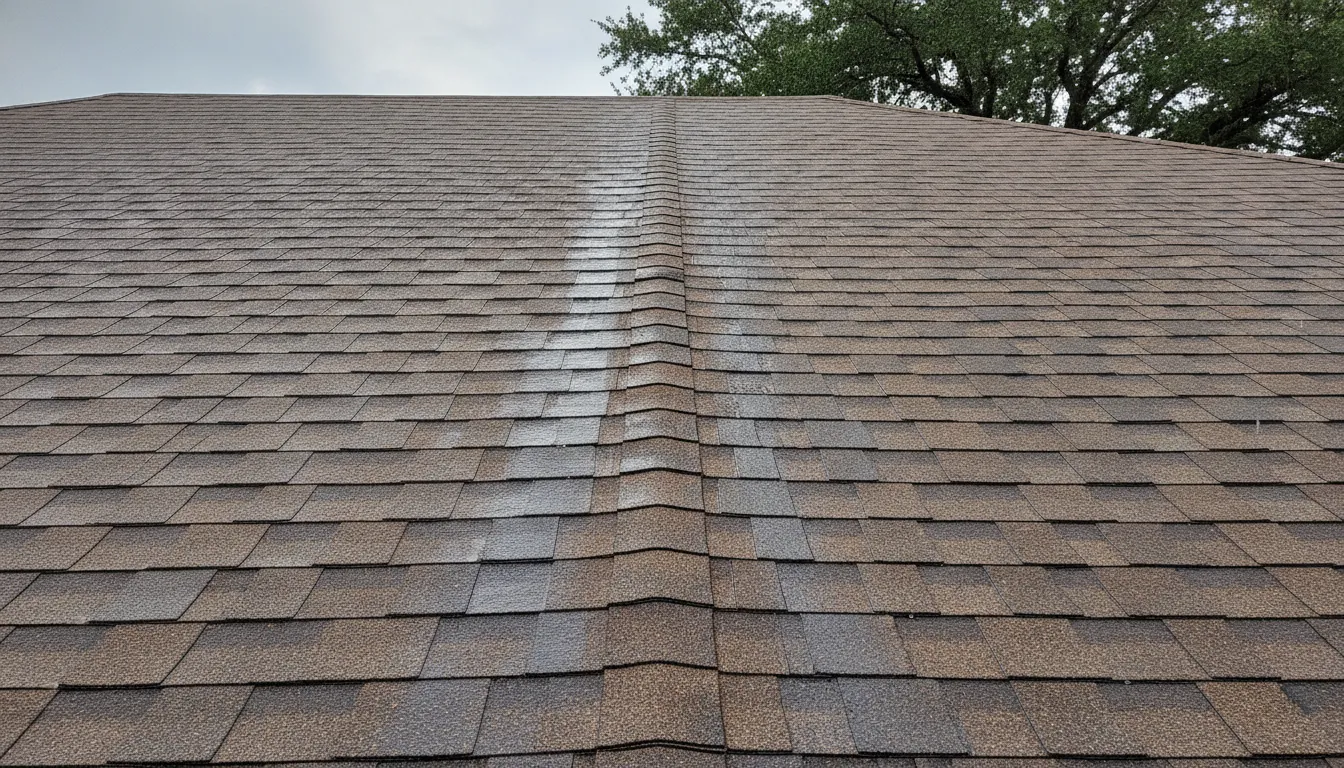
Once or twice a year, and after a storm that drops limbs, look for these signs.
- A dark streak in the valley never quite dries, which can mean the channel is holding water.
- Shingle granules collect in the valley or in the gutter directly under it.
- Corners lift, cut edges crack, or nail heads show along the valley line.
- Open-valley metal is dented, rusted, or separated at a seam.
- Leaves are packed so tightly that water runs sideways onto the shingle field.
- A new ceiling stain, or daylight in the attic, sits under the valley rather than under a random shingle.
Clear debris you can reach safely from the ground with a blower only if the valley is a single story and you are not standing on the roof. Do not smear roof cement down the center to "seal" a valley. Cement cracks, holds grit, and often creates the dam that causes the next leak. If metal is loose or shingles are cut back to the liner, that is roof repair work, not maintenance.
Hail is the other Texas-specific check. A valley can be bruised even when the field shingles still look even from the street. Dents in open metal, and soft spots where granules are gone along the cut line, belong in a documented inspection. Our after-storm roof inspection checklist walks through what to record before you talk with an insurer. If water is already inside, the signs of a roof leak page helps you separate a valley leak from a window or attic-condensation stain. Active dripping is covered on what to do in an emergency roof leak.
A valley that has been patched more than once, or a lining that stops short of the eave, is usually a replacement detail, not another coat of sealant. When the rest of the roof is near the end of its life, fixing only the valley leaves the field shingles as the next failure. Roof replacement is the point where the valley type can be chosen on purpose, with new membrane under it, instead of matched to whatever the last crew wove in.
When Should You Have a Roofer Look at the Valley?
Call for an inspection when you can see the valley failing, or when water has already found the ceiling under it. You do not need a leak to justify the visit. A valley is one of the first places a roof inspection should include, because the deck underneath can be soft while the shingles still look attached.
A useful valley check follows the same order every time.
- Look up from the ground and note which valleys are open metal, closed-cut, or woven.
- Check the bottom of each valley where it meets the gutter.
- Look in the attic, if you can do it safely, for dark decking under that line.
- Photograph hail dents or missing granules before anyone walks on the roof.
- Hand those notes to the roofer so the inspection starts at the valley, not only in the open field.
Good reasons to book a look include any of the following.
- The house has several valleys and you have never had them checked.
- A recent hail or windstorm hit your part of Houston, Austin, or the cities between.
- You are buying or selling, and the report mentions valley wear without naming the type.
- Someone offered to reseal the valley with coating or cement as the whole repair.
- Gutters overflow only under one valley during ordinary rain.
Elevation Roofing & Restoration serves residential and commercial properties from Houston through the Austin area, with in-house crews rather than a rotating set of subcontractors. The free inspection covers the valley, the flashing at walls and penetrations, and the gutters that have to finish the drain path. If storm damage is part of the story, the same visit can document what an insurance adjuster will ask about. Read recent homeowner notes on the reviews page, or browse service areas if you want to confirm your city is on the route. Ongoing care, once a repair is done, sits with roof maintenance so the valley does not fill up again next spring.
Get a free roof inspection from Elevation Roofing & Restoration before the next heavy rain.
Frequently Asked Questions
What is a roof valley?
A roof valley is the inside angle where two sloping roof planes meet. It collects rain from both sides and carries that water down to a gutter or onto a lower roof. Because the flow is concentrated, valleys need a lining and a clear channel. They are not just a place where shingles happen to meet.
Which roof valley type is best for a Texas house?
Open metal valleys are the easiest to keep clear under oak trees and in heavy rain. Closed-cut valleys are a common, sound choice on steeper roofs with laminated architectural shingles. Woven valleys can work on some steeper three-tab roofs, but many shingle makers do not allow them on heavier laminated shingles. The shingle instructions decide.
Can I seal a leaking roof valley with roof cement?
No. A smear of roof cement in the channel usually dams water and fails in the heat. A real repair replaces damaged metal or shingles, keeps fasteners out of the water path, and relies on the underlayment underneath. If the valley has already been coated once, ask a roofer to see what is under the coating before adding more.
How often should a roof valley be cleaned?
Check it at least twice a year, in spring and fall, and after storms that drop leaves or limbs. Clear only what you can reach without climbing onto the roof. If debris is packed in the channel, or if you see stains on the ceiling after rain, stop and schedule an inspection instead of walking the valley.
Does a roof valley leak mean the whole roof must be replaced?
Not always. A torn metal seam, a bad shingle cut, or a clogged outlet can be repaired on a roof that still has years left. Replacement makes more sense when the shingles are worn across the field, the deck is soft, or the valley has been patched several times. An on-roof inspection is what separates those cases.