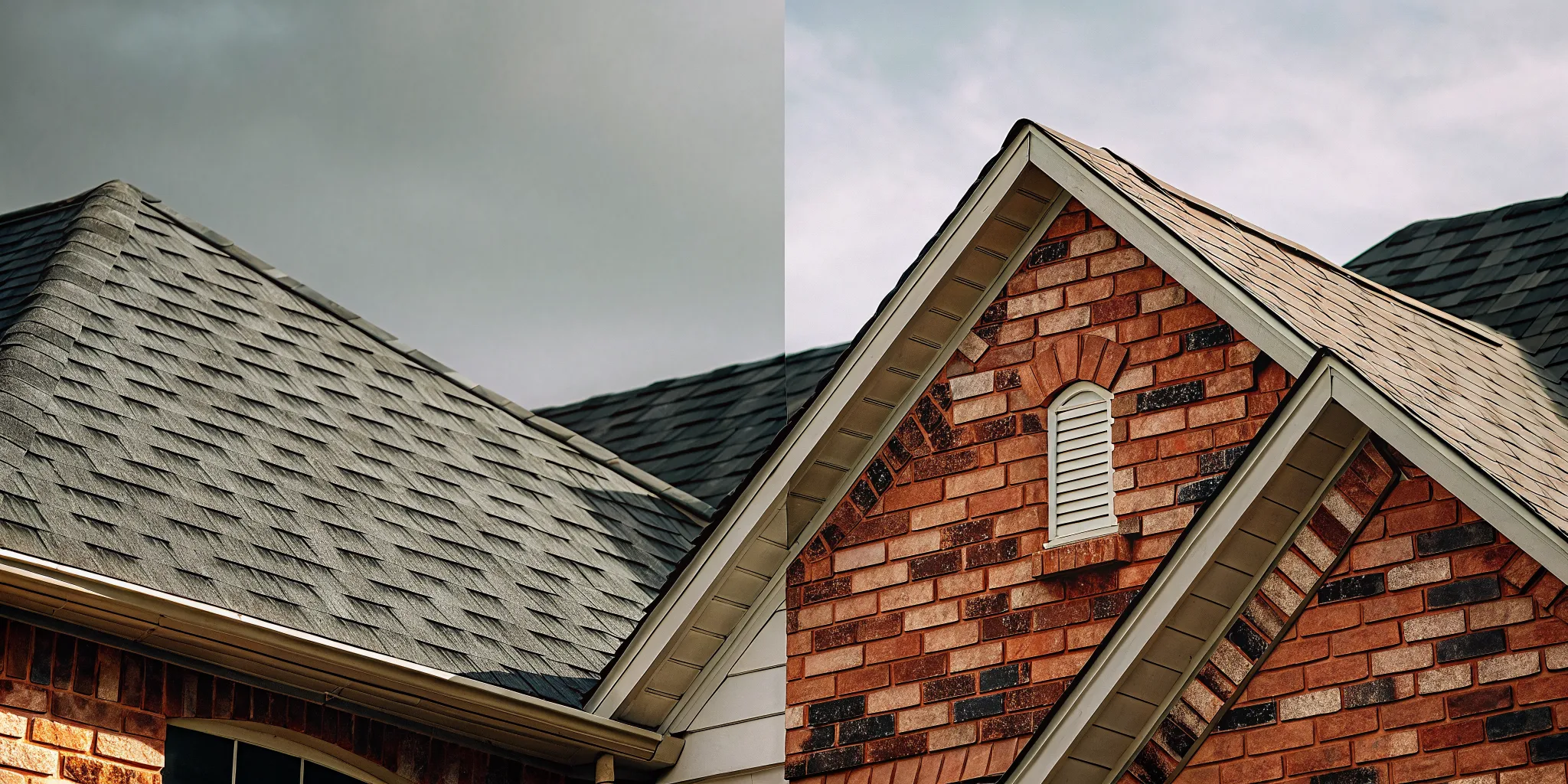
Texas storms often leave roofs with a mix of torn shingle edges and deep impact craters. Knowing what to look for helps you find the right fix before leaks start. These common storm signs can look the same from the ground but need very different repairs.
Schedule your free professional roof inspection after a Texas storm, or call (832) 271-1726 for help identifying the damage.
The main difference in wind damage vs hail damage roof issues is how the force hits the shingles. Wind damage usually shows up as lifted, creased, or missing shingles because strong gusts try to peel the roof layers back. You will often see this damage along the edges or on one side of the house where the wind hit hardest. In contrast, hail damage creates round dents or dark spots where the ice knocked the protective granules off the shingle surface. These impacts are usually scattered across the entire roof and can lead to leaks if the shingle matting is bruised or cracked. According to the National Weather Service, severe storms can bring both high winds and large hail at the same time.
Finding these signs is the first step toward choosing the right repair and documenting a potential insurance claim. The quick comparison below shows what to look for and when to request an expert inspection.
Wind damage vs hail damage roof: quick comparison
Wind damage usually lifts, creases, or removes shingles in directional patterns, while hail damage leaves scattered round dents, dark impact marks, and granule loss. Both can break a roof's water-shedding system, so Texas property owners should document visible clues from the ground and arrange a professional inspection after a severe storm.
Clear signs of storm harm
Wind damage often shows as shingles that have moved or changed shape. You might see parts that have lifted, folded, or torn away from the roof. These issues often happen when high air pressure pulls on the roof.
This force breaks the glue that holds shingles in place. If you find shingles on your grass, you likely have wind issues. Wind can also curl the edges of your roof. This makes it easy for rain to get under the wood.
Hail damage looks like round dents or dark spots on the top layer. These spots form when ice knocks the small stones off the shingles. Some people call these marks bruises or pits. Unlike wind, hail hits the whole roof in a random way.
You can learn more about how Texas weather conditions can hurt your home over time. High heat and sun can also make shingles brittle. This makes them more likely to crack when ice hits them.
Comparing wind and hail patterns
The weather teams say a big storm has hail at least 3/4 of an inch wide. It also includes wind over 50 knots (psu.edu). Wind often hits one side of the house harder, but hail falls from above and can hit every slope.
While wind peels things back, hail strikes down and can crack the shingle base. This type of force can even dent the metal vents on your roof. Both types of storms can lead to deep harm that you cannot see.
When ice strikes a roof, it may not break the top layer right away. Over time, the spot can get soft and let water leak in. High winds can also pull at the edges of the roof and let wind-blown rain get under the shingles.
If you have an impact of hail on a metal roof, you might see small dents that do not cause leaks. But on asphalt, those same dents can lead to big issues.
| Feature | Wind Damage | Hail Damage |
|---|---|---|
| Main Sign | Lifted or missing shingles | Round dents and dark spots |
| Pattern | Found on one side | Spread across the roof |
| Cause | High uplift air pressure | Falling ice strikes |
| Risk | Seal breaks and leaks | Cracks and loss of stones |
| Sight | Can see from the ground | Often hard to see below |
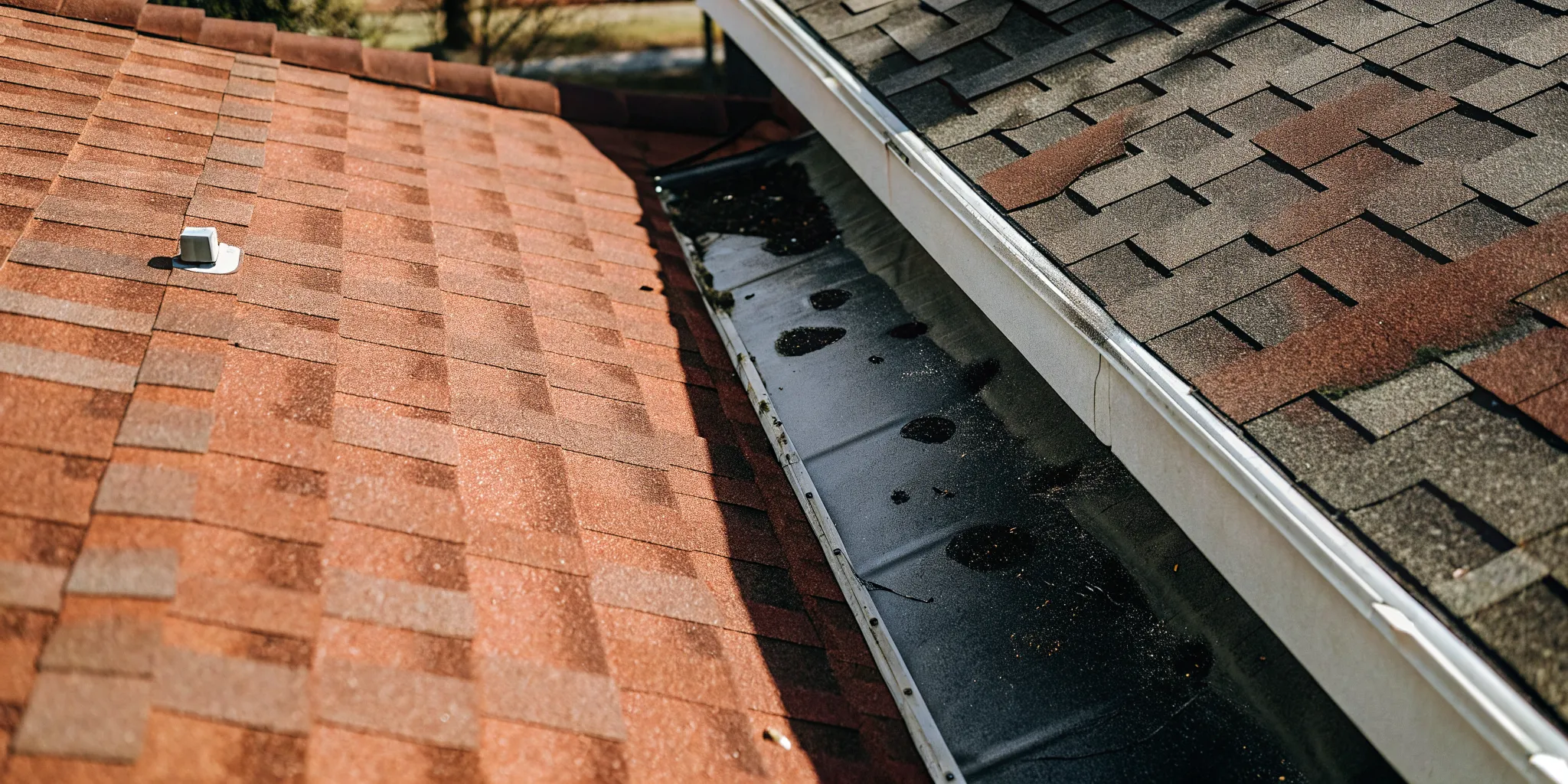
The value of an expert review
You might not see any harm from the curb because many storm issues are small and hard to find without a ladder. Even small pits can let water in over many months. Some people may even mistake foot marks for hail dents.
This is why getting a fast storm repair check is needed after any big event. Our team has the right tools to find these hidden spots. We want to make sure your home stays safe and dry.
A trained pro can find leaks before they start. Our team checks every part of the roof to make sure it is safe. We look for the "bruises" that ice leaves and the broken seals caused by wind.
Catching these problems right away saves you cash on big fixes later, so we also check the gutters and flashing for signs of wear. These parts are just as vital as the shingles.
Types of storm damage to look for
- Lifted or missing shingles: directional signs commonly associated with high wind.
- Creased shingle tabs: evidence that wind broke the adhesive seal.
- Round impact marks: scattered dents or dark spots commonly associated with hail.
- Granule loss: exposed asphalt where hail impacts displaced the protective surface.
What does hail damage look like on a roof?
Hail damage often looks like random round dents or dark spots on your roof shingles. Unlike wind damage vs hail damage roof signs that show up as lifted edges, hail hits are often spread across the whole roof. These strikes can knock off the outer layer of your shingles and leave the felt mat open to the air.
Signs on asphalt shingles
When hail hits an asphalt roof, it can cause granule loss, cracks, or bruises. You might see small piles of granules in your gutters or at the end of your downspouts after a storm. These impacts to asphalt shingles can create soft spots that feel like a bruise on an apple when you press on them. Over time, these spots can lead to leaks if you do not fix them.
You may also find round cracks or holes where large stones hit the roof. These marks often look like pits or dimples in the shingle mat. While some granule loss during hailstorms may not cut the roof's life short right away, it can lead to more wear from the sun. It is wise to have an expert check these spots to see if they need repair.
Damage to metal and vents
Soft metals on your roof often show the first signs of a hail strike. Look at your roof vents and metal valleys for small dents or pits. Hail can also leave dings in your gutters and downspouts that are easy to see from the ground. The impact of hail on these parts is a clear sign that your shingles may also have damage.
Check your chimney caps and sky light frames for similar marks. These metal parts do not hide damage as well as shingles do. If you see dents in your vents, it is a strong clue that the rest of your roof took a hit. This proof helps when you talk to your insurance firm about a storm claim.
Bruises versus normal wear
It can be hard to tell the difference between hail damage and old age. Real hail damage has a random pattern and often comes with dents in soft metals. Normal wear and tear usually looks more even across the roof. Inspectors sometimes mistake scuffs from foot traffic or spots of glue for hail strikes.
A true hail bruise will feel soft and may have a round crack around the edge. If the spot is hard to the touch, it might just be a sign of an aging roof. Because these signs are hard to see, you should get a professional roof inspection after any big storm. An expert can tell you if the marks are from a recent storm or just old age.
What does wind damage look like on a roof?
Wind damage often looks quite different from the round pits caused by hail. While hail leaves marks across the whole roof, wind tends to target the edges and the side of the house that faces the storm. You might see shingles that are gone, torn, or bent out of shape. Even if the roof looks okay from the ground, high winds can cause hidden problems that lead to leaks over time. This is a common issue for homeowners in Houston and Austin who face frequent storms.
Signs of lifted and missing shingles
The most clear sign of wind damage is missing shingles, as high gusts can peel them away and leave the base layer open to rain. This often happens at the corners or along the ridge where the wind can get below the edges. When you see bare spots, you need a free professional roof inspection to check for wood rot or water damage. Our team can help you document this for your insurance claim.
Sometimes shingles do not blow off but lift up and then settle back down. This lifting is risky because it breaks the seal that keeps water out. A storm is severe when wind speeds reach 50 knots or higher, which is about 58 miles per hour. At these speeds, the force can be strong enough to pull nails through the shingles or bend the mat until it cracks.
Creased shingles and hidden seal failure
Creased shingles are a common sight after a big storm when the wind lifts a shingle and folds it back. Even if the shingle stays on the roof, the folding creates a fixed line where the granules have been knocked off. This crease is a weak spot that will later tear or allow water to seep through. Unlike the round dents seen in a wind damage vs hail damage roof check, these lines follow the top of the shingle row.
Seal failure is harder to find but just as bad because shingles rely on a strip of glue to stay in place. Strong winds can break this bond without tearing the shingle, which allows it to flap and pull the nails loose. If you have older shingles, they may be more likely to fail because the glue gets brittle over time. Choosing materials that resist wind damage can stop this issue, but you must document seal failure for your insurance agent.
Damage patterns on the windward side
Wind damage often hits one side of the house harder than the others. This is called the windward side, or the side that faced the wind during the storm. You might notice that the shingles on the front of your house are fine, while the shingles on the back are torn or missing. This pattern helps experts tell the gap between wind and hail since hail falls on the entire roof at once. Wind is more fussy about where it strikes.
Edges and corners are at-risk because the wind creates a strong uplift force as it hits the side of your home. This force tries to peel the roof back like the lid of a tin can. If your edge metal or drip edge is loose, the wind can get a grip on the shingles and cause a flow of damage. Checking these areas after a storm is the best way to catch small issues before they become big leaks.
How to check for storm damage safely
The safest way to check for storm damage is to stay on the ground, photograph visible clues, inspect accessible indoor areas for leaks, and leave rooftop evaluation to a trained roofer. Wet, loose, or impact-damaged roofing can be unstable even when it looks secure from below.
You can find many signs of wind damage vs hail damage roof problems without ever leaving the grass. This keeps you safe while you find out if you need help.
Stay on the ground for safety
Climbing a roof is risky even in good weather. After a storm, the risk grows. High winds may have loosened shingles or trim. Standing water or wet moss can make the surface slick. You might not see these weak spots from a ladder. Falling from a roof can cause serious harm.
It is much safer to get a professional roof inspection if you think there are issues. Experts have the right gear to stay safe while they work. They know how to spot hidden leaks and cracks. This gives you a clear plan without the risk of a fall.
You should also watch out for downed power lines or broken tree limbs near your house. These can be deadly after Texas weather conditions turn sour. If you see a line on the ground, stay far away and call for help. Do not try to move debris that is touching wires.
Spotting clues in your yard
You can see many signs of damage from your yard or sidewalk. Use a pair of binoculars to get a better view of the peak and edges. Look for shingles that are missing, torn, or curling at the corners. Wind often peels shingles back from the edges of the roof. This can leave the wood beneath open to rain.
Hail damage looks different. It often leaves round dents or dark spots where the top grit has been knocked off. These round marks may be scattered all over the roof top. A severe thunderstorm can bring hail that is nearly an inch wide or winds over 50 knots. These forces can do a lot of harm that you might miss from the ground.
Check your gutters and downspouts for small piles of sand-like grit. This grit protects your shingles from the sun. If hail hits the roof, it knocks this grit loose. Seeing a lot of it in your gutters is a sign that your roof took a hard hit. You should also check for dents in your gutters and downspouts.
A safe post storm walkthrough
Follow these steps to check your home after the clouds clear. This list helps you find damage while keeping both feet on the ground.
- Walk around the entire house and look at the roof edges for any shingles that look loose or torn.
- Check your gutters and splash blocks for dents or a buildup of shingle grit.
- Inspect soft metal items like vent caps and window trim for small dings.
- Look for broken tree limbs or shredded plants that show how hard the wind blew.
- Check the ground and your deck for any bits of shingle or roofing nails.
- Take photos of any damage you find from a safe distance for your records.
- Call a local expert to walk the roof and give you a full report on what needs repair.
Why a professional roof inspection matters
Finding hidden storm damage
It is very hard to see wind damage vs hail damage roof problems from the street. High winds can lift shingles or break the glue strips that hold them down. This may not look bad from your yard, but it creates a path for rain to get in. Wind damage often happens on one side of the roof where the air hit hardest. This uplift pressure tries to peel shingles away from the wood deck.
Hail is also tricky because it often leaves small bruises or cracks in the shingle mat. These marks are hard to spot without being right on the roof. A pro roofer will check every part of your roof. They look for spots where granules are missing or where the shingle has lost its shape. These small issues can grow into big leaks if you ignore them. Finding these flaws early is the best way to avoid wood rot and mold inside your home.
Clear proof for insurance
Filing a claim for storm damage needs clear proof. A pro knows exactly what an insurance adjuster looks for when they visit your home. They use the National Weather Service rule that defines a severe storm as having hail 3/4 of an inch or larger. By showing that the storm hit this mark, you have a better case for your claim.
Pros take many photos of the damage to show the full scope of the storm hits. They will write a report that lists every cracked shingle and torn edge. This report makes it much easier to talk to your insurance company. It shows that the damage is real and caused by a recent storm. This helps you get the funds you need for a hail damage repair or a new roof.
Ensuring your roof lasts
Missing even one small leak can cut years off the life of your roof. A professional inspection gives you a full view of your roof's health. Experts know how to tell the difference between a foot scuff and a real hail hit. They make sure you do not waste time on small fixes that do not solve the real problem.
If you live in Houston or Austin, you know how fast a storm can move in. Having a pro check your roof after a big storm is a smart move for any owner. It gives you peace of mind to know your home is safe. A quick check now can save you thousands of dollars in repairs later. Expert help makes sure you do not miss hidden leaks that can cause big bills down the road.
What to do after a Texas hail or wind storm
A big Texas storm can be scary. Once the rain stops, you must act fast to save your home. High winds and heavy hail can hurt your roof in ways you cannot see from the yard. It is vital to know how to handle the next steps so you can get the help you need. Whether you face wind damage or hail hits, your goal is to keep your home dry and safe.
Check for leaks and stay safe
Your first job is to look for signs of a leak inside your home. Check the attic and the ceilings for damp spots or drips. If you see water, place a bucket under it to stop more damage. Do not climb on your roof yourself after a storm. Wet roofs are slick, and a damaged roof may be weak. You can look at the roof from the ground to see if any shingles are gone or if the metal is bent.
You may also see debris in your yard. Look for bits of shingles, metal, or gutters that fell off. If you see these things, your roof likely has damage. Small signs often point to big leaks later on. Getting a professional roof inspection is the best way to find these hidden issues before they get worse. A pro knows where to look for soft spots or cracks that you might miss.
Record the damage early
Keep a clear record of when the storm hit. Take photos of your home and yard from a safe distance. Note the date and time of the event. This data is key for your insurance claim. The National Weather Service says a severe storm has hail at least 3/4 of an inch wide. It also has wind gusts of 50 knots or more. Knowing these facts helps show how strong the storm was when you talk to your agent.
If you see broken windows or dented cars, take pictures of those too. These things prove that the storm was strong enough to hurt your roof. Save any news reports about the local weather that day. A clear trail of facts helps your agent see what happened. Good records also help your roofer know which parts of the house took the most force from the wind or hail.
Work with a pro for your claim
Filing a claim for a roof can be hard. There are many rules and forms to fill out. You do not have to do it alone. Elevation Roofing helps homeowners in Houston and Austin walk through this process. We can meet with the insurance person to show them what we found. This helps make sure they see all the spots that need a fix. We have the tools to show the real state of your shingles and seals.
We offer a free professional inspection to help you get started. Our team looks for the fine details of wind damage vs hail damage roof issues to give you a full report. We focus on getting your home back to its best state with good work. Call us at (832) 271-1726 to set up your free visit today. We are here to help you get your roof fixed right without the stress.
Frequently Asked Questions
Does homeowners insurance cover wind and hail roof damage?
Most standard home insurance policies cover roof damage from wind and hail. You must often file a claim within one year of the storm. If you wait too long, the company may deny your claim. They might say the damage is just from old age. According to Elevation Roofing, good records are vital for a successful claim. A pro check helps prove that a storm caused the issues on your roof.
Can roof damage from hail lead to leaks?
Yes, hail damage can cause roof leaks over time. Small dents may not leak at first, but they make shingles weak. The sun and rain will wear down these spots until water gets inside your home. The customer guide says hail hits cause granule loss and deep bruises. This damage takes away the layer that keeps your house dry. It is best to fix these spots before the next big rain.
Is wind damage or hail damage worse for my roof?
Both types of damage are bad, but they act in different ways. Wind often causes clear problems like missing shingles or holes. Hail damage is harder to see and may take months to cause a leak. In the south-central United States, studies show that hail causes a large share of outdoor damage. Both issues need a quick check to keep your home safe from water. You should not ignore either one.
How soon should I get a roof inspection after a storm?
You should get a roof check within 24 to 48 hours after a storm. Most damage cannot be seen from the ground. A fast check lets you start an insurance claim before it is too late. The National Weather Service says a severe storm has large hail or high winds. Getting a pro to look at your roof early helps you avoid high repair costs later on.
Ready to book your free roof inspection?
Ignoring the small cracks from hail or wind can lead to wood rot and mold that will cost you much more to fix in the future. If you wait too long to call for help, you might miss the small window to file an insurance claim for your storm damage roof repairs. You can read more about what to expect during a professional roof inspection to see how we find every sign of storm damage on your home. Booking your free inspection right now keeps your home safe and gives you a clear plan to restore your property before the next storm hits.
Ready to schedule a roof inspection? Call (832) 271-1726 to talk to our expert team and book your free roof inspection today.